I was pleased that a proposal to situate a commercial carnival for the city-wide celebration of Halloween on Salem Common was abandoned by our Mayor a few weeks ago, but many people in Salem were not. The carnival is a private enterprise, but it serves a public function: the crowds that come to Salem increase with every year because of the profitable association of the 1692 Witch Trials and Halloween and crowd control measures are needed. Apparently the carnival serves in that capacity, and also provides a place for families and teens who have had enough of the haunted houses, tours, and “museum” offerings that form the regular fare of Haunted Happenings. So after the Common was ruled out, the City sought other locations for the carnival (even at this late date!) and have come up with one in the vicinity of the courthouses on Federal Street. This seems like an even more disruptive location to me but the increasing requirements of Haunted Happenings trump everything in this City. Over the past few weeks, the public discourse about the Carnival and its location was really interesting, so I sought a bit more historical context. Salem has quite a history of public civic celebrations, but I think the best precedents for its Halloween carnivals of the past decade are the turn-of-the century “trade carnivals” that were sponsored by the Merchants Association. The carnival of 1906 opened on this very day, and was held in and around Town House Square, not too far from where the 2018 carnival will be held.

This was quite the extravaganza! I have looked everywhere for a photograph of the Japanese pagoda with its 1286 incandescent lamps, with no luck, and it’s difficult for me to see how it would fit in Town House Square (see postcards below). The display of electricity must have been awe-inspiring at this time, as well as the other attractions: near the courthouses (perhaps in the same location of the 2018 carnival), a stereopticon and moving pictures were continuously exhibited on a screen for the duration of the carnival. This was a display of media-in-transition, as the stereopticon, a double-lensed “Magic Lantern”, is widely recognized as a key forerunner of films. Electric cars from all the neighboring towns brought “thousands” of people into Salem for the festivities, all greeted by “‘Welcome’ signs [with] letters formed of small electric lamps in several locations”. Two years later, we can read (in the Boston Globe) about an even bigger trade carnival held in late April: commercial life was not so exclusively connected to exploiting the Witch Trials/Halloween at this point in time, although it was definitely a growth industry. The 1908 carnival featured an elaborate opening parade with the Mayor (Hurley) on horseback, merchant (princes) in barouches, and the entire Fire Department of Salem, with their muster-winning handtub engine the White Angel, “which made a fine show”. Schools were closed for the occasion, and once the carnival was officially opened, there were band concerts in (again–what must have been a very crowded) Town House Square every afternoon and evening.


 Contemporary postcards of Town House Square; Ridgeway Stereopticon Advertising Co., trade card, Boston Athenaeum (I imagine the Salem screenings looking like this); a great photograph of the famous White Angel handtub from the PEM’s Phillips Library, published in Pediment ‘s Salem Memories, Volume II and available here.


 Salem Common in 1836 and 1863: Historical Collections of Massachusetts by John Warner Barber; Fitz Hugh Lane for Moore’s Lithography, Art Institute of Chicago, Museum of Fine Arts, Boston.


 All newspaper articles from the Boston Globe: playground festivals in 1916 and 1923, a film for the troops in 1918, a farmer’s market in 1920 (Historic New England), the celebration of the opening of the Hawthorne Hotel in 1925 and the stage for the Tercentenary pageant in 1926, Salem State University Archives and Special Collections; a protest against the processing tax during the Depression, and an unfortunate death on Salem Common.


 New England Magazine, 1892.


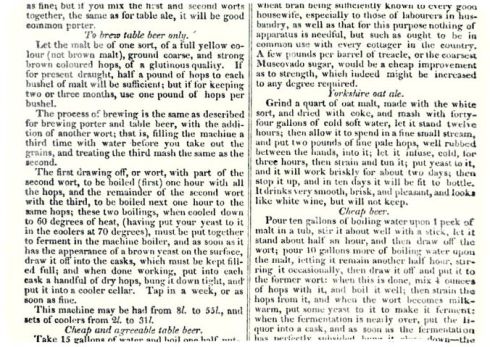

 Peabody Essex Museum and Alice Morse Earle, Stage-Coach and Tavern Days (1900).

 The Base Ball Player’s Pocket Companion. Boston: Mayhew and Baker, 1859.


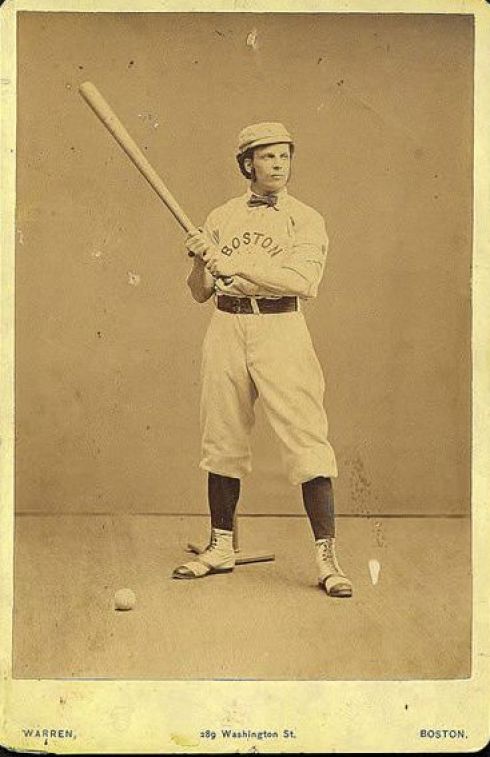

 All images from Robert Edward
 Baseball Sheet Music


 Leslie Jones photograph of Arbella “arrivals” on June 12, 1930, Boston Public Library; with the Winthrop Charter in hand, a “Charter Cavalcade” en route from Salem to Boston in 1930, Dionne Collection, Salem State University Archives & Special Collections; Scenes from the 1913 Official Pageant of Salem Program.


 Two Boston Post articles from 1901 and 1903 showing Perley in the midst of two big Salem historical “disputes”: “Antiquarians are all up in arms again” is one of my favorite headlines ever.