Tag Archives: World War One

Over There and Back Here

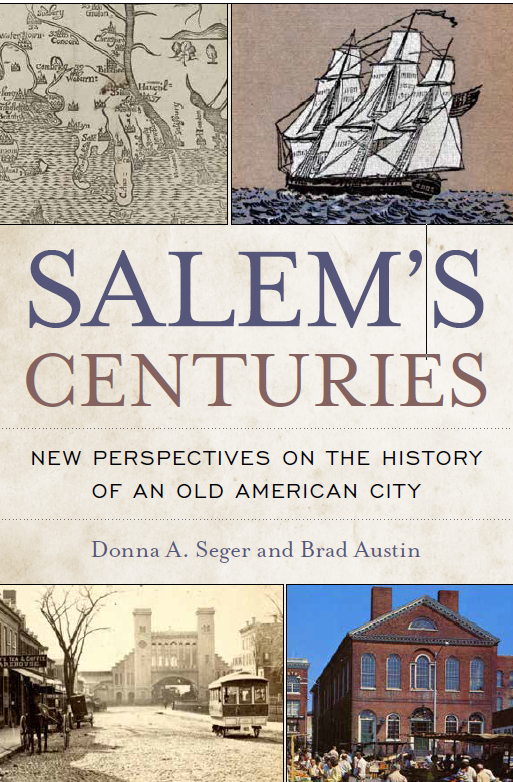
When you produce a book that attempts to cover a long stretch of history–400 years in Salem’s case—you are haunted by what (and who) is left out. I’m so glad that Salem’s Centuries is an anthology as others share the responsibility, otherwise I’d be really haunted. But I still think about untold stories and uncharted territory. So this Veterans Day week post is a small compensation. I wrote the epilogue of the book, entitled “It Happened in Town House Square,” which summarizes Salem’s centuries by focuses on its central square as a stage of sorts over time, from the seventeenth century to the twenty-first. When researching events that happened at Salem City Hall after its construction in the mid-nineteenth century, I came across a remarkable outpouring of grief and respect for a soldier of the First World War who had demonstrated extraordinary leadership and died tragically just two years after his return—of appendicitis. Lieutenant Colonel Frank S. Perkins’ body lay in state in City Hall for several hours prior to his funeral, the only instance I could find of this honor. He was not the central focus of my epilogue, but he is of my post today.

State Library of Massachusetts

Frank Sutherland Perkins (1872-1921) was a distinguished officer, but his story is also representative of the experience of the approximately 2100 Salem men who served in the Great War. He was a citizen soldier, born in Salem and educated in the city’s public schools, and he rose through the ranks of the Salem Savings Bank as he coincidentally served in the National Guard from the age of 20. In the city that is identified as the birthplace of the National Guard, he served with its most esteemed local company, the Second Corps Cadets, which dates back to the close of the Revolutionary War, like his father and grandfather before him. With the American entry into World War I, all of New England National Guard units were mobilized as the Federal 26th Infantry Division, almost immediately designated the “Yankee Division” and deployed to France rather quickly. With over 25 years of service at this point, Perkins began the war as a battalion commander within the 101st Field Artillery Regiment of the Yankee Division, and was promoted to Lieutenant Colonel and Commander of the entire regiment on the firing line at Verdun just before Armistice Day. He had received the Croix de Guerre from the French government the summer before, and was awarded the Grand Order of the Crown by the Belgian government upon his return to America after the war, along with the jubilant gratitude of his fellow Salemites.

Isn’t this second paragraph poignant? He is in splendid health. He was 47 years old and in splendid health, and just a little over two years later he was dead, after contracting peritonitis following surgery at Salem Hospital. It reminds me of all those deaths at Camp Devens in 1918-1919, of soldiers returned home from the terrible war who had survived machine guns and gas but fell to the influenza pandemic. Perkins’ death must have been shocking to people in Salem as well, because they responded with a great outpouring. I suppose General Frederick Lander’s 1862 Washington funeral might have been more notable, but his Salem service was eclipsed by that of Perkins in terms of sheer numbers: crowds lined the streets near his house, City Hall, the Second Unitarian Church (now the Witch Museum), and for the last procession to Greenlawn Cemetery.

He was just such a Salem man. Following the fire of 1914, he had guarded burnt-out streets and set up camps with the Guard, and just four years later his wife led the procession of families filmed on Salem Common in 1918 by the YMCA for their soldiers over there. On the morning of his funeral, the Salem Evening News characterized him as “a loyal son of Salem, hero, banker, and warrior, a man worshipped by all soldier boys of Greater Salem and vicinity, whom he loved in return, and a man known all over the state because of his distinguished and heroic services in the World War.” More succinctly and universally,  his epitaph refers to him as a loyal soldier, beloved officer, and true man.


Twilight Time

Pardon me, I’ve got to engage in some historiography. The history of historical interpretation can be a deadly topic in the context of precise historical events or periods, but is nevertheless essential engagement for comprehensive historical understanding. I feel like I’ve been swimming on the surface with all the Salem stuff this summer, so took advantage of a rainy cleaning-out-my-study afternoon to re-engage with two classic books that have been part of my life and work since graduate school, if not before: Johan Huizing’s Waning of the Middle Ages (1919) Otto Friedrich’s Before the Deluge (1972). I remember my first reading of both books very vividly: their ability to capture a mood and a time using a variety of sources and expressions and to illustrate the peak of their respective eras and civilizations in such captivating ways that you could feel the decline that followed. Both are “decline and fall” books that focus on the before, thus articulating the transition to after in such a way that you really don’t want to get there but you certainly appreciate the change. I think both books really set the standard for cultural history, and also for a succession of histories that focus on the late summer/autumn of civilizations, the waning, the twilight.

Late Summer and the onset of harvesting invokes feelings of seasonal change in general, but this particular summer has seemed almost apocalyptic to me in an environmental sense, so these books seemed to call to me when I was culling my library the other day—they will always be on my bookshelf but I don’t look at them every year. Huizinga’s period is my period so he’s always relevant for me, but even Before the Deluge felt timely when I opened it up the other day. The title is metaphorical, but it can apply literally now. Après moi le déluge, the famous phrase attributed alternatively to either Louis XV or his favorite, Madame de Pompadour, had a more specific meaning when it was uttered in the mid-18th century, but the overwhelming tide of change brought about by the French Revolution transformed it into both a prescient and universal statement by Marx in the 19th century and Great War survivors of the twentieth. I think both Huizinga and Friedrich have had a global impact in terms of imitators and successors, but I’m only familiar with European historiography so that’s going to be my focus in this post. The majority of “waning” books seem to dwell on the same eras as Huizinga and Friedrich, as well as that of the Revolution: they are seeking to explain and illustrate the great transitions from medieval to early modern and from modern to contemporary in classic European chronology. Not all are successful, as you will see from my comments below! 

Bouwsma’s book is inspired by two classical late medieval historiographical trends, that of Huizinga and his predecessor Jacob Burckhardt, whose Civilization of the Renaissance in Italy articulated a definitive Renaissance break and the beginnings of modernity. Unlike Burkhardt, Bouwsma sees the Renaissance as ending, and not just evolving into the early modern era. I really like this book, but it’s narrower in focus than most books focusing on transitions, maybe because it’s not. Norman Cantor was a great medieval historian, but in his later years I think he veered away from his expertise a bit too much: I really did not like In the Wake of the Plague, and I wanted to like The Last Knight, but I think many of his assertions about John of Gaunt were speculative: but just look at the subtitle!

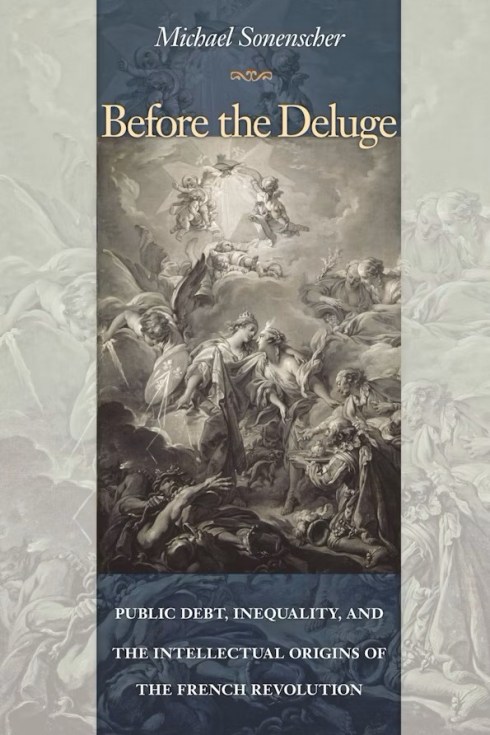
This book by the intellectual historian Michael Sonenscher comes closest to my original understanding of the Après moi quote, and really conveys social perceptions of the coming financial deluge in the later 18th century. It’s more about the “coming” than the “waning” but still belongs in my subgenre. The medieval and early modern “twilight texts” are definitely academic and thus hard going in places, but the interpretations become a bit more accessible with the Friedrich-inspired texts below.

Before the Deluge is about the 1920s and there are several books about the Weimar Republic which mirror its approach in places (I like Weimar Germany: Promise and Tragedy by Eric Weitz) but books which attempt to recreate the pre-World War I mentality seem to me a bit more Friedrich-inspired. Frederic Morton and Juliet Nicolson both have family history to draw on for their social histories of Venice and England before the Great War, and while their works don’t quite approach the dazzling depths of Friedrich’s book, they are both very readable and often poignant. Nicolson’s book is very atmospheric: as I’m not really a fiction reader, for me, The Perfect Summer is the perfect summer read.