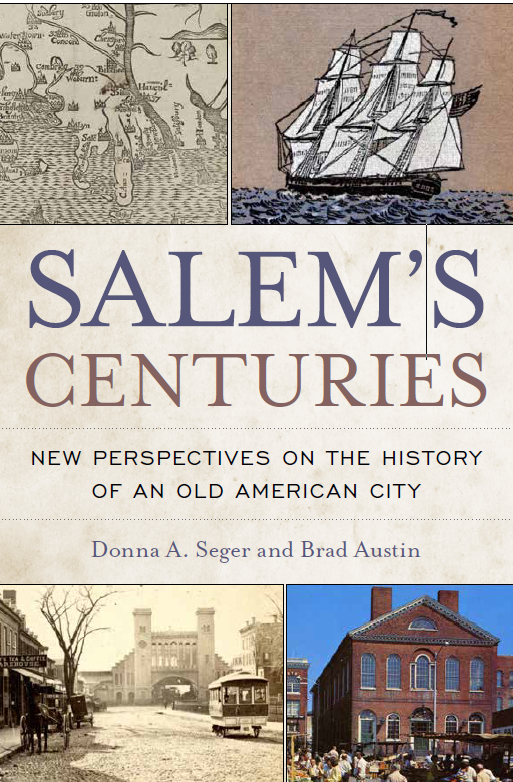
A promotional post today: I’ve got two events coming up at the end of this week and the beginning of next on women’s history in Salem for the close of Women’s History Month. Both are free and all are welcome. The first is on Saturday at Old Town Hall, and very squarely focused on women’s organized philanthropy over the centuries, but particularly in the nineteenth. Because this year is the 400th anniversary of Salem’s European founding, I am going back into the seventeenth century but the nineteenth century is so busy I have labeled it the era of “benevolent activism”! This is certainly not a discovery on my part; anyone who glances at an archival list of Salem sources is going to see that Salem women were really busy in that particular century. So many organizations were founded, and with due diligence, quite a few have survived to the present. We really wanted to include a chapter on this topic in Salem’s Centuries, but it just didn’t happen, so I’m happy to focus in on it now even though it took a bit of work for sure. To tell you the truth, I think all of the women associated with all of the organizations you see on this flyer know the history of their institutions better than I do, so I’m just providing a bit of comparative context and a more sweeping view afforded by four centuries of perspective.


Salem Woman’s Friend Society Collection, Salem State University Archives and Special Collections.
My other event is a bit more about women’s political history in Salem, though I definitely developed an appreciation for how political philanthropic work can be, as well as even more respect for disenfranchised women, when working on the charity talk. Just think about one decade for Salem women, 1920-1920: they provided care during several major epidemics (smallpox, tuburculosis) and relief after the Great Salem Fire of 1914, lost a crucial state vote on suffrage in 1915, participated in several “preparedness” initiatives during World War I and ministered to the sick during the “Spanish” Flu, and then finally won the vote in 1920. Just incredible: I would have been pretty darn mad following that 1915 referendum and retreated to my bedroom or study.


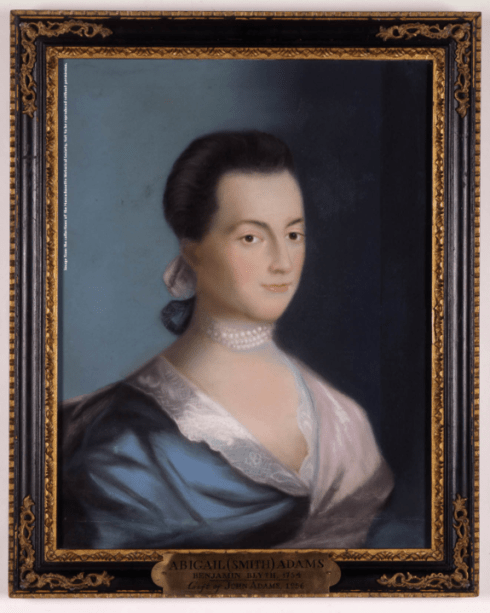
“Remember the Ladies” is a tea at the Hawthorne Hotel on March 31st at 4 (again, free and all are invited) in which I will focus more directly on women’s political activities. As the flyer asserts, the “school suffrage” election of 1879, when women across Massachusetts were allowed to run for, and vote in, elections for school boards, will definitely be a highlight. Salem women really turned out and won four seats, the most in the Commonwealth, and they continued to hold seats right up until 1920 and beyond. But because this is the 400th anniversary, I’m going to go back and forth from 1879. This event is the initiative of my friend Jane, a former Salem city councillor, and she chose the date because it it the 250th anniversary of Abigail Adams’ “Remember the Ladies” letter to her husband in Philadelphia. So I’m definitely going to shine a spotlight on this epistolary moment and also compare Abigail to her near-exact contemporary in Salem, Mary Toppan Pickman. Different women of the same age and time in very similar situations for very different reasons! Both minding the farm and their families while their husbands were absent: John on patriotic business and Benjamin Pickman in London hanging out with other conspicuous Loyalists.


In closing to what I intend to be BRIEF remarks, I’ll move forward to the bicentennial year of 1976, in which the first two women elected to the Salem City Council, ward councillor Frances Grace and councillor-at-large Jean-Marie Rochna, took their seats. Just as those women elected to the School Board in 1879 probably expected the vote a bit sooner than 1920, I bet those women who voted in 1920 likely thought that their city would see a female councilor before 1976, but as we all know, change takes time, and effort. But continuity does too.

I’m not sure if this is the 1976 or 1977 Salem City Council, but it is from the Salem News Collection at Salem State University Archives and Special Collections.
More information for “Organizing Generosity,” March 28, Old Town Hall @ 10: https://www.womansfriendsociety.org/events-1/organizing-generosity-centuries-of-women-supporting-women-in-salem
More information for “Remember the Ladies,” March 31, Hawthorne Hotel @ 4: https://www.eventbrite.com/e/remember-the-ladies-tickets-1985348533909?aff=ebdssbdestsearch