Tag Archives: Art

Back Bay Easter

We were a small party for Easter this year so we went to the St. Botolph Club in Boston for a buffet of oysters, salmon, eggs benedict, coq au vin, and lamb (no ham). This is the artsy old Boston club, and I always enjoy going there because the walls are lined with the work of its members past and present. In the crimson library, there is a portrait of an artist who I became acquainted with through his connections to several Salem artists at the end of the nineteenth century: John Leslie Breck. I’ve come to admire his work over the past few years, and I always “check in” with him whenever I go to St. Botolph’s. Though known as one of the young artists who brought Impressionism to the United States (in successive exhibitions at St. Botolph’s), Breck’s portrait is one of earnest realism: he looks handsome and troubled, or maybe I am just imposing that state on him as I know he ended his own life at the age of 39 in 1899.

Back Bay Easter

Back Bay Easter Dining Room

Back Bay Easter Library

Back Bay Easter Breck

PaintingsbyJohnLeslieBrock1890_0000

I don’t mean to be so maudlin, but that portrait always makes an impression on me. But it was a lovely Easter afternoon with great food and company and a walk down Commonwealth Avenue searching for signs of spring. We found some, mostly man- made, but there were a few flowering buds—we are on the brink! Walking back to the car from the Public Garden, I looked for my favorite version of the three Lutheran solas: I was just lecturing on them in my Reformation class last week, and I took a photograph for some extra validation for/from my students.

Back Bay Easter Box

Back Bay Easter last

Back Bay Easter 4

Back Bay collage

Back Bay Easter 3

Back Bay Gloves

Back Bay Bushes

Back Bay Easter Flowers

Back Bay Solas


First-Period Fantasy

I’ve been obsessed with the Downing-Bradstreet house (which once occupied the site of another current obsession, the Phillips Library) for quite some time: consequently I took advantage of some extra time during this past spring break to dig a little deeper into its history. Actually, the history is easy: it’s the projection that is difficult. We know that this “mansion house” was built by 1640 and demolished more than a century later, but our only image of it was created by a man who was born after its demolition and whose source is unknown:  did it really look like this?

Oldest House Bradstreet-Downing

Wow: that’s a big house with a lot of windows, gables, glass, and finials. What in the world are those “flanking towers reminiscent of feudal days”, in the words of Frank Cousins? Are they made of glass? Indeed they were according to Robert Rantoul’s 1888 essay on the “New Domain” of the Essex Institute, which describes what preceded its buildings on “Downing Block”: it had two massive sets of chimneys and also two transparent, hollow columns of lead sash and diamond glass, great lanthorns (?????), one of either side of the front door, for lighting up the ample grounds in front, and these rose from the foundation to the roof and contained a cupboard-door at each floor of the house for inserting candles or other illuminating appliances on occasion of festivity or other need of light. Wow again. All of this illumination, combined with the scale and detail of the house, makes it appear more like a romantic fantasy of a seventeenth-century house than an actual seventeenth-century structure, especially as it was situated in frontier Salem. This “grate” house, either real or embellished, was built by London barrister Emmanuel Downing, the brother-in-law of Governor John Winthrop, who eventually returned to England leaving the mansion to his daughter Ann as part of the dowry for her marriage to Captain Joseph Gardner, who was killed in the Great Swamp Fight of King Philip’s War in December of 1675. In the following year, the Widow Gardner married Simon Bradstreet, the last Governor of the Massachusetts Bay Colony, whose first wife Anne, America’s first published poet, had died in 1672. Bradstreet returned to Salem (his port of entry to the New World) and took up residence in the Mansion until his death in 1697. Both he and Ann are buried in the Old Burying Ground on Charter Street. The now-Bradstreet House was passed down in the Ropes family for a few generations, but ultimately it was transformed into a tavern (the Globe), divided, and demolished in 1753. The artist of its iconic image, Marblehead painter and muralist Samuel Bartoll (1765-1835) created both the painting above and a similar one of the Corwin (Roger William House in the 19th century; “Witch House” in the 20th) in 1819-1820: what was the basis of his conception?

Bradstreet collage

Bradstreet Witch House BartollFrank Cousins photograph of the Bartoll painting; 1930 Port of Salem map, Boston Public Library & illustration from Lossing’s History of the United States of America (1913); Samuel Bartoll’s Corwin House, Peabody Essex Museum.

I have no answers to the questions I am asking, but it’s still important to ask them, as these idealized (?) images guided so many restoration projects later on. Nathaniel Hawthorne likely saw the Bartoll paintings in Salem: they influenced his vision in the House of the Seven Gables, which later inspired the material transformation of the Turner-Ingersoll mansion into the more “picturesque” House of the Seven Gables by Caroline Emmerton and Joseph Everett Chandler in 1908-1910. Later in the twentieth century, the Corwin House underwent a similar transformation—back (or forward) to the Bartoll vision, with a few less finials.

Bradstreet Bartoll Chairs Julia Auctions

Bartoll Landing of the Pilgrims 1825More idealized American imagery from Samuel Bartoll: Painted Hitchcock Chairs, James D. Julia Auctions; and a Fireboard Depicting the Landing of the Pilgrims, 1825, Peabody Essex Museum.


Salem Women’s Lives in the Phillips Library

As they are now, Salem women were really, really busy in the near and more-distant past, and the records in the Phillips Library are a testament to both the range and intensity of their activities. At this moment, the PEM is highlighting all of the powerful women whose work and lives are featured in their 2018 slate of exhibitions, including Georgia O’Keeffe, artist and facilitator Angela Washco, photographer Sally Mann, and a succession of Qing Dynasty empresses of China. In her post, Lydia Gordon writes about “multiple feminisms” and observes that to operate in feminist modes is not just advocating for women’s issues, but rather to take on the human issues within social, cultural, economic and political arenas of our lives. To be a feminist is to be human. I couldn’t agree more, and while it is wonderful to have all these exhibitions on view here in Salem, once again I am struck by the burying of the local past by an institution which is focused primarily on the more global present. For the collections of the PEM’s Phillips Library are full of women tak[ing]on the human issues within [the] social, cultural, economic, and political arenas of [their] lives, and I’m afraid we’re never going to hear their stories–or see their faces.

Woman Pierce PEMThe lovely Catherine Johnson Pierce, who we do get to see in Salem: anonymous American artist, c. 1828-29, Peabody Essex Museum.

So many activist “Republican Mothers” in nineteenth-century Salem! Here’s just a sampling of women’s association papers in the Phillips Library: the Salem Female Charitable Society Records (1801-2001; MSS 359—still active today!), the Dorcas Society of Salem (1811-1875; MSS 113), The Seamen’s Widow and Orphan Association (1833-1960; Acc. 2011.008); the Salem Female Anti-Slavery Records, 1834-1866; MSS 34—fortunately digitized by the Congregational Library and Archives), the Salem Female Employment Society (1861-1875; MSS 113) and the Salem Thought and Work Club (1891-1974), headed by the famed author and activist Kate Tannatt Woods, who deserves her own archive. In her 1977 article in the Essex Institute Historical Collections, then-curator Anne Farnam outlined the workings of the Salem Female Charitable Society early in the nineteenth century, and also reads between the lines to illustrate what can be gleaned from the more opaque entries, such as the vote of the SFCS on September 2, 1801 from the first published list of subscribers of the society. Mrs. West was in the process of a bitter divorce, and one would like to have heard that discussion. As the century progresses, Salem women’s organizations continue to serve as charity stewards, and widen their social scope to include abolition, temperance, education and immigration.

Women PEM SFCS

WOMEN PEM collage A published sermon for the Salem Female Charitable Society, 1815; and records of the Salem Female Anti-Slavery Society as digitized by the Congregational Library & Archives.

And then there are so many stories of individual women in the Phillips: far too many to include an exhaustive list here. One could: follow a Salem sea captain’s wife along as she accompanies her husband around the world in 1837-38 (Log 405), reconstruct several long-distance marriages by delving into the correspondence between captain’s wives who stayed in Salem and their roving husbands, perceive how several Salem women, from different stations in life, assessed the world around them and their own lives during short and long stretches of time in the nineteenth and early twentieth centuries through their diaries; appreciate the contributions of the extraordinary women of the Remond family (MSS 271), assess the interesting lives and careers of the “Misses Williams” of Salem, two spinster sisters who made, taught, collected and sold art in Salem, and traveled to Italy and elsewhere recording their observations and purchasing items for resale back in their Salem studio/gallery (MSS 253); read cookbooks annotated with notes and suggested variations (MSS 483); examine the unsuccessful restoration of the Qing Dynasty in China from the perspective of three missionaries present at the time (MSS 0.650), learn so much more about the lives and work of so many accomplished Salem women, including Sophia and Rose Hawthorne (MSS 69), educator Elizabeth Palmer Peabody (MSS 474), author, illustrator and educator Lydia Very (MSS 83), authors Kate Tannatt Woods and Mary Harrod Northend (Fam. Mss 1119 and MSS 0.016) and artist and entrepreneur Sarah Symonds (MSS 0.016).

Women PEM Collage 3

Photograph of Waters family members, undated, MSS 92 Volume 4

Women PEM Williams Sisters Studio

Women PEM Very


Women PEM Woods

Cookbook

Synchronicity Sarah Symonds

Studies of the intersection of maritime and gender histories have been trending for some time–but where do the rich collections of the Phillips Library fit in? Women of the Waters Family–all dressed up and ready to go where? (Phillips MH 12); The Studio of the Misses Williams of Salem (Phillips Library photograph from Jacqueline Marie Musacchio’s “The Misses Williams in Salem and Rome: Women Making and Marketing Art and Antiquities.” In The Art of the Deal: Dealers and the Art Market on Both Sides of the Atlantic, 1860–1940, ed. Lynn Catterson, 59-8 (2017); An illustration by Lydia Very, who bequeathed her Federal Street house to the Essex Institute (MSS 83); Kate Tannatt Woods, Out and About (1882); What Salem Dames Coked, the cookbook published by the Esther C. Mack (another amazing woman) Industrial School in 1910, 1920, and 1933 and reprinted by Applewood Books; The “Colonial Studio” of Sarah Symonds on Brown Street, in a building now owned by the Peabody Essex Museum.

As I think about these Salem women on this particular day, in the midst of this particular Women’s History Month, I am dismayed and disheartened when I should be inspired. The sources for women’s history in the Phillips Library are so rich that I have no doubt that they will be discovered and dispersed by a succession of scholars, as many have already (and the digitized catalog and finding aids will facilitate that process), but the prospects for public presentation and engagement seem bleak. As the Phillips collections take up residence in an inaccessible factory, with no obvious digitization plan in place or apparent institutional interest in historical interpretation, it is difficult to see how the people of Salem—or visitors to our “historic city”– will be able to face its history in any meaningful way, like the little girl below.

CurryPhotoTwo-year-old Parker Curry facing Michelle Obama’s portrait by Amy Sherald: a photograph taken by museum visitor Ben Hines which went viral last week, Washington Post.


An Antiquarian Artist

I’ve been thinking about commemoration—past, present, and future–a lot lately, yet another consequence of the constant interplay between what I do and where I live. I’m pretty sure my understanding of English and western European history between 1400 and 1700 is grounded in historical sources, but I’m increasingly aware that my “knowledge” of American history is much more a product of projection than evidence. And as Massachusetts heads into a prolonged period of commemoration for the 400th anniversaries of Plymouth and its successor settlements (including Salem, which will have to “remember” without its hijacked historical sources), I’ve been reading up on the scholarly literature, and just finished We are What We Remember: The American Past through Commemoration, a volume of essays edited by Jeffrey Lee Meriwether and Laura Mattoon D’Amore. Two essays in particular, D’Amore’s “Patriarchal Boots: Women, Redcoats and the Construction of Revolutionary Memory”, and Anne Reilly’s “The Pilgrimization of Plymouth: Creating a Landscape of Memory in Plymouth, Massachusetts during the Pilgrim Tercentenary of 1920-21”, were quite resonant for me, and almost as soon as I was done with them we were off to see commemoration in practice rather than theory: at the annual reenactment of the Boston Massacre by the Bostonian Society at the Old State House. It was interesting to see the “Colonials” mingle with the large crowd assembled: when well-worn revolutionary phrases were shouted out, I heard several individuals wearing capes, cocked hats, and mob caps replying not yet…..that’s from 1774, or 1775.

We are Crop

Boston Massacre 8

Boston Massacre best

This is a really great event but there are too many glaring lights! Can’t we turn off Boston for a half-hour or so? I suppose not, but we should remember that this epic event was clothed in darkness. Even Revere’s iconic print, which is so important a foundation for our collective memory, casts it in light: it’s not until a century later that we see darker depictions. I wanted to see more after the reenactment, so I started looking around, and came up with several references to a painting by Walter Gilman Page (1862-1934), a prominent Boston artist whose commemorative painting of the Massacre was exhibited in 1899-1900. It received strong reviews, but I can’t find the actual painting anywhere–only illustrations and lantern slides. As you can see, it is dark. Where is it?

Boston Massacre Art Exchange 42

Boston Massacre Page

Page was a wonderful portrait artist (best known for his extremely humanist portrait of a dying Grandmother in the collection of the Los Angeles County Museum of Art), and an active member of the Nantucket Art Colony, but he seems to have been particularly passionate about historical paintings: he depicted several other revolutionary events (Paul Revere’s ride, of course) and also reproduced portraits of founding fathers. The 1899 article in the Art Interchange (the source of the illustration above) notes that Mr. Page’s keen interest in American history of the Revolutionary period is indicated by his membership in several historical societies—charter member of the Society of Colonial Wars for Massachusetts, charter member and vice-president of the Massachusetts Society of the Sons of the Revolution, and member of the Bunker Hill Monument Association. He is also chairman of the Tablet Committee of the Sons of the Revolution, whose business it is to mark with properly inscribed tablets the scenes of historical events connected with the War of the Revolution. He has been prominently connected with the movement for art and art decoration in the public schools, and is chairman of the Committee of Massachusetts’ Artists for the Paris Exposition of 1900. Artistry and memory: a winning combination, from time immemorial.

Antiquarian Artist Hutchinson.JPG 1900

Antiquarian Artist HancockWalter Gilman Page’s portraits of Thomas Hutchinson (1900, copy of the 1741 portrait by Edward Truman), Commonwealth of Massachusetts, and John Hancock (1906, after John Singleton Copley, Skinner Auctions).


March On

The first of March: a notable historical day from my own geographical perspective, as it marks the anniversaries of both the incorporation of the first English “city” in North America, my hometown of York, Maine (in 1642), and the commencement of the most dominant event (unfortunately) in the history of my adopted hometown of Salem, Massachusetts: the Witch Trials of 1692. March is also one of my favorite months, so I always wake up happy on its first day. I am sure that this is a minority opinion among my fellow New Englanders, for whom March is generally perceived as the muddiest month. It certainly can be muddy here, and cold, snowy, rainy, dark, windy, and raw. But it can also be bright (like today) with a brilliant sun that seems to highlight the material world in stark detail. It is the month of all weather, and also a month of transition. That’s what I like about it:  you are heading somewhere in March (towards spring); you are not already there (like winter or summer). I like to be en route, in transition, looking forward, in the process—and March feels like that to me, all month long. If you look at magazine covers from their turn-of-the-last-century Golden Age, advertising artistry rather than celebrity, many seem to convey that movement, if only to depict the wind. At least those that don’t feature rabbits.

M27740-26 001

March Harpers 1895

March 1896 2

March Inland Printer 1896

March Black Cat

March 1897

M33739-10 001

March Scribners 1905

M33739-1 001

March covers from 1895 (2); 1896 (3);1897; 1900; 1905 & 1907; Swann Auction Galleries, Boston Public Library, and Library of Congress.


Topsy-Turvy

I find myself these days full of feelings of dissent and resistance but looking for more whimsical ways to express the same, as you can’t be strident all the time. It’s boring, and exhausting. So a flashing reference caught my attention, to a dinner party in Baltimore in February of 1777 attended by two of the most strident people in history: John and Samuel Adams of Massachusetts. The next day, John noted in his diary [II, 434]: Last evening I supped with my friends, Dr. Rush and Mr. Sargeant, at Mrs. Page’s, over the bridge. The two Colonel Lees, Dr. Wisherspoon, Mr. Adams, Mr. Gerry, Dr. Brownson, made the company. They have a fashion, in this town, of reversing the picture of King George III in such families as have it. One of these topsy-turvy kings was hung up in the room where we supped, and under it were written these lines, by Mr. Throop, as we are told: Behold the man, who had it in his power/ To make a kingdom tremble and adore, Intoxicate with folly. See his head Placed where the meanest of his subjects tread. Like Lucier, the giddy tyrant fell; He lifts his heal to Heaven, but points his head to Hell.

George III

King George III by Nathaniel Dance-Holland, National Trust, Uppark

Well I like this “fashion”, and can certainly think of one or two people I’d like to turn upside down at the moment. I’m sure we all can. Apologies to my British friends: I couldn’t find an image of a Baltimore dining room with a topsy-turvy portrait of King George, so I simply turned him upside down myself. But we must note that like so many of their revolutionary sensibilities, the new Americans were simply following a British example: in this case the “world turned upside down” sentiments of the English Revolution in the previous century. The leader of that revolution, Oliver Cromwell, was himself turned upside down when an Indian monarchist of the Victorian era purchased his portrait and displayed it topsy-turvy in a delayed protest of the regicide: the Inverness Museum and Art Gallery followed suit when it acquired the portrait, and Tate Britain when it exhibited it. Another topsy-turvy ruler is Philip V of Spain, whose portrait is traditionally upended in the Almodí Museum in Xàtiva, in retribution for the burning of the city at the close of the War of the Spanish Succession.

Topsy Turvy Tate cromwell_for_web_0

Robert Walker (in the style of), Inverness Museum and Art Gallery

Topsy Turvy King 2

The first Bourbon King of Spain, Philip V.

Later in the eighteenth century and into the nineteenth, the upside-down, topsy-turvy motif was mostly used in a satirical or critical way, the point having been established: “it is monstrous that the feet should direct the head” (in the words of my favorite queen, Elizabeth I, to make up for turning George III upside down) or something’s not right here. There was also a two-sides-of-the-same-coin message in some topsy-turvy images, as well as a general sense of we’re being tossed about/PLAYED. That’s how I feel.

topsy turvy collage

TOpsy Turvy Economy 1979 Jean-Michel Folon Smithsonian NPGTopsy-turvy “Talons” Kaiser Wilhelm I and Emperor Napoleon III, 1878, Victoria & Albert Museum; the Topsy-turvy Economy, 1978, Jean Michel Folon, Smithsonian/National Portrait Gallery.


Hastened Hearts

I have always focused on hearts for St. Valentine’s Day and this year will be no exception: even in the midst of my Phillips frenzy. Actually, I could showcase some Phillips materials because for some reason, among the thousands of materials in its possession, the PEM in all of its wisdom has chosen to digitize valentines, as opposed to, say, invaluable records about the trades in pepper, or opium, or slaves, or all the papers of Nathaniel Hawthorne’s family. But featuring these scraps would be too easy; and I’d rather leave Salem for a while and go back to a more distant and detached time: the Renaissance. There and then we find a man literally draped with titles: René of Anjou, Count of Provence, Duke of Anjou, Bar and Lorraine, and (titular) King of Jerusalem and Sicily, who was associated in one way or another with all the celebrated figures of the fifteenth century: he carried on an influential correspondence with Cosimo de Medici, was comrade-in-arms with Joan of Arc, fathered a Queen of England, and commissioned Christopher Columbus. “Good King René” was in many ways the perfect Renaissance Man, not only for his associations but also for his activities: in addition to his military and political roles he was also a noted author and patron of the arts. The Angevin Duke idealized courtly life and love in several compositions, including Les Coeur d’ Amours Espris, which is alternatively translated as The Book of the Heart Possessed/Seized by Love or (my favorite), The Book of the Love–Smitten Heart (1457).

Heart 3

Heart 5Bibliothèque nationale de France, Département des manuscrits, Français 24399

I think there are six extant copies of the manuscript, to which the illuminations were added later. Above is text from the manuscript in the Bibliothèque nationale; there is another in the Austrian National Library (Codex Vindobonensis 2597), with illuminations by Barthélemy d’Eyck. Both are beautiful in their variant ways, as the heart-sick Duke narrates a dream journey of the Knight-Heart (wearing a spectacular helmet festooned with winged hearts), in league with Desire and in search of his lady, Mercy. There is trouble along the way, of course, including an encounter with the truly monstrous dwarf, Jealousy. A more aesthetic moment occurs when the Knight-Heart is rescued from the River of Tears by Hope, having been deposited there by Melancholy.

Heart collage

heart 2collage

The tone is sentimental throughout, but things lighten up at the end of the French manuscript, in which hearts are picked, lassoed, espaliered, caged, and in one way or another, captured, trained, and no longer allowed to run free. And here you have perfect valentines for René’s time–and ours.

Heart 25

Heart 28

Heart 3 collage

Hearts 27

René_d'Anjou_Le_livre_du_[...]_btv1b60005361He awakes, and immediately writes down his dream. …which is all here!


Home, Hearth & History

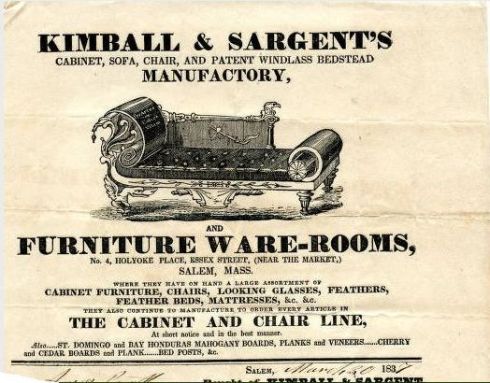
I’m really looking forward to an upcoming exhibition at the Concord Museum: Fresh Goods: Shopping for Goods in a New England Town, 1750-1900, offered as part of a state-wide MASS Fashion collaborative project which will include a fall exhibition at the Massachusetts Historical Society guest-curated by my Salem State colleague Kimberly Alexander: Fashioning the New England Family. I thought I had fashion fatigue, because there have been so many clothing-based exhibitions over the past few years, but these exhibitions look a bit different to me—there’s something more active and engaging about the words shopping and furnishing. Instead of just being wowed by the artifacts, we can learn how and why they came to be created and acquired, processes that involved not just cultural considerations, but also economic and social factors. If I were a curator, I think I would like to create a similar exhibition focusing on home furnishings, because that could offer up insights into so many crafts, industries, and distributors—especially over the nineteenth century as households were affected increasingly by market forces. Recapturing and representing colonial “hearths and homes” and “daily life” were Colonial Revival preoccupations over a century ago; I think we could do with a refresh–and an expanded chronological focus.

Home Furnishings BA 1869

373 Essex Street Joseph Ropes©Boston Athenaeum and Phillips Library, Timothy Ropes Papers (MSS 365).

I imagine there are two approaches to researching the history of household furnishing: presume by utilizing prescriptive materials like trade catalogs and books on contemporary home decoration, or establish through receipts, diaries, and accounts. There are certainly lots of collections of the former, at the Smithsonian, here, and the Winterthur Library, to name just a few sources. Individual household accounts are more decentralized, of course, and for Salem we would be quite dependant on the collections of the Phillips Library: the marvelous hand-drawn sketch by Joseph Ropes of his bedroom at 373 Essex Street above was included in a blog post published by the library which is no longer available, but I was so taken with it I snipped it right up, fortunately. Imagine researching the furnishing of just this one room: that odd stove, so many chairs, the textiles on the bedspread and chair? Wherever they end up, and hopefully digitized, all those family papers in the Phillips have such a wealth of information within—capable of tracing the history of decades of the China Trade and a single year in the material life of one Salem household. But until they see the light of day, we have some other sources: the Winterthur Library’s digital collection of ephemera will not enable me to source Joseph Ropes’ room, but it can give us a few glimpses into Salem’s material past.

Home Furnishings 1801

Liverpool War NA 2

Home Furnishing Waters

Waters

Home Furnishings 4

Home Furnishings 2

Printed_bill 1862

Home Furnishings 3

Home Funishings

A crate of Liverpool Ware for Mr. Nathaniel Burnham (?), 1801; perhaps a pattern such as this (Northeast Auctions)? Andirons and a Kettle for Captain John Waters and the Captain himself (Northeast Auctions); furniture for another Mr. Waters, 1861; 14 yards of black silk for Mr. Goodhue; pillow and furniture manufacturers in the 1880s, Winterthur Library.


Art vs. History: a False Dichotomy

Over the last three weeks, as I have listened to the public discourse surrounding the Peabody Essex Museum’s reluctant announcement that it was planning to house the Salem-dominant collections of its research arm, the Phillips Library, in a vast collections center (encompassing both archives and objects) in Rowley, I have heard a constant refrain: the PEM doesn’t want to be a history museum. They are only interested in art (That’s why they are taking/hiding our history away). I’m not sure this is entirely true, but if it is, it is a stance that is based on a false dichotomy, because these two disciplines are not incompatible or in competition: art is history and if done well, history is an art.

Art and History Vermeer.jpg Vermeer’s Art/Allegory of Painting, Kunsthistorisches Museum: featuring Clio, the Muse of History. 

Several PEM exhibitions in recent memory have featured historical components, from the wonderful Samuel McIntire: Carving an American Style (2008) to Asia in Amsterdam: The Culture of Luxury in the Golden Age (2015) and even the Victoria & Albert traveling show, Shoes: Pleasure and Pain (2016-2107) featured a few placards on the regional shoe industry when it made its pitstop at the PEM. But I can understand why my fellow Salemites feel that their history is being ignored by the very institution that has the responsibility of stewarding it. The Museum seems to have an ever-increasing appetite for gallery space, always justified by its large collections, yet we seem to see more of other Museum’s collections in these showy spaces. The Phillips print and manuscript collections, along with all of those unseen objects, are now on a slow boat to Rowley: one wonders if it was possible to move the historic houses also entrusted to the museum whether they would be on their way too. I don’t really think so, but I like to force the connection between textual and material history.

ropes-renovMoving the Ropes Mansion back a few feet in the 1890s.

As I looked back at PEM exhibitions over the past fifteen years or so, all of which I have seen and enjoyed, I gradually came to an awareness that the PEM does indeed “like” history, just not local history. There has been a great emphasis on Asian history certainly, and European history, and Native American history, but local history, not so much. I wonder why this is so, given the museum’s focus on connections: doesn’t it want to connect with its local audience? All of its engagement initiatives seem to have been focused on entertainment rather than exhibits: the monthly Thursday PEM/PM events, free to all Salem residents, but ending this very month. Everyone says: I enjoyed it [insert exhibition, particularly blockbuster variety] for an hour or so, but that’s it. No need to go back again. I myself clung to just one poster in the recent Ocean Liners: Glamour, Speed and Style exhibition, Boston-published, depicting the watery grave of Lusitania victims.

pem-enlist-loc Library of Congress.

So let’s work with this image–its meaning and its power. We are in the midst of the centenary of World War I, a major turning point in world and American history. Museums across the country (and across the Atlantic, of course) have produced exhibitions focused on this epic event, including art museums like the Museum of Fine Arts in Boston and the Metropolitan Museum of Art in New York City. The latter’s World War I and the Visual Arts encompasses all artistic mediums to present a cultural history of the conflict drawn from their own collection, while the MFA’s show focused on propaganda and recruiting posters similar to Fred Spear’s evocative Enlist above. Despite 18 boxes of World War materials in the collection of the Phillips Library (processed with the support of a federal grant from the National Historic Publications and Records Commission but currently inaccessible and undigitized), the PEM offered up shoes, wearable art, horror movie posters and ocean liners in the centennial year of 2017: all fun and visually-stimulating exhibitions, but can we really engage in a thoughtful exploration of the human experience through these topics?

Art and History HassamChilde Hassam, Avenue of the Allies, Great Britain, 1918, Metropolitan Museum of Art.

I see the PEM’s reluctance to delve into local heritage as tragic for Salem, which is left to the devices of market-driven Halloween “history”, but also for the museum itself, which is losing out on an obvious way to connect to its local audience on which its future is surely dependent at least in part—it can’t be all about big donors, can it? (Maybe it is). In its rationale for not reopening the Phillips Library in Salem, the PEM pointed to declining patronage by Salem residents, but this was surely a self-fulfilling prophecy fueled by declining hours and programming based on the library’s collections. A reopened and revitalized Phillips Library reading room, serving as a nexus for introspective examinations of greater Salem’s experiences in the contexts of global, national, and local history, could serve as a draw for both locals and tourists. Even though history may seem “dusty” to some, the public’s interest in heritage is both universal and increasing: with many state and local history museums reporting upswings in attendance all over the country in the last few years and record-setting crowds flocking to the Smithsonian’s National Museum of African American History and Culture in just its first year. And here in Massachusetts, with a statewide celebration of the 400th anniversary of the Plymouth landing in the works for 2020, the Museum–and its Library– in the midst of the other prominent Puritan colony will find itself very much in demand.

MA400-Mayor-Panel A panel of mayors, including Kim Driscoll of Salem, at the Massachusetts 400 Forum in 2016.


Three Golden Balls

In Salem, December 5 has been celebrated as krampusnacht more often than St. Nicholas’s Eve over the past few years, but I’m following up on a post about the latter today. I want to connect the forerunner of Santa Klaus to pawnbrokers, through the symbolism of three golden balls. This is not an original association, but a reader referenced it several years ago, and I always wanted to connect the dots, so this day seems like a perfect time to do it! I think that the traditional pawnbrokers’ sign of three golden balls attached to a (straight or curved) bar is recognized universally in the west, or at least in Europe: here’s a John Crowther watercolor of Aldersgate Street in London in 1886 with both a traditional symbolic trade sign and a sign of the trade sign, and a photograph from Jeremiah’s Vanishing New York of an old pawnbroker’s sign that is apparently about to vanish—it might be already gone.

Three Golden Balls John Crowther

Pawnbroker sign NYC John Crowther, Aldersgate Street, London, 1886, Guildhall Library; the trade signs of the defunct S&G Gross Pawnbrokers in New York City from Vanishing New York.

Nearly everyone traces the origins of the three balls back to the Medici family for several reasons: the Medici crest features balls (palle) prominently, their financial roles in Renaissance Europe, which can somehow (not at all clear to me) serve as a predecessor for pawnbroking, and the fact that they were Italian, like the Lombards who became the first Christian moneylenders in medieval Europe, when usury (charging interest for a loan of money) was expressly against canon law. There is also an old yarn about a monster, Charlemagne, and the balls representing defensive dings in a shield, adopted by the Medici as proof of their valor, but I don’t think I need to delve too deeply into that tale. The Medici had as many as twelve balls on their crests before the fifteenth century, when they finally settled on six. Not three.

Three Golden Balls Medici MS 15th CThe Medici Crest with its distinctive six palle on the leaf of a 15th Century MS of Propertius, Elegies, Oxford University Bodleian Library MS Canon. Class. Lat 31.

Raymond de Roover, a prominent mid-century medieval economic historian, wrote a short article just after World War II in which he asserted a general connection between the heraldry of all of the moneylending families of late medieval Europe, each and every one featuring spheres on their crest to symbolize coins, and modern pawnbrokers’ signs. He discounts a distinct Medici connection, but also the St. Nicholas one that I favor, with the argument that such a marginal occupation as moneylending (and by association, pawnbroking) could not possibly be associated with as esteemed a saint as St. Nicholas of Bari (or more correctly, Myra), who was known, even beyond the expectations of your average saint, for his charity. But I believe that Professor de Roover is incorrect: perceptions of St. Nicholas clearly focus on the ball symbolism later associated with pawnbrokers, and one of the key links between these two disparate entities is the dowry, an absolute requirement for every Renaissance bride. The most famous example of St. Nicholas’s generosity, depicted time and time again by nearly every Renaissance artist, is the aid he gave to an impoverished family of three daughters of marriageable age: under cover of darkness he threw three purses (increasingly depicted as golden balls) through the window so that the girls would have dowries and avoid destitution or even worse, prostitution. From the mid-fourteenth century through the sixteenth, this scene is played out again and again on canvas: the paintings below represent the beginning and the end of this era–during which St. Nicholas was always pictured with his identifying attribute: the three golden balls.

Three Golden Balls SCALA_ARCHIVES_10310197649 1340s

Three Golden Balls ANGLIG_10313766773

Three Golden Balls AGETTYIG_10313913291Crivelli 1469

Three Golden Balls ANGAIG_10313967631 Paolo Veneziano, The Charity of St. Nicholas, 1430-45, Galleria degli Uffizi; Girolamo Macchietti, The Charity of St. Nicholas of Bari, c. 1555-1560; National Gallery of Art, London; Taddeo Crivelli, St. Nicholas, 1469, J. Paul Getty Museum; Sebald Beham, Saint Nicholas, National Gallery of Art, Washington, D.C.

This same period is also one in which public institutional charitable funds emerged, first the famous Monte delle doti, which enabled Florentine fathers to invest in the city’s public-funded debt and ensure a sufficient dowry when their daughters were of marriageable age, and later in the fifteenth century the Monte di pietà, a form of public-administered pawnbroking designed to provide an alternative to avaricious private moneylending. The Florentine state, and other states as well, were quite willing to engage in official lending, especially if it could finance its public debt and alleviate a pressing social concern at the same time. With its system of collateralized lending and low interest rates, the Monte di pietà, in particular, represented a beneficial Christian form of lending in contrast to the old Lombard system, inspired and reflected by all those images of the three-ball-bearing St. Nicholas, who eventually became the patron saint of pawnbrokers.

Three Golden Balls HGP 342650 (1) Canterbury

Three Golden Balls Boston Leslie JonesCoat of St. Nicholas on the Christ Church gate of Canterbury Cathedral, @Neil Holmes; Leslie Jones photograph of Boston pawn shop signs in the 1920s, Boston Public Library.