Well I have to admit that I’m feeling pleased with myself this week as I have finished a challenging on-line semester of four courses while writing a book, my blog has reached its 10th anniversary, and I’m wrapping up my #SalemSuffrage Saturdays! Pardon my boasting, but sometimes you must indulge yourself. I’m really proud of the blog: I think that there is a lot here; I’ve certainly learned a lot while writing it, and that was my primary reason for starting it in the first place. Salem’s history is so deep; I don’t know if anyone can really scratch the bottom, and it is also wide-ranging, consisting of much, much more than the Witch Trials and the China Trade. Certainly this year’s focus on women’s lives has underscored that point, with its artists and authors, abolitionists and suffragists, physicians and shopkeepers, students and teachers. It’s been a bit challenging trying to draw out the details of some of these women’s lives in this particular year, but I’ve learned to be creative as Salem’s primary historical repository has been out-of-town and off-line for most of this blog’s life. Nevertheless there are holes and gaps and lots of work to be done to put together a cohesive and comprehensive history of Salem women’s lives. Before I end this year’s deep dive, I wanted to offer up something about women’s charitable roles in Salem: this is a topic with great continuity, as Salem women continue to be extremely active in charitable institutions, some of which are still extant after decades, or as in the case of the Salem Female Charitable Society, centuries. This is also a HUGE topic: the roles which Salem women played in institutions such as the Salem Children’s Friend Society, the Seaman’s Widows and Orphan Association, the Woman’s Friend Society (still with us), and the Salem Woman’s Club, just to name a few, were a really important part of civic life in Salem. For the most part, it’s only possible to write about this form of women’s work on very general terms, but we can get a bit more personal about the founder of Salem’s first woman’s charity, the Salem Female Charitable Society (SFCS), because of the remarkable obituary written by her friend, Mrs. James King. I’ve NEVER read so long an obituary of a woman in this era, much less written by a woman. Lucretia Ward Osgood must have been an extraordinary woman.


I love this, particularly the line she had the happy faculty, while she derived pleasure from the company and converse of others, to make them unusually pleased with her, and happy in themselves. Who doesn’t want that faculty? Yes, she was a good mother and Christian but we get some insights into her personality as well, which was obviously charming. These antebellum charitable societies get criticized later on for not lifting the poor up very far—essentially for training servants—but this is not the time nor the place to get into that. Lucretia and her fellow society ladies put themselves out there, got organized, dispensed charity, and impressed contemporaries like the Reverend Thomas Barnard, who spoke at their first anniversary in 1803: Ye, my female friends, feel her Spirit! In all the forms of society ye make your publick appearance: With your Directresses, Managers, and Members: With your Governess, and the Children of your affectionate charge! When ye first formed, I will confess to you, I, with many others whose judgement I respected, felt averse to your society. We thought Charity might be better ordered. But upon a deliberate view of your Constitution, I change my opinion. In the following year, the Salem Female Charitable Society was formally incorporated by Massachusetts law, and it remains so.


 Advertisements in the Salem Gazette and Register, 1821-1853: Cambric and Bombazine dresses from MoMu: Fashion Museum Antwerp and the Metropolitan Museum of Art.


 Salem Register, January & July 1862; South Peabody Wizard, January 1869; Newburyport Daily Herald, November 1886.


 Boston Post 13 February 1903


 Boston Sunday Post, February 3, 1918 & Boston Sunday Globe, April 7, 1918.

 The standard war-time recipe for grape “catchup”, sometimes called catsup and later ketchup: it evolves into a relish over the twentieth century, but earlier in the century there were many different types of catchups: cranberry, mushroom, any fruit or vegetable really, and it was recommended that such sauces be served with roasts. I bet Mrs. Gibney had a more economical recipe for her grape catchup as 2 pounds of sugar would have been very dear in 1918.
 We just discovered that Hamilton Hall served as a Surgical Dressings center for the Salem Red Cross in the summer of 1918, so Mrs. Gibney might have worked there—my attempt at a ghost sign for the Hall!


 Five Barton Square, Sarah’s birthplace, in 1904 by Frank Cousins from his Colonial Architecture in Salem (1919); Oak Hill in the early twentieth century, Peabody Institute Library; Five Summer Street (left), Sarah’s home after 1850, in a 1890s photograph by Frank Cousins, Phillips Library, Peabody Essex Museum via Digital Commonwealth.

 New York Times, March 9, 1862; C. Mathias, “General Lander’s Funeral March”, Library of Congress


 Spectacles: Boston, St. Petersburg, Zurich, “Pekin”.




 Advertisements from the Boston Evening–Post; 1731 portrait of Benjamin Lynde Sr. by John Smibert; Diary entry and will excerpt from The Diaries of Benjamin Lynde and of Benjamin Lynde, Jr. (1880). I’m using the “Otis Map” or the “Map of Salem about 1780,” based on the Researches of Sidney Perley and the (contemporary) accounts of Col. Benjamin Pickman & Benjamin J.F. Browne with Additional Information Assembled by James Duncan Phillips and Henry Noyes Otis and drawn by Henry Noyes as my old-school working map and adding Xs as I uncover information from newspaper ads, censuses, and diaries–but there are still a lot of family papers to go through.


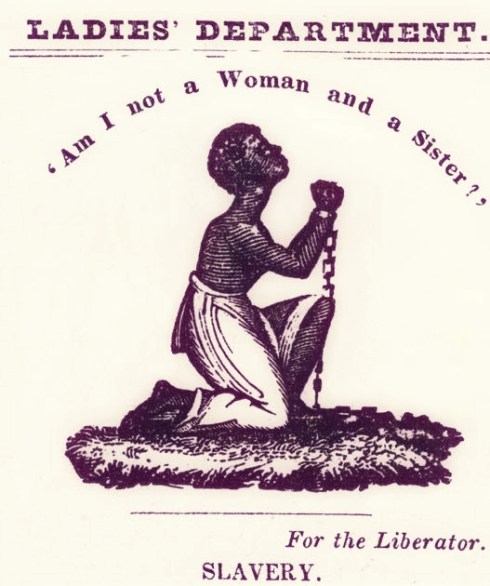
 Just one petition with Remond signatures from Harvard University’s Anti-Slavery Petitions of Massachusetts

 Charlotte Forten and Maritcha Remond Lyons, who was named after her mother’s best friend, Maritcha Remond. You can register for Race, Gender and Education: a Dialogue Linking Past and Present, a complimentary event,

 Part of the African–American Trail Project at Tufts including an evening last fall in which