For this #salemsuffragesaturday, a look at the contest between Massachusetts suffragists and anti-suffragists at the turn of the last century, with particular reference to the Massachusetts suffrage referendum of 1915. Though Massachusetts had (and still has) a well-deserved reputation for progressiveness, it was (and still is) a very traditional state, and has the distinction of producing one of the earliest and strongest anti-suffrage organizations in the later nineteenth century: the Massachusetts Association Opposed to the Further Extension of Suffrage to Women, founded in 1895 (on the foundation of an earlier association, established right after the notable school suffrage victories in 1880). Like their opposition, the Massachusetts Woman Suffrage Association, the Anti-Suffragists had a central office in Boston, and branch committees throughout the state, including Salem. By 1915, their periodical, The Remonstrance against Woman Suffrage, claimed to represent the views of anti-suffragists around the country as well as the over 33, 000 Massachusetts members in 423 municipalities and 130 branch committees. They rallied all of their resources and members to defeat suffrage in the 1915 referendum, thus winning a significant battle but not, ultimately (and fortunately!) the war.


One has to do some real historical reorientation to understand the anti-suffragist position, as it is contrary to everything we believe now. As professed by both men and even more stridently by women, it centers on the family within the home, the natural domain of women, and where they were empowered to make their most important contributions to society. In order for society to function in an effective way, separate spheres for men and women must be maintained: public affairs for men; domestic life for women—and domestic life was perceived as the “higher” sphere. Suffrage would impose civic responsibilities on women which they did not seek or need: as you can see from The Remonstrance above, the message was that the vote was being imposed on women by a radical minority of their gender. It gets a bit more complicated (and confusing!) when you consider that many Anti-Suffragists were active club and society members, striving for moral, educational, and social reforms outside the home: one would think that their various missions would be aided by suffrage, but somehow this was not the belief. When I look at the list of Salem women who were members of the city’s anti-suffrage committee, I recognize familiar names of active women: Mrs. Edward C. Battis, Miss Sarah E. Hunt, Mrs. S.E. Peabody, Mrs. John Pickering, Miss P.M. Waldo, Mrs. William Rantoul, Miss Anna L. Warren and Miss Ellen Laight. I also realize that these women who lived right next to women who were notable Suffragists, so there must have been some interesting neighborhood discussions! More specifically and alarmingly, the Anti-Suffragists expressed their fears that votes for women would lead to discord in the existing marriage relation, which would tend to the infinite detriment of children, and increase the alarming prevalence of divorce throughout the land, and made associations between suffrage and socialism, Mormonism, and pro-German sentiments during World War I.


The Anti-Suffragists wrote and distributed flyers and pledge cards, published their newspaper, and held rallies and other public events, just like the Suffragists, although their meetings were clearly less numerous and less open: the committee’s records, among the digital collections of the Massachusetts Historical Society, reveal an apparent desire to control the interplay and messaging of public events. They adopted the red rose as their symbol from the beginning—a contrast with the suffragists’ yellow sunflowers and roses—but utilized it with increasing intensity from 1914 on, in their initiatives aimed at the defeat of the 1915 referendum. As Election Day of 1915 approached—and particularly the big Suffrage Parade planned for October 16— the efforts of the Anti-Suffragists became more focused and more public, with a big showdown on Parade Day, when over 100,000 red roses draped individuals and structures lining the street as the Suffragist marchers, wearing yellow banners and/or roses, walked by.


And a few weeks later, a terrible defeat at the polls for Massachusetts Suffragists: with nearly 65% of Massachusetts men voting against universal suffrage. Salem’s return mirrored that of the Commonwealth. Both the Suffragists and the Anti-Suffragists continued their efforts, with the former focusing on the national campaign and a constitutional amendment. Massachusetts became the eighth state to ratify the 19th amendment in June of 1919, and it became law in August of 1920 when Tennessee’s legislature ratified it by one surprising vote: that of first-term representative Harry T. Burn, wearing a red rose on his lapel, who voted “aye” upon the very personal plea of his mother.

Image sources: Ann Lewis Women’s Suffrage Collection; Library of Congress (The Anti-Suffrage Rose); Schlesinger Library, Harvard (Margaret Foley with “the RoseStands for Chivalry sign); Bryn Mawr College Suffrage Ephemera Collection(yellow banner and flower). Newspaper clippings: Boston Globe, 1914-1915.





 2020 Suffragists in the Rose Bowl Parade, Getty Images.


 Helen Hagar in 1915, courtesy the Local History Resource Center at the Peabody Institute Library. After her graduation from Peabody High School that year, Miss Hagar moved to Salem and lived there until her death in 1984, working for the Society of the Preservation of New England Antiquities and then the National Park Service to live in and conduct tours of the Derby House. She became an expert on traditional stenciling, and lectured and taught on its history, as well as producing some of her own stenciling work on tole and wooden objects and partnering with various antique dealers like Ethelwyn Shepard (flyer courtesy Historic New England). A cross stitch pattern by the Jenny Brooks Company, located at One Cambridge Street, Hagley Museum & Library.


 Goldthwaite & Shapley, Dressmakers, 269 Essex Street, Salem. Andrew Dickson White Architectural Collection, Cornell University Library.

 Needlework Sampler by Naby Dane (b. 1777), Sarah Fiske Stivours School, Salem, Massachusetts, Dated 1789, Sotheby’s; 6 Forest Avenue, Salem.

 Waters-Sigourney Dress and Southworth Hawes Daguerreotype, Museum of Fine Arts, Boston.


 My favorite pre-restoration print of the House of the Seven Gables, 1889; prints by two women artists—Mary Jane Derby (North Salem) & Ellen Day Hale (Corner of Summer, Norman, and Chestnut Streets, where now we have a traffic circle!)–and pioneering lithography firms from the Boston Athenaeum’s Digital


 Prints of the James Emerton Pharmacy in the Phillips Library of the Peabody Essex Museum and the Salem Directory; Seccomb Oil Works billhead, Salem State Archives and Special


 Illustrations of Salem architecture from Here and There in New England and Canada, The Georgian Period, and Houses in America.


 Fashion plate from La Moda Elegante Ilustrada, December 6, 1919, Fashion Institute of Technology; Georges Barbier’s “les belles Sauvagesses de 1920” from Le Bonheur du Jour, ou, Les Graces à la Mode, Virginia Museum of Fine Arts; Vogue covers and sketches from December 1919.


 House of Lanvin evening dresses, 1920,


 Both the Historical Collections and the American Neptune are available at the Internet Archive thankfully, as they are treasure troves!
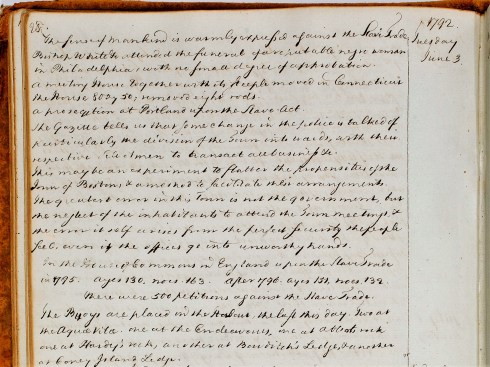 A page from the original Bentley Diary at the American Antiquarian Society, @AAS.


 The “current” editions of the Pynchon (1890) and Lynde (1880) Diaries; William Price Shreve (photo courtesy Brian White); Chestnut Street etching by Harriet Francis Osborne; Dr. Holyoke’s house on Essex Street from The Holyoke Diaries (1911)—-demolished in 1895 for the construction of the Naumkeag Block.


 Philip Godfrid Kast’s advertisements for Turkey figs in the 1770s and his 1774 trade card, American Antiquarian Society; Figs for sale in Salem, 1804-1829.

 J.C. Forkner Fig Garden recipes, 1919 & California Fig Syrup Co. advertisement, Wellcome Library.


 An advertisement for Durgin Park in Boston, which always featured Indian Pudding and closed just this year, from Historic New England, and a typical “old New England” recipe card featuring IP (not one of my recipes—I’m egg-phobic so I always bake the eggless varieties).


 Alpheus Crosby and several (not all!) of his equally successful siblings, the sons of Dr. Asa Crosby of Sandwich, New Hampshire. The Normal School at Salem on Broad and Summer Streets during Crosby’s tenure, c. 1857-1865, Salem State University Archives; just a few of the Salem institutions to which Alpheus Crosby volunteered considerable time: the Salem Lyceum, the Salem Athenaeum (then at Plummer Hall) and the Essex Institute, Cousins collection of the Phillips Library of the Peabody Essex Museum via Digital Commonwealth; Professor Crosby’s bestselling series of Greek textbooks, 1860.


 Post-“retirement”: advocacy for radical reconstruction and “impartial” suffrage, 1865-66, Library of Congress; just one donation to the Normal School at Salem. 111 Federal Street in Salem, the residence of Professor and Mrs. Crosby, along with Amy Lydia and Lucy B. Dennis, during the 1860s.