Tag Archives: Architecture

Most Endangered 2013

My affection for history was fostered by places and buildings; it’s very material. And while I appreciate and am often awed by nature, I find the built landscape more accessible–and instructive. I’ve been an ardent preservationist since my teens, and am just passionate (geeky) enough to actually anticipate the release of the National Trust for Historic Preservation’s annual Most Endangered Places list every year. Yesterday brought the big announcement of this year’s list, which includes two New England properties with which I am familiar and nine more which I’m eager to see (most of them anyway, before they disappear). I have helped to create similar lists for our local preservation organization, Historic Salem, Inc., and if our deliberations are any indication, this list is the result of an intensive process:  you have to choose places that are threatened but are not too far gone, that possess the potential for recovery, there are always political factors involved, and historical and/or cultural significance has to be readily apparent. I’m sure the National Trust also has to take into account regional representation, as their Most Endangered Places are generally spread all over the U.S. map.

New England Most Endangered Places: Gay Head Lighthouse, Martha’s Vineyard, Massachusetts, and the Abyssinian Meeting House, Portland Maine.

Most Endangered

The Gay Head Light, Aquinnah, Martha’s Vineyard, Massachusetts, is threatened by erosion: it’s about 10 feet away from falling over the cliff. It’s wooden predecessor was faced with the same threat in 1844, and this brick structure, outfitted with a first-order Fresnel lens, dates from the 1850s.

OLYMPUS DIGITAL CAMERA

The Abyssinian Meeting House in Portland, Maine was built in 1828 to serve as a school and assembly house for Portland’s African-American community, and it also served as a stop on the Underground Railroad. It is the third oldest African-American meeting house in the country, which is amazing to me given its northern location. If you visit the Abyssinian Restoration Project website, you will see that an intensive preservation effort is ongoing; all they lack is resources.

Properties threatened by Development: The Village of Mariemont, Ohio, and the James River, Virginia.

Mariemont_619x350

The Village of Mariemont  in Ohio, a Tudor Revival planned community built in the 1920s, is threatened by highway construction. Of all the threats to historic structures, infrastructure development bothers me the most, because it is often short-sighted. Salem was faced with the threat of a road running down its historic center in the 1960s which was fortunately averted; I thought Urban Renewal had ended.

Most Endangered

The historic places that line its shores–Jamestown, Williamsburg, and a host of plantations–have given the James River the name “America’s Founding River”. Apparently “inappropriate development” threatens this region now. I’ll take the National Trust’s word on this, but I wish they were a bit more specific about the threat.

Most of the places on the list are quite modern, including Houston’s Astrodome, the Worldport at JFK Airport in New York, and several mid-twentieth-century buildings–all of which face demolition. By contrast, the oldest building on the list and one of the oldest buildings in North America, the San José Church (1523) in Old San Juan, Puerto Rico, is threatened by the deterioration that comes with time. The notes on its Historic American Buildings Survey record indicate that it was “in need of extensive repairs” in 1935, so you can imagine its condition now.

Endangered Historic P1341341

Church

Church 2

The Church of San José in Old San Juan, Puerto Rico, built by the Dominican Order in 1523. Black and white photographs from the Historic American Buildings Survey (1935), Library of Congress.


Storybook Structures 3.0

My preference for classical American architecture does not stop me from seeking out more whimsical structures: the “storybook” style of the interwar years is a particular obsession, though there are not many examples in our region. One of my very favorite Salem houses, which I wrote about here and check in on often, is classic storybook, as is Santarella in western Massachusetts. Most of the houses below would probably be classified more as Arts and Crafts or “eclectic” houses by architectural historians, but it’s all in the details for me: a few fanciful touches makes the grade. The first house, which is situated on a street that runs parallel to ours here in Salem, has long fascinated me. It was built on a swath of land that was devastated by the great Salem fire of 1914, I think shortly afterwards, both because it was the city’s policy to rebuild as soon as possible, and the appearance of similar (but not identical) structures in building periodicals from the World War One era.

Storybook 022

Storybook Low Cost Homes

Storybook 019

A Salem cottage, and its inspiration? Rendering from Richardson Little Wright’s Low Cost Suburban Homes; a Book of Suggestions for the Man with the Moderate Purse (1916).

This next house is right around the corner in the same Salem neighborhood, but it fortunately survived the fire. The main structure dates from the 1840s, but a very fanciful wing was added at some point after the turn of the century. The entire composition is really charming, as you can see:  even the fence.

Storybook 008

Storybook 011

Storybook 014

The towns that line the coast just south of Salem, heading towards Boston, have rich inventories of older houses, many with whimsical details. These next two houses definitely date from before the storybook era (if indeed there is one): they are essentially and eclectically Victorian. But how can I resist including Moorish and Norman “castles” in this company?

Storybook Structures 060

Storybook Structures 046

Storybook Victorians in Swampscott (top) and Lynn (bottom), Massachusetts.

Storybook intersects with all of the other architectural styles of the first decades of the twentieth century: Arts and Crafts, Cottage, Tudor Revival, among others. These last two houses, in Swampscott and Nahant respectively, illustrate this assimilation. The first house, with its spectacular slate-tiled roof, looks like an embellished bungalow, while the second is (unmistakably) an all-American Tudor. But  both have that fairy-tale feel, accentuated by their settings.

Storybook Structures 066

Storybook Structures 053

lowcostsuburbanh00wrig_0030

Swampscott and Nahant cottages, and a photograph from Wright’s Low Cost Suburban Homes (1916).


Purple Reigns

I was looking at pictures of the recent commemoration of the 60th anniversary of Queen Elizabeth’s coronation, and even the Anglophile in me thought: aren’t they done? Haven’t the British been celebrating anything and everything for the past several years? Enough. But I did like this one photograph of royal purple banners, and it inspired me to find some purple in my own city. I’ve been working my way through the palette of paint colors here in Salem for several years, beginning with Old Orange Houses, so it’s all about purple today.

Purple Reigns in London

Purple banners in London last week and Salem (and one Marblehead) houses below:

purple reigns 058

purple reigns 057

One of my favorite houses in (south) Salem, a mid-nineteenth-century extended “cottage” that extends for quite a bit and is set on a very nice property. Love these long windows on the side and the purple-with-green paint scheme.

Purple Reigns 2

purple reigns 063

A purple Salem triple-decker, and a c. 1710 house in nearby Old Town Marblehead.

purple reigns 071

purple reigns 075

Side by side in North Salem, an 1830 house and one from the turn-of-the-century or after (not quite sure about this style; it almost looks storybook to me. This house is a very, very, very pale greyish purple with purple trim and it is for sale now–no, under agreement; I just checked).

purple reigns 086

purple reigns 091

Two High Victorian houses in purple on Federal Street.


Wayward Wisteria

I walk to work along a street named Wisteria, where there is no wisteria to be found, and planted wisteria in my backyard 12 years ago, but it has yet to bloom; nevertheless, it is wisteria-blooming time nearly everywhere else in Salem. Maybe even just past-time, so I took a walk and tried to capture some good shots of the exuberant purple and white blooms, which was not too difficult. The great thing about wisteria it that it needs support, so you get architecture and flowers at the same time. Even when the wisteria was not in bloom–as in my backyard, or on my next-door neighbors’ beautiful fence, or the arbor at the Ropes Mansion, it was still quite abundant in its more restrained way. Given the east Asian source of wisteria, I can imagine Salem’s merchants and adventurers bringing it back from China and Japan in the eighteenth, nineteenth, and early twentieth centuries, carefully packed in their ships’ holds, to adorn their houses, fences and outbuildings–and so it does.

Wisteria at my next-door neighbors’ (side and back) and across Chestnut Street:

Wisteria 005

Wisteria 083

Wisteria 080

On a Tudor “automobile house” on Botts Court:

Wisteria 025

Wisteria 019

The Ropes Garden and Federal Court:

Wisteria 040

Wisteria 034

Wisteria 029

And the surreal wisteria tunnel at the Kawachi Fuji Gardens in Kitakyushu, Japan, via Slate.com.

Wisteria Tunnel


Two Churches and a Park

Apologies for posting multiple pictures of the park across from my house in the space of a few weeks, but the flowering trees have been particularly beautiful this year. Since this space is constantly within my view, I am always trying to picture what it looked like in the past, when not just one but two churches successively occupied the space. Even though I’m a great admirer of the built landscape (when it is well-built), I think I prefer the empty space, especially in the midst of densely-settled Salem. Although if Samuel McIntire’s majestic first South Congregational Church was still standing, I might change my mind—but its 166-foot-high steeple would certainly dwarf my house! That’s the main effect that I’m constantly trying to conjure up–I may ask my husband to make a rendering one day.

The park today and the two churches: Samuel McIntire’s Church was built in 1804-5 and destroyed by fire in 1903, and quickly replaced by the Gothic Revival structure that you see below, which itself burned down in 1950. Quite the contrast! The word on the street is that there were hopes of erecting a third church on the site (this time by a Greek Orthodox congregation), but one prominent resident foiled those plans by purchasing it himself and donating it to the neighborhood association. All the householders on Chestnut Street now pay dues to maintain the park, which is open to everyone.

McIntire Park 2 006

McIntire Park South Church 1891

McIntire Park South Congregational Church 1910

McIntire Park 014

McIntire Park 004

I think I’ve shown these images of the churches as well (The amazing Frank Cousins photograph is from 1891; the postcard of the “new” church is from 1910) before as well (I’m nearly reblogging here!), but I do have some interior shots of both churches which I just found, and a salvaged capital from McIntire’s church:  can you imagine the struggle to salvage precious pieces of wood while the fire raged? It might have been someone from my house that ran over there and grabbed this! That’s a moment (not so pleasant) that I try to imagine: what it must have been like to wake up in the middle of the night and see this blazing inferno just outside my bedroom window; no doubt there was real fear that the fire would spread and the famous spire would collapse onto the house–my house. What a scary, horrible night that must have been. 110 years later, all is calm over there this morning.

McIntire Park interior of South Church Peabody & Tilton

McIntire Park Urn

McIntire Park South Congregational Church interior 1920s

McIntire Park 2 010

All historic photographs from the New York Public Library Digital Gallery, with the exception of the last one, which is from the Estey Organ Company in Vermont, which maintains a virtual museum and an archive of all of its organs.


Filming on Federal

Lots of movies have been filmed here in Salem; at some point, I’ve got to make a comprehensive list and write up a mega-post! In my own time here, I have been kept up two entire nights by film crews outside my bedroom window on two occasions, in two different houses: filming is not a quiet, or small, or particularly energetic operation. This week, a David O. Russell film entitled “American Hustle”, starring Bradley Cooper, Christian Bale, Jennifer Lawrence, Amy Adams and Jeremy Renner, is being filmed in and around the courthouses on Federal Street, and the whole city is abuzz. Yesterday, in particular, there were Cooper sightings being tweeted and whispered about, but I have seen no movie stars: only trucks, cameras, crowds, and cars. Here’s the description of the movie from IMDb: the 1970sset true story of a con artist and his partner in crime, who were forced to work with a federal agent to turn the tables on other cons, mobsters, and politiciansnamely, the volatile mayor of impoverished Camden, New Jersey. So you can imagine what the cars looked like.

Yesterday, they were obviously filming inside the courthouses (abandoned by the state for our newly-built Stalinesque building that is adjacent to the classical revival, Romanesque, and Greek Revival buildings that you see here) but on Tuesday, it was all about the cars. While I saw some seventies-garbed extras milling about the cars, no Cooper or Bale sightings for me.

Filming on Federal 001

Filming on Federal 011

Huge cars lining the street on Tuesday:

May Day 009

Filming on Federal 4

Film on Federal

May Day 020

Filming on Federal 5

Just around the corner, all was calm on the other side of the courthouses. Quite the contrast.

Filming on Federal 014


Flemish Renaissance Revival

I thought I had my architectural revival styles straight–Greek, Gothic, Colonial–but somehow I never accounted for the different varieties of Renaissance revival styles until yesterday, when, in my continuous search for double-parlor inspiration, I came across a beautiful photograph of the interior of a Flemish Renaissance Revival house in a New York Times article about upcoming house and garden tours across the country. This parlor took my breath away, and also took me back, to the Flemish (Northern) Renaissance, of course.

Flemish Renaissance Revival

720px-Rogier_van_der_Weyden_-_Seven_Sacraments_Altarpiece_-_WGA25602

The parlor of a 1903 Flemish Renaissance Revival House in Park Slope, Brooklyn, one of several houses open to the public during the upcoming Park Slope Civic Council Tour, and Rogier van der Weyden’s triptych, the Seven Sacraments Altarpiece, c. 1445-50, Royal Museum of Fine Arts, Antwerp.

I don’t know why this style is such a surprise to me: there were several Renaissances, so it only makes sense that there would be several Renaissance Revival styles. The Renaissance itself was a revival of sorts; revivals are eternal. I immediately set off on a walk around Salem to see if I could find buildings of similar inspiration here, but to no avail:  this is not a Salem style, perhaps not even a New England one–though I do think there are brownstones in the Back Bay of Boston that feature the distinct roofline. A digital search will have to do for now, but I look forward to future forays. I would expect that this style would flourish in New York, but my preliminary search for more examples of the Flemish Renaissance Revival seems to indicate its particular popularity in the Midwest:  surely the Pabst Mansion in Milwaukee, built in 1892 is an exemplar.

Flemish Renaissance Revival Pabst Mansion 1892

Flemish Renaissance Vanderslice Hall 1895-96 Kansas City Art Institute

Flemish Renaissance Parkside West Philadelphia

Flemish Renaissance NYC

Flemish Renaissance Revival houses in America: the Pabst Mansion in Milwaukee, Vanderslice Hall in Kansas City (1895-96), built for the Meyer family and now the Kansas City Art Institute, rowhouses in the Parkside neighborhood, West Philadelphia, and at 13-15 South William Street, Manhattan.

Bruges Getty Images

in-bruges-poster1The inspiration:  the beautiful, storybook city of Bruges (Getty Images), and I’m throwing in the great 2008 film here too, just because I also think it’s converging on CLASSIC, the basis for any revival.


Cake and the Custom House

This weekend marked the 75th anniversary of the Salem Maritime National Historic Site, the first federal heritage site (as opposed to national park) in the nation. On Sunday, a spectacularly clear and cold day, the staff of Salem Maritime presented a program of commemoration and appreciation which included lovely succinct speeches, cake, and the opportunity to wander around all of the site’s buildings at leisure. As usual, I was short on time (with a stack of midterms waiting at home), so I went straight for the Custom House (after my cake, of course), which I had not been inside for quite a while. In retrospect I wish I had had time for the Derby House as well, as it has recently been restored. But that’s alright, I can easily go back at another time–I live here.

Custom House Cake

Custom House 012

Custom House 014

Salem has been a port of entry since 1649, so there have been a succession of custom houses:  this one, built in 1819, is the last, and while beautiful, it’s a bit of a white elephant really. It was built by a new American government that expected Salem’s dynamic trade to keep expanding, but it declined precipitously almost as soon as the cornerstone of the new building was laid. In his introduction to The Scarlet Letter, Nathaniel captures this decline better than anyone possibly could, as he was a first-hand observer working (or watching) from this very custom house. Writing in 1850, he observed:  The pavement round about the abovedescribed edificewhich we may as well name at once as the CustomHouse of the porthas grass enough growing in its chinks to show that it has not, of late days, been worn by any multitudinous resort of business. In some months of the year, however, there often chances a forenoon when affairs move onward with a livelier tread. Such occasions might remind the elderly citizen of that period, before the last war with England, when Salem was a port by itself; not scorned, as she is now, by her own merchants and shipowners, who permit her wharves to crumble to ruin while their ventures go to swell, needlessly and imperceptibly, the mighty flood of commerce at New York or Boston.

Economic stagnation and historic preservation can often, ironically, go hand in hand, and as stately as it is, I’ve always thought that the Custom House has that air of a building that time forgot, where the front door was shut long ago and seldom opened afterwards. There is “minimal” interpretation, which I prefer, just old rooms without people–and the tools of the trade.

Custom House 049

Custom House 055

Custom House 057

Custom House 061

Custom House 062

The one room that doesn’t look like everyone just picked up their things and left has a HUGE gold eagle in it: this is the original eagle crafted by Salem woodworker Joseph True and installed at the front of the Custom House in 1826. When it was found to be seriously deteriorated, it was removed, restored, and replaced with a fiberglass copy in 2004. The rooms across the second-floor hall, with their period furniture on which are randomly-placed papers, really reinforce that abandoned ambiance.

Custom House 069

Custom House 075

Custom House 078

I particularly love the entrance of the Custom House, with its fanlight and sidelights, and then of course there’s the view, of Derby Wharf and the Friendship. Below, the Custom House in 1906 and this past weekend. It was a beautiful bright day, but as I write everything you see is covered with snow, again.

Custom House 1906

Custom House 010


Preservation and Post Offices

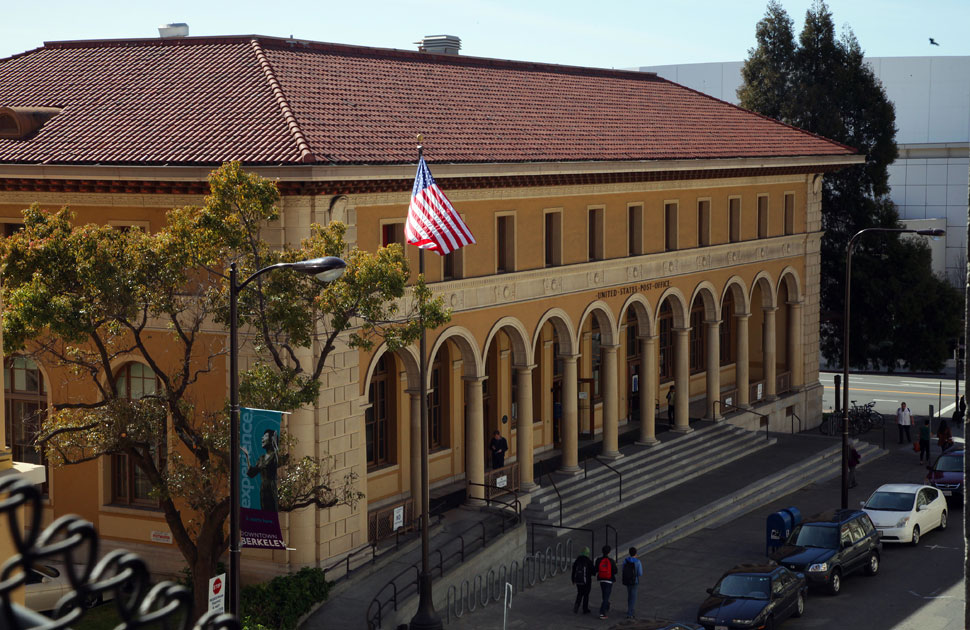
The fundamental challenges facing the U.S. Postal Service as an agency are beginning to trickle down to our local post office buildingscreating ripple-effect challenges for preservationists across the country. The New York Times ran an article last week highlighting the issue (with great comments), and the National Trust for Historic Preservation placed “Historic Post Office Buildings” on its Most Endangered List last year. Apparently the agency has identified nearly 3,700 buildings as likely candidates for closure, about 200 are soon to go on sale, and eleven are on the market right now. There are several concerns from the preservation perspective:  not only do these buildings serve as community centers, but that they are often the most architecturally significant structure in many towns. And like so many federal buildings, many post offices are also surviving legacies of the New Deal policies designed to put Americans back to work during the Depression. The adaptive reuse of these buildings is the logical answer, but that is always a tricky business, and even if the exteriors of those buildings with landmark status are preserved historic interiors remain threatened:  murals, marble, and metals could be ripped out and sold to the highest bidder.

berkeley_ext

Berkeley PO Jim Wilson NY Times

08POSTOFFICEjp5-popup

Three photographs of the 1915 Renaissance Revival Berkeley, California Post Office, on the short list for closure:  interior murals of by Suzanne Scheuer, exterior, and protester Josh Kornbluth in character as Benjamin Franklin, the first Postmaster General. Jim Wilson/New York Times.

I checked out several of the post offices that are on the market now (on this great blog) and was immediately drawn to two in particular:  another Renaissance Revival building in Gulfport, Mississippi and the beautiful Greek Revival post office in the Georgetown section of Washington, DC.  The DC building has been sold to a developer who is apparently going to adapt it for office space while retaining the post office on the first floor; this deal seems to have been years in the making and illustrates just how difficult the redevelopment process can be.

Gulfport PO

Gulfport_Post_Office

georgetown_post_office

Georgetown post office by Young

The Gulfport, Mississippi Post Office today and shortly after its construction in 1910,  postcard courtesy of the Mississippi Department of Archives and History; the Georgetown Post Office, built in 1858, and a 1856 rendering by architect Ammi B. Young, Library of Congress.

I must admit that I have never really appreciated Salem’s Post Office, which I walk by nearly every day with little more than a passing glance. It is a classic WPA project, designed by local architect Philip Horton Smith and constructed in 1932-33 in the Colonial Revival style.  It definitely has presence, but I always thought it was a bit boring, until I recently started noticing the details, inside and out:  there certainly is a lot of marble and bronze in there, and the tables and radiator grates–even the mailboxes–are really lovely, as I now can see. To emphasize its centrality–as well as its connection to the outside world–this building was sited right across from Salem’s grand and gothic railroad station, whose destruction in 1954 is lamented to this day.

Post office 2 049

Post Office PC 1940s

Post Office Interior

Post office 2 003

Post office 2 004

The Salem Post Office today and in the 1940s, downstairs interior and mailboxes, the former Post Office in Salem, adapted for reuse as shops in the 1930s and still serving in that capacity.


Wait a Minute

There is an oftquoted saying attributed to Mark Twain: if you don’t like the weather in New England, wait a minute.  Like most oftquoted sayings, this is a paraphrase of his more longwinded observation, made before the annual meeting of the New England Society in December, 1876:  I reverently believe that the Maker who made us all makes everything in New England but the weather.  I don’t know who makes that, but I think it must be raw apprentices in the weather-clerk’s factory who experiment and learn how, in New England, for board and clothes, and then are promoted to make weather for countries that require a good article, and will take their custom elsewhere if they don’t get it.  There is a sumptuous variety about the New England weather that compels the stranger’s admiration — and regret.  The weather is always doing something there; always attending strictly to business; always getting up new designs and trying them on the people to see how they will go.  But it gets through more business in SPRING [emphasis mine] than in any other season.  In the spring I have counted one hundred and thirty-six different kinds of weather inside of four-and-twenty hours…

March is certainly the cruelest month in terms of changeability, and to make my case I’ve got a series of photographs taken on Wednesday and Friday last week: a rather sleepless night was rewarded with a beautiful sunrise over Chestnut Street at midweek, and then two days later an unexpected (at least by me) storm dumped 14 inches of wet snow on the same landscape. As I’m writing this several days later, it is 50 degrees out and much of the snow is gone. And what will tomorrow bring?  Rain, of course!

Weather before

Weather 033

Weather 032

Weather before 2

Weather after 2

Weather after 3

Weather 047

Weather 012