Tag Archives: Antiques and Collectibles

Decorative Directions

Samuel Emery (1787-1882) made compasses and other nautical and mathematical instruments here in Salem for more than half a century–both during and after the city’s great age of sail. His work can still be seen today, at auctions and in museums, but most often in museum shops. Recently I stumbled across one, and then another and another, reproduced and transformed into pendants and pins. What made Emery’s compasses so decorative? It’s not the fleur-de-lis marking north–that is traditional from the fourteenth century when French makers used a fancy “T”, resembling a flower, to mark the north wind or Tramontana. The two surveyors’ compasses below are nearly identical and were both made by Salem craftsman: the one on the left by John Jayne and the smaller one on the right by Emery, both sold at Skinner auctions.

Emery label Harvard-001

PicMonkey Collage

Samuel Emery Box Label, Collection of Historical Scientific Instruments, Harvard University.

I’m sure Emery’s instruments were well-made or he wouldn’t have been in business for as long as he was, but his designs look pretty conventional for their time. I suspect that the reason Emery’s compasses are still for sale is the original copper plate in the possession of the Peabody Essex Museum, enabling fresh and adapted impressions and models to be made, as well as the traditional appeal of the compass rose (first in maritime communities, then more broadly), which has emblazoned textiles, pottery, and other decorative accessories for centuries, so why not jewelry–among other things–now?

Compass Rose Brooch PEMCompass Rosette Brooch Morgan

Compass Quilt NE Auctions

Compass Bowl Sunderland V and A

Compass Fabric Better than Jam

Compass Rose brooches from the PEM and Morgan shops (just click on the picture and you’ll get there); Early Connecticut pieced quilt with Mariner’s Compass, Northeast Auctions; Sunderland Pink Lustre bowl, c. 1820-1830, Victoria & Albert Museum; Better than Jam fabric.


War Games

It’s not just contemporary video games that engage our children (boys) in virtual warfare: their paper predecessors had the very same focus. The majestic monarchs and large professional armies and navies of the eighteenth century inspired the transformation of traditional games of the goose into more strategic games of fortifications and war, and nineteenth-century manufacturing and marketing techniques intensified this shift, along with contemporary ideas about nationalism and education. Four things inspired me to dig into this topic:  André Hellé’s Alphabet de la Grande Guerre, which I featured in my last post, the discovery of a board game dating from and “playing” the Crimean War of 1853-56 (too topical), a recent New York Times “Opinionator” column about “The Myriopticon”, a Civil-War parlor game which was “immensely popular with boys”, and an advertisement for Salem’s own Parker Brothers’ Spanish-American War games, The War in Cuba and The Battle of Manila. And then I discovered the Victoria & Albert’s Museum of Childhood “War Games” exhibit, which is closing at the end of the week.

ABC Great War Games

War Games Crimea V and A

War Games

War Games Parker Brothers

I find these games a little disarming. I understand that the ABC was intended for “the children of our soldiers”, but do these children really need to see pictures of trenches and tanks (no gas masks, thankfully)? I’m just nervous about the Crimea. And Milton Bradley produced the Myriopticon during the Civil War (or Great Rebellion), a tactic that was followed by Parker Brothers at the end of the century. Both World War I and World War II challenged the glorification of war in many ways, but they did not put an end to war games; if anything, the intensifying competitive nationalism and focus on propaganda made them even more popular. The latter are of the bombs away variety, but games of the Great War seem particularly and personally destructive: German children targeted Britain with their toy u-boats, while the object of British children was to get rid of the Huns.

War Games U Boat

War Games Sink the Huns

Get Rid of Huns Maze Puzzle, c. 1916, Victoria & Albert Museum of Childhood.


Double Faux

For some time I’ve been captivated by a covered cup and saucer in the collection of the Museum of Fine Arts in Boston: the pieces were made by the Niderviller Manufactory in France just before the Revolution but somehow the combination of two illusory design motifs–faux bois and trompe l’oeil–make them seem very modern to me. I love everything about them and want to learn more and see more.

Faux Bois MFA

It was relatively easy to find more faience from the Niderviller Manufactory: below are a plate dated 1774 in a French private collection and another at the Minneapolis Institute of Arts, along with a tray and teapot dated the very same year in the collection of the Victoria & Albert Museum. Look at the little nail on the teapot, “tacking” the print to its surface–amazing! The Niderviller Factory was a rare pre-revolutionary aristocratic-owned operation situated in the Duchy of Lorraine where it was exempt from French laws protecting the royal monopoly of the Sèvres porcelain factory. Production at Niderviller commenced by 1750, but I seem to like the more whimsical creations of the 1773-93 period when the factory was owned by the Count de Custine. The Minneapolis plate below is signed by “J. Deutsch” which is a rather imprecise name–I wonder if this almost-anonymous artist was responsible for the other trompe l’oeil pieces? The signatures look similar on the Victoria & Albert tray and teapot. Despite the Count de Custine’s sympathy for both the American and French Revolutions, he was guillotined in 1793, but the Niderville Factory survived both the Revolution and the ensuing Napoleonic Wars and continues to operate today. Trompe l’oeil decoration was wildly popular in the eighteenth century, but the combination of “wood” and “paper” and ceramics is a little more unusual–though I did find a few more examples beyond Niderviller: an early nineteenth-century plate produced at the Imperial Vienna Porcelain Factory and a very rare “solitaire” set, also made in Vienna. I’m not as taken with these Vienna pieces: they lack the whimsy and detail (folded edges) of the Niderviller pieces.

faience-de-nidervillerDSC08907_medium

Faux Bois Minneapolis 1774

Faux Bois Tray V and A

Faux Bois Teapot V and A

Faux Bois Teapot V and A focus

Faux Bois Vienna Plate c. 1810 Victoria and Albert Museum

Faux Bois Trompe

This faux bois/faux papier decoration doesn’t have to be confined to ceramics, of course: we can and should go back–and forward. Both the faux bois and trompe l’oeil techniques seem to have been perfected in the seventeenth-century paintings of still-life artists like Cornelius Norbertus Gijsbrechts (c. 1630-after 1683) and Edwaert Colyer (or Collier, 1642-1708), which must have influenced the ceramic artists of the next century. The “wooden” background and affixed objects certainly seem very real in the former’s Trompe l’Oeil with Riding Whip and Letter Bag (1872), one of many “paneled” and “cabinet” paintings at the National Gallery of Denmark, and Colyer’s letter racks and “portraits” often have faux bois backgrounds (and folded corners).

Faux Bois Gijsbrechts Riding Whip 1872

Trompe l'Oeil Portrait of a Lady (oil on canvas)

Cornelius Norbertus Gijsbrechts, Trompe l’Oeil with Riding Whip and Letter Barg, National Gallery of Denmark; Edwaert Colyer, Trompe l’Oeil Portrait of a Lady, Ateneum Art Museum, Finnish National Gallery.

Both faux bois and trompe l’oeil techniques continue to be expressed and adapted up to the present day, with varying degrees of detail and in various mediums–but combinations are a bit more rare. In the realm of ceramics, I have yet to see anything as appealing as the Niderviller pieces, but I’m always looking. ….so far the closest I’ve come–not too close at all, really—are plates in the “Texquite” pattern from Bongenre, made in that most modern of materials: melanine.

The One Key to It All

Faux Bois Texquite

Otis Kaye (1885-1974), The One Key to It All, 20th Century, Private Collection, photo © Christie’s Images / The Bridgeman Art Library; Melanine plate in the “Texquite” pattern, Bongenre.


Hearts in Hand

For this St. Valentine’s Day I thought I would explore the heart in hand motif, which is probably familiar to most: there are countless items out there with this emblem, produced for or by the Shakers, the Order of the Odd Fellows, heartfelt lovers and/or mourners in the nineteenth century and a whole host of artisans and entrepreneurs more recently. It’s a captivating image, easily accessible and “read”, and highly decorative, but how did it emerge and evolve?

Hearts in Hand Am Folk Art Museum

Love Token, c. 1840-60, anonymous American artist, possibly from Connecticut, American Folk Art Museum.

Before the love token, declaring that hand and heart shall never part, or the fraternal staff, denoting “cheerful giving”, there was of course the Sacred Heart of Jesus, the object of intense veneration in medieval Europe. While the spiritual origins of today’s generic and secular symbol seem pretty clear to me, the road between past and present is not precisely a straight path. The image of the Sacred Heart is quite standardized in illuminated medieval manuscripts from the thirteenth century on: a heart, often flaming and always pierced, with attendant Crown of Thorns and the Five Wounds of Christ, wounds which were of course on his hands and feet. But there are evolving variations: the late medieval images below have already made the transition to a more worldly message, encompassing pity, love and charity.

Heart in Hand First

Heart in Hand Second

Princeton University Library MS Taylor 17, c. 1500.

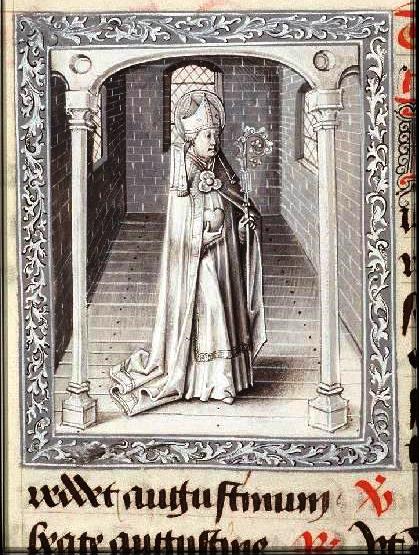
Several of the most important medieval saints, including Augustine, Catherine of Siena and Bernardino of Siena, literally hold hearts in their hands as ever-attendant attributes: Augustine’s restless heart is guided by the Lord, and Catherine actually exchanges hearts with Christ. It seems to me that representations of these two saints humanize the heart somewhat, and late medieval romances contribute to that trend. You begin to see quite average people (well maybe not average, but certainly not saints) with hearts in hand. I suppose that the medieval-clothed Caesar is giving his heart to Rome.

Heart of Augustine

heart-catherine MET

Heart in Hand 3

Heart in Hand Via

St. Augustine with heart in hand, Nationale Bibliotheek van Nederland MS KB 76 F 2; Giovanni di Paolo, Saint Catherine of Siena Exchanging her Heart with Christ, after 1460, Metropolitan Museum of Art; Arras Tapestry, Offering of a Heart, c. 1400-1410, Louvre Museum; Master of the Vitae Imperatorum, Illumination from Suetonius, Life of Caesar, 1433, Princeton University Library MS Kane 44.

The literal and the spiritual depictions of hearts in hand continue right through the Renaissance into the Reformation, eras of intense lay piety and scholarship. Nothing represents this better than the amazing painting by an anonymous Flemish master of a young man holding a heart-shaped book–he may or may not have been a member of a confraternity devoted to St. Augustine– but this focus on the word anticipates the Reformation, when John Calvin adopted the emblem of a flaming heart resting in a hand outstretched to God for his personal seal. So the Sacred Heart would survive the Reformation, in a way. The influences of classicism and realism affected the motif as well–so we also see hearts in real hands, and in that of Cupid, of course.

Heart Shaped Book

Heart Sincerity

Heart burning cupid ceiling

Master of the View of Sante Gudule, Young Man Holding a Book, c. 1485, Metropolitan Museum of Art; Carlo Dolci, Study for the figure of “Sincerity”, mid 17th century, British Museum; Francesco Mergolo, Design for a painted ceiling, 1770s, Cooper Hewitt, National Design Museum.

And then we’re off: it’s a straight line from the delftware plate below, commemorating a marriage, to the sentimental tokens of today. The heart in hand motif loses its specific Christian meaning and comes to signify charity, friendship, love, benevolence, sentiment–much more general concepts. The Odd Fellows emblem appears not only on signs and banners, but on a myriad of more mundane items, including tools and flyswatters. Valentine’s Day become a holiday–with all that entails.

Heart in Hand Plate 1798 Delft Northeast

Heart Odd Fellows

Heart in Hand Folk Art

Heart in Hand Bonnie Cashin Gloves

Heart Warhol

Dutch Delftware marriage plate, 1798, Northeast Auctions; Heart in Hand, Independent Order of Odd Fellows, c. 1890 Museum Victoria; 19th century paper love token, Peggy McClard Antiques; “Heart in Your Hand” Gloves by Bonnie Cashin, 1974, Metropolitan Museum of Art; Heart in Hand by Andy Warhol, 1954, Christies “Love” Auction.


Salem 1851

In the process of deciding which rare books we want to put up for “adoption” (conservation) at the Salem Athenaeum, our collections committee was looking at an 1851 map of Salem the other day. It was folded up in a special binder, and had probably not seen the light of day for quite some time. Unfolded and spread out on a table, it was striking: the reddish pink outlines encircling a vibrant city of little square buildings (with homeowners’ names) and several bodies of water that no longer exist. Salem was even more coastal than it is now! Surrounding this terrain are beautiful lithographs of the city’s most notable buildings, including the long-lost railroad depot. Away from the city center, in the north, south and west, there was open land now occupied by buildings, but downtown was just as “developed” as it is now, maybe more so (lots of wharves). The outline of my own house (on the second image below) looks like the original 1827 structure, without the sequential additions that would be added on later in the century. And I finally know where the Salem powderhouse stood! I couldn’t find much on Henry McIntyre, the civil engineer surveyed the city for this map–does anyone know more? There’s another copy of this map here, but it’s not nearly as nice as this one.

Railway map 002

Railway map 001

Railway map 006

Railway map 010

Railway map 003

Railway map 009

Railway map 013

Railway map 015


A Clean Bill of Health

There are several things that interest me about this 1787 “Bill of Health” issued by Massachusetts Naval Officer/customs official Joseph Hiller for the (first) Salem ship Grand Turk, an item that comes up for auction next week (in a lot that includes a personal dinner invitation to the ship’s captain, the son and namesake of America’s first millionaire, Elias Hasket Derby, from the Marquis de Lafayette). The first thing that caught my attention is the seal, which is quite faint in this scan so I doctored it a bit (and you can click on the document to examine it in more detail):

Derby Bill of Health

Derby Bill of Health seal

I still can’t really make it out, but it’s clearly not the official Massachusetts or US seals, both of which had been adopted by this time. The Commonwealth seal was a Nathan Cushing-designed, Paul Revere-engraved version of the older Massachusetts Bay Colony seal, with a Native American at its center but the unfortunate wording “come over and help us” left out. Instead, what I can barely see here is the faint outline of a pine tree, a symbol which was adopted by the Massachusetts navy after the Battle of Bunker Hill, and later incorporated into the new state’s naval and maritime flags. For naval-officer Hiller, this was obviously the ultimate seal of authority, the seal of his office, rather than his commonwealth or country.

Massachusetts Seal

Mass Flag

Library of Congress.

The other thing that intrigues me about this document is its dating, or more precisely, the wording of its dating: the sixth day of December in the twelfth year of American Independence, and in the year of our Lord One Thousand Eight Hundred and Eighty-Seven. It is double-dated, in standardized format, with reference not only to conventional western dating but also to the American Revolution. Very interesting: I knew that the French Revolutionaries recognized the importance of the calendar as a nationalistic medium, but I had no idea that the Americans did–I wonder how many other official documents utilized this wording, and for how long?

I haven’t even addressed the content of this document: clearly Derby could not sail his ship to to the Isle de France (Mauritius) until it had received a clean bill of health from the authorities. The Grand Turk, the first of several Salem ships bearing that name, was at this time perhaps the most famous ship in New England, if not the new nation, having returned from a voyage to China and the East Indies earlier in 1787. Mauritius was becoming the gateway to this potentially lucrative trade, and its French governors were clearly aware of its emerging importance. I know of no global plague pandemic at this time (the last one was in the port of Marseilles in 1721) but the document uses the phrase Pestilence or contagious Distemper which is not plague-specific. Smallpox was rampant in New England at this time so that was probably the primary concern.

Mauritius Lodge 1781 BPL

John Lodge, A Correct Map of the African Islands of Bouron and Mauritius or the Isle of France, The Political Magazine, London, 1781; Norman B. Leventhal Map Center at the Boston Public Library.

Having received his clean bill of health from Naval Officer Hiller, Derby embarked for the east. Shortly after the Grand Turk arrived in port on the Isle de France, its fame (and size) attracted an offer that apparently could not be refused, and the ship was sold to a French merchant. More Salem ships would follow in its pioneering path, and more Grand Turks would be launched, but the exploits of the first one would be remembered not only because of surviving documents like this form, but also through its starring role as the original Old Spice ship.

PicMonkey Collage

Hull Pottery Old Spice Shaving Mug, 1930s, and lots of other examples of “Old Spiceiana”, available here.


What I want for Christmas

Well, it’s a bit too late to put in this request, but if I had been able to make a Christmas list of wants rather than chores and things to buy at the grocery store, these amazing “Christmas Pudding” dishes designed by Eric Ravilious would be on the top. I’ve never really appreciated either holiday china or twentieth-century china, but these dishes are just so striking, as are most of the pieces made by Ravilious in his short life (1903-1942). My favorite is the first plate with what looks like a flaming (steaming) Christmas pudding, which was accentuated by the Victoria & Albert Museum in the form of a Christmas card. I was looking for a traditional Christmas pudding recipe when I found this plate, and then my search was over–I put in an order with our new bakery because I was so distracted by these decidedly cooler (in more ways than one) versions. Happy Christmas, everyone.

Christmas Pudding Plate

Christmas Pudding Plate Card

Christmas Pudding Plate 2

Christmas Pudding Sauce

Christmas pudding Bowl

Wedgwood “Christmas Pudding” dishes designed by Eric Ravilious, 1938, collection of the Victoria & Albert Museum, London.


Four Loves

For some time I have been trying, very sporadically, to reconstruct the lives of four Salem women called Love:  Love Rawlins Pickman (1709-1786), Love Pickman (Frye,1732-1809), Love Frye (Oliver, Knight, 1750-1839) and another Love Rawlins Pickman (1786-1863). The first Love, from a prominent Boston family, married Benjamin Pickman of Salem and gave birth to the second Love, who married into another prominent (though unfortunately Loyalist Massachusetts family named Frye), and gave birth to the third Love. The second Love Rawlins Pickman, a friend of Nathaniel Hawthorne’s wife Sophia, was, I believe, a granddaughter of the first, niece of the second, and cousin of the third. They are all part of the wealthy and influential Pickman family of Salem, whom I have mentioned several times before on this blog in reference to their amazing houses:  here and here. The two Love Rawlins Pickmans really are Salem women–one is buried in the old Broad Street cemetery which I can see from my study, the other up in North Salem–while the in-between Loves, Loyalists that they were, are buried in Britain. I could flesh out more by engaging in more genealogical research but (like most professional historians that I know), I have very little patience for that pursuit, preferring the forest to the trees. What I’m really curious about is:  which Love Pickman made these beautiful embroidered pictures?

Pickman Embroidered Picture 2

Pickman Embroidered Picture 1

Pickman the Kiss Given

Pickman the Kiss Returned

Silk embroidered pictures by Love Rawlins Pickman,
including The Kiss Given, and The Kiss Returned, after 1747, The M. and M. Karolik Collection of Eighteenth-Century American Arts, Museum of Fine Arts, Boston.

The curators at the Museum of Fine Art, Boston, attribute these amazing pictorial embroideries to the second Love Pickman, but I can find no reference to her as Love Rawlins Pickman, and she would have been quite young, in her early to mid-teens. As a girl from a wealthy Massachusetts colonial family, no doubt she would have been tutored intensively in needlework (though she predates Sarah Stivours, who operated a famous school in Salem from 1778-1794), but I’m wondering if this a example of schoolgirl art or perhaps Mrs. Pickman indulged in such artistic pursuits? This is just one query about the elusive-but-everywhere Pickman family–I’ve got lots more.


New York Minutes

Just back from a quick trip to New York City, which overwhelmed me, as usual. It’s not just the size of the city and the buildings, it’s the details that overwhelm, on the (pre-World War II) buildings, and everywhere:  the textures of the city.  I need a week or so just to absorb a neighborhood, so the pictures below are just instant impressions of Brooklyn Heights and lower Manhattan, where I attended a very special wedding and a very indulgent (seven-course? I lost count) lunch. On the way out of town I did stop at the Met’s Interwoven Globe exhibit, which also overwhelmed me with its details and textures. Part of my return trip was quite leisurely as I took the Taconic Parkway and Route 23 into Massachusetts, but then I flew back to a very busy Salem on the Mass Pike. It’s really Witch City here now, which is overwhelming as well.

New York 049

???????????????????????????????

???????????????????????????????

New York 117

???????????????????????????????

New York Minutes

???????????????????????????????

???????????????????????????????

New York Minutes 8

New York Minutes 11

Bed carpet

Brooklyn Heights and Lower Manhattan:  the view from my brother’s apartment window, streets and windows in Brooklyn Heights, “Historia testis temporum” (History is witness to the Times) at the Brooklyn Historical Society, lower Manhattan, apples in the foyer of Bouley, where we ate lunch, a palampore (bed cover) and table carpet from Interwoven Globe.


Olde Salem on Silk

I never tire of expressions of “olde Salem”: books about colonial furniture, furnishings and architecture, old-fashioned gardens, and photographs and drawings of Salem buildings and scenes, real or imagined, from the first few decades of the twentieth century. There appears to have been an entire generation of authors, photographers, architects, and preservationists who either emerged from or descended upon Salem to capture its fiber before it was lost to modernity:  Frank Cousins, Mary Northend, Arthur Little, William Rantoul. I’m sure the Great Fire of 1914 intensified their pursuit, and they are also representatives of a national Colonial Revival, of which Salem was a singular inspiration. I’ve covered a lot of Salem stuff in this blog, but I don’t think I’ve focused on fabric before, so I thought I’d take a first stab.

I’m inspired by some drawings I found in the collections of the Museum of Fine Arts, Boston by Walter Mitschke, a German-born textile designer for H.R. Mallinson & Company, which specialized in the production of silk fabrics in the early twentieth century. Their most productive and profitable period was in the 1920s, when they offered a series of American prints, many designed by Mitschke:  American National Parks, Wonder Caves of America, American Indians, and Early America.  His preparatory drawings for the latter series include several “Olde Salem” vignettes.

Early American Salem

Early American

Mallinson MFA

Walter Mitschke, Drawings for the”Early American” Series of Designs by H. R. Mallinson & Co., 1927, Museum of Fine Arts, Boston. Gift of Robert and Joan Brancale.

As you can see, the House of the Seven Gables, perhaps Salem’s most iconic “olde” building and image, is front and center in Mitschke’s emerging design. And Olde Salem is most definitely maritime Salem, not industrial Salem or witchy Salem. A large collection of his drawings and fabric samples was donated to the MFA, and you can see several portfolios of his work via the museum’s Interactive Tours. The Museum of the Rhode Island School of Design has some of Mitschke’s finished fabrics, including the very patriotic (and dynamic) Betsy Ross-Liberty Bell print.

Mallinson MFA Betsy Ross

Mallinson fabric

Mallinson Print 2

Walter Mitschke, Drawing for the “Early American” Mallinson Series, Museum of Fine Arts, Boston, and Fabric Samples, 1927-28, Museum of the Rhode Island School of Design.

I wish I could find the finished product for the Salem drawings; I’m struck by Mitschke’s modernization of “ye olde” images and would love to see the old Gables in such a striking setting. In any case, comparing drawings to finished fabrics is a lesson in how textile designers plotted out the repeat–no small consideration for them. I tried my hand at an old Salem silk print on Spoonflower, and as you can see, I’m no Walter Mitschke!

Salem Spoonflower Fabric

Two more sources for information on Mitschke and Mallinson:  this post on the blog On Pins and Needles, and the current exhibition at the Bard Graduate Center: An American Style: Global Sources for New York Textile and Fashion Design, 1915–1928.

