You are what you do/like

I was in an antique shop several weeks ago when I spotted some framed prints published by J.N. Toy and W.R.Lucas in Baltimore in the early 1830s. They were that odd kind of anthropomorphic mixture of human, creature, plant and/or materials that always appeals to me, so they instantly captured my attention. I wasn’t quite sure I wanted to purchase them, so I snapped some pictures, but the combination of glass and lighting did not capture them very well–later I searched for some better images and fortunately found them, or most of them (The Botanist below is under glass). These lithographs are the products of a short-lived partnership between two Massachusetts-born printers, George Endicott and Moses Swett, both of whom had worked at the Pendleton Firm in Boston. I’ve admired Pendleton prints  for a while, so that’s probably another reason why these odd little prints appealed to me. Apparently these are political caricatures, illustrating an increasing (threatening) feminine presence in these endeavors, but I think this is lost in the translation of time. To me, they just look like ladies who are enthusiastic about their various pursuits (except for maybe the fish lady).

endicott-swett-circulating-librarya

endicott-swett-crockerya

endicott-swett-fish

endicott-swett-fish-color

endicott-swett-botanist-print

Lithographs by George Endicott & Moses Swett, published by J.N. Toy and W.R. Lucas, Baltimore, 1831-33, Collections of Winterthur Library and the Library of Conress.


Memorial Markers

Look up: at many intersections of Salem streets, intensively but not exclusively in the center of the city, you will see bright black and gold markers with the names of veterans who sacrificed their lives in twentieth-century wars. I really don’t remember focusing on these plaques until late last spring, when all of the faded markers were replaced with new and shiny ones: just in time for Memorial Day, as I recall. Then suddenly they were very conspicuous to me–and hopefully to others. The markers are placed adjacent to the soldiers’ neighborhoods, so you can also ascertain the various ethnic neighborhoods of Salem in the last century, now not quite as distinct. They are as detailed as possible: name, rank, service, conflict, exact date and place of death: I immediately noticed how many young men died in the closing months of the Great War, just before Armistice Day.

memorial-markers-chestnut

memorial-markers-9a

memorial-markers-2a

memorial-markers-3a

memorial-markers-4a

memorial-markers-5a

memorial-markers-6a

memorial-markers-7a

memorial-markers-8a

memorial-markers-11a

memorial-markers-12a

Squares of service in Salem, beginning with that dedicated to Private George C. Trask at the beginning of Chestnut Street. Nichols Square at Federal Street is dedicated to Captain Henry C. Nichols, who served in both world wars and Korea and was a “man about town” (and also the author of a popular little pamphlet titled Bewitched in Historic Salem). The distinct red marker designates veteran firefighter Raymond McSwiggin, killed in the line of duty in 1982. You can see a map of all of Salem’s Veterans’ Squares here: https://www.mapsonline.net/salemma/index.html.


Enduring Edifices

I’m really glad that I’ve made my blog relatively apolitical, and I’m equally grateful that I am not an American historian: I wouldn’t want to be in a position to explain what happened yesterday. Hopefully my words and images can serve as a distraction for some, as they do for me. Along with history in general, I’ve always found historical architecture comforting in times of stress: older buildings seem like testaments to both what we have achieved and what we can endure. Yesterday was a beautiful and bright election day, when anything seemed possible. After my husband and I voted in the parish hall of one Salem Catholic church (St. John the Baptist) we made our way down Federal Street (past the newly-refurbished Probate Court, which was quite literally shining in the sun) to another parish, St. James, where he is working on the restoration and conversion of the former rectory and convent into condominiums. The rectory building is unique in that it was built (in 1889) by the parish priest, the Reverend John. J. Gray, for his residence and then later donated to the archdiocese. As you can see it is a huge Italianate building which has been taken down to the studs: the banisters, mantles, and floors are all wrapped up in protective materials and the doors and windows are all being restored to their original condition. Lots of Eastlake details. The same developers have purchased the 1878 building across the street, which served as a convent for the Sisters of Notre Dame, an order that joined the parish in 1864. I could only explore the front foyer of this huge building, which appears to have been stripped of much of its interior detail (not to mention its radiators) as it was utilized in an institutional capacity in recent years. It is also Italianate (which must have been Father Gray’s favorite style–I certainly came away with a lot of admiration for his ability to expand his parish’s physical presence during his tenure), with a mansard roof.

enduring-edifices-courthouse-on-federal

enduring-edifices-1a

enduring-edifices-7a

enduring-edifices-collage

The newly-published Probate Court and Registry of Deeds building on Federal Street, and further down, nos. 161 (the Rectory) and 162 (the Convent).

Sometimes I worry that too many of Salem’s historic buildings have been carved up into condominiums, but not with these two structures, as they are very large in scale and physical space–much too big for one family or even two or three in the case of the rectory and four or more in the case of the convent–and quite neglected. The units built within both will be comparatively large, and through their conversion both buildings will (hopefully) endure for many more years to come.

Inside the Rectory: first, second, and third floor views, and an exterior side door to the basement.

enduring-edifices-13a

enduring-edifices-15a

enduring-edifices-14a

enduring-edifices-8a

enduring-edifices-10a

enduring-edifices-11a

enduring-edifices-12a

enduring-edifices-9a

enduring-edifices-6a

The Convent: front foyer, looking up–hope to get into the rest of the building at a later time. I love radiators.

enduring-edifices-3a

enduring-edifices-2a


Bittersweet November

I don’t really have a theme or subject for today’s post: it is primarily comprised of photos I took here in Salem and up in York Harbor where I spent most of the weekend. But as I was walking along the Harbor cliff walk–a childhood path of mine that was allowed to be taken over by new home owners/builders along the way in past years but now seems to be in the process of being reclaimed by the public–I thought of how appropriate the bittersweet “decoration” that lined the walk was: contrasting and colorful, a last blast of bright before things get darker, so somehow all the more sweet. I’ve always thought November is one of our most beautiful months: the light is so clear, the earth not yet muddy brown or white. Of course since I’ve lived in Salem November has become particularly cherished as it marks Salem’s liberation from its Witch City identity, but I think everywhere that I have lived I have enjoyed November: in Vermont, and Maine, and Maryland, and Britain. I think it must be my second-favorite month, just behind May.

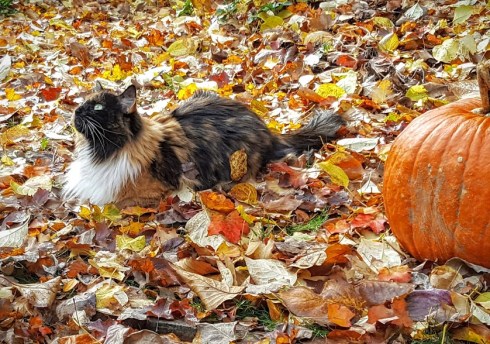
The first week of November in Salem: a blazing tree on Essex Street, the new Little Free Library on the Ropes Mansion Grounds, a house coming back to life, white shows the light, old tracks, a strange seating area at Harmony Grove cemetery (I think it is the pillows that I find somewhat odd), THE WITCH IS DEAD, one last fall photograph of my cat Trinity for a while, I promise!

november-5a

november-13a

november-12a

november-2a

november-3a

november-4a

november-1a

november-6a

In York Harbor, the first weekend of November:  along the Cliff Walk: fortifications (several estates along the walk have castle-esque architectural attributes and CANNONS–who are they guarding against, the New York Yacht Club?), bittersweet, and a secret gate; fall back.

november-10b


november-7a

november-9a

november-8a

november-11a


Electoral Ephemera Euphoria/Escapism

I’m still very preoccupied with the large collection of nineteenth-century ballots at the American Antiquarian Society: if I had time I would drive down to Worcester and immerse myself in the real paper; because I do not, I have to settle for digital immersion. Every little slip/image fascinates me–I woke up at 4:00 the night before last thinking why is the image of an upside-down chained beast associated with the movement AGAINST the incorporation of Boston as a city in 1822? Would livestock no longer be able to roam freely on the Common? That was my 4:00 am thought, but in the light of morning I realized the image probably had a more metaphorical meaning.

election-city-no

election-no-city

I still don’t know what the symbol of the chained beast means, but these particular ballot tickets represent the failing side: Boston did indeed become a city in 1822. So today, I’m going to focus on referenda, something we should all be familiar with as I believe nearly every state has ballot questions to decide on Election Day. Here in Massachusetts, our measures pertain to: 1) slot licenses; 2) charter schools; 3) the containment of farm animals (here we are, back to the chained beast!); and 4) recreational use of marijuana. In the nineteenth century, it was all about municipal incorporations, infrastructure, and above all, liquor. And taxation, of course: you know that old saying about death and taxes.

election-boston-no

election-3-referendum

election-liquor-no

election-liquor

election-common

election-taxation

Some of these private party tickets offered a public service by reminding voters when the polls were open–and where they where. Vote early [vote often?] and vote no.

election-collage

This last ticket obvious refers to the presidential election rather than a contemporary referendum, but I had to include it because it’s just so great: eminent historian George Bancroft weighing in on the [1864?] election. Imagine a world where an historian’s words could sway votes!

election-bancroft

All images courtesy of the American Antiquarian Society: their digitized collection of nineteenth-century electoral ballots and ephemera can be found here.


That’s the Ticket

Well now we are in this rather ominous week between Halloween and the Election. How t0 deal with it? By retreating into the past, of course! I’ve been curious about the mechanics of elections for a while, actually, and decided to indulge my curiosity by browsing through some local digitized collections of electoral ephemera. The large collection of nineteenth-century election ballots at the American Antiquarian Society is particularly engrossing: so many stories and ideas and trends are encapsulated on these little scraps of paper. For a non-Americanist such a myself, it took quite a bit of background work just to identify the myriad political parties as well as the issues that were driving their formation, and I also came to realize that the transitions from written to printed party tickets, and from party tickets to official ballots, were very momentous, almost on a par with the evolution of voting via machine or electronically. Who knew that the Australian ballot was a secret ballot, first adopted in the United States in Massachusetts as late as 1888? Certainly not me. Here’s a small sample of a great collection, beginning with a very early printed ballot which features Salem’w own Timothy Pickering and also illustrates the electoral college very clearly.

ticket-1

Freedom is expressed in both words and images on nineteenth-century Massachusetts election tickets, often and in various ways: the “Free Bridge and Equal Rights” ballots from the 1820s which refer to the proposed Warren bridge over the Charles River, linking Charlestown and Boston, a liberty pole, the “Free Soil” party that split off from the Whigs over the issue of slavery, the linkage of nearly every candidate “and liberty”. The first two tickets below are also illustrations of the hybrid print-script tickets produced before printed “party tickets” became the norm after 1840 or so.

ticket-2-free-bridge-1827

ticket-3-liberty-pole-1829

ticket-free-soil-1848

And after the Civil War: color, more elaborate typography and imagery, and a spectrum of emergent political affiliations, including various Labor and Greenback parties, Prohibition, Liberal, Independent, Citizens’, Peoples’ parties and both regular and varietal Republicans and Democrats. The party ticket evolved into such an familiar form that it would even be mocked through caricature. And then it became much the official ballot, much more private, and consequently much less interesting.

ticket-green

ticket-regular-republic-reform

ticket-collage

ticket-regular-republican

ticket-regular-democrat-1883

ticket-stripes

ticket-fake

Election tickets from 1800, 1829, 1848, n.d., n.d., 1870, 1876, 1883, n.d, and n.d., all Courtesy, American Antiquarian Society and available here.


Liberation Day

November 1 is Liberation Day in Salem: the long Halloween is over, quite suddenly it always seems, and the city is returned to its residents. I’m in much better spirits than last year because of my boyc0tt of downtown Salem: the image of the Witch Trials Memorial turned into a food hall is somewhat faded from my mind. It’s comforting to know that in this month, and the months leading up to next September and October, civic resources and energies will be liberated from propping up the seasonal Halloween industry and thus enabled to focus on promoting Salem’s less-ephemeral attributes. As usual trick-or-treating generally mollifies my feelings about Halloween as the kids are so cute, but still, I’m glad it’s over (again).

My favorite trick-or-treaters (or costumed people who walked past my door–sorry, the pictures of an entire Game of Thrones crew and the Swiss Family Robinson (I think?) did not come out well).

halloween

halloween-3

halloween-2

My feelings today, illustrated : “Liberty Triumphant” (against oppression) in the Revolutionary war and World War I (Library of Congress) , joyful skipping by Harold Edgerton (© Harold & Esther Edgerton Foundation, courtesy of Palm Press, Inc., Museum of Fine Arts, Boston), My cat Trinity at peace.

liberty-triumphant

halloween-liberty-wwi

halloween-skipping-rope-mfa

halloween-4


Boston Halloween

Besides living in the self-proclaimed Witch City, yet another aspect of my tortured relationship with Halloween is my birthday, which falls a few days before and inevitably gets colored (darkened) by the proximity. It’s not quite as bad as having a Christmas birthday, but close, especially for me. There’s generally a big storm on my big day too–but not this year, thank goodness. This year we have family in town to celebrate their first Salem Halloween, but there was no way I was going to be their guide, so I left them to my husband and fled to Boston for the day. I went to the Museum of Fine Arts for the William Merritt Chase and Della Robbia exhibitions (the women!), then to the Antiquarian Book Show  (the prices!) at the Hynes Convention Center, and then I just walked around the Back Bay and Beacon Hill, as the weather got progressively warmer over the day. Oddly enough, I found myself enjoying the Halloween decorations on the stately brownstones and townhouses: very creative and such a contrast to the architecture! Maybe I like Halloween after all (just not in Salem).

Back Bay:

boston-halloween-back-bay

boston-halloween2-back-bay

boston-halloween-3-back-bay

boston-halloween-book-show

Just one book from the show at the Hynes in keeping with the theme: next post I’m going to write about a beautiful ($45,000) incunabulum I had never heard of before (if I can find out enough about it).

Beacon Hill: who knew that Louisburg Square was Halloween central? This first house was amazing.

boston-halloween-13-ls

boston-halloween-10-ls

boston-halloween-11-ls

boston-halloween-12-ls

boston-halloween-8-lq

boston-halloween-9-ls

boston-halloween-collage

j IOP-[0

boston-halloween-14-bhill


The Woodcut Witch

Witchcraft and witch trials are by no means an academic focus for me, but any European historian who studies and teaches the early modern era must take these subjects on. Consequently I developed an undergraduate course called “Magic and Witchcraft in Early Modern Europe” just a few years after I came to Salem, in part because I also felt that I had a certain obligation, given the local unawareness of the fact that over 100,000 people were put on trial for witchcraft in the sixteenth and seventeenth centuries across Europe and the consequential belief that the 1692 trials were the largest/most important/consequential in world history. My course goals consequently included: 1) putting the Salem Trials in a wider geographical and chronological perspective and; 2) placing the European witch trials in a longer and larger intellectual tradition, hence the “magic”. The course title is partially a misnomer, as we spend half our time in the medieval era, laying essential theological and historical groundwork, and the last few times I taught it, I became somewhat stalled in the fifteenth century. I think this was a bit frustrating for my students, as the most intensive period of witch hunting was the century between 1560 and 1660 (can’t we get to the trials?), but the more I studied both the primary and secondary texts the more I came to realize that the fifteenth century was absolutely key to the intensification that was to come. This is true not only because of the publication of the famous Malleus Maleficarum, an incredibly accessible, even riveting, “how-to” manual of witch identification and prosecution which itself is a consequence of fifteenth-century trends regarding what was seen increasingly as a “pestilential heresy” on the Continent, but also because of the visualization of diabolical witchcraft, most prominently in Ulrich Molitor’s De lamiis et pythonicis mulieribus (‘On Witches and Female Soothsayers, 1489). A Professor of Law at the University of Constance, Molitor’s point of view is traditional in terms of his opinions on witchcraft, unlike the more radical authors of the Malleus, Heinrich Kramer and  Jacob Sprenger, whose perspectives were inquisitional rather than reasoned. In the course of a ten-chapter dialogue, Molitor ultimately concludes that witches are generally products of demonic illusion. So his words did not incite, but one could argue that his images did, as De lamiis was the first illustrated treatise on witchcraft, and a text with a remarkably long run: 43 editions were published between 1489–1669—more than the Malleus Maleficarum. Molitor’s insistence on the illusionary  powers of witches was definitely undercut by the inclusion of woodcut illustrations of middle-aged “witches” engaging in some of the things Kramer and Sprenger accused them of: stirring up storms, flying to the sabbat, frolicking with their demon lover. And so, in both words and woodcuts, stereotypes were created, and cemented over the next century.

molitor-title-page

molitor-archery-witch2

molitor-consorting-with-the-devil

molitor-flying-witches

molitor-feasting-witches

molitor-weather-witches

molitor-1544

Woodcut illustrations from the 1489, 1500, and 1544 (last one) editions of Ulrich Molitor’s De lamiis et phitonicis mulieribus. [first published in Reutlingen: Johann Otmar, not before 10 Jan. 1489]. University of Glasgow Sp Coll Ferguson An-y.34. For more and the later visualization of witches and witchcraft, see Charles Zika’s excellent The Appearance of Witchcraft: Print and Visual Culture in Sixteenth-century Europe.


Seasonal Spider (webs)

Well, Halloween is less than a week away so I suppose I should post on something seasonal: my October avoidance of downtown Salem has actually made me less aware of this holiday, although yesterday it dawned on me that I was not prepared for trick-or-treating and should start accumulating all of the candy I will need. It seems as if I always run out, no matter how much I buy. In my neighborhood there is a range of Halloween/Fall decorations:  some completely over the top, others more subtle. My favorite seasonal decoration preferences run more to the natural than the macabre: I’ve always thought that bats are wonderful, and I have developed a healthy appreciation for spiders over the last few years. There are quite a few spiders, with webs and without, around Salem these days, but today’s post is really more inspired by interior decoration than exterior embellishment, and specifically by a New York Times article from a few weeks ago about the restoration/redecoration of two historic “literary shrines”: the Connecticut houses of Mark Twain and Harriet Beecher Stowe. In the parlor of Twain’s house, workers are installing a reproduction 1880s wallpaper with spiderwebs designed by Candace Wheeler, an absolutely amazing artist who, along with her design colleagues in her firm Associated Artists, was primarily responsible for the original decoration of the house. Just one look at the wallpaper started me down both a Candace Wheeler path and a spider/web path–so here’s the latter, beginning with the Mark Twain’s parlor paper and proceeding back and forth through the ages and back to Salem.

spiderweb-wallpaper-candace-wheeler

spiderweb-wallpaper-collage

spider-textile-meiji-mfa

spiderweb-textile-mfa-2004

1985-52-31200b-pdp

spiderweb-medieval-bl-illuminated-ms

spider-in-salem

Candace Wheeler wallpaper, Metropolitan Museum of Art: Contemporary spiderweb wallpaper in two tones, Walls Republic; Japanese silk embroidered spiderweb textile, early Meijii era, William Sturgis Bigelow Collection, Museum of Fine Arts, Boston; English “Spider Print” Textile Length, 2004, Museum of Fine Arts, Boston; the best “natural” Halloween vignette ever: Bat and a Spider Web, 1782, Philadelphia Museum of Art; my favorite medieval spider, British Library MS Sloane 4016; a Salem spider.