
At the center of Raleigh is the North Carolina Capitol building, in the midst of Capitol Square, surrounded by more than a dozen monuments to the memory of statesmen and soldiers. The most recent installation (1990) is the North Carolina Veterans Monument, while the tallest memorial is the monument erected “to our Confederate dead” in 1892, and the only monument referencing women is the 1914 statue honoring the North Carolina Women of the Confederacy. The Raleigh-Durham area has seen several intense protests against Confederate monuments over the past several years, resulting in the toppling of the Robert E. Lee and “Silent Sam” statues in Durham and Chapel Hill, but this past August the special “Confederate Monuments Study Committee” of the North Carolina Historical Commission voted that the Capitol monuments should stay in place, despite the request for removal from North Carolina governor Roy Cooper and the Committee’s own opinion that the statues are “an over-representation and over-memorialization of a difficult era in NC history.”


I would have to agree with that characterization, particularly of the Women of the Confederacy statue, which depicts a woman as a mother-historian, reading the heroic tales (I presume) of war to her sword-bearing son. The towering Confederate Dead statue nearby (which was very difficult to photograph) features anonymous soldiers and a rather simple message of honoring the dead, and so is perhaps not as confrontational as a statue of an individual and identified Civil War soldier, though there is also a monument to Henry Lawson Wyatt, purported to be the first Confederate soldier killed in action, on the Capitol grounds. In announcing its decision to let these statues stand, the state Commission called for additional interpretation, “to provide a balanced context and accounting of the monuments’ erection in their time in political history” as well as the erection of additional monuments honoring the contributions of North Carolina’s African-American citizens. I did not see such context, nor equal monumental representation, but we are less than a year out from this ruling and a long-term effort to establish an adjacent “Freedom Park,” designed by architect Phil Freelon, the leader of the design team for the Smithsonian Institution National Museum of African American History and Culture, appears to have accelerated over the past year.

Plan for the proposed “Freedom Park” and monument in Raleigh.
As I wandered around Capitol Square this past weekend looking at all of its installations with my historical and decidedly northern (even more decidedly Massachusetts) perspective, I had the most visceral reaction to a monument which wasn’t even mentioned in the recent debate over Confederate memorials in North Carolina: that dedicated to Samuel A’Court Ashe in 1940. Ashe obviously lived a full life and was revered by many in his native state, but all I could see when I read this plaque was heroic defender of Fort Wagner. Just a few weeks before I was wandering another hallowed ground, Salem’s Harmony Grove Cemetery, where I saw the graves of several men who served with the 54th Massachusetts Volunteer Infantry Regiment, the first Civil War military unit comprised of African-American soldiers to be raised in the North. The soldiers of the Massachusetts 54th distinguished themselves during the assault on strategic Fort Wagner, which guarded the entrance to Charleston Harbor, at great cost, losing 281 men on July 18, 1863: 54 confirmed casualties (including commanding officer Robert Gould Shaw), 179 wounded, 48 simply lost, while the Confederate troops inside were reportedly “maddened and infuriated at the sight of Negro troops.” Their sacrifice confirmed their promise of hope and glory, in the words of Massachusetts Governor John Andrew, and was memorialized later by the Augustus Saint-Gaudens monument on Boston Common (1897), Robert Lowell’s poem “For the Union Dead”, and the 1989 film Glory. Ashe, the defender of Fort Wagner, has much to say about the war and its commemoration, as his long post-war career was characterized by prolific writing (and Confederate commemoration advocacy) both as a newspaper editor and historian. In his History of North Carolina, he makes no mention of the Massachusetts 54th at Fort Wagner, but only of “the splendid heroism and devotion of the North Carolina troops”, and his “historical” analysis of the causes of the Civil War focuses almost exclusively on the policies of an “unpatriotic” Abraham Lincoln, whom he never refers to as President: it is not true, as Lincoln said, that without slavery there would have been no secession. It was the absence of the spirit of compromise on the part of Lincoln and his party that brought about secession in 1861….Secession would have been averted if Lincoln had copied the example of his patriotic predecessors. But he made his anti-slavery feeling his ‘paramount object’ instead of his desire to save the Union. He was revered as “that stainless leader of the Lost Cause” in the 1940 address given at the dedication of his monument. Frankly, I don’t want to read anything more about or by Mr. Ashe, and the next time I am in Raleigh I will give his memorial a very wide berth.


The monument dedicated to Samuel A’Court Ashe in Raleigh’s Capitol Square and one of his telling titles; the Boston Common monument to Robert Gould Shaw and the Massachusetts 54th by Augustus Saint-Gaudens: two memorials which reference Fort Wagner, and the Civil War, in very different ways. The grave of Salem native of Luis Fenollosa Emilio, a Captain of the Mass. 54th who survived Fort Wagner and lived to tell their tale in A Brave Black Regiment (1894).


 Signs everywhere in Raleigh, which has held on to its state heritage markers (even for sites that no longer exist) and added lots more.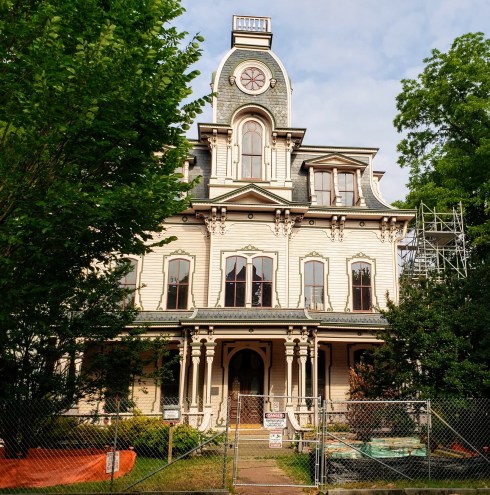


 The Heck-Andrews House (under renovation), Polk House, and Executive Mansion in the city center, and Oakwood beyond—and beyond Oakwood.

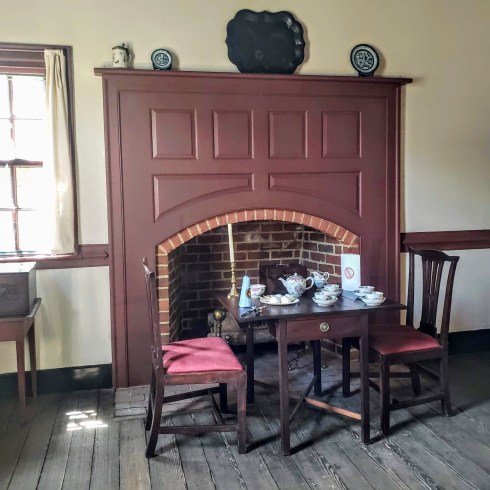


 Exteriors and Interiors of the Lane and Mordecai Houses + their gardens and the Andrew Johnson birthplace, adjacent to Mordecai.


 The City of Raleigh (COR) Museum: a must-visit spot; this last question is existential!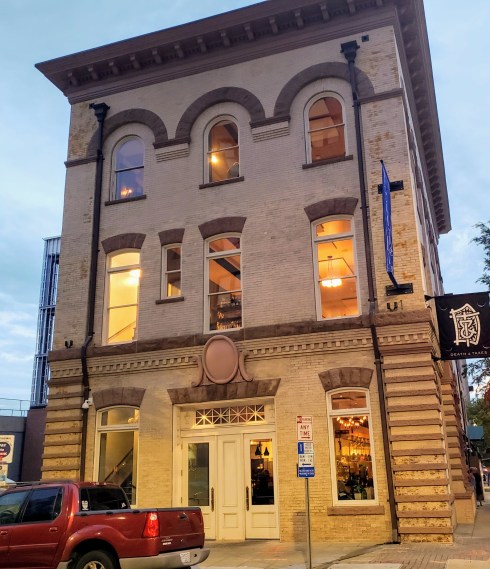


 Port Royal Parlor at Winterthur and South Drawing Room at Sir John Soane’s Museum, photograph by Derry More.


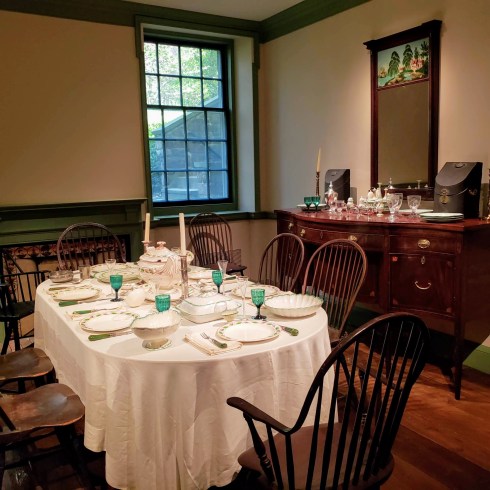
 So many rooms—and stuff—for eating and drinking, of course, but dining rooms can be very revealing in their details. After the famous Chinese Parlor are several shots of the Du Pont Dining Room, with the Derby family’s green knives and knife boxes (+ McIntire chairs and Needham secretary, and adjacent candlestick closet. I can’t remember the name of the second, simple dining room, which is one of my favorite Winterthur rooms, but the photograph just above is of Queen Anne Dining Room, which really represents Mr. du Pont’s creative abilities (as well as his collecting efforts).

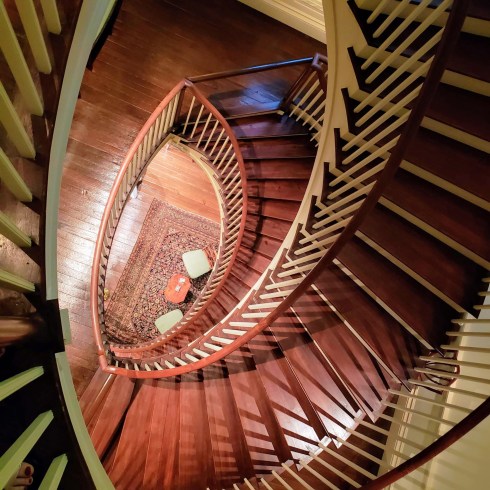


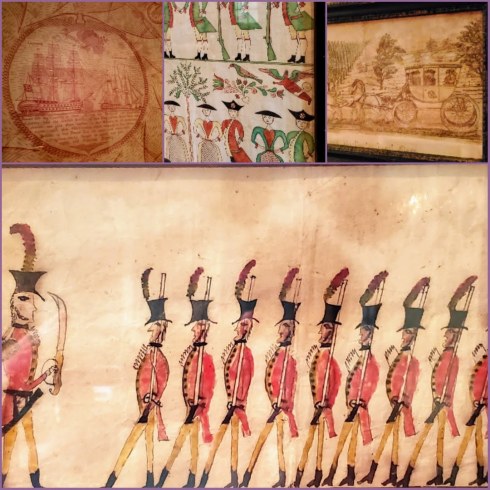


 The Montmorenci stair, taken from a North Carolina house, replaced the “baronial” staircase which Mr. du Pont’s father installed. Folk objects and images, just a few tea tables, and just one china room. Several Salem items: the chimneypiece embroidered by Sarah Derby Gardner, a Silsbee chair, Mr. du Pont’s secretary (and bed), and the Corné mural from the Lindall-Barnard-Andrews House.


 Longwood Gardens + Conservatory and “Green Wall” surrounding restroom doors!


 Treasures of the Brandywine River Museum of Art, including: Howard Pyle’s influential “historic” illustrations and a N.C. Wyeth cover, Andrew Wyeth’s Snow Hill and Jamie Wyeth’s Lime Bag, N.C.’s studio exterior and interior and in Andrew’s North Light, N.C. Wyeth, framed by his parents and looking down on his talented family, a Jamie Wyeth Christmas card for his beloved wife Phyllis.


 The arch of the Praça do Comércio, the Square of Commerce, is the proper entry to Lisbon, from the sea, but it’s a nineteenth-century construction after the rebuilding of the square following the earthquake of 1755. A great mural in the Museu Nacional de Arte Antiga shows the pre-1755 square. The Church of


 I’m trying to show the integration and proximity of new and old with these pictures, which include several streetscapes, views from the Castelo de S. Jorge, the Church of


 Belem: site of the iconic Manueline


 Museums: so many! History museums and museums of every conceivable form of art: “ancient” (pre-1850), modern, decorative, TILES, marionettes. The famous Gulbenkian collection and several less well-known house museums: I was blown away by the


 Horses and ballet slippers (a nod to the New York City Ballet’s summer residence at the Saratoga Performing Arts


 Salem was one recommended stop along the eastern line up to Maine in the 1880s–but Old Orchard Beach was really the place to be in the summer. Bird’s Eye and route maps are always included and tipped in.


 The North and South Churches in Salem, and the “Old Witch House” in Here and There in New England and Canada (1889): I’m not sure the Witch House ever looked like this!






