Tag Archives: Scholarship

Salem’s Centuries

Yesterday I received three copies of Salem’s Centuries. New Perspectives on the History of an Old American City, and Tuesday is publication day, so I thought I’d provide an introductory post. The crucible of this book is definitely this blog, so I want to thank all of its followers, readers, and commenters: I truly am grateful for your support and inspiration! I can’t believe that I’ve been writing in this space for fifteen years: that’s a long time in internet years. It started out as just a vehicle to satisfy my own curiosity about Salem’s history and showcase Salem’s architecture, though I definitely thought I would move on to more worldly topics, despite its title. But the Salem posts were always the most popular, by far (except for anything to do with maps!) And so a more sustained focus on Salem led to the book, but a book is different than a blog. What I share here are mostly stories, but Salem’s Centuries is all about the history of this storied place.


I “posed” the books all over the house!

Salem is indeed a storied place. You (or I) can’t walk down the street without seeing a structure that conjures up some story or inspires the search for one. Stories are part of history, but history is more: layers, context, perspectives. After Covid and the publication of The Practical Renaissance I knew I wanted to write something about Salem for its 400th anniversary in 2026, but I wasn’t sure what—or howThe easiest thing to produce would be a compilation of the Salem stories I have posted here, but I wanted more and I thought Salem deserved more, and so the thought of a proper Salem history emerged. It was an intimidating thought for me, as Salem is an important American city and as I have asserted here time and time again, I am not an American historian. I think I’ve acquired some knowledge and expertise in Salem’s history over these fifteen years, but not enough to sustain a volume that attempts to cover 400 years. So I turned to my colleagues at Salem State, and the result is a collection of essays which explore Salem’s history from different scholarly perspectives across time but centered in place. The key moment in this turn was definitely that in which Brad Austin, our Department chair, 20th century American historian and experienced editor, agreed to be my co-editor. And the rest is history!

Here’s an overview of the book, which will be released everywhere on Tuesday and showcased in a series of events, beginning with a presentation (and hopefully discussion) at Hamilton Hall on January 25. Brad and I are incredibly grateful to the Peabody Essex Museum for centering its PEM Reads podcast on Salem’s Centuries throughout 2026. There’s a lot to discuss, but as both Brad and I realized as we finished this book, there’s also a lot more to learn about Salem’s vast history, so we hope that its reception encourages further research. And that’s exactly where you want to be at the end of a history project: stories end, history doesn’t.

The First Century (note: an innovative feature of our book is its division into full-length chapters and shorter, more focused “interludes” on people, places, and specific events. This was Brad’s idea.):

“Putting Salem on the Maps” is a grand display of historical and geographical context by Brad, and a perfect orientation for our place and book. My colleague Tad Baker has written the definititve history of the Salem Witch Trials, A Storm of Witchcraft, but he is also an archeaologist and historian of the indigenous peoples of New England, and his contributions to our book showcase both these fields of expertise. “The Dispossession of Wenepoykin” gives some much needed historical background of Salem’s “Indian Deed,” and “Gallows Hill’s Long Dark Shadow” is a first-hand account of the revelation of Proctor’s Ledge, a space below Gallows Hill, as the execution site of the victims of 1692, set in historiographical and contemporary contexts. My brief history of Hugh Peter, Salem’s fourth pastor and a regicide of King Charles I, enabled me to indulge in my own scholarly expertise for a bit, and Marilyn Howard’s depiction of John Higginson and his world is a rewrite of one of the best (no, the best) masters’ theses that I have read at Salem State. A magisterial chapter on “Salem and Slavery,” including both indigenous and African-American enslavement in Salem, by my award-winning colleague Bethany Jay, completes this century. Salem’s Centuries contains five pieces on African-American history, all set in larger contexts.

The Second Century: 

You would think that an eastern American city as venerable and consequential as Salem would have a published history of its myriad roles during the American Revolution, but no. Hans Schwartz, also a graduate student at Salem State who went on to get his Ph.D. at Clark University, has contributed a succinct yet comprehensive history of these roles in Chapter Four, with an emphasis on the social and economic changes brought about by the Revolution. Another one of our graduate students, Maria Pride, contributes some of her dissertation research on privateering in an interlude on Salem’s “hero among heroes,” Jonathan Haraden, with a little public history push by me. A strong theme of the book is Salem’s continuous “outward entrepreneurialism,” which Dane Morrison’s and Kimberly Alexander’s chapter on the rather tragic expatriate residency of the Kinsman family represents well. “Sabe and Rose” summarizes the collaborative research of Professor Jay and Salem Maritime National Historic Park Education Specialist Maryann Zujewski into the lives of the two people enslaved by Salem’s wealthy Derby family. The much-told story of Mary Spencer, “the Gibralter Woman” who (ironically) made and sold her famous hard candy with slave-made sugar while simultaneoulsy maintaining (and passing down) a fierce Abolitionist stance, gets the Austin treatment while I am able to indulge in a longer history of the man who inspired me to dig in, and dig in deeper, to Salem’s history: patriarch, entrepreneur and abolitonist John Remond.

The Third Century:

The Third Century opens with two studies of Salem and the Civil War by former Salem State graduate students Robert McMicken and Brian Valimont. McMicken contributes a general overview (like the Revolution, there isn’t one!) and Valimont a more focused piece on Captain Luis Emilio of the Massachusetts 54th. Here we have another Salem hero with no statue while a fictional witch reigns in Salem’s most historic square (at least Haraden has a plaque, even though it’s in the Korean barbecue restaurant which stands where his home once did). Our colleague Elizabeth Duclos-Orsello contributes a valuable overview of Salem’s Catholic parishes (Irish, French, Italian and Polish) with her chapter on “Immigrant Catholicisms” and we have another example of Salem’s many connections to Asia in Chapter Nine, “A Salem Scholar Abroad: the Worldview of Walter G. Whitman” by our department’s South Asian historian, Michele Louro, and the Dean of the Salem State Library, Elizabeth McKeigue. This chapter is based on Whitman’s writings and lantern slides of his time in Asia in the SSU Library’s Special Collections, and could definitely be the basis of a larger project. There are two focused studies on Salem Willows in this Century: mine on the evolution of Salem’s famed “Black Picnic” from the eighteenth century to the present, and Brad’s portrayal of the Willows as the “playground” of the North Shore. My chapter on four notable Salem representatives of the Colonial Revival movement definitely transitions well in the twentieth century, while my examination of the 1879 “School Suffrage” election is pretty focused on that one year.

The Fourth Century: 

We were slightly deferential to the nineteenth and twentieth centuries, as Salem historiography has been so focused on the witch trials and maritime history and felt that this last century has been a bit ignored. From a department perspective, we also have several acclaimed twentieth-century historians and wanted to showcase their work. Brad and I worked together on all the editing and introductions in Salem’s Centuries, but the one chapter we co-wrote is an overview Salem’s urban development over the twentieth century, beginning with the aftermath of the Great Salem Fire of 1914. This chapter enabled me to finally figure out Salem’s experience of urban renewal in the 1960s and 1970s! Avi Chomsky, an eminent Latin Americanist who also studies labor history and Hispanic communities here in the US, contributed two pieces to this century, one on the 1933 strike at Salem’s largest employer, the Naumkeag Steam Cotton Company, and another on Salem’s changing demographics in the later twentieth and twenty-first century. Brad worked with SSU archivist Susan Edwards on a chapter on Salem during World War II and with Professor Duclos-Orsello on the Salem State community during the lively 1960s: both pieces are based on SSU archival holdings, which we also wanted to showcase. Readers of this blog have read my rather struggling posts about Salem’s public history in its present “tourism era,” but our book contains two much more illuminating studies by public history professionals Margo Shea and Andrew Darien. Drew Darien, our former chair and now Associate Dean of the College of Arts and Sciences at SSU, presents an analysis of oral histories taken during and after a conference held on the occasion of the 325th anniversary of the Witch Trials back in 2017, which Professor Shea and her former graduate student Theresa Giard explore the lure and meaning of one of Salem’s most popular present attractions, ghost tours. Finally, we have an epilogue (by me, exploring or maybe the better word is summarizing 400 years of Salem history through the perspective of one place, Town House Square) and a coda, by our colleague in the English department, J.D. Scrimgeour, Salem’s very first Poet Laureate.

Salem’s Centuries. New Perspectives on the History of an Old American City. Temple University Press, 2026.


Salem History: my Reading List

We got word last week that our book Salem’s Centuries. New Perspectives on the History of an Old American City, 1626-2026 cleared its final rounds of review and approval and will be published by Temple University Press in the fall of 2025, just in time for Salem’s Quadricentennial in 2026. This project has been challenging in many ways but I think our book will expand Salem’s written history rather dramatically: there are four pieces on African-American history alone, chapters on Salem’s experience of the Revolutionary and Civil Wars, and lots of twentieth-century history that has never been written, and much more. I felt vulnerable throughout the whole process: I had never edited a volume before, and I am not trained in American or modern history but here I was writing chapters not only on the seventeenth century, but also the nineteenth and twentieth. The whole project would not have been possible without my colleague and co-editor Brad Austin, who is both an experienced editor and a modern American historian. I also relied on Salem historians past and present, as I felt I had a detailed grasp on the topics I was writing about from a local perspective, but no general, much less comprehensive, context in which to place my Salem narratives. So the whole experience was like a deep dive into historiography for me, and I learned a lot. As a tribute of sorts, I thought I’d post my Salem bibliography, in chronological order of publication. These are the sources, primary and secondary, from which I learned the most. I’m going for breadth over depth here so I’m not going to annotate each and every title, but if you have questions ask away!

A couple of caveats: my chapters are on Hugh Peter, John Remond, the suffrage and Colonial Revival movements, and urban renewal in the twentieth century, so my reading list is going to reflect those eras and topics. This particular bibliography is not comprehensive in regard to the Witch Trials as our book is about new perspectives. I’ve got my colleague Tad Baker’s Storm of Witchcraft on here and a couple of classics, but that’s it.

  1. Francis Higginson, Nevv-Englands plantation. Or, A short and true description of the commodities and discommodities of that countrey. Written by Mr. Higgeson, a reuerend diuine now there resident. Whereunto is added a letter, sent by Mr. Graues an enginere, out of New-England (1630). First impressions and physical descriptions, plus Reverend Higginson was like a bridge for me, as he’s from my period.
  2. John Smith, Advertisements for the unexperienced Planters of New-England, or any where. Or, the Path-way to erect a Plantation…by John Smith, sometimes Governour of Virginia, and Admirall of New-England. (1631). 
  3. Lewis Roberts, The merchants map of commerce wherein the universal manner and matter relating to trade and merchandize are fully treated of, the standard and current coins of most princes and republicks observ’d, the real and imaginary coins of accounts and exchanges express’d, the natural products and artificial commodities and manufactures for transportation declar’d, the weights and measures of all eminent cities and towns of traffick in the universe, collected one into another, and all reduc’d to the meridian of commerce practis’d in the famous city of London (1700).
  4. Samuel Sewell, The Selling of Joseph. A memorial (1700).
  5. Joseph Barlow Felt, The Annals of Salem, from its first Settlement (1827). This is my favorite of the antiquarian histories–full of details!
  6. Charles Moses Endicot, Account of Leslie’s retreat at the North Bridge in Salem, on Sunday Feb’y 26, 1775 (1856).
  7. Harriet Sylvester Tapley, Salem imprints, 1768-1825 : a history of the first fifty years of printing in Salem, Massachusetts, with some account of the bookshops, booksellers, bookbinders and the private libraries (1870). More than printing here!
  8. Thomas J. Hutchinson, Patriots of Salem. Honor Roll of Officers and Enlisted Men in the late Civil War (1877).
  9. Samuel Sewall, Diary of Samuel Sewall. 16741729. Massachusetts Historical Society, 1878-1882.
  10. Marianne Cabot Devereux Silsbee, A Half Century in Salem (1887). There are quite a few memoirs by Salem women; this is my favorite.
  11. William Pynchon and F.E. Oliver, editor, The diary of William Pynchon of Salem. A picture of Salem life, social and political, a century ago (1890). There are several Salem Tory diaries; most left, Pynchon remained.
  12. Lyman P. Powell, ed., Historic Towns of New England (1898).
  13. Essex Institute (William Bentley), The diary of William Bentley, D. D.,Pastor of the East Church, Salem, Massachusetts (1905-1914). The ultimate detailed diary: new annotated edition coming soon, I believe!
  14. Arthur Barnett Jones, The Salem Fire (1914).
  15. Mary Harrod Northend, Memories of Old Salem (1917).
  16. Frank Cousins, The Colonial Architecture of Salem (1919).
  17. Clifford L. Lord, ed., Keepers of the Past (1965). Really good chapter on George Francis Dow.
  18. Richard P. Gildrie, Salem, Massachusetts, 1626-1683: A Covenant Community (1975). A really important book, key to understanding the religious structure and mindset of Salem’s religous foundation.
  19. Paul Boyer and Stephen Nissenbaum, Salem Possessed. The Social Origins of Witchcraft (1976).
  20. Essex Institute, Dr. Bentley’s Salem: Portrait of a Town. A Special Exhibition (1977).
  21. Elizabeth Stillinger, The antiquers : the lives and careers, the deals, the finds, the collections of the men and women who were responsible for the changing taste in American antiques, 1850-1930 (1980). So many seekers of Salem stuff!
  22. Charles B. Hosmer, Preservation Comes of Age, 1926-49: from Williamsburg to the National Trust (1981). Salem is key in a national historic preservation movement.
  23. John Demos, Entertaining Satan. Witchcraft and the Culture of Early New England (1982).
  24. Bryant and Carolyn Tolles, Architecture in Salem: an Illustrated Guide (1983, 2003, 2023).
  25. Michael Middleton, Man Made the Town (1987). Urban renewal.
  26. Julie Roy Jeffrey, The great silent army of abolitionism : ordinary women in the antislavery movement (1998).
  27. Daniel Vickers, Young Men and the Sea. Yankee Seafarers in the Age of Sail (2005). OMG what a tour de force!
  28. Dane Morrison and Nancy Schultz, eds., Salem: Place, Myth and Memory (2005). This is our exemplar, and we tried to make our book complementary.
  29. Megan Marshall, The Peabody Sisters. Three Women who ignited American Romanticism (2006).
  30. Avi Chomsky, Linked Labor Histories: New England, Colombia, and the making of  a Global Working Class (2008). My colleague and a contributor to our volume: Salem needs more labor history!
  31. James R. Ruffin, A paradise of reason : William Bentley and Enlightenment Christianity in the Early Republic (2008).
  32. Gretchen A. Adams, The Specter of Salem. The Witch Trials in Nineteenth-Century America (2008). A big theme in our last century: the overwhelming impact of the trials.
  33. Georgia Barnhill and Martha McNamara, eds., New views of New England : studies in material and visual culture, 16801830 (2012).
  34. Susan Hardman Moore, Abandoning America. Life Stories from early New England (2013).
  35. Emerson W. Baker, A Storm of Witchcraft. The Salem Witch Trials and the American Experience (2014).
  36. Martha Hodes, Mourning Lincoln (2015). Descriptions of Salem in mourning from Sarah Browne’s diary.
  37. Jacob Remes, Disaster Citizenship: Survivors, Solidarity, and Power in the Progressive Era (2015).
  38. Kabria Baumgartner, In Pursuit of Knowledge: Black Women and Educational Optimism in Antebellum America (2019). Essential for school desegregation in Salem.
  39. Nancy Shoemaker, Pursuing Respect in the Cannibal Isles: Americans in Nineteenth-Century Fiji (2019).
  40. James Lindgren, Preserving Maritime America. A Cultural History of the Nation’s Great Maritime Museums (2020).


Winter Salem, Day and Night

This is a rather lazy picture post: I’m basking in the glow of the publication of my book and rather drained from teaching AND I have some nice pictures of Salem on my camera roll so I thought I would just share them. Salem is really lovely after snowfalls: the architecture pops as the automobiles disappear. It’s rather brown out there now: these photographs were taken after a big snowstorm several weeks ago and a much smaller one a week ago. There are some truly dreadful structures that have risen in Salem over the past few years downtown and around, but if you stick to the neighborhoods you can avoid them for the most part. I observe a strict don’t look up (or over) rule as I walk to work past the Frankenstein-esque Hampton Inn, but once I make it home to the McIntire District I’m happy.

After the first big snowstorm:


The park, our house and garden, and a few other snowy structures on Super Bowl evening, and earlier in the day:


And here’s my hot-off-the-press book!


Suffrage Stories

I apologize for my disappearance without a heads-up: the combination of computer problems and travel rendered me postless for a week! I am back with the first of what will be a series of reading lists for the summer, but first some big news: I’ve just received a book contract for the project I’ve been working intermittently but steadily on for the last couple of years, so expect The Practical Renaissance: Information Culture in Early Modern England out next year (or early in 2022) from Bloomsbury! This means that posts on early modern medicine, agriculture, mechanics, and navigation are going to turn up here occasionally, but the blog will also serve as a break from my more-scholarly endeavors: Salem history is still a rich minefield and I will still have a life! As these past few weeks have shown, history in general is as problematic, and public, and current as ever, and here I can indulge, and engage, and weigh in. And in matters more material, I still have my kitchen renovation to show you! (we are in a particularly messy and noisy stage right now).

Though the suffrage centennial has been drowned out by the pandemic and protests of this eventful year, it remains a focus for me. I’m sorry that this notable anniversary is getting lost— along with the bicentennial of my home state of Maine and the 400th anniversary of the passage of the Mayflower. As I am neither an American or modern historian, I really had to read up on the long struggle for suffrage–both in America and Europe–to get the context and perspective I wanted for my #SalemSuffrageSaturdays. The literature on the American and British suffrage movements has grown exponentially over the last few years, and I couldn’t read everything, so in typical academic fashion I started with some key primary sources, read a lot of reviews, narrowed down what I thought might be the essentials, and spread out from there. I was looking for a trans-Atlantic approach, which I didn’t really find, and also more personal stories—and the quest for the latter took me into fictional territory, so I do indeed have a few novels on my top ten (actually eleven) list. I wouldn’t consider these texts sources, of course (although they were certainly well-researched) but they fleshed things out for me. And I have some real suffragist stories too.

Books My Own Story (2)

suffragette-books (4)

Books Suffrage Kitty Marion

Books Broom

Books Collage

Books Picturing (2)

Books Lucy Stone Collage

Books Gilman (6)

Fictional Suffrage Collage (2)

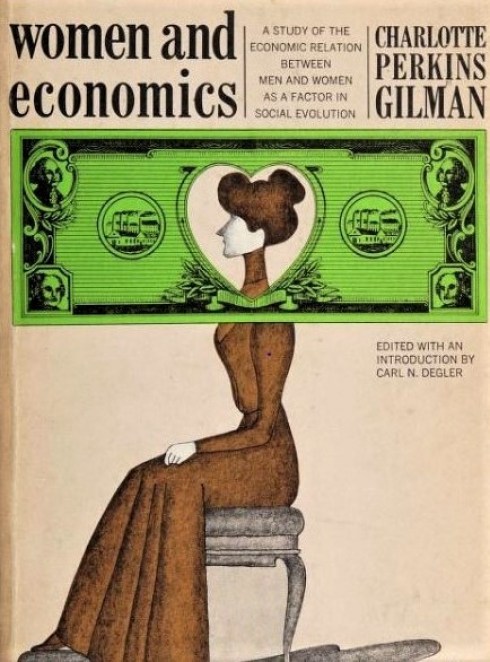
How I learned about the Suffrage movements in the UK and US: 1) Emmeline Pankhurst’s My Own Story (1914), because you’ve got to start with the founders; 2) Diane Atkinson’s Rise Up, Women is my favorite British survey—focusing on personal stories (and from Bloomsbury!) 3) here is our trans-Atlantic activist, Kitty Marion, whose extraordinary life is explored in Fern Riddell’s Death in Ten Minutes; 4) images are so important to this movement—on both sides of the Atlantic—and I’m obsessed with the work of British photographer Christina Broom; 5) and 6) I didn’t really find the writings of the founders of the US movement very accessible or enjoyable, so I went for more recent interpretations: Lisa Tetrault’s Myth of Seneca Falls and Faye Dudden’s Fighting Chance were particularly helpful in explaining some of the divisions in the movement; 7) Allison K. Lange’s brand-new Picturing Political Power explores the very important visual projections of Suffragists in the US; 8) in Massachusetts, it’s all about Lucy Stone, who must have visited Salem 100 times: she is the subject of several works, but I found Sally McMillen’s Lucy Stone: an Unapologetic Life the most helpful; 9) Charlotte Perkins Gilman’s Women and Economics (1898) provides classic context, and 10) and 11) two works of fiction in which Suffragettes and the Suffrage Movement play key roles: Tracy Chevalier’s Falling Angels and Lucy Ribchester’s The Hourglass Factory.

I couldn’t limit my list to 10 and I had to throw in some fiction: happy reading, everyone, and Happy Fourth!


Salem’s Scholar-Activist

The second president of the university where I teach was Alpheus Crosby (1810-1874), although his title was Principal of what was then known as Salem Normal School, a pioneering institution in both the education of teachers and women. While “scholar-activism” is an integral part of professional life for many in higher education today, it was a somewhat different pursuit in the nineteenth century, and Crosby’s life exemplifies that of a scholar-activist in that time, while also representing the differences between his time and ours. Crosby was an eminent scholar of classical Greek who became a passionate advocate of public education: for women and freed slaves in particular, for everyone in principle. He managed to pursue these two callings simultaneously even though they did not always intersect—-to connect them, he also became an expert on educational instruction, publishing papers and delivering lecturing on “emulation” and grammatical “analysis” (which seems to refer to dissecting sentences—a practice I wish was still current) and serving as editor of The Massachusetts Teacher. These professional activities were just part of his life, which also included a decades-long devotion to the abolitionist and suffrage movements and major roles in Salem’s key cultural institutions: the Salem Lyceum, the Salem Athenaeum, and the Essex Institute. He was a very “public man” by vocation and predilection.

Crosby pic

Crosby Normal School 1865 SSU

pixlr

Crosby Ad The Massachusetts Teacher 13Alpheus Crosby and several (not all!) of his equally successful siblings, the sons of Dr. Asa Crosby of Sandwich, New Hampshire. The Normal School at Salem on Broad and Summer Streets during Crosby’s tenure, c. 1857-1865, Salem State University Archives; just a few of the Salem institutions to which Alpheus Crosby volunteered considerable time: the Salem Lyceum, the Salem Athenaeum (then at Plummer Hall) and the Essex Institute, Cousins collection of the Phillips Library of the Peabody Essex Museum via Digital Commonwealth; Professor Crosby’s bestselling series of Greek textbooks, 1860.

Because Crosby was so active, he was memorialized everywhere upon his death in 1874. I read a lot of obituaries and none were pro forma: all were very personal and absolutely reverent. Some personal details: his first wife, Abigail Cutler of Newburyport, was an invalid whom he took on a tour of Europe after their marriage, during which she died in 1837. He returned to his professorship at Dartmouth, where he had commenced teaching at age 23, but resigned and moved to Newburyport to care for his mother-in-law, who was also an invalid, upon the death of her husband. During this period—over a decade—he continued his Greek scholarship but also served as Newburyport’s Superintendent of Schools. Upon Mrs. Cutler’s death, he went south to Salem and began his post at the Normal School. in 1857. There followed an expanded curriculum, a larger library, and enthusiastic (by all accounts) teaching by the Principal, who was clearly much more than an administrator: many student testimonies speak to his “remarkable spirit of earnestness” and enthusiasm, and then there is this glowing account in the Salem Observer, from December of 1861.

Crosby CollageCrosby Oberserver 3

In that same year, Crosby married Martha Kingman of Bridgewater, who was an instructor at the Normal School. As the Civil War progressed, he became increasingly focused on the emerging agenda of political, social and educational reform in the south, publishing several works on the topic, becoming the first chairman of the Salem Freedmen’s Aid Society, and taking on editorial duties for The Right Way, a new journal dedicated to advocating for progressive reconstruction. The urgency of this work prompted his resignation from the Normal School in 1866, citing “the critical condition of the country at the present time and the danger that the rights of colored people will not be duly regarded in the coming reconstruction.” That work—-and his classical scholarship—consumed him until his death in 1874. Several of the obituaries marking his death, including those in the New York Times and Boston Globe, make note of the two “colored girls” which Professor and Mrs. Crosby adopted, “an act which provoked much comment.” I have to admit I couldn’t find any comment and not much about these two girls, whom I suspect were fostered rather than adopted by the Crosbys. They are referred to (and provided for) in Crosby’s 1874 will as “Amy Lydia Dennis and Lucy B. Dennis, living with me.” I’d really like to know more about these two women.

Crosby Suffrage Collage

Crosby donation

Crosby Donation 3

20191117_151200 Post-“retirement”: advocacy for radical reconstruction and “impartial” suffrage, 1865-66, Library of Congress; just one donation to the Normal School at Salem. 111 Federal Street in Salem, the residence of Professor and Mrs. Crosby, along with Amy Lydia and Lucy B. Dennis, during the 1860s.

Obviously there is a lot more to learn about Professsor Alpheus Crosby: his life, his work, his world. He is book-worthy! I was inspired to post about him now because of a rather odd confluence of factors. I was reading up on Xenophon for the book I’m working on, as he was a very popular author of husbandry and household tracts in the Tudor era despite being dead for centuries, and I encountered Professor Crosby’s name everywhere I clicked. And the materialist side of me is a constant real- “estalker” and his Federal Street house has recently been on the market. Once I had Alpheus Crosby on my mind, he was suddenly everywhere: just last Friday I was walking back to my office after finishing my last class and I saw one of my students in the hall, waiting to begin her classical Greek tutorial with our Department’s ancient historian, Erik Jensen, and I thought: Professor Crosby would be so pleased!


Slaves in the Hunt House

There were two prompts for today’s post, both of which came as I was getting ready for the spring semester, after a productive sabbatical in which I thought and wrote very little about Salem’s history. The first prompt was the wonderful recognition of the work of one of my colleagues, Dr. Bethany Jay, whose book (co-edited with Dr. Cynthia Lynn Lyerly of Boston College) Understanding and Teaching American Slavery won the prestigious James Harvey Robinson prize for the “most outstanding contribution to the teaching and learning of history in any field for public or educational purposes” at this year’s annual meeting of the American Historical Association. The second prompt came from a former student of mine, now an archivist-in-training and public historian-by-passion, inquired as to the location of the remains of the burial ground of Salem’s Bulfinch-designed Almshouse on Salem Neck, a property which is now the site of a 1980s condominium development. I looked through the usual sources to try to help her, but then (as usual), got distracted: by this obituary in the Liberator, dated April 30, 1836.

slavery collage

Here we can read of the death of a long-time resident of the Almshouse, centengenarian Flora Jeans, an African-American woman who was once the widow of Bristow Hunt, a slave belonging to Capt. Wm. Hunt, who resided at the corner of Lynde Street. At the time of the general emancipation of the slaves in New England, Bristow partook of the sweets of freedom, in common with others of his race, and in the elevation of his feelings consequent on his being placed on a level with his fellow men, he nobly fought for the liberties of his country and was killed in battle by the side of a connection of his master’s family, who is now living. Sigh. Yet another amazing Salem story, drawing me back in: this city’s African-American history, as well as its revolutionary history, and its nineteenth-century history, and virtually all of its history, is so minimized and marginalized because of the incessant drumbeat: 1692, 1692, 1692, 1692, 1692, 1692, 1692, 1692, 1692, 1692, 1692, 1692. 1692, 1692.

bucks of america mhsThe paint-on-silk “Bucks of America” flag in the collection of the Massachusetts Historical Society, 1785-86, commemorating what is “believed to have been a Massachusetts militia company composed of African Americans and operating in Boston during the American Revolution, although no official records of the unit seem to exist”.

I don’t know much about American history; I began this blog partly because I wanted to learn more about Salem’s history because it seemed so overwhelmingly focused on the Witch Trials and I was curious about other eras and institutions. The last time I studied American history was in high school, where I can assure you I learned nothing about slavery and its myriad consequences. I avoided American history in college studiously, because it seemed so short and one-dimensional compared to the European and Asian history (I didn’t even think about African history). By the time I finished my doctoral program and started teaching I had learned a lot about slavery in the early modern Atlantic world, or about the slave trade, and I assumed that it formed a larger part of the secondary-school curriculum than when I was in high school. But that’s not the case, even now. Dr. Jay consulted with the Southern Poverty Law Center on their Teaching Toleration project, which surveyed 1000 American high-school seniors, 1700 history teachers, along with popular textbooks and state standards, in 2017 about their knowledge and presentation of slavery. The results were alarming, to say the least, and really surprising to me, although I suspect not as surprising to my Americanist colleagues: only 8% of high-school seniors identified slavery as the cause of the Civil War, few than one-third identified the 13th amendment as the formal end of slavery in the United States,  and less than half could define the “Middle Passage”. Eight percent.

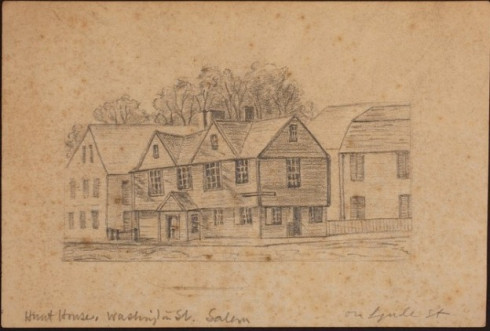
I feel fortunate to have learned a lot about slavery—its structures, consequences, and abolition—from my colleagues as well as my students. It’s not an easy subject; I really would prefer to look at our founding fathers as heroes rather than hypocrites, believe me (but Martin Luther and both Cromwells are troublesome creatures too). I teach our capstone seminar, in which students write long research papers over the course of the semester, pretty regularly, and I let students choose whatever topic they like, within reason and with my qualifications. Because Dr. Jay is such a popular professor, I’ve supervised papers on slave children, anti-slavery societies, the circumstances surrounding the abolition of slavery in Massachusetts, and The Liberator, among other related topics. So I’m not surprised to see such a detailed obituary of a poor African-American woman in 1836. Another popular professor in our department is Dr. Dane Morrison, who teaches the Colonial and Federal eras: he has inspired a full range of Revolutionary topics in my seminars, including one on African-American soldiers who fought for the American side despite the enticements of the British. So I’m not surprised to read about Bristow Hunt either: despite the flowery rhetoric in the obituary, I assume he was offered manumission in exchange for his military service, rather than absolutely, as slavery was not formally abolished in Massachusetts (by judicial review) until 1783. I don’t really know this to have been the case, but the fact that he died by the side of a connection of his master’s family is pretty telling. I wish I knew more about Bristow—and Flora—and their lives rather than just their deaths. I wish we all knew more about them, and I’m a bit embarrassed of my previous preoccupation on the house in which Bristow and others were enslaved. I’ve always been fascinated by this first-period house, which was demolished during the Civil War. It survives in paintings and photographs, neither of which offer us any insights into what went on inside.

hunt-house-cousins-and-riley

hunt-house-on-washington-and-lynde-streets-salem-hneCirca 1857 photograph of the Hunt House in Frank Cousins’ and Phil Riley’s Colonial Architecture in Salem (1919); undated drawing, Historic New England.

The antiquarian approach focuses on the house, on physical remainders rather than social history. So I was being an antiquarian, just like Sidney Perley, who wrote in the Essex Antiquarian [Volume II, 1898] that William Hunt (whom he does not call Captain) died in 1780 possessed of the “mansion house”, bake house, barn and lot; in the division of his real estate in 1782, the buildings and eastern portion of the lot were assigned to his son Lewis Hunt [who was] a baker, and had his shop in the front end of the house”. When William Hunt died in 1780, slavery was still technically legal in Massachusetts despite its brand-new constitution’s provision that “all men are born free and equal, and have….the right of enjoying and defending their lives and liberties”. And in the early 1770s, when the public discourse calling for freedom and condemning tyranny was intense and incessant, he placed a series of advertisements in the Salem papers offering a reward for the return of another of his slaves, Cato. This much we do know.

slavery 1771 essex gazette may 28Essex Gazette, May 28, 1771.