I am still processing Winterthur, so this is a rather premature post, but I wanted to get my first impressions and thoughts out there and sometimes posting is processing! It was just so wonderful, in so many ways, especially as my friends and I toured its many period rooms in the company of Wendy A. Cooper, Curator Emerita of Furniture and conservator Christine Thomson. If the majesty of the rooms and their furnishings was not enough, the commentary of these two brilliant women on style, detail, condition, context, and provenance provided a soundtrack of sorts which enhanced the whole experience. And we got to go where more scheduled tours could not–which is always fun: if we did not make it through Winterthur’s 175 rooms, we came pretty close, and by the time of the closing bell we were on the top floor. While Ms. Cooper’s specialty is furniture, she seemed to have a mastery of every object in every room, as well as the history of Winterthur itself, so the takeaway was a very personal, even intimate, view of both the museum, its collections, and its founder, Henry (Harry) Francis du Pont (1880-1969). During our tour, I was so focused on absorbing every little detail that I didn’t really process, but afterwards, and all this week, I kept comparing Winterthur to another famous house museum, across the pond: Sir John Soane’s Museum. I needed context, I needed a comparison, and while I know that Winterthur is comprised of parts of many different houses and inspired more by the tradition of installing period rooms that started right here in Salem with George Francis Dow’s exhibits at the Essex Institute and Soane’s (much smaller) house is uniquely his place and collection, and fixed at a more exact point in time, the two houses seem both stuffed and the stuff of very personal passions for collecting: materialistic rather than “scientific” wunderkammers.

 Port Royal Parlor at Winterthur and South Drawing Room at Sir John Soane’s Museum, photograph by Derry More.
The personal was my window into Winterthur: somehow stories of Mr. du Pont entertaining antique dealers over dinner and then proceeding to invite them to help rearrange the furniture reminded me of the more eccentric Mr. Soane. As I did when I first visited the London museum, I really felt the stamp of Mr. du Pont on Winterthur: period rooms can be rather cold, detached places (as they are literally detached), but Winterthur felt warm. The big, showy parlors and dining rooms of the main floors less so than the upper stories, but still, altogether an inviting installation—impressive for a museum of such scale.


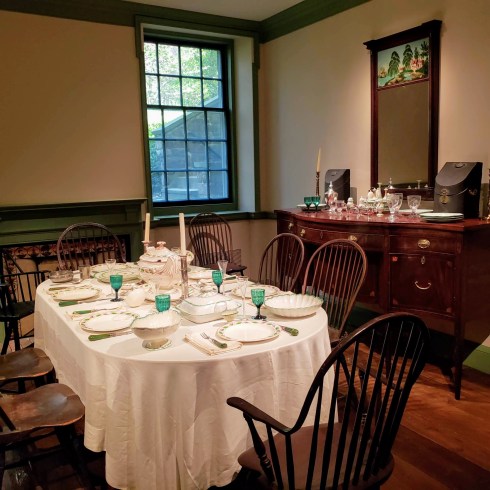
 So many rooms—and stuff—for eating and drinking, of course, but dining rooms can be very revealing in their details. After the famous Chinese Parlor are several shots of the Du Pont Dining Room, with the Derby family’s green knives and knife boxes (+ McIntire chairs and Needham secretary, and adjacent candlestick closet. I can’t remember the name of the second, simple dining room, which is one of my favorite Winterthur rooms, but the photograph just above is of Queen Anne Dining Room, which really represents Mr. du Pont’s creative abilities (as well as his collecting efforts).
Some more observations and thoughts not yet fully developed, impressions: you really have to put your New England preferences aside and pay tribute to Philadelphia and New York furniture when you visit Winterthur (particularly the former, wow), but Mr. du Pont seems to have been just as passionate a collector of American (or should I say eastern American) folk art as high-style furniture. I knew I could get pictures of the grand rooms from the Winterthur website (plus they have a great digital database) so I took pictures of lots of little things that caught my eye (see some below). How many eagles are there in Winterthur? They seemed to be everywhere. And tea tables! Apparently Mr. du Pont’s collections started with pink transferware and he continued to assemble pottery collections with great conviction: there are several rooms devoted entirely to a variety of wares, even spatterware. And yes, parochial person that I am, I did seek out Salem items, which were not hard to find: there’s a whole room dedicated to McIntire, and other pieces scattered around. In just one room, of painted furniture pretty high up, Ms. Cooper casually pointed out a lovely silk chimneypiece embroidered by Sarah Derby Gardner and a Silsbee chair. The Du Pont Dining Room (above) featured not only knives from the Derby family, but also some McIntire side chairs, and an amazing secretary/bookcase made by Nehemiah Adams. In his own suite of rooms, Mr. du Pont worked on another Salem secretary, with a Nathaniel Gould chest of drawers nearby. An entire room is wallpapered with a mural painted by Michel Felice Corné for the Lindall-Barnard-Andrews House at 393 Essex Street in Salem.


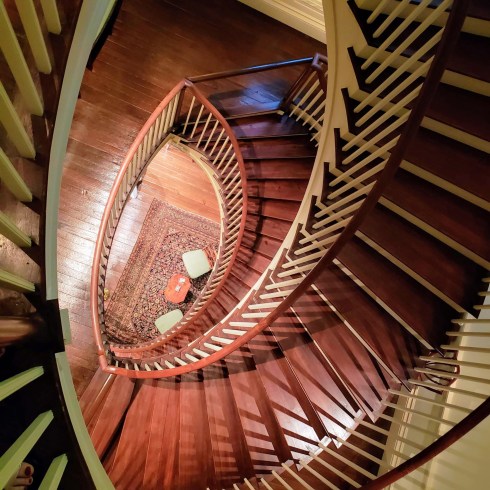


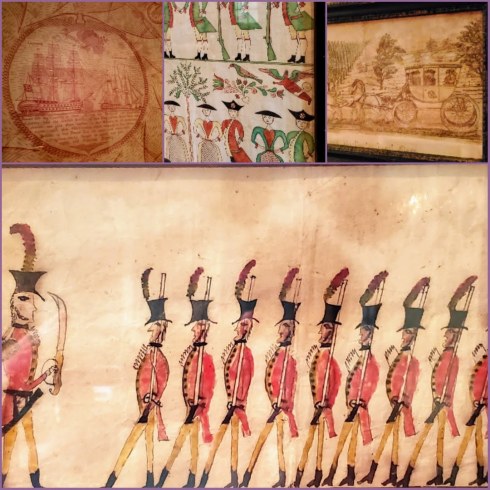


 The Montmorenci stair, taken from a North Carolina house, replaced the “baronial” staircase which Mr. du Pont’s father installed. Folk objects and images, just a few tea tables, and just one china room. Several Salem items: the chimneypiece embroidered by Sarah Derby Gardner, a Silsbee chair, Mr. du Pont’s secretary (and bed), and the Corné mural from the Lindall-Barnard-Andrews House.
I could go on and on and on, but I’m going to wrap it up with just a few more of my favorite things/rooms, in no particular order. I really loved the William and Mary Parlor, pretty much every image of George Washington (and there were many), the detail on an otherwise simple chest of drawers, two pastels by John Singleton Copley of himself and his wife (and the amazing high-style parlor which they overlook), a very early billiards table, and an elegant curved settee for which Mr. du Pont built a wall. And just to bring in a touch of a real wunderkammer, a wonderful little anatomical plate.





 An abandoned farmhouse on Old Dana Road, and the Quabbin Reservoir.


 A dreamy house—and former tavern—in Montague Center: listing


 All around Montague Center: house & barns, the Book Mill, Valley cats, Viennese heirlooms, the Homestead.


 Turners Falls, 1877, Digital Commonwealth ( I don’t think all of those streets were filled out!); the fast-flowing river after the Falls; workers’ housing. On the way home, the French King Bridge over the Connecticut River.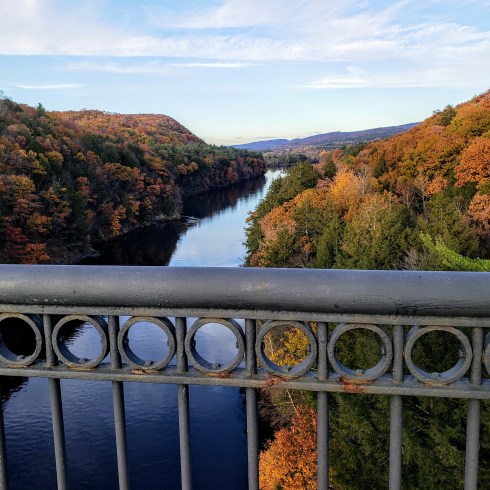


 The Hearse House in Marlow, New Hampshire.


 The McDermott Covered Bridge in Langdon (1864); the Meriden Bridge in Plainfield (1880); the Cilleyville (or Bog) Bridge in Andover (1887); the Keniston Bridge, also in Andover (1882); just two of Cornish’s FOUR covered bridges: somehow I missed the “Blow Me Down” Bridge and the Cornish-Windsor Bridge over the Connecticut River is


 Salisbury & Fremont, New Hampshire.
 Salem Register, August 19, 1841.








 Signs everywhere in Raleigh, which has held on to its state heritage markers (even for sites that no longer exist) and added lots more.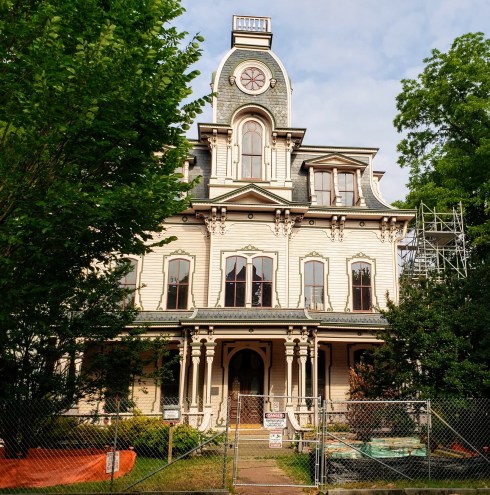


 The Heck-Andrews House (under renovation), Polk House, and Executive Mansion in the city center, and Oakwood beyond—and beyond Oakwood.

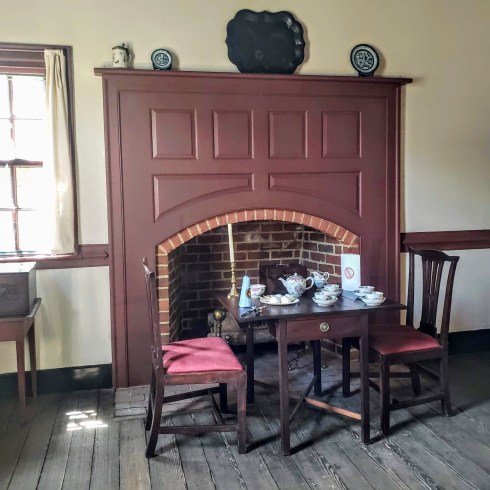


 Exteriors and Interiors of the Lane and Mordecai Houses + their gardens and the Andrew Johnson birthplace, adjacent to Mordecai.


 The City of Raleigh (COR) Museum: a must-visit spot; this last question is existential!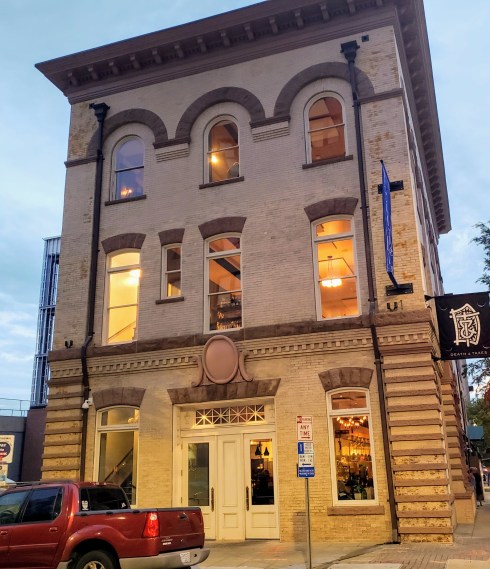


 Pages from Gardner’s Sketchbook, Volume One at Duke University Library’s


 Calvin Townes of the First Regiment; the surviving Regiment at Salem Willows, 1890; Memorials at Spotsylvania and in the Essex Institute, from the History of the First Regiment of Heavy Artillery, Massachusetts Volunteers, formerly the Fourteenth Regiment of Infantry, 1861-1865 (1917); the demolished Harris Farm.


 The Munroe House on Lexington Green (which is presently for

 The Jonathan Corwin (Witch) House, in all of its incarnations in an early 20th century postcard, Historic New England; in 1947 as restored by Gordon Robb and Historic Salem, Inc., and photographed by Harry Sampson, and in the tourist attraction in the 1950s, Arthur Griffin via Digital Commonwealth.
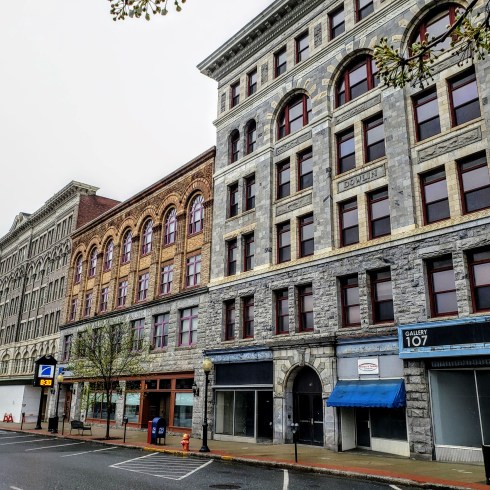


 Some of the larger Victorians on Church Street (just above) need some help, but just up the hill is a lovely neighborhood of mostly-restored structures. Below: the Arnold Print Works produced a full line of textiles over their long history, but one of their popular products in the 1890s were these stuffed animal templates (examples below from the collections of the Rhode Island School of Design Museum & Cooper Hewitt): the finished products are very collectible and you can buy reproductions too (here are some Etsy