I’m a bit late with this summer reading list: it’s August! And this list is more intentional than actual, so I’m not going to be able to give informed commentary on most of these books. I planned to read all of them, but as soon as the end-of-semester responsibilities were over, intensive gardening began. And as soon as intensive spring gardening ceased, family trips were taken. And then I returned home and BOOM: big book contract! So the last month has been all about writing rather than reading. Yet I have heard from many of you that you like my book lists, so I thought I would offer up one: I did choose these carefully, and many of them are sitting by my bedside, but I usually pass out before I can pick one up! I didn’t even have time to go back and look at my previous book lists but I bet there is a trend of increasing interest in historical fiction over the years: I used to be pretty snobby about that genre, but after reading several titles which were researched meticulously and crafted beautifully—enabling one to really plunge into the world in question—I have changed my tune. I think there are a few of these on this list: you’ll have to forward your assessments, and after my own book is finished I will either return to these books—or I won’t!
So let’s start with fiction. I am dying to read James Meek’s To Calais, in Ordinary Time, which is set in England and France during the Hundred Years’ War and Black Death, and the publication date of Emma Donoghue’s 1918 book was moved up to Corona time. Talk about plunging into the past: I read Andrew Miller’s previous historical novel, Pure, last year and was definitely plunged into the world of an eighteenth-century engineer in Paris; Free is set in Scotland during the Napoleonic Wars, and I really want to go there. I always want to go to sixteenth-century England, even into the somber Shakespeare household following the death of Hamnet, from the plague, of course. Big jump in terms of both chronology and topics: I’ve been reading my way through Evelyn Waugh and his era over the years, and I loved these new covers so purchased them for my bedside stack (I purchased Martin Green’s Children of the Sun a few years ago for some context and insights into this era, but have read it only in snippets so far). And another favorite era in fiction and fact: the Daphne Du Maurier’s novel is from the 1940s, Nadine Akkerman’s scholarly book on female spies in the seventeenth century is much more recent.


For the first time every, I think I have more fiction books than nonfiction—-probably because I’m all nonfiction all the time for by work: both writing and teaching. I don’t really have time to indulge my curiosity this year, but if I did, I would move Ivory Vikings by Nancy Marie Brown, about the medieval Lewis Chessmen, up to the top of my bedside stack: I’ve been curious about these guys forever. The other books are somewhat related to my book so I supposed I can categorize them as research: I’m writing about gardening and cooking right now, in my Chapter Three, so Floud’s and Dawson’s books are right by my side, offering some great insights and context supplementary to my primary sources. Newton is a little late for me, but I’ve got to read all about alchemy for my book as it creeps into several topics (medicine, beauty, even agriculture), so William R. Newman’s Newton the Alchemist will be illuminating, I’m sure.


 The Sensational Sidney brothers as boys: Sir Philip and Sir Robert, from a painting by Mark Garrard at the Sidney’s ancestral home Penshurst Palace, Kent.
 Sir Philip Sidney, 1577-78, courtesy the Marquess of Bath, Longleat House; A trio of Sidney copied portraits from the sixteenth, eighteenth, and twentieth centuries: National Portrait Gallery, London; an 18th century copy, NPG, London, and a 20th century version attributed to Frederick Hawkesworth Sinclair, Pembroke College, Oxford University.


 Sir Philip Sidney, early 17th century, National Trust @Knole; by John de Critz the Elder, c. 1620; by John de Critz the Elder, 17th century; by George Knapton, 1739.

 1931 Cheshire House edition with illustrations by Abner Epstein; 1950 British film version.


 The house exterior in the 1928 American film, the 1950 British Film, and the 1960 Roger Corman film; Jean Epstein’s 1928 film prefers to focus on its baronial interior.


 The House: illustrations by Robert Swain Gifford (1884); Daniel Walper (1922), Albert Dubout (1948), Arthur Rackham (1935) and Gris Grimly (2004).
 Confronting a GEORGIAN haunted house: The Little Stranger (2018). Talk about a house-centered story! In both the film and the book, the house is a MAJOR character, even more so than in Usher. The juxtaposition of the airy (though decayed) Georgian and the “presence” heightens the tension, and you realize that possession has multiple meanings.


 Mary Ann Wilson, Young Woman Wearing a Turban, c. 1800-1825, Museum of Fine Arts, Boston; Portrait of a “fashionable” woman, c. 1810, Northeast Auctions; Hepzibah and her turban (or turbans, as they all seem to be different styles) by Maude and Genevieve Cowles (1899), A.A. Dixon (1903) and Helen Mason Grose (1924), and a more recent (1997) Classics Illustrated cover depicting a very grim turban-wearing woman indeed.

 Photograph of Dolley Madison by Mathew Brady, 1848, Library of Congress; Painting by William S. Elwell, also 1848, National Portrait Gallery. Dolley descends upon the White House and witnesses her husband’s presidential oath, be-turbaned of course, in two YA books, Dolley Madison, First Lady, by Arden Davis Melick (with illustrations by Ronald Dorfman), 1970 & Dolly Madison, Famous First Lady, by Mary R. Davidson (with illustrations by Erica Merkling), 1992.
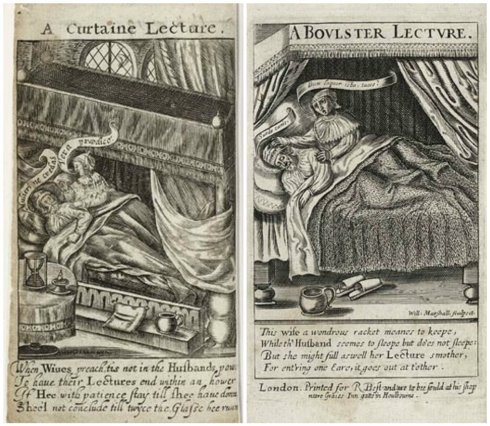


 A Curtain Lecture pub. by J. Lewis Marks, 1824, British Museum; illustrations by John Leech for the first edition of Mrs. Caudle’s Curtain Lectures, 1845; Mrs. Caudle Card (with real hair!), Victoria & Albert Museum; 1907 stereoview from the Library of Congress; postcards, c. 1900-1910.




 A century of time machines, from Enrique Gaspar’s “time ship” (1887) to the 1960 Wells machine, to TARDIS.


 Knights descend on Salem!