Tag Archives: holidays

What I want for Christmas

Well, it’s a bit too late to put in this request, but if I had been able to make a Christmas list of wants rather than chores and things to buy at the grocery store, these amazing “Christmas Pudding” dishes designed by Eric Ravilious would be on the top. I’ve never really appreciated either holiday china or twentieth-century china, but these dishes are just so striking, as are most of the pieces made by Ravilious in his short life (1903-1942). My favorite is the first plate with what looks like a flaming (steaming) Christmas pudding, which was accentuated by the Victoria & Albert Museum in the form of a Christmas card. I was looking for a traditional Christmas pudding recipe when I found this plate, and then my search was over–I put in an order with our new bakery because I was so distracted by these decidedly cooler (in more ways than one) versions. Happy Christmas, everyone.

Christmas Pudding Plate

Christmas Pudding Plate Card

Christmas Pudding Plate 2

Christmas Pudding Sauce

Christmas pudding Bowl

Wedgwood “Christmas Pudding” dishes designed by Eric Ravilious, 1938, collection of the Victoria & Albert Museum, London.


Smoking Bishop

It must be because I have traditional Christmas drinks on the brain, but for the first time a reference to smoking Bishop in one of the last lines of Charles Dickens’ Christmas Carol caught my attention when I saw a live musical version the other day. I could not count how many times I’ve seen this story on stage and screen, but I never really heard that term before. It came right at the end, after Scrooge has been reformed and is in the process of pledging his support to Bob Cratchit and his family:  “A merry Christmas Bob! said Scrooge with an earnestness that could not be mistaken, as he clapped him on the back. “A merrier Christmas, Bob, than I have given you, for many a year! I’ll raise your salary and endeavour to assist your struggling family, and we’ll discuss your affairs this very afternoon, before this very fire, over a Christmas bowl of smoking Bishop, Bob! Make up the fires, and buy another coal-scuttle before you dot another i, Bob Cratchit!”

Smoking Bishop 1

Smoking Bishop 3

Smoking Bishop 2

Now at first I thought this name was yet another example of early modern English anti-Catholicism, or at the very least, an anti-establishment jab. The Puritans disliked the Anglican bishops in their own country just as much as Catholic bishops abroad. But it turns out the name is all about color: the mulled red wine, mixed with port and spices and roasted fruit, was also known as purple wine, a reference to the purple robes and sashes that bishops wore–and still do. Yet another variation on the Wassail–there appear to be countless.

Smoking Bishop 4

Illustrations from the 1911 edition of Dickens’ Christmas Carol by A.C. Michael, the 1915 edition by Arthur Rackham, and Scrooge and Cratchit drinking their Smoking Bishop before the fire by John Leech; Pope Francis greeting a succession of bishops at St. Peters.


Be Merry and Drink Perry

One of the most famous colonial Christmas “incidents” occurred here in Salem on Christmas night, 1679: the so-called (by Stephen Nissenbaum, author of The Battle for Christmas) “Salem Wassail”. In the old English wassailing tradition, but quite contrary to the prevalent Puritan culture of Salem, four young men from Salem Village burst into the remote home of 72-year-old John Rowden and began singing before his hearth in an effort to entice him to offer them some of his (apparently renown) pear wine, or perry. Rowden and his family tried to get the intruders to leave, but they responded that “it was Christmas Day at night and they came to be merry and drink perry, which was not to be had anywhere else but here, and perry they would have before they went.”  The Rowdens were steadfast (after all Christmas revelry was actually illegal in the colony from 1659-1681), but wavered a bit when the young men offered them some money for the wine, “coins” which turned out to be pieces of lead. More pleading, a request for directions to Marblehead  (apparently not as dry as Salem), and then the young men stoned the Rowden homestead in demand of perry. Desperate times call for desperate measures, and as we all know, the holidays can promote rather disorderly behavior. The seventeenth-century “war on Christmas”, provoked by Puritans who saw no scriptural basis for the holiday and associated it with paganism (they were right) and popery, was largely over in Old England at the time of the “Salem Wassail” and it would soon end in New England as well.

Here and now, I have stocked up for my Christmas visitors with perry ( a traditional local version from Russell Orchards in Ipswich and a more festive sparkling variety–see below) as well as other spirits: I don’t want to get stoned.

Perry

Anon-The_Vindication_of_Christmas_or-Wing-V474-105_E_684_1_-p1

Anon-The_merry_boys_of_Christmas_or-Wing-M1852-A6_2_24_-p1

Bonny Doon Vineyards Sparkling Perry label (there’s also quite a few artisanal pear CIDERS on the market now–not sure if they are the same as perry; Russell Orchards makes both); two tracts from the war on Christmas in the 17th century: The Vindication of Christmas (1653) and Merry Boys of Christmas, or The Milk-Maids New Years-Gift (1660).


Christmas Roses

I like to decorate with live plants at the holidays–and all year round–but I don’t particularly care for the traditional Christmas plants: cyclamen is too gaudy for me, as are Christmas cacti, and I can’t stand the smell of paperwhites. I suppose amaryllis are alright, but I can never get them to bloom on time and, again, I find them a bit showy. Poinsettias are too predictable (and I have cats). So the only flowering plant that I seek this time of year are hellebores, varieties of which are alternatively called “Christmas Roses” (helleborus niger) and “Lenten Roses”. You’ve got to love a winter-blooming flower, and the association with Christmas is based not only on the season but also on the story of a penniless shepherdess who sought to give a gift to the baby Jesus–an angel turned her tears into pale waxen flowers, which were, of course, the greatest gift. Like tears, hellebore petals are seemingly-fragile, especially in contrast to their sturdier stems, and white, like winter (although there are pale pink varieties too–but the Christmas rose is white). There is another dissonance between the virtues of the plant and its seasonal beauty:  all of the classical and medieval herbals testify to its toxic qualities.

Hellebore BM Egerton

Hellebore after John White BM 1600

Hellebore Mary Delaney BM 1770s

Hellebore Cooper Hewitt early 19th century

Hellebore McIntosh

Hellebores 3

Hellebores 2 013

A succession of hellebores:  British Library MS. Egerton 747, Salernitan Herbal c. 1280-1310; two images from the British Museum: after John White, c. 1600 and Mary Delaney, 1770s; early 19th century British soft paste plate from the Cooper Hewitt National Design Museum, Smithsonian; a Charles Rennie MacKintosh drawing, c. 1901-1914, from the Victoria & Albert Museum, London; one of my potted hellebores, overlooking a snowy Chestnut Street.


Verjuice

From sweet to sour, or tart.  Over the Thanksgiving holiday, I had the most delicious pork scallopini at an Italian restaurant in Rhinebeck, New York. It had an interesting acidic flavor in its sauce–my stepmother identified it as vinegar, but after looking through a bunch of recipes, I’m pretty sure it was verjuice, a close relation with a long history. Verjuice (or verjus) just means “green juice”, and generally it refers to the juice of strained unripe apples or grapes, hence the tartness, but I’ve seen references to it in recipes dating way back–and most prominently in the late fourteenth-century household guide Le Ménagier de Paris and the Tudor cookbooks of Thomas Dawson. I always thought verjuice/verjus was just another name for vinegar (an incredibly important substance in the medieval and early modern eras–essential in both cooking and preservation), but upon closer reading, it’s clear that it is different, as this recipe from Le Ménagier makes clear:  SAUCE FOR RABBIT OR FOR RIVER-BIRD OR FOR WOOD-DOVE. Fry onions in good oil, or mince them and put to cook in the dripping-pan with beef drippings, and do not add verjuice nor vinegar until boiling: and then add half verjuice half wine and a little vinegar, and pass the spices. Then take half wine half verjuice and a little vinegar, and put all in the dripping pan under the rabbit, dove or river-bird; and when they are cooked, boil the sauce, and have some bits of toasted bread and put in with the bird.

Verjuice was (is) neither vinegar nor wine, but perhaps something in between, which is not my original observation. In this foodie world that we live in, it was only a matter of time before verjuice made a comeback, and the Australian chef Maggie Beer started producing it commercially a while ago. Just the other day, I was strolling through a shop in Newburyport, and there it was. So now I can try to make my own perfect scallopini–or maybe a traditional syllabub for our Christmas Day desert.

Verjuice 002

Verjuice Dawson

Verjuice BM

Noble Verjus at Wishbasket in Newburyport; Title page of the 1610 edition of Thomas Dawson’s The Good Huswifes Jewel, which has many recipes calling for verjuice; “As sour as Verjuice”, George Hunt print c. 1825, British Museum.


Christmas in Salem 2013

The Christmas in Salem house tour, Historic Salem, Inc.’s major fundraiser, has been an annual tradition in Salem for over 30 years. It alternates between neighborhoods from year to year, and this year’s tour–Ports of Call–is centered on Derby and Essex Streets in the eastern end of the city. I’m always impressed with the effort that goes into this tour, as well as the generosity of the owners (and I speak from experience here–it’s quite a commitment), but of course it’s all about the architecture. Ports of Call suggests a maritime theme, but for me, this year’s tour was all about architectural diversity–as I walked through a succession of houses that included McIntire’s perfect Gardner-Pingree House and a stunning modernized house on Salem Harbor filled with the “souvenirs” of a global life well-lived with a bunch of super-insightful friends, I was, once again, blown away by Salem’s architecture. The tour is on today, so if you’re in our area you should go.

Starting out at Gardner-Pingree (1805):

Christmas in Salem 045

Christmas in Salem 048p

Christmas in Salem 051

Christmas in Salem 053

Some amazing floors at 91 Essex Street (1868):

Christmas in Salem 061

The very creative owners of Two Curtis Street (c. 1731), short on space but quite attached to their piano, turned their dining room into a “lounge” situated in its quadrilateral addition!:

Christmas in Salem 064p

Christmas in Salem 067

Various vignettes and views of the Captain John Hodges House (c. 1750):

Christmas in Salem 027

Christmas in Salem 025

Christmas in Salem 075p

Christmas in Salem 076

Captain Hodges himself, and exterior decorations of the house:

Christmas in Salem 030

Christmas in Salem 034

Christmas in Salem 039

26 Hardy Street (built 1851): a Christmas display with Lenin bust, and the dining room overlooking Salem Harbor. So much to see I was overwhelmed!

Christmas in Salem 098

Christmas in Salem 105

Purple glass doorknob leading into the Sarah Silsbee House (c. 1807); “Three lobstermen” in a Derby Street shop window).

Christmas in Salem 136

Christmas in Salem 080


Rhinebeck & Red Hook

Just back from a long celebratory Thanksgiving weekend in the Hudson River Valley, stuffed and tired. In between the festivities, I indulged in my usual activities:  looking around for interesting houses, and things. Almost as soon as you cross over the line from Massachusetts into New York the traditional domestic architecture is different, which never ceases to amaze me. You enter into a world of board and batten, center gable roofs, and little square second-story windows. Lots more pillars. I believe that the Dutch influence is much less evident on the eastern side of the Hudson River where my brother lives than the western, but I could be wrong: my favorite house of the weekend, which I’ll start with below, has a Dutch look to it along with lots of interesting outbuildings, all of which possess an irresistible air of abandonment–love the Gothic Revival windows casually propped up against the side of its barn.

Rhinebeck 008

Rhinebeck 010

Rhinebeck 014

Rhinebeck 016

Some more Rhinebeck houses that caught my eye, beginning with the center-gabled ones that are everywhere in this area, and ending with a house that is in Red Hook, just to the north along route 9G: Rhinebeck was a bit crowded on Black Friday so I ventured up there.

Rhinebeck 138

Rhinebeck 028

Rhinebeck 021

Rhinebeck 065

I have pledged to do all my Christmas shopping in downtown Salem, but I can look elsewhere, so I popped in all the shops of Rhinebeck and then drove up to less-precious Red Hook. Just a few things that caught my eye–still-trendy mismatched pattern plates from Spruce Design & Decor, embroidered pictures and cardboard “busts” (dressed for the holidays) from Paper Trail, and an assortment of creatures from Tivoli Mercantile.

Rhinebeck 040

Rhinebeck 145

Rhinebeck 148

Rhinebeck 060

Rhinebeck 061


Late November in Salem

November is the month where you notice things that go unnoticed in other months: leaves hide and distract, and snow covers. This has been such a busy semester that I feel like I’ve been walking around with blinders on, but this past weekend I took them off and took a long walk around Salem and saw new (to me), developing, and seasonal things: roses that bloomed and then froze, building projects everywhere, details of houses and landscapes that I had never noticed before. The light is so clear at this time of year as well, so there is color popping out of the starkness, unlike March, the other stark (though muddy) month. I snapped a few pumpkin-colored houses to get me in the mood for Thanksgiving.

Thanksgiving 007

Thanksgiving 009

They’re still here (in the Charter Street Burying Ground), even after October; the 17th-century Pickman house (I’m still obsessed with this family–more next week).

Thanksgiving 012

Thanksgiving 021

The trees next to the Peabody Essex Museum are truly more beautiful without their leaves, and I wonder who tagged the Marine Arts Gallery next door? Frozen red roses in front of the PEM’s 17th-century John Ward house.

Thanksgiving 023

Thanksgiving 026

Thanksgiving 027

So happy that the Washington Arch on the Common is being repaired, along with the Common fence; two brick houses on Pickman Street: the first is completely covered by ivy in the summer, the second (“The Mack”) I never noticed before–great entrance.

Thanksgiving 038

Thanksgiving 035

Thanksgiving 051

Great house off Bridge Street; more frozen roses.

Thanksgiving 052

Thanksgiving 055

Thanksgiving 062

Three very different pumpkin-colored houses, on Derby Street, in the Willows, and on Lafayette Street–I was losing the light with the last one.


Ceramic City

My material side–always simmering under the surface–almost takes over during the holidays: I have no doubt that I would be consumed by it if I didn’t also have lots of academic responsibilities at the same time. It’s not just shopping, it’s really more about decorating–I have to have a theme, and the theme must layered all over the house–which means I have to get ready now. This year, I’ve decided to go with little clay villages, a ceramic city of sorts, interwoven with the usual holiday stuff (but not a kitschy enchanted village). I was inspired by the “Town Square Sculptures” of ceramicist Molly Hatch, but as soon as I started looking, I’ve been finding little clay houses everywhere. Here are a few of my favorites on the web, and next weekend I’m off to check out a potential treasure trove in New Hampshire. Please forward any additional sources, as right after Thanksgiving, I’ll have to be ready to assemble my ceramic city.

Ceramic City Hatch

Ceramic City Hatch 2

I adore these little houses by Rowena Brown, modeled after the cottages of St. Kilda, the westernmost islands of the Outer Hebrides off Scotland, but they might be a bit too rustic for my little city, and definitely too precious to display for only one month a year:

Ceramic Houses 2

Ceramic Houses

The houses which I am eying on Etsy:

Ceramic City Poast

Ceramic Houses Poast 2

Ceramic Houses Poast 3

Ceramic House Red

Ceramic City White Cottage

Lots of tea light holders–lighthouses–out there (these are my favorite), but most are a bit too cute for my taste, and I think I’m going to refrain from all of the collectible series of miniature houses, from Europe and America and the past and the present, as well. So it’s going to take a while to build my city, but in the meantime the many deer I’ve collected over the years can dominate the landscape.


Last Men Standing

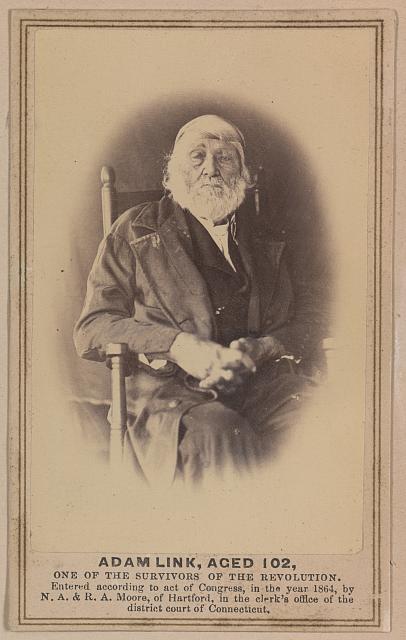
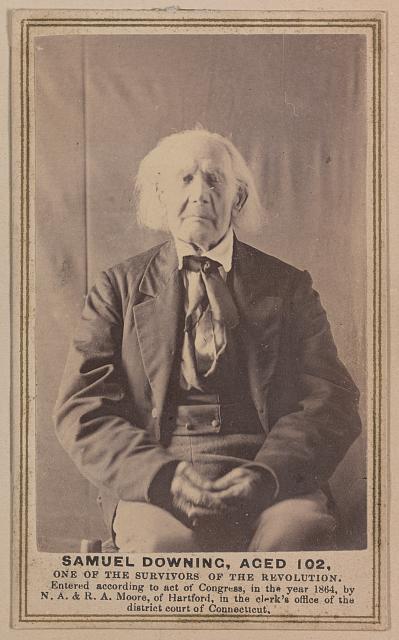
We are accustomed to seeing photographs of veterans—of the recent wars in Afghanistan and Iraq, of Vietnam, of World Wars I and II, of the Spanish-American War, and even of the Civil War—but not of the American Revolution, as the first daguerreotypes were made a half-century after its conclusion. But such images do exist, first compiled in an extraordinary book that I’ve just discovered:  E.B. Hillard’s The Last Men of the Revolution (1864). The Connecticut minister clearly had a mission of remembrance in the midst of the Civil War, and he made pilgrimages to the homes of six surviving Revolutionary War veterans, accompanied by Nelson and Roswell Moore, brother photographers from Hartford. I’m sure my Americanist colleagues know of this book, but its existence is a revelation to me: how shocking to gaze upon the images of men who, in Hillard’s words, “looked on Washington…[and] heard his words”.

Hillard’s little volume contains eagle-encircled images of the old men in their best dress, along with color plates of their homes and wonderful little vignettes which cover their experiences in the war and in life, along with their views of the “present rebellion”—no confederate sympathies here! There are also prescriptions for longevity: lots of smoking, moderate drinking, “no particular attention to diet”, lifelong physical exertion. You can see the book’s plates here, and below are individual carte-de-visite images from the Library of Congress–beginning with William Hutchings, who was born in my hometown of York, Maine (then Massachusetts, of course) and ending with Newburyport-born Samuel Downing, who harvested fifteen bushels of carrots on the 90-degree day before Hillard came to call.

Last Men Hutchings

Last Men Waldo

Last Men Link

Last Men Cook

Last Men Millener

Last Men Downing

I wish I knew much more about the contemporary reception of Hillard’s book and the Moores’ photographs, but they are certainly inspirational now. “New” images of Revolutionary War veterans have been uncovered/discovered, most notably by Utah-based journalist and collector Joseph M. Bauman, who recently published his collection in a book entitled Don’t Tread on Me:  Photographs and  Life Stories of American Revolutionaries (2012) and “daguerreotype detective” Maureen Taylor, who has published two volumes entitled The Last Muster. Images of the Revolutionary War Generation. The more interest there is in something, the higher the likelihood of finding more of it, in the case of these rare daguerreotypes, uncatalogued family collections are probably the key source. You can see a lovely portfolio of Bauman’s collection here:  my favorites among them are another Massachusetts/Mainer, James W. Head, and the flamboyant George Fishley, famous resident of Portsmouth, New Hampshire and “last of the Cocked Hats”.

Last Men James W. Head

Last Men George Fishley

Revolutionary War veterans James W. Head and George Fishley: images courtesy of Joseph Bauman.