I was listening to the TED talk of biodiversity warrior Cory Fowler the other day when I suddenly became panicked about the dwindling variety of apples in our world. It must be the season, but immediately this issue resonated with me: we have apparently lost 86% of the varieties of apples we had a century ago: 86%! Of course I am very, very late to the party: Thoreau was wandering around the woods and fields of Massachusetts 150 years ago reveling in the sheer variety of pomological splendor before him while at that same time observing that “it is remarkable how closely the history of the apple-tree is with that of man” and “the era of the wild apple will soon be over”. He complains about the preponderance of Baldwins, now relatively rare, but it seems like all we have are boring McIntosh, Delicious, Gala, and Granny Smith apples in the grocery stores today. I looked through some agricultural books, journals, and catalogs from the middle of the nineteenth century, beginning with the several editions of Robert Manning’s Book of Fruits and proceeding through The Apple Culturist (1871), and came up with a list of about 150 apple varieties which were cultivated just in Massachusetts at that time, including the aforementioned Baldwin, along with Bellflower, Blue Permain, Canada Reinette, Duchess of Oldenberg, Early Joe, Fall Pippin, Fenouillet Jaune, Grimes’ Golden Pippin, Hawthorndean, Hubbardston’s Nonsuch (to which there is a monument dedicated in Wilmington, Massachusetts), Myers’s Nonpareil, Newtown Spitzenberg, Northern Spy, Pickman Pippin, Pick’s Pleasant, Pound Royal, Red Astrakhan, Rhode Island Greening, Roxbury Russet (very famous as “New England’s first pomological experiment”), and my very favorite, Westfield Seek-no-further. There are a few local growers still cultivating some of these varieties, but most of them are no more.
We can’t taste all of these antiquated apples (though some, it seems, we can!), be we can see them, thanks to a great visual source: the USDA Pomological Watercolor Collection, which contains over 7000 images of fruit from 1886 to 1942.We used to have over 7000 apples, and now we have pictures.


 A Baldwin apple, 1915, by Mary Daisy Arnold; Early Joe, 1898, by Deborah Griscom Passmore; Hubbardston, 1928, Mary Daisy Arnold; Northern Spy, 1905, by Elsie Lower; Roxbury Russet, 1905, by Amanda Almira Newton: all U.S. Department of Agriculture Pomological Watercolor Collection. Rare and Special Collections, National Agricultural Library, Beltsville, MD 20705. A real Roxbury Russet from Clarkdale Fruit Farms in Deerfield, Massachusetts.



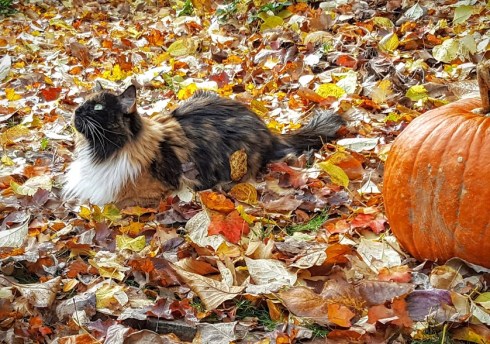


 Lots of color around town, even though the leaves haven’t turned yet….


 Still green…..