Winter Salem, Day and Night

This is a rather lazy picture post: I’m basking in the glow of the publication of my book and rather drained from teaching AND I have some nice pictures of Salem on my camera roll so I thought I would just share them. Salem is really lovely after snowfalls: the architecture pops as the automobiles disappear. It’s rather brown out there now: these photographs were taken after a big snowstorm several weeks ago and a much smaller one a week ago. There are some truly dreadful structures that have risen in Salem over the past few years downtown and around, but if you stick to the neighborhoods you can avoid them for the most part. I observe a strict don’t look up (or over) rule as I walk to work past the Frankenstein-esque Hampton Inn, but once I make it home to the McIntire District I’m happy.

After the first big snowstorm:


The park, our house and garden, and a few other snowy structures on Super Bowl evening, and earlier in the day:


And here’s my hot-off-the-press book!


Candy Land

In my sweetest dreams Salem is Candy Land rather than Witch City, and it certainly has the heritage to claim that title (although Candy Land was a Milton Bradley game rather than a Parker Brothers production.) There are of course the famous Gibralters and Black Jacks, still sold at the Ye Olde Pepper Candy Company on Derby Street, America’s oldest candy company. Mrs. Spencer sold her hard candy from a horse-driven carriage, and her primary competition seems to have been the stationary confectioner John Simon, whose shop was stocked with a variety of syrups and sweets, everything from anise drops to peppermint. He was always announcing his “removal” to Boston but somehow never made the move. Before the later nineteenth century, however, most confectionary item were not sold by single confectioners, but rather by grocers and apothecaries, and their lists of available sweets became longer and longer with every decade. Nourse’s Fruit Store on Washington Street sold “calves foot jelly candy, strawberry jelly candy, sherbet candy, gum jelly drops, and “East India Red Rock Candy” and all sorts of candies made with the New England’s favorite ingredient, molasses. Confections got a bit softer in the later nineteenth century, when cream candies became popular, and then comes Chocolate!

The Theodore Metcalf Company, one of Boston’s most successful apothecaries, published a beautiful pamphlet on gibralters and black jacks but these were SALEM candies; Nourse’s advertisement, Salem Observer 4 November 1865; Trade cards illustrate the softer trend in confectionary consumption.

The decline of hard candy and the rise of chocolate seems to be a major trend, but candy customers still loved variety. The most successful, and very long-running, confectionary business in twentieth-century Salem was the “Palace of Sweets” on Essex Street, from which the Moustakis Brothers sold their “mastermade” (a patented term) confections. This business was in operation from 1905 until 1968, and after the Taft Summer White House in Beverly placed a series of larger orders it received—and marketed—the presidential seal of approval.

Moustakis Brothers’ Menu from the digital archives of the Culinary Institute of Technology.

Salem is still candy central, in fact two confectionary shops opened up just this past year: Curly Girl Candy Shop on Washington Street and the Chocolate Pantry on Derby, not far from Ye Olde Pepper Candy Company further down the street. And then there is the venerable and amazing Harbor Sweets, the manufacturers of my very favorite candy, Sweet Sloops. I don’t even really have a sweet tooth, and if I am going to indulge I prefer jelly beans to chocolates, but bring a box of Sweet Sloops into the house and I will not rest until they are gone!

The House of the Seven Gables and Ye Olde Pepper Candy Company sponsored the ice sculpture of Mrs. Spencer’s horse and carriage for the Salem’s So Sweet festival this past weekend: its position made it difficult to photograph but it’s much bigger than it appears in this photo! My beloved Sweet Sloops, available at Harbor Sweets on Leavitt Street in Salem as well as lots of other retailers.


John Remond’s Struggle for Citizenship

I’ve written about the Remonds, the African-American family who lived, worked, and strove for a succession of causes in nineteenth-century Salem quite a bit, but I think there is more to write, and more to learn. I live right next to Hamilton Hall, which was the center of many of their activities, and it’s really difficult for me NOT to think of it as their hall, their place. Rather intimate spaces in our home, including my study, the kitchen, and our dressing room (I know, who has a dressing room? Well, we live in a town house with interconnected bedrooms so that’s what we call the room adjacent to our bedroom as that’s pretty much all we do in there), look out to the Hall and so I feel like I am constantly in its presence or their presence. Charles Lenox and Sarah Parker Remond are the famous Remonds, as they were both very active speakers for the Abolitionist movement here in America and also (in the case of Sarah) in England, but it is their father, John Remond (1788-1874), who captivates me. He was an incredible man in so many ways and I am constantly trying to understand the historical landscape which he navigated so successfully. He arrived in Massachusetts from Curaçao in 1798 as a lone ten-year-old and over the next decade established himself in several occupations, married Nancy Lenox of Newton, and became settled in Salem’s newest assembly house, Hamilton Hall. During the following decades, his primary occupational identity as caterer and manager of the Hall was supplemented by a succession of provisioning roles: restauranter, grocer, wholesaler. He acquired properties in Salem and supported the various entrepreneurial and activist pursuits of his eight children. “Venerable” and “famous” are the adjectives employed in his 1874 obituaries, indicating that he attained a high level of respect for the accomplishments of his long life. In retrospect, his career looks like the proverbial American success story, unencumbered by race (I’m sure this is not true, but it looks that way from afar). Those most “American” of commemorators, the Daughters of the American Revolution, even included several items associated with John Remond items in their 1897 exhibition at Copley Hall in Boston , including the bottle of Schiedam gin given to him by his mother, Marytelia, on the day he disembarked for the United States.

Undated photograph of John Remond, Collection of Hamilton Hall; advertisement in The Salem Literary & Commercial Observer, 1827 January 13; Catalogue of a Loan Exhibition of Ancient and Historical Articles, Daughters of the American Revolution, 1897; John Remond’s gin bottle on display in the “Salem Stories” exhibition at the Peabody Essex Museum.

I saw John Remond’s gin bottle—his sole childhood possession!—at the Peabody Essex Museum the other day, where it is featured in the “Salem Stories” exhibition (see above): I think he would be pleased with its display both in Copley Hall at the end of the nineteenth century and here in Salem in the twenty-first. While his professional struggles are not immediately apparent and overwhelmed by his achievements, his personal struggles to claim the identity and rights of an American citizen are manifest, so I think he would have been particularly pleased by his inclusion in the DAR exhibition. There were several moments during his life where we can see his strong desire for citizenship: his naturalization in 1811, his son John Lenox’s acquisition of a Seaman’s Protection Certificate in 1839 (even though he was not, to my knowledge, a seaman), his own acquisition of an American passport in 1854, and his obvious frustration with his daughter Sarah’s inability to leave Britain five years later when the U.S. Department of State failed to recognize the passport that it had issued her in 1858! In the interim the Dred Scott decision had invalidated the paper trail of citizenship he had so carefully crafted for himself and his children, placing them all in a terrible limbo.

The paper trail records the paper trail: The National Era, The New York Times, and the Salem Register cover the passport paradox, 1858-1860. Sarah’s middle name was incorrectly presented as Lenox rather than Parker in the rather haughty Times!

Sarah Remond ultimately obtained a visa which enabled her to travel to Italy and back home for brief periods: she became a British citizen in 1865. From the vantage point of 1860 however, her father was in evident distress. In a long article published in the Salem Register in July of that year, he asked the reporter, or the readers, or the government: if we cannot be citizens either home or abroad, what is going to become of us?


Transportation segregation was another issue confronted by the eldest Remond son, Charles Lenox Remond: Elizabeth Stordeur Pryor’s Colored Travelers. Mobility and the Fight for Citizenship before the Civil War presents essential context for the restricted mobility of African-Americans both home and abroad. School segregation was an issue for all the Remonds, who moved to Newport for a lengthy period of time in 1835 after Sarah and her sister Caroline were expelled from Salem High School, only to keep fighting and return once the public schools were desegregated. This struggle will be the focus of an exhibition at the Peabody Essex Museum later this spring!


When Nixon went to China and Life Magazine came to Salem

For some reason, I’ve been going through the archives of Life magazine over the last month or so: it started with the photographs, and then I had to read the stories too. Life seems like it was a perfect mix of news and popular culture: we don’t have the like now, do we? And I doubt we ever will again with our very diffused and digital media. I’m no twentieth-century historian, but it also seems to represent the collective mindsets of its changing times: it really excels at representing wartime America, of course, but the later decades too. So far my favorite issue bears a beautiful Elizabeth Taylor on the cover on the occasion of her fortieth birthday: but inside the focus is on President Nixon’s imminent trip to China. It was fifty years ago this very month, and a very big deal. For some historical context, Life went to Salem, which emerges as kind of cultural intermediary between the United States and China, as it was the first American city to become thoroughly acquainted with the East. And so we get to read about Elias Hasket Derby and his ships, and see Derby Wharf, and all sorts of “exotic souvenirs” brought back from China by Salem’s daring merchants and later installed in the old Peabody Museum of Salem. It’s all great, but the best photograph is an aerial view of Chestnut Street where nothing much has changed in fifty years.

“When the US Sailed to China,” Life magazine, 25 February 1972. Photographs by Henry Groskinsky.

I think that the Peabody Essex Museum is still playing that intermediary “West meets East” role, although now the perspective is far more global than western. I know that I fault the PEM often for its displaced library and limited local offerings, but their East Asian and China Trade galleries are beyond impressive. I find myself teaching the first half of World History this semester for the first time in a decade, and I really had to do a lot of preparation before I stepped into the classroom (well, first it was on the screen as we had a “staggered” opening). China is the star of pre-1500 world history, and all my “color” comes from the PEM! Its collections are much stronger in later-dynasty objects, but there’s still some wonderful things on display from earlier eras. Much has happened in the past half-century: the Cold War is over, and Life magazine has also concluded its run, but Salem’s “China Cabinet” not only endures, but has been expanded considerably (and we no longer refer to its contents as souvenirs). In fact, aside from Salem’s built landscape, PEM’s East Asian collections constitute one of the largest and most lasting material legacies of “its” history in situ: this seems like an odd statement, but I think it is true.

Yichengyong Picture Workshop, Tianjin. Family celebrating the New Year and welcoming wealth from all directions, 1908-11, reproduction of detail from a woodblock print; Standing official with tablet, Jin dynasty, early 13th century; Guangzhou artists, Tea packer and porter, about 1803; Guangzhou artists, Wu Bingjian, Known as Houqua, about 1835; George Chinnery, detail from Dr. Thomas Richardson Colledge and His Assistant Afun in Their Opthalmic Hospital, Macau, 1833. There’s an emphasis on people and their relationships in PEM’s present galleries, but there’s also the “Great Wall of China” and a transplanted 18th-century Chinese house, Yin Yu Tang, to see.


Gilded Age Salem

Let me be very clear: Salem is NOT a Gilded Age town. In reference to the new series from Julian Fellowes, Salem is the two Old Money sisters in the stuffy house, not the nouveau riche couple across the street in the bright and shiny Beaux-Arts building. In fact, there are no Beaux-Arts buildings in Salem, which was so Old Money that its dominant Gilded Age style was Colonial Revival, expressed characteristically through renovation rather than new construction. But I wanted to produce a Gilded Age post for Salem for two reasons: 1) despite the mixed reviews, I really like the new HBO series (though I think it should have a more nuanced title than The Gilded Age) and; 2) this time period (I’m going with 1870-1900, though I made one exception) provides me with an opportunity to address a big myth about Salem history, chiefly that it was all over for the city’s economy by 1820 or so. That’s just not true: I see a lot of prosperity and vitality in Salem’s economy in the later nineteenth century, and I think the buildings I have chosen to illustrate its own spin on the Gilded Age prove it. My choices were inspired by shots from the series premiere, although I must say that some of the cgi exterior views (in which everything is so CLEAN) contrasted sharply with those of more textured interiors). But before I get to the new, let me reassert and illustrate my claim that (re-) gilding the lily that was the Federal style was the Salem Gilded style, as we can see so clearly in architect Arthur Little’s 1885 plans for the George Emmerton House on Essex Street.

 Arthur Little and Herbert W.C. Browne architectural collection, Historic New England

Along Essex Street, which is undoubtedly Salem’s most dynamic street, there are also several prominent later-nineteenth-buildings that testify to the vibrancy of that age, but I want to start with a very showy building on parallel Chestnut Street which I think might be Salem’s ultimate Gilded Age construction: the Wheatland-Phillips House, built in 1896 for Mrs. Stephen G. Wheatland following the design of architect John B. Benson. At a glance, this imposing house fits right in with its Federal neighbors, but there is no restraint of scale or detail: it seems very “gilded” to me! Now on to Essex: even though it was built prior to the Civil War and Gilded Age, I’m still including the Bertram Mansion, built in 1855 for philanthropist John Bertram and donated by his family to the City for use as the Salem Public Library in 1887. This building really impressed contemporaries when it was built: I am always looking for signs of a nascent historical preservationist consciousness in the nineteenth century, and I found absolutely no trace of that sentiment in contemporary newspaper accounts of its construction, despite that fact that several “ancient” houses were swept away to make way for this “ornament” to the City of Salem. There are other candidates for such novel ornamentation on Essex Street, but none more than the Putnam-Balch House built in 1872, which once served as the headquarters for the American Legion in Salem.

I have no doubt that Salem had some really grand Gilded Age mansions on Lafayette Street, which was very much the new street of that era. But these structures were swept away by the Great Salem Fire of 1914. I don’t have photographs of all of them, but the Cassino Mansion at 192-194 Lafayette had to be among the most impressive, and it was gone in a day, an afternoon (A Cassino descendant gave me the photograph below, which I cherish!) Probably the grandest survivor on Lafayette is the Gove House built in 1888, the home of patent-medicine millionairess Lydia Pinkham’s very philanthropic daughter, Aroline Gove. The Pinkham story/connection is perfectly gilded.

Back in the center of town and heading north, I think I’m going to add the George C. Shreve House at 95 Federal Street and the James Dugan House on Dearborn Street, both built in 1872, to my list, as Italianate is as close as we’re going to get to Beaux-Arts in Salem. I love the situation of the Dugan House: it’s very grand.

Salem probably has more commercial or institutional architecture that approaches a Gilded Age style than residential: there are blocks on Essex and Washington streets downtown that evoke that era, still and fortunately, even though uninspired contemporary buildings are encroaching. The Superior Court Building on Federal Street (shown from Bridge, below) is an incredible structure inside and out, positively soaring and charming at the same time. It represents an era of unlimited opportunity and decoration quite well, but in typical Salem style, is an extensive 1887-91 renovation of an earlier Renaissance Revival building.


Sidney Perley’s Houses

Sidney Perley (1858-1928) exemplified that exhausting mix of endeavors—historical, genealogical, archaeological, architectural, legal, literary—which in his time was represented by the occupational identity of an “antiquarian.” It was a title he proudly bore, and one which had primarily positive associations a century ago. Now it is itself an antiquated term and I don’t know any historian who would refer to themselves as such. I’ve read pretty much everything Perley wrote about Salem, including the multi-volume History of Salem he published just before he died, and while I wish his work had a bit more context and interpretation, I still value it and think of him as a historian, primarily because he was so very focused on making early public documents public. His meticulous research and publication of probate records, deeds, and town documents was service-oriented; he was very much a public historian in his own time. And more than that: there is a famous dual characterization/division of historians by the French historian Emmanuel Le Roy Ladurie, who observed that they fell into one of two camps, either that of truffle hunters, “their noses buried in the details,” or of “parachutists, hanging high in the air and looking for general patterns in the countryside far below them.” Perley was the ultimate truffle hunter, and I’m grateful for all of the detailed information he dug out for me. Because he was trained as a lawyer, Perley’s publications on local history are overwhelmingly based on deed research, and this focus made him somewhat of an architectural historian as well: he sought to portray the built environment, not just land grants and transfers. His wonderful little series of “Parts of Salem in 1700” (and other Essex County towns too), first published in the periodical Essex Antiquarian and/or the Historical Collections of the Essex Institute and later incorporated in the the History of Salem, always included charming illustrations of houses, both on his hand-drawn maps and in the text. Now while I trust Sidney Perley completely in his dates for the construction, transfer, and demolition of these houses, sometimes I think he displays a little artistic license in their depiction. But maybe not: I’m just not sure.

The Essex Antiquarian Volume III (1899).

I’m not sure because sometimes he is a bit vague about the sources for his house illustrations. I would say that I have complete confidence in the depictions of about three-quarters of his illustrations: they were still standing in his time, or had been recently demolished, or had been sketched or photographed before demolition. But with some houses, he is relying on the memory of an anonymous elderly gentleman who gazed at the house early in his life, or on an undated sketch by an anonymous artist found in the depths of the Essex Institute. I’m always interested in the early days of historic preservation, or the first stirrings of some kind of preservation consciousness, so the depictions of these first period houses by Perley and his fellow antiquarians are just fascinating to me: their visions created houses that are still showcased in Salem, most notably the House of the Seven Gables and the Witch (Jonathan Corwin) House. Their visions shaped our visions of the seventeenth century. I like to imagine Perley’s houses still standing, and the best way to do that is to map them: my progress in the acquisition of digital mapping skills stopped as soon as I got my book contract in the summer of 2020, and as I am now working on another book it will stay stalled for a while, but I can cut and paste with the best of them! I am using Jonathan Saunder’s 1820 map of Salem from the Boston Public Library as the background for an evolving Perley map here, but later maps, with more crowded streets, really make these structures stand out too: they must have been so very conspicuous in Perley’s time. I find it interesting that in Europe, very old and very modern structures can coexist, side by side, but we seldom see that in America.

Jonathan P[eele?] Saunders / Engraved by Annin & Smith, Plan of the TOWN OF SALEM IN THE Commonwealth of Massachusetts from actual Surveys made in the years 1796 & 1804; with the improvements and alterations since that period as Surveyed by Jonathan P. Saunders. Boston, 1820. Proceeding clockwise rather haphazardly from the Epes House, on the corner of the present-day Church and Washington Streets, to the Lewis Hunt House, which was photographed before its demolition.


The MacCarter and Bishop Houses: the latter burned down in the 1860s but was fortunately sketched a few years before.


Some survivors in this bunch! The John Day House survived until Frank Cousins could photograph it in the 1890s (Phillips Library, Peabody Essex Museum), I’m not sure if Perley’s “John Beckett” house on Becket Court is the “Retire Becket” House on the House of the Seven Gables’ campus? Half of the Christopher Babbidge house survives to this day, though it moved to the parking lot of the 20th century building which replaced it.


Salem’s Spider Man

Obviously I am shamelessly exploiting both popular culture and alliteration with my title, but nevertheless James Henry Emerton (1847-1931), one of Salem’s most successful commercial artists, did indeed love spiders. He was a self-proclaimed “zoological and botanical draughtsman” who illustrated some of the most popular natural history publications of the later nineteenth and early twentieth centuries. Emerton was of that generation of Salem boys (and maybe Salem girls, I’m just not sure) who could and would flourish in the natural history network of the city, where and when both the Essex Institute and the Peabody Museum (which was the Peabody Academy of Science until 1915) had missions of advancing scientific understanding as much as cultural appreciation. The son of a prominent Salem apothecary, he was a self-taught artist and naturalist, beginning his collection of his favorite object of study, spiders, in his teens and expanding it right up until his death. He was not university-educated, though he did spend a year in Germany at several universities, at the same time as his younger brother Ephraim, who became a very prominent medieval historian and professor at Harvard. James returned to Salem in 1876, and was employed as a curator and instructor in natural history at the Peabody Academy, all the while collecting his spiders and illustrating the natural world around him. Throughout his career, he seemed to operate in three different intersecting worlds, working with prominent naturalists to illustrate their research in publications and exhibitions, as a creative artist, and as an active arachnologist. The illustrations in one of the most beautiful and authoritative botanical books of the later nineteenth century, Daniel Cady Eaton’s Ferns of North America, first published in Salem in 1879 by the prolific Samuel E. Cassino, placed him very confidently on the first path.

Emerton had several productive and lengthy academic collaborations which inspired him to expand his creative and reproductive skills from illustration to modeling with papier mache and plaster: consequently he is sometimes referred to as both a sculptor and an illustrator. Following the Ferns book, he began to work with Yale professor Addison Verrill, who was also employed by the U.S. Commission of Fish and Fisheries and the Smithsonian. After some hardy Newfoundland fisherman hauled up a giant squid in 1873, Verrill and Emerton worked together to produce the first illustrated scientific study of that wondrous creature, and the latter produced a 40-foot-long model that was displayed with great fanfare at the International Fisheries Exhibition in 1883. A decade later, Emerton made a life-sized model of a giant octopus for the World’s Fair in Chicago, and both creatures were showcased in the Smithsonian afterwards.

Emerton’s giant squid on paper and at the London International Fisheries Exhibition, 1883; The giant octopus at the World’s Fair in 1893 (from Photographs of the World’s Fair, 1893), in the Smithsonian’s Arts and Industries Building and the Field Museum, Chicago (present); Crab and lobster from George Brown Good’s Fisheries and Fishery Industries of the United States: Section I, Natural History of Useful Aquatic Animals, Government Printing Office, Washington, DC.

I’m not sure if the marine modeling took Emerton away from his preferred entomological illustration, but while working with Verrill in New Haven he met his wife, Mary, and they moved to Boston in 1885: this remained his residence for the rest of his life, though he traveled continuously and of course I’m still claiming him for Salem! In the 1890s he branched out, yet again, to produce anatomical models for Harvard Medical School Parkman Professor of Anatomy Thomas Dwight: apparently these models were used at the school throughout the twentieth century. Throughout this busy period Emerton was still collecting spider specimens and also engaging in some pastime painting, mostly of coastal landscapes. He supplemented his first spider book, The Structures and Habits of Spiders (1878) with numerous academic papers and also a more general (and obviously more popular) book entitled The Common Spiders of the United States (1902) and also turned his attention to butterflies and wasps. Both before and after his death in 1931, James H. Emerton received the highest honors for any naturalist: several taxa are named after him, including Agelenopsis emertoni, Emerton’s Funnelweb Spider.

Emerton’s Common Spiders, and illustrations from Wasps Social and Solitary by George W. and Elizabeth G. Peckham (1905); the great naturalist on one of his many travels.


The Era of Excessive Mourning

I’m giving a talk at the end of the month on the impact of the Reformation on the theology of death and practice of mourning, on both sides of the Atlantic in the seventeenth and eighteenth centuries. I’ve got the former down, but I’m a bit confused by the latter, and particularly by the rise of large, elaborate funerals from the later seventeenth century. Puritans in both old and New England modeled their mourning on the Calvinist disdain for the Catholic culture of death, with its emphasis on transcendent saints, purgatory, prayers, rituals, and material remembrance. As there was nothing that the living could do to facilitate the passage of the deceased into heaven, funerals should be short and simple, and excessive monuments could easily trespass into the territory of idolatry. That’s the ideal, but was it the reality? The most straightforward directive for funerals, the Directory of Publick Worship (1647) of the Westminster Assembly charged with reforming the Church in the midst of the English Revolution, asserted that because the custom of kneeling down, and praying by or towards the dead corpse, and other such usages, in the place where it lies before it be carried to burial, are superstitious; and for that praying, reading, and singing, both in going to and at the grave, have been grossly abused, are no way beneficial to the dead, and have proved many ways hurtful to the living; therefore let all such things be laid aside on the one hand, and on the other that the Christian friends, which accompany the dead body to the place appointed for publick burial, do apply themselves to meditations and conferences suitable to the occasion and that the minister, as upon other occasions, so at this time, if he be present, may put them in remembrance of their duty. Meditations? I get that, but conferences could clearly be held in the pub after the burial. The Directory’s final say on funerals, that this shall not extend to deny any civil respects or deferences at the burial, suitable to the rank and condition of the party deceased, while he was living relays what happened: as the religious significance of the funeral was lessened, their social roles increased, as an expression of the deceased (and their families) status in society. Monument comes to mean something a little more…..mobile.

Every little detail of the funeral of Robert Devereux, the 3rd Earl of Essex and first General and Commander of the Parliamentarian Army, is included in this 1646 broadside.

Essentially what happened is that funerals became more for the living than for the dead. Perhaps they always were, to some extent, but the Reformation extended that extent considerably. Over the course of the seventeenth century, we can see this consequence in print, in broadsides publishing funeral sermons and elegies, as well as the new funeral custom: the issuing of funeral “tickets”.

A Selection of Funeral Tickets from the British Museum.

Across the pond in British America, there weren’t many funeral tickets, but there were lots of printed elegies, and lots of gifts dispersed to the (presumably invited) mourners by the family of the deceased: the traditional ring, the occasional “scarf”, and gloves, so many gloves. The custom of gifting the minister and pallbearers with white gloves seems to have been extended to include everyone who attended the funerals of former members of wealthy New England families in the first half of the eighteenth century: the family of Andrew Faneuil dispensed 4000 pairs of gloves to mourners in 1738! This custom was burdensome to many families, obviously, and the Massachusetts General Court passed “An Act to Retrench the Extraordinary Expence in Funerals” in 1742, ordering that “no scarves, gloves (except six pair to the Bearers, and one pair to each Minister of the Church or Congregation where any deceased person belongs), wine, rum, rings shall be allowed at any Funeral, upon the Penalty of Fifty Pounds,” an extravagant fine for extravagant funerals! As you can see below, Charles Apthorp’s Boston funeral reverted to past practice in 1758 after the act ran out, as his family distributed 95 pairs of gloves to attendant mourners. The attempts of local and provincial governments to regulate “excessive mourning” in the eighteenth century illustrate another consequence of the Reformation: the so-called “secularization of the parish”:  it was the state, or the assembly, or the town, which regulated funeral practices, not the Church. In his multi-volume History of Salem, Massachusetts (1924), Sidney Perley reports that in 1697, the town’s selectmen established rules about both the ringing of bells and the order of processions for funerals: ministers had no say.

Major Thomas Leonard’s funeral elegy, Library of Congress; a mourning ring for Edward Kitchen of Salem, Yale University Art Gallery; Announcement of the 1742 Act; Charles Apthorp portrait by Robert Feke (Cleveland Museum of Art) and a list of the 95 gloves dispensed by his family on the occasion of his 1737 funeral, King’s Chapel.

I had no idea that “excessive mourning” was such a conspicuous issue in colonial British America, so was particularly surprised to see the First Continental Congress address it by including elaborate funerals with other forms of “expensive” diversions” which were prohibited: just a black ribbon or crepe armband or necklace, and no funeral gifts of scarfs and gloves. After the Revolution, elaborate funerals must have returned, and so did the penalty system: the selectmen of Boston and Salem issued very detailed and stern warnings against excessive funeral gifts and dress in 1788 in an attempt to encourage an “economical plan of mourning.” By this time, I think the era of elaborate funerals was coming to an end, only to be revived and extended by the Victorians, of course. When Mary Ball Washington died in the following year, newspapers across the new country lauded the first President’s restrained mourning for his mother, as “the heart that mourns need no external sign to speak the agony that preys within.”

The size and customs of funerals are just one avenue into this big topic, but I’m wondering if these showy funerals represent the triumph of a a transatlantic Anglicanism over Puritanism, among other themes and trends. On a more material level, I’m also wondering if coffins became more common in North America, land of a million forests, than still-shrouding Britain in this period! Fortunately I’m giving this talk with my colleague Tad Baker, an expert on colonial material culture (as well as the Witch Trials and myriad other topics), so he can speak to the issue and other details of the built landscape of the Old Burying Point on Charter Street in Salem, the sponsor of our event. I’ve got some things to say about early modern European cemeteries, but he has a lot more expertise in this realm.

Here’s the link to our talk, “The Protestant and Puritan Way of Death,” for the Charter Street Welcome Center: https://www.facebook.com/events/1275084503014361/

And here are some great resources—I’ve got to continue brushing up on this topic myself so I welcome more suggestions!

Craig M. Koslofsky, The Reformation of the Dead: Death and Ritual in early modern Germany, 1450-1700.

Thomas W. Laqueur, The Work of the Dead. A Cultural History of Mortal Remains. 

Peter Marshall, Beliefs and the Dead in Reformation England 

Steven C. Bullock, “Often Concerned in Funerals:” Ritual, Material Culture, and the Large Funeral in the Age of Samuel Sewall” New Views of New England: Studies in Material and Visual Culture, 1680-1830, eds. Martha J. McNamara and Georgia Barnhill (2012: available here).

Steven C. Bullock and Sheila McIntyre, “The Handsome Tokens of a Funeral: Glove-Giving and the Large Funeral in Eighteenth-Century New England,” William and Mary Quarterly 69 (April 2012).


What About Fort Pickering?

I love commemorations: I have posted about them often here, particularly at the beginning of a new year like 2020, during which the long-planned commemorations (of the achievement of women’s suffrage, the Mayflower voyage, and the bicentennial of the state of Maine) didn’t quite go off as planned, obviously. As I spend much of my time thinking about the past, I relish any moment in which a more collective present is so engaged. In four years’ time, Salem is going to be thrust into a big commemorative year, even bigger than 2020 and hopefully more celebratory and reflective: 2026 will mark the 250th Anniversary of the beginning of the American Revolution and the 400th anniversary of the first European settlement in Salem. Revolution 250 has been planning the regional observance of the Revolutionary anniversary for quite some time in a collaborative and dynamic manner, because “commemorations bring people together.” I think there is some Salem participation in this effort, but I’m really not sure. I’m even less sure about what is being planned for Salem’s 400th anniversary: when I look at the organizing that has been going on in two other cities facing big anniversaries, Portsmouth and Gloucester, I see much more organization than is in evidence here in Salem, but then again these cities’ 400th anniversaries are next year so they better have their acts together! Salem certainly has time, but from what foundation and inspiration will it proceed? Who is in charge and who is involved? What will “Salem 400” entail and hope to achieve? I google that term from time to time but all I get is this. Without a professional historical society or heritage commission to shepherd such an initiative, there is no doubt that the 400th anniversary of Salem’s founding will be a much more “top-down” initiative than that of its sister cities, or even its own Tercentenary, which inspired a multi-layered calendar of commemorative events and expressions, including a parade of 10,000 participants, pageants and performances, musters and medals, open houses, bonfires, and headlines in national newspapers.

Official Tercentenary Program, 1926: you can see some great photographs of the events here.

I can’t imagine 10,000 people turning out for a Quadricentennial parade in 2026! The past century has transformed history into a product in Salem, something to be exploited rather than contemplated or celebrated. A singular focus on 1692 seems to have deadened the city’s interest in nearly everything else, save for the occasional nod to the military or the marginalized. I’m not sure how anyone can engage in history in Salem, save for nostalgic facebook postings. The few references to plans and goals for 2026 seem to acknowledge this by emphasizing places over people, and the present over the past: foremost among them is Mayor Kimberley Driscoll’s “Signature Parks Initiative,” which is “focused on planning and carrying out improvements and preservation work in six of Salem’s busiest and most beloved public parks and open spaces, ensuring that they will remain available and enjoyable for future generations to come: Forest River Park, Palmer Cover Park, Pioneer Village, Salem Common, Salem Willows and Winter Island.” Certainly this initiative is welcome, and will be beneficial to Salem’s residents (as will more trees, also a part of “quadricentennial planning”) but is it commemorative? Is it engaging, inspiring, and challenging the public, as opposed to simply providing for them? Maybe it is for some, or even many, but not for me: I want more history—and more humanity—in my quadricentenary. Compare Mayor Driscoll’s Signature Parks Initiative with the centerpiece of the Gloucester 400 commemoration: the 400 Stories Project, “a citywide undertaking whose goal is to collect, preserve, and share 400 stories of Gloucester and its people” from 1623 until 2023. The Project’s administrators invite Gloucester residents to “help us make history” by sharing their stories. This is a pretty sharp commemorative contrast between these two old Essex County settlements.

“Our People, Our Stories”: I wonder what the tagline of Salem’s Quadricentenary will be?

So far the most conspicuous work of the Signature Park Initiative in Salem has been in evidence at Forest River Park in South Salem: one end of the park now features new public pools and trails along with an enlarged and renovated bathhouse while the other is slated for a dramatic alteration revolving around the exchange of the Colonial Revival reproduction “Pioneer Village” currently situated there with the YMCA camp formerly located at Camp Naumkeag in Salem Willows. The writing has been on the wall for Pioneer Village, built for the Massachusetts Tercentenary of 1630, for quite some time as the City has neglected its buildings and landscape for decades and expanded the adjacent baseball field more recently. However, the exchange plan has hit a snag recently, as the City had to apply for a waiver of its own demolition delay ordinance before its own Historical Commission in order to remove the buildings at Camp Naumkeag, which was first established as a tuberculosis camp over a century ago. So far this waiver has not been granted, and a notable resistance to both the destruction of Camp Naumkeag and the relocation of Pioneer Village has emerged. I wrote about Pioneer Village at length last summer, and I have been rather ambivalent up until last month, when several admissions shifted me into the wary and possibly-even-opposed zone: I’m still thinking about it as I find it a particularly vexing public history problem! This is an ambitious plan: Pioneer Village is not simply going to be relocated but rebuilt and re-interpreted with the addition of a visitors’ center and a new focus on the relationship between the European settlers and the indigenous population of pre-Salem Naumkeag. This is an admirable goal for sure, but to my ears, the new interpretive plans sound vague, simplistic and ever-shifting, and above all, lacking in context. They are supposedly the work of the numerous consultants who have worked on the project, paid and unpaid and including several people whom I admire, so it might just be a matter of presentation, but there are several statements that I find concerning. In the first Historical Commission hearing, one consultant responded to the argument that Camp Naumkeag was itself an important historical site because of its role in public health history with an assertion that that role would enhance the new Pioneer Village’s focus on the virgin soil epidemic which devastated the indigenous population even before settlement, as if infectious diseases were interchangeable and detached from time and place! [“Pioneer Village Complicated by History,” Salem News, September 16, 2021] Several months later, the City posted its plans on its website, with this all-encompassing but yet incomprehensible statement of goals: increased access and visibility to the breadth of Salem’s history as represented by the breadth of the site’s history, including Salem Sound’s natural history, the original inhabitants, Fort Lee and the Revolutionary War, the Willows, Camp Naumkeag, and the Pioneer Village. So now it seems as if the newly-situated Pioneer Village will be utilized to interpret almost the entirety, or breadth, of Salem’s history, and in a space which the accompanying plan revealed will have parking for only ten cars. In terms of both interpretation and logistics, this is a flawed plan as presented: its reliance on the seasonal trolley for access is confirmation of its orientation to tourists over residents as well as its seasonal status, in contradiction to the breadth of its stated goals and costs.

The current Plan for the new Pioneer Village on Fort Avenue, on the site of the present-day Camp Naumkeag.

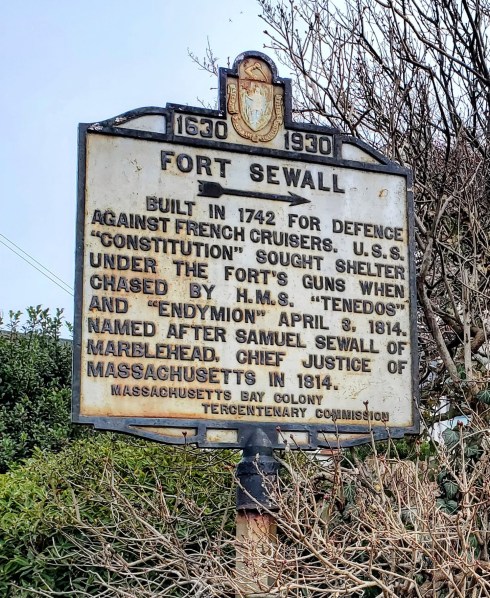
While at face value the inclusion of yet another long-neglected Salem historical resource, Fort Lee, looks like a good thing, I find it concerning. Why should Fort Lee be included in the interpretation of the faux Pioneer Village and not its very authentic (and far more important) neighboring fort on Winter Island, Fort Pickering? This is the guiding principle of the the 2003 study commissioned by the City and the Massachusetts Historic Commission, the Fort Lee and Fort Pickering Conditions Assessment, Cultural Resources Survey, and Maintenance and Restoration Plan: that the forts should be “restored, maintained and interpreted together [emphasis mine] as part of the Salem Neck and Winter Island landscape for enhanced public access.” To its credit, the City has begun a phased rehabilitation of Fort Pickering, but I see much less energy and far fewer resources committed to it than to the Pioneer Village project, which is perplexing given its authenticity and historical importance. Winter Island has served successively as a fishing village, a shipbuilding site, and in continuous military capacities from the very beginning of Salem’s settlement by Europeans to the mid-twentieth century.  The storied fortification which became known as Fort Pickering in 1799 was built on the foundation of the British Fort William, part of a massive effort by the new American government to fortify its eastern coastline beginning in 1794 under the direction of French emigré engineer Stephen Rochefontaine. Fort Pickering was manned, and rebuilt, on the occasions of every nineteenth-century conflict, and was especially busy during the Civil War. Another regional Rochefontaine fort, Fort Sewall in Marblehead, shines under the respectful stewardship of that town. Salem is so fortunate to have so much built history:  why can’t we focus our energies and resources on preserving and re-engaging with authentic sites, rather than creating new ones? (And could someone please find our SIX Massachusetts Tercentenary markers? Every other town in Massachusetts seems to have held on to theirs).

Talk about a site that can illustrate the BREADTH of Salem history: Winter Island was an early site for fishing and fish flakes (and even more substantial “warehouse” structures) as well as the location of Salem’s first fort William/Pickering. The Salem Frigate Essex (depicted by Joseph Howard) was built adjacent to the Fort in 1799, and Winter Island also served as the site of Salem’s “Execution Hill” in the later eighteenth and nineteenth century and of a Coast Guard air station from 1935-70. Members of the US Coast Guard Women’s Reserve, or SPARS, were stationed on the island during World War II. Rochefontaine’s 1794 plan and block house sketches and Frank Cousins’ photographs of the island and fort in the 1890s, Phillips Library of the Peabody Essex Museum. Marblehead’s Fort Sewall on the last day of December, 2021.


Christmas at Home and Away

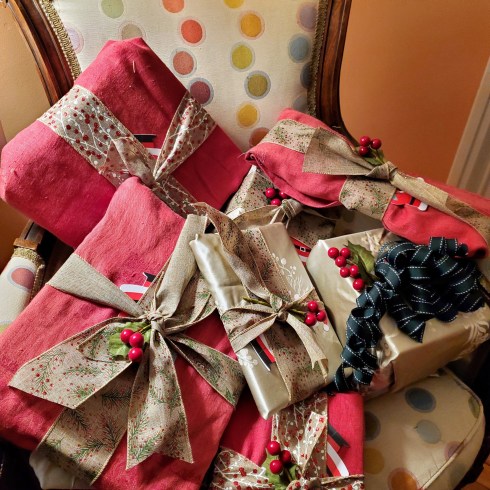
Our Christmas was Covid-impacted like everyone else’s, but it ended up being just lovely, with most of our time spent with my brother and brother-in-law in Salem eating, drinking, playing bad board games and watching movies. We went up to York Harbor for Boxing Day with my parents, but we’re not going down to New Jersey to see my husband’s family, so this is a rare holiday season without long-distance travel for me (with the exception of last year, of course), and I’m enjoying lounging around. Because we knew we would be primarily stationary on Christmas weekend, we snuck in a quick trip down to Newport to see the decorated mansions (the Elms, Marble House, and the Breakers) as well as the streets and streets of colonial houses of every color. So all in all, a convivial, colorful, and (so-far) Covid-free holiday! I feel very fortunate.

Christmas at Home (with swans this year—and lots of cats, our Trinity & Tuck, and my brother’s Clementine).

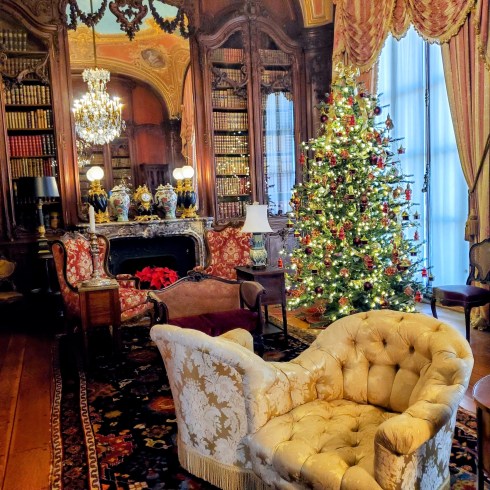
Newport! I really prefer the smaller colonial houses, but when you’re in Newport you’ve got to see some mansions, especially at Christmas time. We had a lovely dinner at the White Horse tavern, and just walked by and through so many houses. Perfect little break. I think I have the many, many Christmas trees and mantles in order of their location—-first The Elms, then Marble House, then the Breakers—but there were just so MANY I might have mixed some up.

The Elms, 1901.

Marble House, 1888-1892.

The Breakers, 1895.

As glittering as they are at this time of year in particular, these mansions are a bit over the top, so I’m ending with the simple themed trees in the basement kitchen of the Breakers (hedgehogs & mushrooms! I’ve been wanting to do those Christmas themes myself) above and my very favorite Newport house and the First Parish Church in my hometown of York, below. Happiest of holidays to everyone.