Category Archives: History

Eat, Drink & Be Merry

For the most part, I’ve managed to avoid dwelling on the pandemic and I must admit that I haven’t been that affected by it either, apart from the radical reconfiguration of my work environment! My struggle is to improve my online communication skills so that I can convey my passion for history through the screen—and that really isn’t much of a struggle, relatively speaking. I feel grateful as I’ve been fortunate: fortunate in my profession, which enables me to work in isolation reading and writing about a distant time and place, and fortunate in my residence—Massachusetts was hard hit in March and April but the steady leadership of our Governor and the responsible compliance of (most of) our citizens has enabled us to contain the spread of the Covid. Most days I am in a sixteenth-century fog writing my book, but headlines from the radio and the television intrude, and of course, the numbers of the infected and the dead keep climbing. I can’t believe that the President would hold rallies in this environment, and I am fearful of the maskless merrymakers I see whenever I do get outside and happen to find myself near a body of water, which is often, because I live on the coast. These “mask slackers” (a great term that comes from the last epic pandemic, when an Anti-Mask League formed in San Francisco) do not in any way remind me of a proverbial and patriotic “live free or die” movement but rather another, older, proverbial expression of selfishness: “eat, drink and be merry for tomorrow we shall die”. This is a biblical reference, of course, and as such it does not imply selfishness on the part of those partaking in the joys of daily life; rather it began to acquire its modern meaning at the time of the Black Death, or shortly thereafter. One of our best sources for the plague’s impact is the Italian author Giovanni Boccaccio, who set the scene for his tales of the Decameron by giving us a first-hand account of plague-time Florence, where

Some thought that moderate living and the avoidance of all superfluity would preserve them from the epidemic. They formed small communities, living entirely separate from everybody else. They shut themselves up in houses where there were no sick, eating the finest food and drinking the best wine very temperately, avoiding all excess, allowing no news or discussion of death and sickness, and passing the time in music and suchlike pleasures. Others thought just the opposite. They thought the sure cure for the plague was to drink and be merry, to go about singing and amusing themselves, satisfying every appetite they could, laughing and jesting at what happened. They put their words into practice, spent day and night going from tavern to tavern, drinking immoderately, or went into other people’s houses, doing only those things which pleased them. 

Boccaccio’s description echoed the late medieval Danse Macabre (“Dance of Death”) allegory, an expression of the egalitarian and universal nature of all-conquering Death found in poetry, music, and images both before, and especially after, the Black Death. Late medieval people heard (or saw) the message as a reminder to be ready for Death, which could strike at any time, in a spiritual sense, not just as a call to indulge. Over the next centuries the hoarding isolationists and the dancing fools converged and the focus on sinfulness and salvation was diminished and forgotten, leaving us only with self-centered indulgence in the face of things we can’t, or won’t control: eat, drink, and be merry for tomorrow we die. It’s the end of the world as we know it (and I feel fine).

Screenshot_20200720-123018_Arts-Culture

Screenshot_20200401-081302_TwitterAre we in a crisis? Death is just outside the door in The Feast of Dives, Master of James IV of Scotland, c. 1510-20, from the Collection of the J. Paul Getty Museum; I took this screenshot of Governor Kevin Stitt’s tweet back in March because I could not quite believe it: it was later taken down. I’m sad to say that Governor Stitt has recently announced that he is the first Governor to test positive for Covid and I hope he makes a speedy recovery. He attended the President’s rally in Tulsa on June 20 (without wearing a mask) but does not believe that it was where he was infected.

Screenshot_20200720-123433_Chrome

Screenshot_20200720-123154_Chrome

Screenshot_20200720-124158_Chrome

Detail of a photograph of  the Danse Macabre frieze at St. Mary’s Church in Lübeck painted by Bernt Notke in 1463; it was destroyed during World War II.  Ink & watercolor Dance of Death by anonymous German artist, 16th century, Metropolitan Museum of Art; inset of 17th century oil painting of the Dance of Death, Wellcome Library.


The First Crusader

One of the key themes emerging from my #SalemSuffrageSaturday posts is the activism and organization of women: there is a paper trail of organized advocacy for abolition, suffrage, temperance, and all sorts of reform and relief. The beginning of that trail might have begun in the 1820s with protests against the Federal government’s policy towards Native Americans: I don’t see a movement but I do see one fierce crusader in Salem. Elizabeth Elkins Sanders (1762-1851) is yet another woman about whom we never hear anything in Salem: she was born into privilege, lived a privileged life, but was aware of said privilege in an age when most of her contemporaries were not, and consequently became a fierce advocate for Native Americans and an equally fierce critic of American cultural imperialism from the 1820s on—expressing views that become much more current a century later. She was not just an armchair observer; she published Conversations, Principally on the Aborigines of North America (1828), the First Settlers of New England (1829), and the Tract on Missions (1844) as well as several literary essays and reviews. The intense presidential campaign of 1828, pitting notorious Indian fighter Andrew Jackson against Massachusetts’ native son John Quincy Adams, inspired her to pick up a pen in her sixties: the Tract on Missions was published when she was 82!

Women Sanders 2 (2)

Sanders Circular (3)

Sanders contextConversations, Principally on the Aborigines of North America, published by Elizabeth Elkins Sanders during the presidential campaign of 1828; Catherine Beecher’s Circular Addressed to Benevolent Ladies of the United States (from the Phillips Library, incorrectly attributed to Sanders), a call to action against the pending Indian Removal Act, 1829. Alisse Portnoy’s Their Right to Speak connects the anti-removal movement with the emerging abolitionist movement in the antebellum era.

Elizabeth Sanders (or Saunders) was a Salem representative of a larger movement against Indian removal which included the first national women’s petition campaign, organized by Connecticut educators Catherine Beecher (elder sister of Harriet) and Lydia Sigourney: in response to the Circular addressed to Benevolent Ladies of the United States nearly 1500 petitions were sent to Washington in 1830. I’m assuming Elizabeth sent hers, and wondering what other causes and organizations were the focus of her “expansive benevolence and strong mature intellect”.

Sanders Feb 22 1851

20200717_180254Salem Observer, February 22, 1851; 39 Chestnut Street, the home of Captain Thomas and Elizabeth E. Sanders.


Not so Ephemeral

I was a casual collector of ephemera for years, so I’ve always been impressed with the more serious seekers and crafters of entire collections, most prominently Eric C. Caren, founder of the Caren Archive of paper Americana. With its tagline “History Unfolds on Paper”, the collection extends to about a million items I believe: Mr. Caren has culled it down with a series of auctions over the last decade or so–at Bonhams, Christie’s, and Swann’s among other houses–but I suspect that he continues to buy with feverish enthusiasm. The eighth Caren collection auction is now ongoing online at Sotheby’s, and I have really enjoyed perusing the lots: ephemera can really take you into an era, by offering intimate, “everyday” or administrative perspectives on the events of the day: often it’s surprising how weighty these little strips of paper can be. A serious collection of ephemera makes such items less ephemeral and more evidential, and with digitization, the ephemeral is also transformed into a lasting testimony. My browsing was edifying as well: who knew, for example, that the famous Gerrymander, spawned right here in Essex County in 1812, died in the following year? Certainly not me! This skeletal monster is just one of several intriguing items in the auction: here are my picks.

Dead Gerrymander

Screenshot_20200713-225046_Chrome

Screenshot_20200713-223801_Chrome

Screenshot_20200713-231043_Chrome

Screenshot_20200713-223829_Chrome

Screenshot_20200713-224036_Chrome

Screenshot_20200713-224109_Chrome

Screenshot_20200713-224736_Chrome

Gerrymander cartoon in the Columbian Centinal via the Salem Gazette, 1813; Horatio Gates’ Recruiting Instructions, 1775; Benjamin Harrison, Governor of Virginia, grants land to Daniel Cumbo, and African-American soldier, in return for his service in the Revolutionary War (quite a contrast to the Gates document, which prohibits the recruitment of “any Stroller, Negro or Vagabond”; John Paul Jones mezzotint, 1779; Alfred Swaine Taylor, early “photogenic drawing” photograph of a fern, 1839; Brochure for “Bloomer Girls”, a touring baseball team, from the Young Ladies’ Athletic Journal, 1889; Stop Lynching, Shame of America poster, 1937; US House of Representatives Calendar No. 61: Impeachment of Donald John Trump.


The Coal Queen of Salem

There is no question that the women I’ve come to admire the most as I’ve been compiling my #SalemSuffrageSaturday stories are the entrepreneurs: the artists and writers and activists are both interesting and impressive of course, but women entrepreneurs leave less of a mark, and were much more daring in their day. It was fine for women in the eighteenth and nineteenth centuries to “dabble” in painting and writing, but business was another thing altogether: no dabbling there. And no one is interested in them, so their stories remain untold. We have to hear about (very worthy, but still!) House of the Seven Gables founder and philanthropist Caroline Emmerton Caroline Emmerton Caroline Emmerton Caroline Emmerton Caroline Emmerton Caroline Emmerton Caroline Emmerton Caroline Emmerton Caroline Emmerton Caroline Emmerton Caroline Emmerton again and again and again and again and again, but I’m telling you now: her contemporary Charlotte Fairfield was far more interesting.

So who was Charlotte Fairfield (1864-1924)? Well, I have labeled her “Salem’s Coal Queen” and the Boston papers refer to her as both a “Model Business Woman” and “Salem’s Smartest Business Woman”, among other glowing terms. She was the daughter of James Fairfield of Salem, a dealer in coal and other commodities, but she did not simply inherit the family business: she pursued her own bookkeeping career in Boston, principally with the dry goods firm Babcock & Sargent, until the combined forces of her own illness and her brother’s death compelled her to come back to Salem and work with her father. In 1903, when she was denied a vote in the Salem Coal Club, she and her father decided to go “independent” and undercut their competition, lowering the price of coal in Salem and exposing what was essentially a cartel in the process to great acclaim and notoriety: the newspapers simply could not write enough about Miss Fairfield in the winter of 1903: she became the “Fighting Coal Dealer”.

Coal Feb 15 BSG

Coal Collage 2

“Lottie” Fairfield transcended her gender with that particular headline in the Boston Sunday Globe, but the story beneath it, and most stories about her in 1903 and later, are overwhelmingly focused on it: Thoroughly independent, with a mind, a will, and a brain all her own and a masculine adaptability for business, Miss Fairchild is decidedly feminine, not at all what you would call a strong-minded ‘new’ woman, but an up-to-date, stylish, well-gowned, attractive, bright, lovable little body, who, with the proverbial inconsistency of her sex, with coal by the wagonloads on her wharves, has burned coke for a couple of years in her furnace reads the February 15 illustrated story in the Globe. Wow! That is quite a characterization. The Boston Post caricatured her “arrogant” competitors in the Salem Coal Club, most prominently Major George W. Pickering, while headlining her as a heroine.

Untitled (89)

Coal Boston Post 13 Feb 1903 2PMBoston Post 13 February 1903

And so she was: because the result of Miss Fairfield’s war with the Salem Coal Club was the lowering of the price of coal from $12.00 to $9 a ton in Salem: imagine the impact that had in an era when coal was a major household expense! Charlotte Fairfield appears in the Boston papers again and again over the next twenty years, always portrayed as plucky, business-savvy, and well-dressed. After years of pleading with the city of Salem to dredge the Harbor so that coal-laden ships could reach her docks, she took matters into her own hands and then submitted the dredging bill to the City, which refused to reimburse her. One of her docks was damaged because of the inaccessibility of the Harbor. She filed suit against the City for both reimbursement and damages, and eventually won both, though the legal process stretched out for years, earning her more headlines in the local papers. She was a fierce advocate for Salem Harbor, and not just for commercial reasons: at this time the City was dumping raw sewage into it and she and others protested regularly to state and federal authorities. She was very involved in the relief efforts following the Great Salem Fire in 1914 (which did not burn down her waterfront storehouse, as it was built of “modern” materials) and she gave a job to every Salem soldier returning home from World War I.

Coal 1910 Beverly Directory (2)

Coal Harbor

I became so enamored of Charlotte Fairfield that I actually gasped when I found accounts of her death in the papers: a tragic end to a very full and active life, from injuries sustained when her clothing caught fire while she was standing too close to a gas heater in her home at 13 Pleasant Street (there is actually quite a list of Salem women who died when their clothes caught on fire!!!) She was able to call for help, and was in stable condition for the first few days in Salem Hospital, but she died on January 30, 1924, leaving only a niece, and a substantial estate, of course.

Coal-28-Jan-1924


Delaware River Towns

With the new book contract, I won’t be traveling anywhere for quite a while so I guess our trip down to New Jersey last week was my last road trip! My husband is from the Jersey shore, and so we go down once or twice a year. I’m not really a beach person, so in the summers, I generally take the days that we are there to explore and come home for dinner with everyone: I think my husband’s family thought this was odd at first but now they seem quite adjusted to my behavior. I’m just very curious about Jersey: it’s one of those states I have always driven through and seldom explored thoroughly, and there’s a lot to see. This time I was set on visiting Lambertville on the Delaware River, just about due west from where we were on the Shore, and I also wanted to go south (and west) to the other Salem, New Jersey, to see the Nicholson House: I made it to the former but not the latter, so next time. But I thoroughly enjoyed Lambertville, a really cool historic city which is also the antiques hub of New Jersey, as well as its adjacent towns on both sides of the Delaware River. This is a perfect road trip if you are not too far from the region: just drive up NJ Route 29 from Trenton to through Lambertville to Frenchtown, then cross over to Pennsylvania, and travel south along Route 32 through New Hope to the Washington Crossing Historic Park. Here’s my trip.

20200628_110305

20200628_105647

IMG_20200628_120536_158

20200628_103833

20200628_104526

pixlr

20200628_104734

20200628_104617

20200628_104152

20200628_104548How perfect is Lambertville? Clean, every storefront filled, an interesting array of houses, perfect SIGNAGE, and city-council candidates who run on a platform of stopping overdevelopment!

IMG_20200628_124406_069

20200628_123543

20200628_121117

20200628_120911Still in New Jersey, heading north on 29 past the John Prall House and Mill, now a wonderful public park, into Frenchtown.

20200628_130454

20200628_130432

IMG_20200628_154620_880

20200628_141051

20200628_140937

20200628_143358Route 32 in Pennsylvania, past the Thompson-Neely House, where Washington’s troops waited to cross over the river prior to the Battle of Trenton, into Upper Makefield, site of the Washington Crossing Historic Park, ending up back in Jersey at the Johnson Ferry House. Obviously there was a lot more to see in Buck’s County, but I had to make it back to the Shore for dinner!


Suffrage Stories

I apologize for my disappearance without a heads-up: the combination of computer problems and travel rendered me postless for a week! I am back with the first of what will be a series of reading lists for the summer, but first some big news: I’ve just received a book contract for the project I’ve been working intermittently but steadily on for the last couple of years, so expect The Practical Renaissance: Information Culture in Early Modern England out next year (or early in 2022) from Bloomsbury! This means that posts on early modern medicine, agriculture, mechanics, and navigation are going to turn up here occasionally, but the blog will also serve as a break from my more-scholarly endeavors: Salem history is still a rich minefield and I will still have a life! As these past few weeks have shown, history in general is as problematic, and public, and current as ever, and here I can indulge, and engage, and weigh in. And in matters more material, I still have my kitchen renovation to show you! (we are in a particularly messy and noisy stage right now).

Though the suffrage centennial has been drowned out by the pandemic and protests of this eventful year, it remains a focus for me. I’m sorry that this notable anniversary is getting lost— along with the bicentennial of my home state of Maine and the 400th anniversary of the passage of the Mayflower. As I am neither an American or modern historian, I really had to read up on the long struggle for suffrage–both in America and Europe–to get the context and perspective I wanted for my #SalemSuffrageSaturdays. The literature on the American and British suffrage movements has grown exponentially over the last few years, and I couldn’t read everything, so in typical academic fashion I started with some key primary sources, read a lot of reviews, narrowed down what I thought might be the essentials, and spread out from there. I was looking for a trans-Atlantic approach, which I didn’t really find, and also more personal stories—and the quest for the latter took me into fictional territory, so I do indeed have a few novels on my top ten (actually eleven) list. I wouldn’t consider these texts sources, of course (although they were certainly well-researched) but they fleshed things out for me. And I have some real suffragist stories too.

Books My Own Story (2)

suffragette-books (4)

Books Suffrage Kitty Marion

Books Broom

Books Collage

Books Picturing (2)

Books Lucy Stone Collage

Books Gilman (6)

Fictional Suffrage Collage (2)

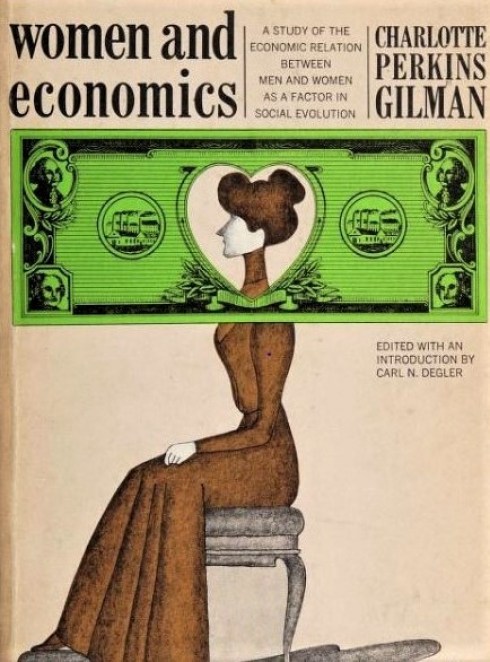
How I learned about the Suffrage movements in the UK and US: 1) Emmeline Pankhurst’s My Own Story (1914), because you’ve got to start with the founders; 2) Diane Atkinson’s Rise Up, Women is my favorite British survey—focusing on personal stories (and from Bloomsbury!) 3) here is our trans-Atlantic activist, Kitty Marion, whose extraordinary life is explored in Fern Riddell’s Death in Ten Minutes; 4) images are so important to this movement—on both sides of the Atlantic—and I’m obsessed with the work of British photographer Christina Broom; 5) and 6) I didn’t really find the writings of the founders of the US movement very accessible or enjoyable, so I went for more recent interpretations: Lisa Tetrault’s Myth of Seneca Falls and Faye Dudden’s Fighting Chance were particularly helpful in explaining some of the divisions in the movement; 7) Allison K. Lange’s brand-new Picturing Political Power explores the very important visual projections of Suffragists in the US; 8) in Massachusetts, it’s all about Lucy Stone, who must have visited Salem 100 times: she is the subject of several works, but I found Sally McMillen’s Lucy Stone: an Unapologetic Life the most helpful; 9) Charlotte Perkins Gilman’s Women and Economics (1898) provides classic context, and 10) and 11) two works of fiction in which Suffragettes and the Suffrage Movement play key roles: Tracy Chevalier’s Falling Angels and Lucy Ribchester’s The Hourglass Factory.

I couldn’t limit my list to 10 and I had to throw in some fiction: happy reading, everyone, and Happy Fourth!


An Inventory of Salem Women Artists

Today’s #SalemSuffrageSaturday post is really more of a list than a composition, and a working list at that: I want to take a stab at identifying as many female Salem artists as I can, although I know it’s an impossible task. It’s impossible because there were so many, and I’m pretty certain I haven’t tracked them all down, but it’s also a difficult task because of the historical impact of gender. In the seventeenth, eighteenth, and nineteenth centuries, women were taught artistic and creative skills as part of their informal and formal education: some excelled and were clearly artists, even though they—or anyone else—did not identify themselves as such. I think this especially applies to women who worked in the textile arts but to other women as well. In the nineteenth century we see the emergence of (a few) women who can make their living through their artistic talent and skill; this is rarely possible before.

Artists Fidelia Bridges by Oliver Ingraham Lay 1872 SmithsonianFidelia Bridges (1834-1923) by Oliver Ingraham Lay, 1872, Smithsonian: Bridges is probably the first and most successful Salem woman artist, though she traveled widely and lived in Connecticut for most of her professional life.

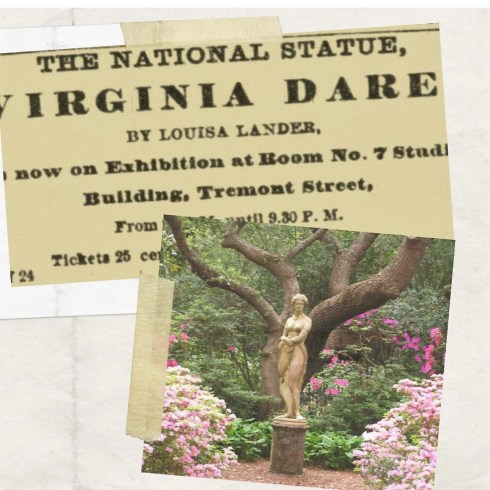
Daughters of old Salem families, Fidelia Bridges, who worked in several mediums and as both an artist and an illustrator, the Williams sisters, Abigail and Mary, who were both artists as well as art dealers, and sculptress Louise Lander, all found themselves in Rome in the mid-19th century for varying periods of time, drawing inspiration and establishing connections. The Misses Williams returned to the family home on Lafayette Street where they created a studio and loaned their works out to several prominent institutions, including the Essex Institute, which featured its very first art exhibition in 1875 featuring many Williams works. Louise Lander (1826-1923) also returned, reluctantly and eventually, to Salem and the family home at 5 Summer Street when she was shunned by the Anglo-American (and quite Salem-dominant) circle in Rome upon charges of some sort of scandalous behavior which she never deigned to answer. She exhibited her “national statue” of Virginia Dare, the first English child to be born in the New World, to raise money for war relief and moved to Washington, D.C. upon the death of her last Salem sister in 1893.

artist williams 4 (2)

Artists Williams Sisters Bulletin of Essex Institue 1875 (2)

Artist Virginia DareMary E. Williams, illustrations from The Hours of Raphael in Outline – Together with the Ceiling of the Hall Where They Were Originally Painted (Little, Brown, 1891); Just some of Mary and Abigail Williams’ works shown in the 1875 Essex Institute Exhibition; Virginia Dare in the Elizabethan Gardens & notice in the Boston Post, January 24, 1865.

To these nineteenth-century artists who seem to be awarded “professional” status I would add Mary Jane Derby (Peabody, 1807-1892) and Mary Mason Brooks (1860-1915) from the generation before and after the “Roman” circle. I’ve written about Derby many times before (see here and here) because I am the fortunate recipient of a journal she composed for her grandchildren, and Brooks more briefly here. Before her marriage, Mary Jane (a cousin of Louisa Lander) was definitely pursuing an artistic career, and she created several lithographs for the Boston firm Pendleton’s Lithography in the 1820s, including a view of her childhood home on Washington Street. Brooks, who worked exclusively in watercolors I believe, was one of the Salem artists who worked out of the famous “studio” at 2 Chestnut Street briefly, and her works were exhibited in Boston and New York. Among Mary Jane’s generation (almost) were two lesser-known artists, Sarah Lockhart Allen (1793-1877), who produced portraits in miniature and pastel, and Hannah Crowninshield( 1789-1834), both of whom were recognized as working artists by their contemporaries. Sophia Peabody Hawthorne (1809-71) is representative of the score of score of female artists who exhibited and sold their works at charitable fairs and bazaars in mid nineteenth-century Salem: always as “misses”.

brm2033-derby-nahant-ca-1827-749x1024 (2)

Artists Mary Mason Brooks

Artists reportsoffirstex01sale_0027 (2)

View of the Nahant House by “MJD” (Mary Jane Derby), Boston Rare Maps; Mary Mason Brooks, The Lumber Schooner, Grogan & Company Auctions. Just a few of the “Fine Arts” exhibitors from Reports of the First Exhibition of the Salem Charitable Mechanic Association : at the Mechanic Hall, in the city of Salem, September, 1849

And then there were all those Salem needlewomen! In her definitive work Girlhood Embroidery: American Samplers and Pictorial Needlework, 1650-1850 (1993), collector and scholar Betty Ring devotes an entire chapter to Salem, focusing on the influential school of Sarah Fiske Stivours (1742-1819) and showcasing the work of Antiss Crowninshield (1726-1768), Love Rawlins Pickman (Frye, 1732-1809), Susannah Saunders (Hopkins, 1754-1838), Betsey Gill (Brooks, 1770-1814), and Mary Richardson (Townsend, 1772-1824) among others. This was a very important Salem art form that was revived in the late nineteenth and early twentieth century by Jenny Brooks, Mary Saltonstall Parker (1856-1920) and other entrepreneurial artists.

Artists_Girlhood_Embroidery__2_-removebg-preview

artists Saunders Sotheby's (2)

Screenshot_20200618-064954_Chrome

Brooks Collage

mary-saltonstall-parker-house-beautiful-1916 (1)Betty Ring’s two-volume Girlhood Embroidery; Salem samplers by Susannah Saunders (Sothebys) and Elizabeth Crowinshield (Doyles); Jenny Brooks Co. advertisements from 1913, and Mary Saltonstall Parker’s cover embroidery for House Beautiful, October 1916.

So that brings me to the most entrepreneurial of Salem women artists, or maybe all Salem artists: Sarah Symonds, an artist-craftswoman descended from a long line of Salem craftsmen. I’ve written about Symonds (1870-1965) very recently, so I’m not going to go and on here, but she operated a very successful business selling her cast plaques of historic Salem symbols and structures in the first half of the twentieth century. Following her death in 1965 the Essex Institute, which operated as Salem’s historical society until its amalgamation into the Peabody Essex Museum in 1992, started collecting her works, as they “have enriched our local picture of the past”.

20200121_133721Sarah Symonds in her studio, Phillips MSS 0.202, Papers of Sarah Symonds, 1912-21.

How the past informs the present, and how the present acknowledges, interprets, and builds upon the past are central preoccupations of mine, and artistic perspectives on these processes can be just as illuminating as texts. I’d like to conclude this (again, working) list of women artists from Salem with a contemporary artist whose work is a great example of this illumination: book artist Julie Shaw Lutts. Julie’s a great friend of mine and I’ve featured her work before here, but she has just completed a very timely project which I love, so I wanted to showcase her talents again. The Vote is a mixed media artist’s book which commemorates the achievement of women’s suffrage in ways that are both personal and memorial, material and textual, and touching: all the best ways.

the-vote-9-julieshawlutts (2)

the-vote-8-julieshawlutts

JS Lutts 2©Julie Shaw Lutts, The Vote.


Women on a Pedestal

Obviously statues have been in the news of late, so I thought I would tap into the national (and international) focus by looking at some of our country’s more notable monuments to women, either striving for the franchise or striving in general, for this week’s #salemsuffragesaturday post. It doesn’t matter what your political inclination is, everyone seems to agree that there are not enough statues of women anywhere and everywhere, and corrective measures are being taken, along with initiatives associated with this Suffrage Centennial year. The husband and wife team who constitute Statues for Equality have established that statues of women represent less than 10% of public monuments in several American cities, and far less in most. In Salem we have only one statue to a woman: Samantha Stevens from Bewitched, situated in our city’s most historic square. She never accomplished anything (because she never actually existed) and her prominent situation and whimsical depiction mocks the real victims of the 1692 trials who were falsely branded “witches”, but nonetheless she is deemed worthy of monumental representation in Witch City. There are so many more women (real women) that deserve to be put a pedestal in Salem—that’s what this year has been all about for me.

pixlrSamantha is currently wearing an ensemble by local artist Jacob Belair, which I think is lovely on its own but also because it covers part of her up! I wish it extended to her unfortunate pedestal. I’m not in Salem now, so I asked my stepson ©Allen Seger to take the photos of Samantha in crochet.

Let’s turn to some more serious representations. Ever since it’s installation 15 years or so ago, the Boston Women’s Memorial has been one of my favorite monuments: not only is it aesthetically pleasing and immediately engaging, but it represents a spectrum of women who shaped Boston’s history (as well as that of Massachusetts and the nation): Abigail Adams, Phillis Wheatley, and Lucy Stone. These women are not just on pedestals (actually they have come off their pedestals) but depicted by sculptor Meredith Bergmann in the process of thought and activity, with their words accompanying them. Monumental women are in large part, active women, the feminine counterpart of all those masculine equestrian statues.

Screenshot_20200612-082211_Chrome

Screenshot_20200612-082224_Chrome

Screenshot_20200612-082234_ChromeThe Boston Women’s Memorial by Meredith Bergmann; photographs from her website.

Meredith Bergmann was also commissioned to create the most anticipated installation of this Suffrage Centennial Year: the Women’s Rights Pioneers Statue in Central Park in New York City, which will be unveiled on August 26, the date on which the ratification of the 19th Amendment was certified in 1920. This will be the park’s first statue honoring real women, and it also focuses on their activity: Sojourner Truth, Susan B. Anthony, and Elizabeth Cady Stanton are gathered around a table, intently focused on drafting a document. The statue had a controversial conception in that Truth was originally excluded, but public discussion and debate resulted in a more inclusive—and representative—monument.

Screenshot_20200612-082723_Chrome

Screenshot_20200612-082623_ChromeModel and Mock-up of the first and final monument to the Women’s Rights Pioneers by Sculptor Meredith Bergmann, to be unveiled in Central Park on August 26, 2020.

As the state which ultimately ratified the 19th Amendment in August of 1920, Tennessee takes its suffragist history very seriously and has produced two notable monuments to the women who worked so hard to make it happen (because it’s really not all about a wavering state senator is it?) There is the Tennessee Woman’s Suffrage Memorial (2006) in Knoxville, depicting Lizzie Crozier French, Anne Dallas Dudley, and Elizabeth Avery Meriwether, and the Tennessee Woman Suffrage Monument (2016) in Nashville’s Centennial Park, featuring Dudley along with Abby Crawford Milton, J. Frankie Pierce, Sue Shelton White and Carrie Chapman Catt. Even more recently, the Commonwealth of Virginia—always the site of so much statue furor—dramatically increased its commemorative depictions of accomplished women with its Virginia Women’s Monument: Voices from the Garden initiative, honoring the “full scope” of women’s achievements with twelve representative statues.

Screenshot_20200612-075354_Chrome

Screenshot_20200613-080549_Chrome

Screenshot_20200612-072439_Chrome

Screenshot_20200612-072336_ChromeThe Knoxville and Nashville Suffrage statues—both by Tennessee sculptor Alan LeQuire—and the unveiling of seven statues of prominent Virginia women last fall: former Virginia First Lady Susan Allen points to a statue of Elizabeth Keckley, dressmaker for Mary Todd Lincoln, and suffragist Adele Clark among the crowds (Bob Brown/ Richmond Times-Dispatch).

I like the fact that so many of these monuments are collective, featuring women engaged with each other. Sometimes they are working, sometimes they are simply “conversing”—or meeting for the first time like one of the most famous Suffragist monuments, the “When (Susan B.) Anthony met (Elizabeth Cady) Stanton” statue in Seneca Falls, New York, portraying the moment when these two icons were introduced by Amelia Jenks Bloomer in 1851. My very favorite “conversation piece” is the lovely statue of two prominent Rochester, New York suffragists, Anthony and Frederick Douglass, having a cup of tea: I would love to have been a fly on the wall (or the bench) for that conversation!

Screenshot_20200613-075828_Google

Screenshot_20200613-080112_ChromeThe Anthony-Stanton-Bloomer statue (1998) by Ted Aub in Seneca Falls; Ira Srole’s “Let’s Have Tea” (2009) in Rochester.

The most official Suffrage statue of all, Adelaide Johnson’s “Portrait” monument to Anthony, Stanton, and Lucretia Mott completed (and dedicated) in 1921, is also a collective representation but the women don’t seem particularly engaged with each other: it’s not my favorite statue but that doesn’t mean I think it should have been hidden away for most of the twentieth century! The “unfinished” appearance of the work also engulfs the women in their “pedestal” rather than placing them on it, but rumor has it that Johnson was making room for at least one more prominent woman—perhaps the first female president—to be carved out of that raw marble in the back at some point in time. Clearly not 2020.

Capitol StatueOffice of the Architect of the Capitol.


Feeding Suffrage

Sorry I’m a bit late today with my #SalemSuffrageSaturday post: I’ve migrated up to Maine for several weeks and the wifi situation is a bit challenging! But I think I have it together now. I’m going to move into some national suffrage history for a few weeks and then go back to the parochial, because the long-term suffrage movement was successful ultimately because it operated at several levels: the national and the local, the exterior and the interior. I have been continually impressed, as I studied this movement this year, at how adept the marketing was, with every concern taken into consideration: messaging, branding. graphics, audience. Lately I’ve been reading some wonderful suffrage cookbooks, which in many ways were the perfect venue for the Suffrage message: not too radical, traditional really, but also containing themes of practicality, self-sufficiency, and above all, femininity. The first Suffragist cookbook, the Woman Suffrage Cookery Books, was edited and published by Mrs. Hattie Burr of Boston in 1886 with exactly that message in its forward:  Alarmists of both sexes will shrink back abashed before this cook-book, for at least two recipes, which she has tested with success, will be given over the signature of each fair suffragist who contributes to its pages. It will be a confession book, a proof that, even if they wish to vote, the suffragists cherish a feminine interest in culinary matters.

Suffrage 1886 2 (2)

Suffrage-Cookbook-1890-2nd-ed-2

First and Second Editions of Mrs. Hattie Burr’s Woman Suffrage Cookbook, 1886 & 1890: you can read the text here.

Indeed there was nothing at all alarming about this cookbook: no radical recipes! In addition to recipes for everything from soup to nuts, there are sections on the care and feeding of invalids and helpful household hints, followed by “Eminent Opinions on Woman Suffrage” (starting with Plato!) only at the very end: an appendix. I think the relative banality of this book must have helped the cause considerably, and it certainly inspired regional editions as well as the first British Suffrage cookbook in 1912. I also think it inspired valuable support, in the form of advertising, from commercial food producers, such as Fleishmann’s Yeast (referenced in several of the recipes) and Kellogg’s Cereals. All in all, it seems like the cookbook was a very nourishing genre for the Suffrage movement.

Screenshot_20200605-093743_Chrome

Suffrage Pittsburg 1915

Suffrage British Cookbook 1912 (2)

Suffrage Ad Collage

suffrage all-stirred-up-9781643134529_lg

Suffrage cookbooks from Washington State (1908), western Pennsylvania (1915) and the UK (1912), from the Ann Lewis Women’s Suffrage Collection. Fleischmann’s Yeast and Kellogg’s advertisements from the 1890s and 1914. I bet that Laura Kumin’s All Stirred Up, which will be published in August, will have lots more details about the publication and impact of these cookbooks. 


If We Can’t Picture Them, Were They There?

We don’t have any portraits of Salem women before the eighteenth century: the (European) women of Salem’s (European) founding century are therefore difficult to picture. We are left with nineteenth- and early twentieth-century romanticized and idealized images of dramatic women: persecuted Quakers, the two Annes, Hutchinson and Bradstreet (who never lived in Salem), and above all, the women who were accused of witchcraft. The latter are always represented by illustrations from long after their deaths, or by images of English or continental witch trials, utilized even on the covers of scholarly books on the 1692 trials. Why am I always seeing the Pendle “witches” from 1612 depicted as the Salem “witches” from 80 years later and across the Atlantic?

Picturing Pendle Collage

Because “public-facing” history, presented in digital formats and disseminated through social media, needs pictures: texts just won’t do! And book covers need to draw the reader in. I’m as guilty as the next blogger of using the later nineteenth-century images (of which there are so many!) to illustrate some of my posts, although I never substitute depictions of one event for another. I’d love to have some contemporary illustrations of Salem women in the seventeenth century doing all the things I know they did: parent, cook, sew, garden, make all sorts of stuff, keep taverns, worship, wonder. But there aren’t any. I’d love to have a portrait of Lady Deborah Moody, who settled briefly in Salem before she moved on to New York and was labeled a “dangerous woman” by John Winthrop for her heretical Anabaptist views (and I think her independence), but there aren’t any—I’ve checked through all the English sources as well. I’d love to have an image of the adversaries Martha Rowlandson, who divorced her husband for impotence in 1651, and Eleanor Hollingsworth (mother of Mary English, who I’d also like to see), who operated her own tavern, brewed her own beer, and cleared her husband’s considerable debts. But nothing. There are several portraits of seventeenth-century Massachusetts women, so I guess they need to stand in for their Salem sisters: anything to avoid disseminating those simplistic “Puritan” images!

Women Pictured

Puritan WomanReal 17th Century Massachusetts Women and a “Puritan Woman, 17th Century” from Cassel’s Historical Scrap Book, c. 1880.

As an English historian, I have a wide range of texts and images available to me with which to explore seventeenth-century women: many portraits of wealthy ladies, prescriptive writing, prints and broadsides, recipe books and diaries, theatrical performances as social comment and criticism (with women as the focus quite a bit in the earlier seventeenth century). So English women seem more diverse, more interesting, more active, more layered, while their sisters across the Atlantic seem a bit…..one-dimensional in comparison. I guess that’s why the authors of books on the Salem Witch Trials pinch English images so often. Of course if we move away from the reliance on the visual we can learn a lot more, but I worry that the exclusive reliance on “picture history” in the public sphere erases those who do not leave an image behind.

Virtuous Women

I think I can illustrate my concern a bit better by examining some women from the nineteenth century, certainly a much more visual age, but not universally so. There’s been a lot of interest in Salem’s African-American history over the past few years, which is of course great. Two women in particular, have claimed the spotlight: Charlotte Forten Grimké (1837– 1914)  and Sarah Parker Remond (1824-1894). Both were incredible women: Charlotte came north from Philadelphia to live among the always-hospitable Remond family to attend Salem’s desegregated schools in the 1850s, and went on to graduate from Salem Normal School (now Salem State University, where I teach) and become Salem’s first African-American teacher in the public schools, while Sarah grew up in Salem in the midst of a very activist Abolitionist family and became a much- heralded advocate herself, before emigrating to first England and then Italy for her undergraduate and medical degrees. Charlotte remained in her teaching position for only a couple of years before returning to her native Philadelphia and then launching an amazing career of advocacy herself, in the forms of teaching, writing, and public speaking. Both women were illustrious, and completely deserving of the two Salem parks which now bear their name. But I can’t help thinking about another African-American woman, Clarissa Lawrence, who spent her entire life in Salem, running her own school for girls, founding the country’s first anti-slavery society for African-American women as well as a benevolent society, with only a brief trip to Philadelphia for a national Abolitionist convention in which she gave the riveting “We Meet the Monster Prejudice” speech. Where is Clarissa’s park or statue in Salem? Why is Charlotte, whose family is from Philadelphia, the feature of Destination Salem’s Ancestry Days, which seeks to serve as “a gathering point for descendants of Salem’s families as well as a research opportunity for people who want to learn more about their family history”? Her family history is not here! (well actually, none of Salem’s history is here). I suspect the answer to these questions is in good part based on the fact that we have no picture of Clarissa Lawrence, so it’s almost as if she didn’t exist.

Clarissa (2)

Clarissa 2

Ancestry-DaysCharlotte Forten between the two Salem Nathaniels, Hawthorne and Bowditch on the Ancestry Days poster. This sounds like a great genealogy event, but none of Charlotte’s family records are held by the participating institutions: why not feature Sarah Parker Remond, whose are? We even have several photographs of Sarah!