Tag Archives: Renaissance

Fall Reading 2025

The stars seem to have aligned and I am all set for a fall full of reading. Salem’s Centuries is in production (and out on January 6), my new saffron project hasn’t taken flight yet, and I have a course release for the semester. I’ve written two books in five years and now is the time to ingest. Escaping into book worlds is another way of avoiding my least favorite season in Salem as well. So I have a long list, already about a quarter devoured. As usual with my book lists, it’s very light on fiction, heavy on history, and reflective of the odd ephemeral interest. So let’s go: it will be interesting to see how I group these rather disparate texts.

I think I’ll start out with broad, cultural histories as they might have the most general appeal: I’m always reading “commodity histories” and this year will be no exception, but I have to tell you that Robert Hellyer’s Green with Milk and Sugar has a bit more depth and dimension than most books about tea—and there are a lot of books about this particular commodity. I had the difference between black and green teas down, but did not discern between different types of the latter (and their impact) until I read this very interesting book. Another important global commodity, sugar, has also received quite a bit of attention from scholars (beginning with Sidney Mintz’s classic Sweetness and Power) but the latest effort, the Dutch economic historian Ulbe Bosma’s World of Sugar, is supposed to be particularly comprehensive. I bought it last year but haven’t delved into it yet. Super excited to read Catland: how can it not be amazing? I’m not sure where to put Chanterelle Dreams, Amanita Nightmares, a book I discovered in the gift shop of the Coastal Maine Botanical Garden a few weeks ago solely for its title (+ lore), in this post so I guess I’ll put it here: it is kind of a broad cultural history of human perceptions of muchrooms. It’s also very much a “pick up and read a bit” book.

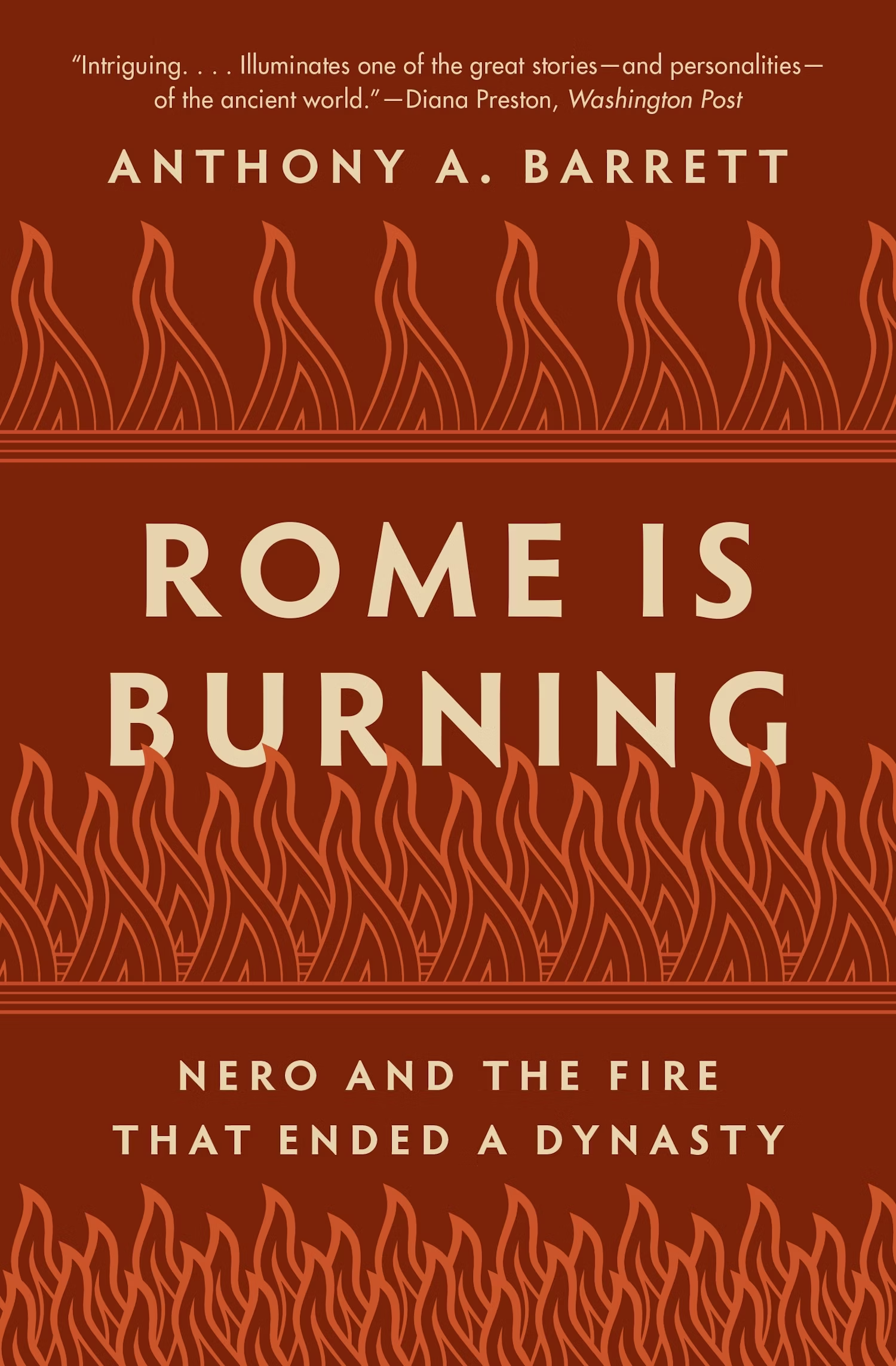
I find that I am reading new books on the Atlantic Slave Trade regularly because we are in the midst of a golden age of research into the history of this terrible trade and provocative analyses of its cascading impacts are published every year.  Traders in Men and Plantation Goods are on my fall list but I should have read them this summer, in advance of teaching my Introduction to European History course. Instead, I had a “Roman interlude” prompted by a re-reading of Suetonius’s Twelve Ceasars last spring. So two half-read Roman books are on my fall list too: a very accessible history by Anthony Barrett about Emperor Nero and the burning of Rome and a book by Roland Mayer about Roman ruins which is more about later perceptions of Rome than Rome itself. The Mayer book probably belongs with the broad cultural history books above. I have started Traders in Men and Plantation Goods (as you will discern by now, I read books in phases, concurrently with other books, a habit I’ve been trying to break but cannot) and my assessment so far would be: both very important and well-sourced studies, with Plantation Goods probably more accessible as it focuses on the basic. It is very much a “material history.”

There are several books which were recently published in my scholarly fields which now sit beside my bed in a stack: first up is Inventing the Renaissance and then we have two books on major late Tudor/Jacobean players: George Villiers, the Duke of Buckingham, and Robert Cecil. I’ll read these for myself, but also to discern whether or not I’ll assign them to students. Stephen Alford (author of All His Spies)’s previous book, London’s Triumph, was a big hit among my grad students this past summer. I suspect that Palmer’s Inventing the Renaissance will be great for historiographical discussions in both undergrad and grad courses. And because it was set in my period and in an interesting period in Mary, Queen of Scots’ life, I actually read a novel all the way through this summer: Flora Carr’s The Tower.

Finally, books on more topical interests which are preoccuping me constantly and/or currently. I’m always interested in architecture, and I read one book this summer which I loved: Thomas Heatherwick’s Humanise (it’s spelled Humanize in its American edition but I prefer the British one’s cover). I don’t think many architects like this book as it is quite critical of contemporary architecture not so much on the basis of design but of craftsmanship. Heatherwick has provoked a reaction among architects in the UK (I’m not sure about here) as he is not an architect himself and does not hold back on characterizing much present-day building as both soul-crushing and soulless (generally because it is so boring) and has launched a campaign to bring joy and craftsmanship back to construction. He’s a real crusader! I’ve been interested in the urban planning idea of the “15-minute city” for a while, so I picked up Shrink the City to learn more about it. The whole idea of meeting all your needs within a 15-minute radius could work for a city with the infrastructure of Salem, but not if we continue our comprehensive commitment to witchcraft tourism, which has resulted in a multitude of witch shops replacing those selling clothing and groceries. As this past year I seem to have become preoccupied with symbols and emblems, first because of the ongoing discussion over the Salem city seal and more recently by the dumbing-down of the Massachusetts state seal and flag, I’ve really been searching more insights into visual culture and graphic design. It’s like another language which I don’t understand. One book that has really helped me is the classic Megg’s History of Graphic Design, but I welcome suggestions. I have yet to find a thoughtful or even interesting book on vexillology.


November 5th: What’s in a Date?

I’m anxious about our election, and when I am anxious, I always go back into history to find reassurance in relativity. Everything is relative, we’re just dust in the wind. I didn’t really know where I was going, but I started looking into the history of suffrage in our country, as those women really struggled and ulimately succeeded so I thought they would be inspiring and reassuring. And then I came across the date November 5th, 1872, when Susan B. Anthony voted for Ulysses S. Grant, and was arrested ten days afterwards for playing man at the polls. Well, I thought, we could have a nice bookend moment ahead of us on November 5, 2024! But as stalwart as Susan was, she did not ease my anxiety, I needed more historical immersion: so after a brief survey of twentieth-century US electoral November Fifths, I went back into the eighteenth, seventeenth, and sixteenth centuries just to stretch things out a bit and put my 21st century problems in perspective. I found struggles against tyranny in the 18th and 17th centuries, represented by the November 5 birthday of General John Glover, a Revolutionary hero who is ignored here in his native city of Salem but has quite a following in neighboring Swampscott, where avid preservationists are struggling to preserve his retirement farmhouse. Further back, William of Orange landed at Torbay on November 5, 1688, to unseat his father-in-law James II and establish a “glorious” contractual/constitutional monarchy. Earlier in that same century, there was of course the most memorable event, the Gunpowder Plot of November 5, 1605, an attempted coup foiled, and the inspiration for the observation of “Pope’s Night” in colonial Massachusetts. And right in the midst of the Renaissance, Copernicus gazed at the lunar eclipse while in Rome for the Golden Jubilee, germinating new ideas about the heliocentric universe. November 5th has indeed been both an innovative and momentous date throughout history, and I’m hoping that November 5th, 2024 will also break new ground.

Wonderful eclipse painting in background by Mexican artist Rufino Tamayo.


Spring 2024 Reading List

I have been reading! I intend to read more! So much writing and so much teaching over the past few years, I’ve had very little time for general reading, as opposed to targeted reading, trying to find the answer to some very specific question in as little time as possible. That’s not really reading, so I’m trying to get back into the “practice”.  We have our Salem’s Centuriemanuscript in now, and the semester is winding down, so I’ve ordered up a stack of books and am digging in. If you’re familiar with my reading lists you know there’s never a lot of fiction: novels cannot retain my attention unless I’m on a plane. Otherwise, I put them back in the stack and generally forget about them. I do have one novel on this list, Richard Harris’s Act of Oblivion, which is about the manhunt for two regicides in seventeenth-century New England, a topic I can’t resist. I haven’t started it yet, and I’ll be thrilled if I finish it. I like the idea of reading novels and I hope to return to fiction at some point, but that time is not now; I’m just too hungry for information, even when reading for pleasure. Most of these books are adjacent to some of my scholarly interests, but not spot-on, although I could have written this first one and wish I did!

This first batch of books (above) could be generally classified as early modern cultural history and I’m kidding, I certainly could not have written Jill Burke’s great book about beauty culture in Renaissance Italy. I included a few recipes for cosmetics in my book, The Practical Renaissance, and made both a mental and actual note (in one of my writing notebooks) to dig a little deeper into that realm but then forgot all about it. Burke’s book is both scholarly and accessible and if you’re interested in learning more about her topic check out the Wellcome Collection’s “Cult of Beauty” exhibit. Ulinka Rublack is another early modern historian whom I admire and her latest work is on the shifting patronage environment in that era, through the perspective of Albrecht Durer’s career. Like Burke, Rublack really opens what has been/could be a much more contained “world”.  Marcy Norton’s The Tame and the Wild. People and Animals after 1492 is also global in its orientation and focused on a topic which I explore in several of my courses (now that I think about it, ALL of my courses): how Europeans viewed the New World/ how the New World impacted the Old. In this case, all about animals. Spycraft is not quite out yet, but soon, and I really want to read it so I put it on this list. I just finished The Wisest Fool, a very engaging biography of King James I and VI, as I wanted to be all ready for the debut of Mary & George this week! Victoria Finlay’s Fabric: the Hidden History of the Material World, is one of those sweeping “commodity histories” which are always on my lists—I haven’t read this yet, but I enjoyed her last book on color.

The last three books are a bit more local: as noted above, Act of Oblivion is historical fiction, largely set in New England, Flee North is about the African-American shoemaker//abolitionist/author/ liberator Thomas Smallwood, and A House Restored is about the restoration of a Massachusetts house.  Flee North is the only book on this list with any sort of Salem connection: Smallwood worked with Charles Torrey, former minister at the Howard Street Church in Salem, to organze escapes of enslaved men and women from the Washington-Baltimore region. I believe that Lee McColgan, whose restoration of the first-period Loring House in Pembroke, Massachusetts is detailed in A House Restored, is going to be one of the speakers at Historic Salem’s annual meeting next month, so I will be reading his soon-to-be released book in advance.


Teaching with Holbein

A new exhibition featuring the works of Hans Holbein the Younger opened at the J. Paul Getty Museum this week, and it will be traveling to the Morgan Library and Museum after the new year. It happens that this very week Holbein was very much on my mind: various of his works had popped up, as they always do, in several of my classes, and he appears in reference and image in the proofs for my forthcoming book as well. I have always depended on Holbein: his images have enabled me to illustrate so many aspects and avenues of my teaching fields, from the Renaissance to the Reformation to the Scientific Revolution and everything in between. His 1533 masterpiece The Ambassadors is a visual key to all three topics, and I generally devote an entire class to it.

National Gallery, London.

I’m not that special: anyone armed with the essential knowledge of the era’s cultural history could turn The Ambassadors into a class: there’s just so much in it and to it! This particular painting is not included in the Getty exhibition, but each and every Holbein painting has a tale to tell, even if it’s just a singular portrait with (deceptively) little embellishment. I suppose Holbein is best known for his paintings of the Tudor Court, and the exhibition includes the portraits of Thomas Cromwell and Richard Southwell as well as one of my favorites, that of Mary, Lady Guildford, the wife of Henry VIII’s comptroller, Sir Henry Guildford. Holbein was a great painter of women in general, and “capturing their character” (the subtitle of the exhibition) in particular, but I do wonder why he chose the stern Lady Guildford rather than the more amused one captured in one of the studies for the portrait. In either case, you can easily see that both Lady Guildfords are far from the serene Renaissance ladies we generally see: they are feisty and fun.

Frick Collection, St. Louis Art Museum and Kunstmuseum Basel; The Getty Exhibition.

Of course, students love the gossipy history of Henry VIII and his six wives, of which at least two were painted by Holbein. Students love anecdotes, and Holbein allows you to illustrate them. But you’ve got to be careful: an anecdote can be a dangerous thing, remembered better than the larger issue/trend/event it is designed to illustrate. A case in point is the “story” behind Holbein’s portrait of Anne of Cleves, painted when he was dispatched to Germany to render a likeness as Henry was considering the Protestant princess for his fourth bride in 1539. The story goes that Holbein was so charmed by Anne that he made her more attractive than she really was, thereby convincing Henry to go along with the marriage by proxy only to declare “I like her not!” and seek an annulment the moment he laid eyes on her in England. I don’t think Holbein had time to be charmed by Anne, and we can see that he lavished more attention on her dress than her face in the portrait. In any case, Thomas Cromwell the courtier, diplomat, and by now manifest Protestant had far more influence over the German marriage, and he lost his head over it in the next year.

Jane Seymour (Kunsthistorisches Museum Wien), Anne of Cleves (The Louvre), and (perhaps) Katherine Howard (Royal Collection Trust).

The royal portraits are not included in the Getty exhibition, but there are several striking portraits of Tudor courtiers that I’m looking forward to seeing in person, including that of Southwell and an anonymous falconer or Portrait of a Gentleman with a Hawk. I also love Holbein’s portraits of merchants, who characterize his era in so many ways, and there are several in the exhibition though not my favorite, the Portrait of Georg Giese. It’s all in the details: Holbein enables us to grasp the practice of various endeavors with his little slips of papers, instruments and objects. He amplified the importance of literacy in his age as well as the ars nova of printing by including so many words in his paintings (so perfectly rendered: see Bonifacius Amerbach in the exhibition), engaging in printmaking himself, and designing printers’ devices and ornamental title pages. With Holbein we can also explore the roles of the Renaissance public intellectuals like Thomas More and Erasmus of Rotterdam, the latter represented in the exhibition by both Holbein’s portrait and the title page engraving by Albrecht Dürer based on it. All of this is fairly straightforward stuff: I haven’t even delved into the next layer of Renaissance symbolism, in lavish display in many of Holbein’s works. Layers and layers of images, words, and meanings.

Portrait of a Gentleman with a Hawk, Mauritshuis; Portrait of Georg Giese, Gemäldegalerie, Staatliche Museen zu Berlin; Bonifacius Amerbach and device of printer Johannes Froben, Kunstmuseum Basel; the exhibition catalog, Holbein: Capturing Character, edited by Anne T. Woollett.


Renaissance Refresh in Worcester

This past Wednesday was my stepson’s 20th birthday and lo and behold, instead of all the outdoorsy things we have done on birthdays past he wanted to go see the collection of armor and arms at the Worcester Art Museum, which absorbed the John Woodman Higgins Armory Collection in 2014. This is the second largest arms and armor collection in the US, and I have been speaking about it to my stepson for a decade or so, so I was thrilled that he wanted to dedicate his birthday to this little trip: Salem is all about the coast and the sea for him in the summer, so going “inland” was quite a change. I hadn’t been to the Worcester Museum for quite some time, but I remembered it as a treasure, and so it remains: it’s just the right size, you don’t get overwhelmed, and you can see a curated timeline of western art from the classical era to the present. Taking their cue from the Renaissance court at its entrance, the galleries are humanistic in their proportions and colors, so the whole experience is rather intimate. We started with the medieval galleries on the first floor, and worked our way to the top: I lingered in the Renaissance rooms, but also really enjoyed those that featured art from Colonial and 19th century America, as it was nice to see some familiar favorites in “person”.

Wednesday at the Worcester Art Museum: the Renaissance Court with These Days of Maiuma by Robert and Shana ParkeHarrison on the wall; Chapter House of the Benedictine priory of St. John Le Bas-Nueil, later 12th century, installed in 1927; armor & weaponry are clustered in the Medieval galleries but spread about in the Renaissance and early modern galleries upstairs; Christ Carrying the Cross, 1401-4, by Taddeo di Bartolo; Vision of Saint Gregory, 1480-90, a FRENCH Renaissance painting; Jan Gossaert, Portrait of Queen Eleanor of Austria, c. 1516 (I was quite taken with this portrait, but the photograph doesn’t really capture it very well–her fur glistened!); Steven van der Meulen, Portrait of John Farnham, 1563. Follower of Agnolo Bronzino, Portrait of Giovanna Chevara and Giovanni Montalvo, early 1560s.

While Queen Eleanor above was captivating, I am obsessed with the “Madonna of Humility” by Stefano da Verona, a painter with whom I was not familiar. She dates from about 1430, and I think this painting is the essential Renaissance encapsulated: I stared at it for a good half hour, and could have spent hours before/with her.

There was a “Women at WAM” theme running through the galleries, perhaps a holdover from the suffrage centenary last year, and I did find myself focusing on the ladies, both familiar and “new,” from near and far.

Women at WAM: Mrs John Freake and Baby Mary, 1670s; Joseph Badger, Rebecca Orne (of Salem!), 1757; Thomas Gainsborough, Portrait of the Artist’s Daughters, 1760s; Philippe Jacques Van Brée, crop of The Studio of the Flower Painter Van Dael at the Sorbonne, 1816; Att. to John Samuel Blunt or Edward Plummer, An Unidentified Lady Wearing a Green Dress with Jewelry, about 1831; Winslow Homer, The School Mistress, about 1871; Frank Weston Benson (from Salem), Girl Playing Solitaire, 1909.

And then there are those charming “primitives” in the collection, including the very familiar Peaceable Kingdom of Edward Hicks with its odd animals and the Savage family portrait with its odd people! I looked at the latter every which way to try to perfect their proportions, but it’s just not possible.

Edward Hicks’ Peaceable Kingdom, 1833; the big-headed Savage family by Edward Savage, about 1779 (the artist is on the far left–“Savage’s initial struggles with perspective and anatomical proportions are evident in this work”).

As I said above, the Worcester Art Museum dedicates the majority of its space to its own collections, but there are two very special—and very different—temporary exhibitions on now: one on baseball jerseys, as Worcester is enjoying its first year as home to the Triple A WooSox who have relocated from Pawtucket, and a very poignant display of the processes of theft and retrieval of Austrian collector Richard Neumann’s paintings, the target of Nazi plunder. The story told was fascinating and the pictures presented lovely, but what really caught my attention were their backs, displaying the numbers by which they were added to the “Reichsliste,” the Nazis’ centralized inventory of cultural treasures, and considered for inclusion in Hitler’s Führermuseum. So chilling to see these mundane Nazi numbers.

Baseball jerseys and Nazi numbers at the Worcester Art Museum.


Under Cover in the Renaissance

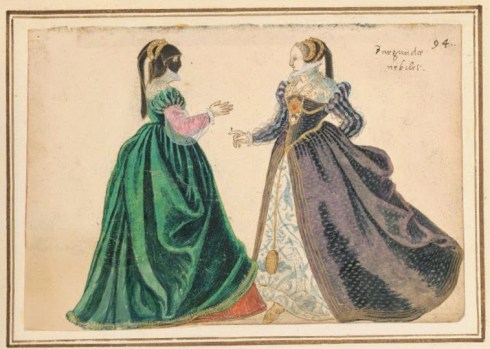
It’s a beautiful day here in Salem, but I’m in lockdown in my study, more than halfway through the very last chapter of my book! I am taking a break to show you some early modern masks, just because they are so wonderful. There is no material culture in my book: it’s all about information culture. But some of the instructive information I am coming across refers to very mundane matters like personal and household hygiene: one of my very favorite books is all about how to remove spots and stains from both precious and mundane fabrics, with dyeing advice if they won’t come out. Out, damned spot! Out, I say! This was of course a huge problem, as I am not dealing with a disposable society. Cleanliness was increasingly important for health reasons as well: sixteenth-and seventeenth-century people were living through constant pandemics of plague and various poxes and fevers, and while they knew nothing about germ theory, they had associated disease and squalidness. When they went outside, into the pestilential air, they covered up for protection if they could afford to: with hats, hoods, gloves and fans and yes, even masks. Everyone is now familiar with the beaked plague masks of the later seventeenth century, but this was just one, rather dramatic, form of early modern masks, which were also worn for “disguising,” for protection against the weather, for festivity, and for fashion. The most elaborate of fashionable early modern masks for women, the vizard or visard, which covered the entire face except for the eyes, seems to have had Italian origins, like so many fashions then (and now): when they began appearing in England, many commentators, especially of the Puritan disposition, were not impressed. In his Anatomy of Abuses (1583), Phillip Stubbes wrote: When they use to ride abroad they have invisories or visors made of velvet, wherewith they cover all their faces, having holes made in them for their eyes, whereout they look. So that if a man, that know not their guise before, should chance to meet one of them, he would think he met a monster or a devil, for he can see no face, but two broad holes against her eyes with glasses in them. Nevertheless, the household accounts of Queen Elizabeth’s reign list vizards among her purchases, and a century later, these “visors” were fashionable apparel for women of some means, who would wear them out and about, particularly when attending the theater. Samuel Pepys was so struck by one vizard-wearing lady at a performance that he went right out and bought a mask for his (long-suffering) wife. There are several digital sources for early modern apparel: I chose the images below from a late sixteenth-century album of costumes in watercolor at the Morgan Library and the “Friendship Album” (Album Amicorum) of a German Soldier in the collection of the Los Angeles County Museum of Art.

An Album of Costumes, Morgan Library.

Album Amicorum, LACMA.

Wenceslaus Hollar’s engravings of English women clothed for every season from the mid-seventeenth century illustrate the bit more utilitarian masks worn by women of means during the winter: many more Hollar images are at the Fisher Library at the University of Toronto and the Rijksmuseum, where I obtained these images—there is a new “Rijkstudio” where you can get creative with collection items; no time for that now, but later……..

Wenceslaus Hollar at the Rijksmusum.


The Gardener’s Labyrinth

I’m having this really neat synchronicity of research, writing and life right now, as I’m working on Chapter Three of my book, which is focused on Elizabethan horticulture. So I get up, water my garden, and then go upstairs into my study and read and write about English gardening texts from the sixteenth century. Or there is the alternative day: I get up, drink coffee, read and write about English gardening texts, and then go downstairs for “cocktail watering” at the end of the day.  Regardless of when I sit down to immerse myself in this topic, it is obvious that there was a lot to write about then, and so I have a lot to write about now: new plants, coming from the Continent or the New World, how to feed the rapidly growing city of London, how to harness the power of plants for a variety of medicinal purposes. There were kitchen gardens, physic gardens, market gardens, and “summer gardens” for pleasure and relaxation. No matter what the purpose of the garden, the general belief was that it should be adjacent to the house and laid out in beds segregated by paths and walkways: the influences of the French parterre and medieval precedents encouraged the creation of a “knotted” or knot garden, which seems to have become a Tudor symbol. The pioneer of English gardening texts, Thomas Hyll (or Hill) published his first book, The Profitable arte of gardening in 1558: it was reprinted frequently thereafter and published in an amplified edition called The Gardeners Labyrinth posthumously in 1577. The Labyrinth was also very popular, due to the combination of Hyll’s “plain” instructions on how to lay out, enclose, plant, fertilize, irrigate, protect, and harvest a garden as well as its wonderful illustrations, the most reprinted of which are his images of watering the garden, something we all need to think about right now in the August doldrums (at least in New England). And true to its title, the Labyrinth also includes illustrations—templates really, for knot gardens, mazes, and labyrinths. Somehow I am more appreciative of his watering advice right now, in these 90-degree days!

Gardeners Collage First

Gardeners Labyrinth 1594 (2)

Gardeners Labyrinth Ch. 20 (3)

Gardeners Labyrinth 1594 watering through troughs (2)

Gardeners Labyrinth Watering (3)Tending to and ordering your garden in the Elizabethan era: Thomas Hyll’s Gardeners Labyrinth.

I am a bit confused by these two alternative watering techniques: “the maner of watering with a pumpe by troughes in the garden” and “the maner of watering with a pumpe in a tubbe” as Hyll is quite clear in the text that “water rotteth and killeth above ground.” So do we water from above or below?  I generally do both: aiming for the roots when I start watering and then just lazily arching it from above when I get tired and lazy—especially if I am watering with wine-in-hand. So many tools we use now were used then—rakes, hoes, shovels, watering “pottes”: and he calls his tin watering devices “great Squirtes”! August was hot in those Elizabethan summers as well: and Hyll instructs his readers to get out there and water in whatever way they can.

20200810_185343

20200810_070845Bad cocktail watering (?) and the garden in the morning.

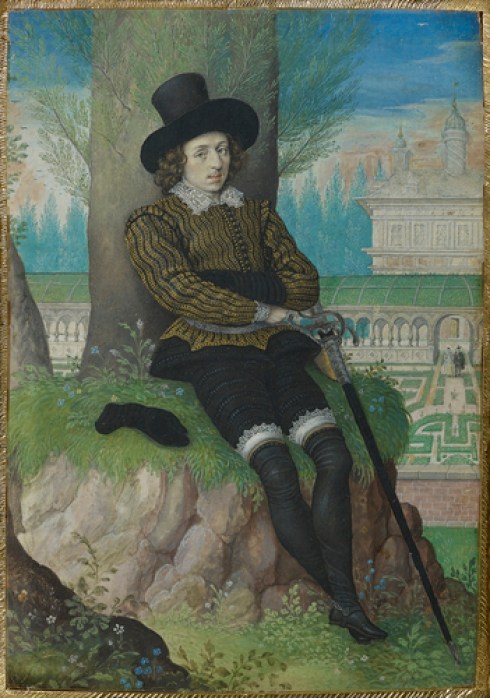
There are several knot garden examples in The Gardener’s Labyrinth as well as mazes: Hyll had to appeal to the literary public, which was essentially a monied and aspirational one, and so his gardens had to have ornamental qualities as well as utilitarian ones. The knot or maze is a perfect and very literal example of man bending nature to his will, a key Renaissance preoccupation: man is at the center of everything. The perfectly-ordered gardens that appear in the backgrounds of English portraits from this era reflect very well on their individual subjects, as well as the society at large.

Gardeners Knot (2)

Gardeners Maze (3)

Lord Edward Russell

Gardening Young Man

Garden Lettice Newdigate 1606Knot & Maze designs from the Gardeners Labyrinth, 1577; Lord Edward Russell by George Perfect Harding, watercolor copy of a 1573 portrait after unknown artist, National Portrait Gallery; Isaac Oliver, a Young Man seated under a Tree, 1590-95, Royal Collection Trust; Lettice Newdigate, c. 1606, Private Collection: Arbury Hall, Warwickshire.


Corona Courses: My Top Ten Sources of Digital Content

So I have just finished converting my lecture courses into online formats: difficult to do midstream. A well-designed online course is a beautiful thing, but if a course is based on a more personal form of delivery and has to become virtual overnight there are going to be challenges. Fortunately, I teach history, and not a discipline that requires a lab or a studio: I can’t imagine what those professors are going through! And I also feel very fortunate to be able to depend on a variety of institutions—libraries and museums—which have made so much of their collections accessible AND provided road maps and guides to these same texts and images in the form of interpretive essays, questions for consideration, and extra-special digital features. I’ve had digital content in my courses for the last decade or so, but again, a course based on all-digital content is another thing entirely. I could not have accomplished such a thing—in such a short time— a decade or so ago; I can now, thanks to the diligent and creative efforts of these institutions, which take the “education” and “engagement” directives in their missions seriously. So here’s my top 10 list, with one qualifier and one comment: 1) I teach medieval and early modern European history and world history, so this is not going to be a US-centric list; and; 2) these institutions are focused on general education, not just formal education: they have made their collections accessible to those who have more casual or independent interests as well as those working within a curricular framework. (oh, and this list is in no particular order and is by no means exhaustive).

1. The Newberry Library, Chicago: For an American library, the Newberry has very rich European collections and it has created online exhibitions and curated primary source sets that I find invaluable for my courses: its librarians and fellows are very attuned to key curricular and historiographical trends. The Newberry is also a leader in American history and culture in general and local history in particular: it just won the top prize for “Oustanding Public History Project” at the National Council on Public History’s virtual conference for  “Chicago 1919: Confronting the Race Riots”. Digital Newberry offers about a million high-resolution texts and images: this is a small fraction of the library’s collection but still quite a lot to see.

De_Bry_Indi_Hispanis_plt_20 Theodor de Bry’s famous 1594 engraving showing Amerindians pouring molten gold into the mouths of Spaniards driven by insatiable lust for the stuff.

2. The Heilbrunn Timeline of Art History at the Metropolitan Museum of Art: is a timeline which pairs works of art from all eras and regions of the world with curatorial essays. You can search by region, by period, or by theme, and there are many thematic essays to explore: one leads to another and before you know it, hours have gone by. I teach with images, so this is the first place to I go to find perfect visuals for my presentations, but I also encourage my students to explore this resource themselves. And they do.

Dissolute HouseholdJan Steen, The Dissolute Household, 1663-64.

3. Speaking of timelines, check out the British Museum’s History Connected: A Museum of the World, in which objects can be explored across time and place while visualizing connections, the essential links of world history, and listening to curators share their expertise and perspectives. This is the result of a partnership between the Museum and Google: Google Arts and Culture can provide a engaging platform for a cultural institution to broaden their reach in more ways than one, but there needs to be some intent in terms of design and curation. Some institutions just share images of their objects and leave it at that (I’m looking at you, Peabody Essex Museum: 323 objects; 2 stories, but what BIG story is being told? And could we possibly have some more Salem objects?): this is parking, not driving engagement.

BM HST (2)It’s all about connections at the British Museum (above) and the Rijksmuseum (below).

4. Another exemplary Google partner is the Rijksmuseum: which offers up 164,511 objects, 11 stories, and 8 museum views, taking us right into the building. We can “walk” around the galleries, focus on particular paintings, examine them in “street” or catalog views, organize them in chronological order, discover connections to other works. The collection is so comprehensive (though again, only a fraction of the museum’s 8 million objects), and the connections go on and on, in all sorts of directions.

5. This semester I really need to get my students into the Vatican, as I’m teaching the Renaissance and the Reformation, and that particular place is a powerful connecting link between the two eras and movements: while a succession of Renaissance popes reveled in its creation and majesty, Martin Luther was repulsed by it. The Vatican Museums‘ website features 360-degree tours of many rooms and a more virtual experience with headsets, but just getting us into those spaces will be fine.

Virtual Vatican (3)

6. Anniversary Digital Exhibitions: Both private and university research libraries characteristically observe historical anniversaries by putting together digital exhibitions of images and texts. 2017 was the anniversary of Luther’s 95 Theses and the beginning of the Reformation, so there were many such exhibitions which are now archived: two of my favorites are Cambridge University Library’s Remembering the Reformation and the University of Arizona’s Special Collections Library’s After 500 Years: the Protestant Reformation. This year, digital exhibitions on the anniversary of Woman suffrage abound: see my previous round-up here.

7. Digital Bodleian: 914,832 images and counting at the digital portal of Oxford University’s Bodleian Library, through which you can do your own curation and share “collections” with students (or friends!). A very diverse and visual database, including some great ephemera, which I also love to teach with: I’ve got to cover both the “old imperialism” and the New in my European and World History courses, and I think some educational ephemera will illustrate the transition.

Bodleian (3)

8. The British Library, of course, because it has everything. I like the smaller, more curated collections, the “Turning the Pages” feature for complete texts, and when I am teaching medieval history (not this semester), the digitized illuminated manuscripts collection is indispensable. This is my favorite image of Henry VIII: from another anniversary exhibition and his own personal psalter: in the bedroom!

Henry BL

9. Harvard Digital Collections, of course, because they have everything: 6 million objects assembled from all of Harvard’s libraries, which you can search through with purpose or browse through an array of diverse topic collections. Because Salem is so source-challenged, I’ve come to rely on the Colonial North America collection quite a bit for this blog, but I use several of the other collections regularly for teaching. Then I just jump in from time to time: another rabbit hole: tread with caution!

10. IDEA: Isabella D’Este Archive at the University of North Carolina: I wanted to include one specialized site which demonstrates the full potential of what digital learning can encompass, and this is it. IDEA is an open-access digital “environment” dedicated to the life and letters of Isabella D’Este, the marchesa of Mantua (1490-1539). Isabella was by no means a “representative” Renaissance woman, but she left a blazing multi-disciplinary, interdisciplinary trail, which is explored here in creative ways, including a wonderful, truly virtual, replication of her personal studioloI love to go here/there, and I bet you will too.

Цифровая репродукция находится в иThe incomparable Isabella D’Este and a site worthy of her.


My December 2019 Book List

I generally post a book list around this time of year: my favorite books of the past year, books I want for Christmas, books I’m reading or assigning for my spring courses, books I want to read over the holiday break. This list is all of that except for the first category: I haven’t read much this past year because I’ve been working so hard—writing myself, teaching, and reading to teach—and so I really can’t play favorites. This was not a leisurely year and there is very little fiction on this list, and even very little history unrelated to my teaching: very little American history in particular. To a certain extent, this blog has been an exercise in discovering the American history which I avoided from high school: I’ve learned a lot but now I’m kind of done—it seems a bit repetitive to me. Other worlds call, and new books in my own fields are piling up! I’ll never be done with the histories of architecture (structure and landscape) and material culture though—and folklore, though nothing of that genre caught my eye this year. So proceeding in chronological order, here are the books which did.

pixlr-2

book-ralegh

Book Elizabethan Globalism

book-gardens

Picture1

These books are all for my courses and an endless writing project which I hope to bring to fruition in the coming year. Simon de Montfort is one of those guys like Sir Philip Sidney: a glamorous representative of his age, in this case the thirteenth century, who has a very dramatic story which students love and which can also represent the best (anti-absolutism) and worst (antisemitism) of the time. I’ve read everything about de Montfort, and this book, by University of Lancaster Lecturer Sophie Thérèse Ambler, is very good, full of details and analysis which will enhance my teaching. I will be reading Renaissance Futurities and Gardens for Gloriana for pleasure and for context for own work over the break, and I am considering Walter Ralegh and Elizabethan Globalism for sections and courses on European expansion in the early modern era, although the latter is also an absolutely gorgeous book that could double as a more casual coffee-table text. Climate history is absolutely essential right now, as as the periods I teach encompass both the “Medieval Warm Period” and the “Little Ice Age” I’m always on the hunt for fresh environmental perspectives: Nature’s Mutiny is a potential adoption for several of my courses but I have to read it over the break to gauge its accessibility.

Book Boston_edited

screenshot_20191202-202149_chrome

Books Folio Society

Book Sandition IMG_1504

Books

Books 2

House Party

These are all books I WANT or want to read: I think Inventing Boston would inform my understanding of Salem craftsmanship in the same key era, Mark Girouard’s classic Life in the English Country House has been reissued in a stunning edition by the Folio Society this year with photographs from Country Life and a binding illustration by architectural artist John Pumfrey, and I collect Penguin clothbound editions by Coralie Bickford-Smith. I’m not sure I buy into Orlando Figes’ themes of European unity and modernity in the nineteenth century, but that is an era with which I need to engage, again. I’ve always been fascinated with Frank Lloyd Wright’s professional and personal life, and who doesn’t want to read about English Country House parties? Oh, and in addition to Sandition, I did want to read one other novel this year if only for the local reference in its title, but no, I cannot read Lucy Ellman’s 1000-page Ducks, Newburyport at this particular time: I just don’t have the ability (or the time) to dwell on a strung-out sentence of rambling thoughts, as experimental and interesting as it/ they may be. Maybe next year, or the year after.


My Top Ten Books for 2018

I don’t believe that I’ve posted on books that I’ve read, or am reading, or want to read in quite some time: it seems like this whole past year has been consumed by the dislocation of our local history rather than more pleasurable pursuits! In years past, I always rounded up what I read–even before I started blogging—as a form of reflection, and December is obviously the best time for that. This year was odd not only because of the PEM problem, but also because I’ve been on sabbatical this fall and am writing my own book—so I’ve been reading primary sources and very specialized scholarly texts for the most part, not the sort of books that are going to rate inclusion in a top ten list aimed at a general audience. On weekends and at night I worked through a more entertaining stack by my bedside. I’ve always been a content reader even when I’m not reading for work: some history outside my period, lots of natural history, all sorts of books about books, and books about art and various types of design. I like to read about food in historical or cultural contexts, but I don’t really like to cook. I like to read about beverages in historical and cultural context as well, and I do like to mix drinks (and drink them). Not much fiction, and the occasional guide depending on what’s going on in my life. The first three books on this list intersect with my professional and private interests a bit, the rest are just representative of my varied interests, and the last book is a work of fiction, and one of the best books I read all year.

Books Pasta

Books Hawfinch

Books catalogue-of-shipwrecked-books-9781982111397_xlg

Books

My book is actually based on Renaissance handbooks, but not handbooks as specialized, and as beautiful, as the one reproduced, in its first English translation, in Pasta for Nightingales, an Italian orinthological study by Pietro Olina produced in 1622 with watercolor illustrations produced for the Paper Museum” of the Roman collector and scholar Cassiano dal Pozzo. The text features all sorts of charming contemporary ways to relate to birds, including a chickpea pasta recipe for nightingales. This is just the kind of intersection—of folklore and emerging “science”— that I’m hoping to capture in my book. The Catalogue of Shipwrecked Books, by Edward Wilson-Lee, tells the story of Christopher Columbus’s illegitimate son, Hernando Colón, and his thirty-year quest to assemble–and organize–the largest private library in Europe, a collection that sadly went to waste after his death. It’s not just Colón’s constant purchasing of books from all over Europe that makes this book interesting, but also his efforts to catalog them: their problem looks slight in comparison to ours, but Renaissance Europeans actually suffered (a bit) from “information overload” in the first decades of print. I’ve always learned a lot from Theodore Rabb—in graduate school and throughout my career–and the essays in Why Does Michelangelo Matter? address one of my key teaching goals: the integration of the visual arts into historical analysis. Jumping back and then forward in time: ancient history is not my favorite era, much less the horrible twentieth century, but I love Mary Beard and I wanted to read something about the Great War in this centennial year of its end, so I’ve got The Roman Triumph and Jörn Leonhard’s Pandora’s BoxA History of the First World War on my list.

Book Collage

I am including Susan Orlean’s The Library Book, about the devastating destruction by fire of the Los Angeles Angeles Public Library in 1986 in particular and the impact of libraries on public and private lives in general, on my list even though I haven’t read it. It just seems appropriate for this year when I was obsessed with the loss of a library (and she is such a good writer): it’s nearing the top of my bedside stack. My food book this year (so far) is Dan Stone’s The Food Explorer, which is really about a botanist bureaucrat who transformed the American diet through his discoveries in the later nineteenth and early twentieth centuries. On to drink: I’m including a mixology book because it’s been a difficult year: gin is my spirit of choice and I’m always looking for the perfect gin and lemon drink, and Gin Made me Do It helped me to refine one. I really am a material girl at heart, and an anglophile, and I live in a townhouse, so Ros Byam Shaw’s’s Perfect English Townhouse, showcasing 14 stunning homes, is perfect for me. Finally, my last pick: Francis Spufford’s amazing novel of colonial New York City: Golden Hill. Rarely do I read fiction, even rarer still, historical fiction: essentially I have to know the author to indulge in that genre. But, much like Hilary Mantel’s Wolf Hall, this book just submerged me into into its time and setting. I devoured it: you will too, I bet.

Library

Food Explorer

Books Gin

Perfect Collage.jpg

Golden Hill