Tag Archives: Photography

In Praise of Massachusetts Chairs

Aficionados of antiques, decorative arts, and furniture, or simply admirers of artistry and design, can find plenty to see and learn at all of the events and exhibitions associated with Four Centuries of Massachusetts Furniture , a collaboration of eleven institutions designed to put the spotlight on Bay State craftsmanship. You may not have been aware that this past Tuesday, September 17th, was declared Massachusetts Furniture Day by our own Governor Deval Patrick!  The announcement was made at the State House with the chair of John Endecott, the first governor of the Massachusetts Bay Colony, sitting prominently in the background–I assume this is a Salem chair as that is where Endecott landed and lived (it certainly couldn’t be the English chair which accompanied his successor John Winthrop on the Arbella  which is the subject and device of Hawthorne’s story “Grandfather’s Chair”).

Chair of Endecott at MSH

©Andrea Shea/WBUR

It’s really all about chairs for me, as even a casual reader of this blog would know. Just in my head, without going to Four Centuries’ great website or any of its events, I can immediately think of a chronological succession of great Massachusetts-made chairs–up to about 1830 or so:  after that, I’m lost. The nice thing about this initiative is its incredible time span, which must accommodate colonial craftsmen and Federal superstars like Samuel McIntire of Salem as well as industrial manufacturers in central and western Massachusetts, After all, Worcester held the title of “chair capital of the country” a century ago and Gardner is still proudly “the chair city”.

Biggest_Chair,_Gardner,_MA

Gardner’s Big Chair, c. 1910

So here we go:  my own Four Centuries of Massachusetts Furniture, taken from a variety of sources and certainly informed by the collections showcased on the Four Centuries’ sitea particular discovery for me is Boston furniture-maker Samuel Gragg–amazing!  Obviously there’s a bias here in favor of the early nineteenth century, but it was hard to choose favorites in general:  Massachusetts really produced a lot of great chairs (more than all of the other original 12 colonies put together apparently) and continues to do so.

Chair 17th c MFA

Chair Chippendale Boston MFA

Chair Lolling Skinner

PicMonkey Collage

Salem Fancy Chair

Chairs 1825

Chair regency winterthur

Richardson Chair

Apartment Therapy

Chair Plycraft

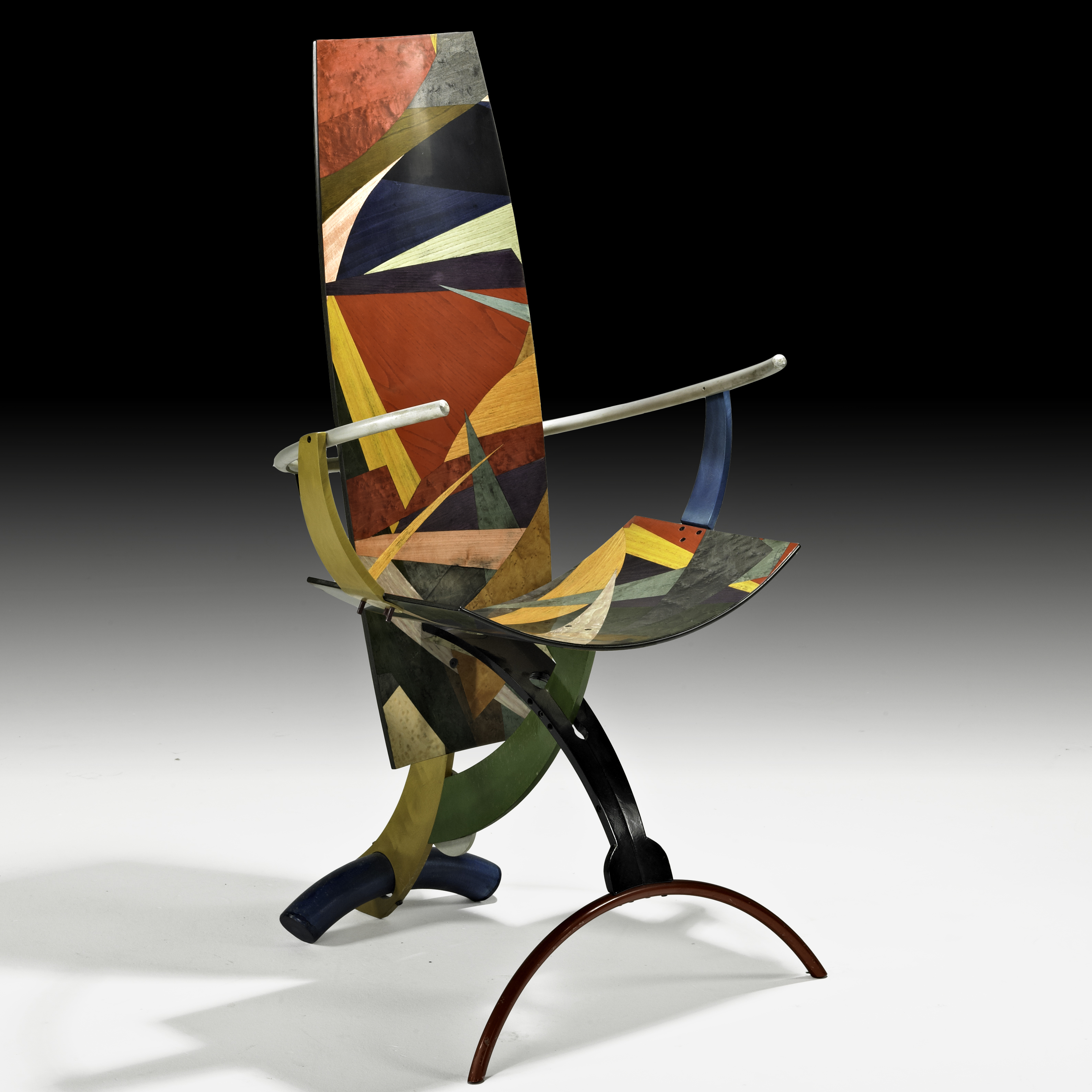
Char by Jay Stanger 1994 Fuller Craft

Made in Massachusetts:  Leather “Great Chair“, 1665-80, Boston (a near-contemporary of the Endecott chair), and Chippendale side chair, about 1770, Boston, both Museum of Fine Arts, Boston; Federal “Lolling” Chair made by Joseph Short of Newburyport, c. 1795; Federal armchairs made by Samuel McIntire for the Peirce-Nichols House in Salem, 1801, Metropolitan Museum of Art, New York, and in situ; “Fancy” side chair, probably Salem, c. 1800-1820, American Folk Art Museum, New York; Pair of decorated fancy chairs, attributed to Samuel Gragg, Boston, c. 1825, Skinner Auctions; Boston “Grecian” side chair, c. 1815-25, Winterthur Museum, Gallery & Library; Armchair designed by H.H. Richardson for the Woburn Public Library, Boston, 1878, Museum of Fine Arts, Boston; Shaker chairs at the Hancock Shaker Village near Pittsfield, Massachusetts, courtesy of Apartment Therapy; Armchair by Norman Lerner for Plycraft, Lawrence, Massachusetts, c. 1955, Skinner Auctions; “Arched and Animated” chair by Jay Stanger, Fuller Craft Museum, Brockton, Massachusetts.

Mass Furniture Haverhill Chairs

Another great line-up:  chairs in the snow, c. 1910, Haverhill, Massachusetts. Smithsonian Institution.


Fox and Geese

The pictures from my last post on the Coolidge Reservation do not convey one of its major features:  what remains of  the many geese that obviously enjoy the Ocean Lawn as much as other visitors. I remarked upon this to the ranger who was stationed there, and he laughed and told us that they brought in a fox to keep the geese away, but after a while he gave up and left……the geese won. The parable of the fox and the geese and their adversarial relationship is an old one, even older than the fox in the hen-house I think, and it has inspired centuries of illustrations, decorative objects, and games, all featuring the hunter and the hunted or the geese somehow outfoxing the fox; in either case, the two parties are inevitably intertwined, in one way or another.

Fox and Geese Harley BL

Fox and geese

British Library MS Harley 4751, English Bestiary, 1230-40; Fox and Geese in the Tudor Pattern Book, Bodleian Library MS Ashmole 1504, 1520-30.

It looks like the fox is winning in these two pre-modern images, and he definitely has the upper hand in most representations of the relationship, at least until the creation of a succession of satirical views from the later eighteenth century onwards.

Fox Goose and Gander

Fox and Geese BM

Johann Heinrich Tischbein, A Goose and a Gander Honking in Alarm as Foxes Approach, mid-18th century, Metropolitan Museum of Art; The Goose Lost (a caricature of British politician Charles James Fox), published by J. Barrow, 1784, British Museum.

Porcelain and pottery with fox-and-goose motifs were also produced around this time, including rather elaborate pieces for extensive table services and the popular ABC and proverbial plates for children. Talk about intertwined: look at the gravy (sauce) boat below!

AMICO_CLARK_1039413730

Fox and Goose Gravy Boat

Fox Plate V and A

Fox and Goose plate Cooper Hewitt

Fox and Goose plate detail

Meissen Porcelain Cup and Saucer, c. 1760, Sterling and Francine Clark Institute; AMAZING Staffordshire Fox and Goose Sauce Boat, c. 1780-1790, and Transferware Plate, 1790, Victoria & Albert Museum, London; Creamware Fox and Goose ABC Plate by Elsmore & Son, England, late nineteenth century.

Children’s books published in the nineteenth and twentieth centuries, whether fables, nursery rhymes, or bedtime stories, feature a variety of illustrations of foxes and geese, generally on friendlier, or at least less predatory, terms. And then there were the fox-and-goose games of strategic pursuit, played on a board, in the parlor or even outside, which date back to the seventeenth century at the very least. Textile designs in the past and present  feature fox and geese continuously, in abstracted patterns for quilting and knitting, and more literal prints for fabrics and wallpapers.

Fox and Geese Game 1883

FoxGeesePieces

Fox Fabric

Fox and Geese board game, Gloucester, Massachusetts, 1993, Smithsonian Institution, and pieces from a modern version of the game; Westfalenstoffe fox and geese fabric.

My favorite images of these two natural enemies are a bit more basic and elemental, in line with the medieval and Tudor images above. The realistic, rather than romantic relationship was captured completely by John James Audubon in the nineteenth century and The National Geographic more recently: these are elemental and eternal images.

audubon

04-feisty-fox-drives-snow-goose-670

John James Audubon, Fox and Goose, c. 1835, Butler Art; An arctic fox and a snow goose face off in Sergy Gorshkov’s photograph for National Geographic,


Orphans and Multiples

A photographic essay in the Huffington Post from a few days ago entitled “10 Orphan Row Houses So Lonely You’ll Want To Take Them Home With You” did indeed make me sad. A sampling of photographer Ben Marcin’s work, the photographs feature single surviving rowhouses (I prefer the one-word spelling) in Baltimore, Philadelphia, and Camden, New Jersey, the heartland of mid-Atlantic urban architecture. I love rowhouses: I actually live in one, although it’s just a double, and I went to college in Baltimore and briefly lived in Washington, D.C., another great rowhouse city. You just know that these still-strident orphans were once part of a strong streetscape, and want to know the story behind their abandonment–and survival.

rowhouse  Ben Marcin Baltimore

Rowhouse Ben Marcin Baltimoreblue

Rowhouses Ben Marcin Philadelphia

Rowhouses in Baltimore and Philadelphia by photographer Ben Marcin, C. Grimaldis Gallery, Baltimore.

I got happier when I started reading about some rowhouse renovations, and took a leisurely late-afternoon walk to see some of Salem’s rowhouses. We don’t really have rowhouse blocks like larger cities, but we do have several rows of triple and quadruple semi-detached houses just in my neighborhood,  and a few more around  town. Before the great fire of 1914, there was a “Tontine Block” of four houses in Salem built in 1805, no doubt inspired by Charles Bulfinch’s Tontine Crescent in Boston, one of the first American residential urban planning projects. The Boston Tontine was built in 1794-95 and unfortunately demolished in 1858, the victim of encroaching commercial construction.

Rowhouses Tontine Crescent

Rowhouses 1850s franklin tontine crescent bpl

Bulfinch’s Tontine Plan, 1794, and the Tontine Crescent shortly before its demolition in 1858, Library of Congress and Boston Public Library.

Here in Salem, the triple house on Chestnut Street, fortunately very much still standing, and the lost 1805 Tontine block on nearby Warren Street testified to Bulfinch’s influence; the latter was rebuilt after the fire with some charming Craftsman details, inside and out. The other Salem rowhouses are clearly not Federal in inspiration: dating from the second half of the nineteenth century, they are wooden structures built in a more vernacular Victorian style. Each and every one is enhanced by the presence of its neighbors.

Rowhouse Salem Chestnut

Rowhouses Salem 2

Rowhouses Salem 3

Rowhouses Salem 4

Salem rowhouses on Chestnut, Warren, North Pine, and Broad Streets.


Asylums Abandoned and Adapted

What is it about abandoned mental hospitals? There is a lure there; not quite sure why. For many years, the abandoned state mental hospital in nearby Danvers, formally and progressively known as the Danvers Lunatic Hospital, the Danvers State Insane Asylum and the Danvers State Mental Hospital (you can trace the evolution of the vocabulary of mental illness by charting the changing names of such institutions, so many of which were built in the later nineteenth century), drew many night-time visitors to its darkened doors after its closure in 1992. Constructed between 1874 and 1878 in the “Domestic” Gothic style and according to the Kirkbride Plan which dominated asylum architecture at the time, you can see why it cut a rather menacing silhouette when lifeless. Even before it was abandoned, Danvers was inspirational (it is said to be the model for H.P. Lovecraft’s Arkham Sanitarium in “The Thing on the Doorstep” and several other stories) but somehow became even more so in its abandonment: inspiring preservationists, photographers, and movie producers.

Abandoned Asylum Danvers Trask

Abandoned Asylum Danvers 1930s

Abandoned Asylum Danvers 1895

Danvers in its heyday:  photographs from Danvers Town Archivist Richard Trask History of Danvers State Hospital at the Danvers Archival Center and from the Eighteenth Annual Report of the Trustees of the Danvers Lunatic Hospital, 1895.

Below are pictures of the hospital dating from 2000-2001, when preservationists were engaged in an intense battle to save the building, or at least its central administrative section, for adaptive re-use. They were successful in placing Danvers on Preservation Massachusetts’ Most Endangered List that year, but not in saving the structure: both its wings and its central section were demolished by the Avalon Bay Communities, Inc., an apartment development and management company, following its acquisition in 2005. What “remains” was really reconstructed rather than renovated, so my alliterative title is a misnomer, at least as it applies to Danvers State.

Abandoned Danvers2 SSU

Abandoned Danvers SSU

Abandoned Danvers 3 SSU

The Shuttered Hospital:  Preservation Massachusetts Flikr. (The steeple was removed in 1970, apparently for safety’s sake).

The shuttered era of Danvers State has inspired some hauntingly beautiful images, most notably by photographers Roger Farrington and John Gray. Farrington is the historian-photographer, capturing the institution’s interior at the moment of its closing in 1992, while Gray comes along a bit later and expands the geographical context of Danvers and its decline in an extremely compelling way in his beautiful book Abandoned Asylums of New England: A Photographic Journey. I particularly like his image (below) of Worcester State Hospital, another Kirkbride building built and closed at the same time as Danvers, which met much the same fate. Looking through Gray’s book, my question is no longer what is it about abandoned mental hospitals but why do we build monumental buildings that we can’t, or won’t, maintain? Maybe we no longer do.

Roger-Farrington-15

Abandoned Asylums Danvers Rooftops Gray

Worcester State John Gray

Photographs by Roger Carrington (interior) and John Gray (Danvers turrets at sunset and Worcester State in the dark).

The consensus among preservationists is that Danvers didn’t have to be demolished/reconstructed: there were other options and there are other models of adaptive reuse among the remaining (sadly small number) of Kirkbride buildings. There is a great blog/website which provides a one-stop resource of information and images for these institutions and their fates. The list of demolitions is much longer than the list of saves, and most of these complexes seem to be crumbling, but there are a few rays of hope:  the Traverse City Mental Hospital in northern Michigan (alternatively known as the Northern Michigan Asylum), now redeveloped and reconsecrated as the residential Village at  Grand Traverse Commons, seems to be  the best example of preservation and conversion. Things look good for the Fergus Falls State Mental Hospital in Minnesota as well but, like Danvers, it’s been abandoned for years.

Traverse

Traverse1-popup

Fergus Falls Hospital 1928

Traverse City in 1990 and The Village at Grand Traverse Commons today, photograph by Gary Howe for the New York Times; Fergus Falls Hospital in 1928, Minnesota Historical Society.

I could go on and on about each and every one of these abandoned buildings, both those that remain (Athens, Ohio, Buffalo!!!) and those that have been lost, but I’m going to go back to Danvers, which has provided a dramatic backdrop and inspiration in both its open and shuttered eras. Two films have been filmed there, the Jean Simmons  film Home before Dark (which I saw long, long ago and have no memory of the Hospital; I’m going to look at it again) and the 2001 horror film Session 9, which I have not seen and have no desire to see.

Session 9 2

session 9 danvers

Poster and Screen shot from Session 9 (2001).

Perhaps the most creative expression inspired by Danvers State Hospital has simultaneously preserved a piece of it. A year ago, I came across an article about Danvers resident John Archer’s “Scrap Mansion” in the New York Times. As a board member of the Danvers Preservation Commission, Archer was a key part of the fight to save Danvers State, but when it came down, he salvaged a turret and installed it in his ever-expanding house.  So pieces of Danvers State Hospital remain intact, both in the reconstructed facade on its original site and a house nearby.

Archer1 Archer3

Danvers State/Avalon

???????????????????????????????

John Archer before his Danvers Wing, and salvaged doors from Danvers State, Trent Bell for the New York Times; Danvers State administrative building/Avalon Danvers, last weekend.


Celebrating Summer

Salem is just wrapping up its two weeks of Heritage Days activities, which included a Maritime Festival at the Salem Maritime Historic Site, the Firemen’s Muster at the Willows, the Essex Street Fair, the Witches’ Cup bicycle race around Salem Common, the antique car meet here on Chestnut Street, and lots of events involving ice cream and/or music. You’ve got to love a town that celebrates itself AND summer. And we are now in the midst of those perfect New England summer days: clear, bright and sunny in the high 70s/low 80s during the day, high 50s/low 60s at night–you need a light (cotton) blanket, but not an air conditioner. Minimal humidity. PERFECT. This particular celebration has been going on for more than 50 years, but before that, there were other pageants, commemorations, festivals: I don’t think Salem has every missed an anniversary, or an opportunity to celebrate something, and before Haunted Happenings took over in the past few decades, these celebrations usually happened in the summer. So here’s a portfolio of festivities, present and past.

Scenes from Salem’s Heritage Days, these past few weeks: the Maritime Festival, the Witch House, The Antique Car Meet on Chestnut–which was bigger and better than ever this year.

???????????????????????????????

???????????????????????????????

Summer Celebrations USS Constitution

Summer Celebrations 002

Summer Celebrations 061

Summer Celebrations 041

Summer Celebrations 053

And some summer celebrations from the past:  once again, I’m turning to long-term (1917-67) Boston Herald-Traveler Photographer Leslie Jones, whose archives are at the Boston Public Library. Jones was in Salem often in the later 1920s and 1930s, to record swimming meets and other activities at the Willows, the arrival of the replica Arbella in the 1630 pageant marking the Tercentenary of  Salem’s founding, and a very interesting water festival at the Smith Memorial Pool, the largest open-air “natural” swimming pool on the east coast, where Summer was REALLY celebrated for many years.

Summer Celebrations Swim Meet 1929 Leslie Jones

Summer Celebrations Arbella 1930

Summer Celebrations 1936 Leslie Jones

Summer Celebrations Smith Pool


Witch Hazel

Well, I’m a bit disappointed (but not surprised) that the new British prince has not been named Alfred, but I must return to my more mundane life. The heat wave is over, thank goodness, but I am remain aggrieved: bruised and beaten from gardening and various athletic activities, bitten by a variety of bugs, burned by the sun. Consequently I have become completely dependent on, and enraptured with, witch hazel. I can’t get enough. I love its simplicity, its cheapness, its effectiveness, its old-fashionedness. Yet I know little about it–there are so many bottles around the house my stepson asked me what it was, and I had to admit complete ignorance. So I looked it up.

V0043169 Witch hazel (Hamamelis virginica): fruiting stem with flower

Witch Hazel Redoute 18p

Witch hazel (Hamamelis virginica): fruiting stem with flowers and seed. Colored engraving, c. 1792, after F. J. Schultz; Pierre Redouté, Hamamelis Virginica = Hamamélide de Virginie, c. 1801-19, New York Public Library.

I do know quite a bit about European medicinal plants and their history, but witch hazel is a North American native (actually there are Asian varieties too) so it doesn’t turn up in any of the medieval or Renaissance herbals with which I am familiar. The Native Americans used its bark medicinally, but Europeans (in typical European adaptive fashion) amplified its potency by mixing it with distilled alcohol–and consequently it became a stillrooom/medicine cabinet staple. The standard recipe seems to be 84% witch hazel extract and 16% alcohol today; I’m not sure what is was several centuries ago, but certainly not standard. From past to present, it has been prepared in a variety of forms–poultices, lotions, potions, tinctures and salves–as well as the common “tonic”.

Witch Hazel White BM

L0032213 Hazeline bottles, advertisement, 1903-04

John White’s depiction of a Virginian chief with witch-hazel bow, c. 1585-93, British Museum; an advertisement for Hazeline Witch Hazel, c. 1903, Wellcome Library, London. This latter image reminded me of John Derian‘s apothecary series of decoupage trays, so I clicked over, and there was witch hazel, of course.

Witch Hazel Derian

Apparently the witch hazel shrub is also beautiful, and a very early bloomer: I might have to get one of my own. Or I could just by a print. And lots and lots of more bottles of this panacea.

Witch Hazel NYBG

Witch hazel print Etsy

Witch Hazel at the New York Botanical Garden this early spring, photograph by Ivo M. Vermeulen; “Witch Hazels on Salmon Wood” by Kate Halpin, Etsy.


Girls of Summer

I detest hot weather and we’ve had a long stretch of it, so instead of extending my energies outdoors I have been lingering indoors, working on a couple of academic projects and watching old movies and Wimbledon. It’s been an unusually passive July Fourth long (long) weekend, though not an unpleasant one–perhaps I’m living vicariously through images on the television and computer screens–and not breaking a sweat! Anyway, for some time I have admired the work of two very different artists who captured the girls of summer in very different, though equally charming ways: Hamilton King’s “Sports Girls”, issued as a series of oversized cigarette cards promoting Turkish Trophies and Helmar Cigarettes before World War I, present the idealized (ironed!) view, while Boston photographer Leslie Jones captured many real sporting girls in the interwar era and after, most of whom seem rather sweat-less as well.

Girls of Hamilton King 1

Girls of Hamilton King 2

Girls of Hamilton King 3

Three of Hamilton King’s “Sport Girls” , Series T7-6, 1913, Metropolitan Museum of Art, New York.

Leslie Jones, long-time photographer for the Boston Herald-Traveler, was not an artistic photographer but a working one, who covered both everyday life and the big regional events from 1917 to 1956. There’s a large collection of his photographs on the Boston Public Library’s Flikr photostream, and also here. All of his work is amazing, but I find his coverage of sporting events particularly interesting, because it focuses more on the athletes and their surroundings as much (or more) than the action: Jones’ girls of summer are real women, smiling and completely in context.

Girls of Summer Betty Nuthall Jones 1930s

Girls of Summer Jones Marblehead 1940s

Girls of Summer Genevieve Peabody BPL

Leslie Jones’ photographs of Betty Nuthall at Longwood Cricket Club, Brookline, Massachusetts, 1930s,Yachting girls during Marblehead Race Week in the 1940s, and champion sculler Genevieve Peabody of Salem, 1920s. Boston Public Library and © Leslie Jones.

There were several national women’s golf tournaments at the Salem Country Club and the Kernwood Country Club in Salem in the 1930s, and Jones was there, but he was also sent to Revere Beach, just north of Boston, on the hottest days in July and August, where both casual groups and the “peek-a-boo” girls frolicked in and out of the water. I absolutely adore the center picture below, taken in July 1919:  it reveals Jones’ ability to put his subjects completely at ease.

Girls of Summer Helen Hicks

Bathing Girls Revere Beach Leslie Jones 1919 BPL

Girls of Summer Peek-A-Boo Bathing Girls Revere Beach Jones 1920

Champion golfer Helen Hicks at Salem Country Club, 1932, “Bathing Girls” at Revere Beach in 1919 and “Peek-A-Boo” Girls on Revere Beach in 1920, all Boston Public Library and © Leslie Jones.


Merchant Princesses

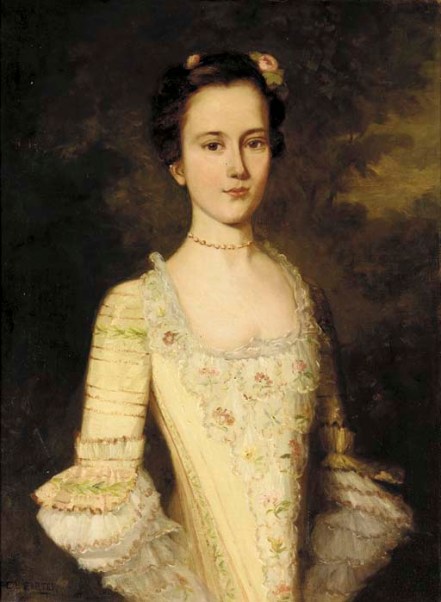
I recently found another Salem painting in the Christie’s Auctions archive that captured my attention and fancy: “Portrait possibly of a Girl of the Derby Family” by C.L. Carter, early nineteenth century (she actually looks more eighteenth-century to me). She’s a lovely girl, but I think she entranced me not only because of her Salem connection, but because she reminds me of another “merchant princess” from long ago and far away: Bia Medici, the illegitimate daughter of Cosimo I de’ Medici, as envisioned by Bronzino.  I say “envisioned” because while the portrait of the Salem girl captured the fullness of life (I think), the Bronzino portrait is a memorial image of the recently deceased girl. In life and death and in these paintings, both girls represent the privileged positions their respective families held in two mercantile oligarchies, centuries and an ocean apart.

Merchant Princess CL Carter Christies

Merchant Princesses  Bronzino

C.L. Carter, Portrait Possibly of a Girl of the Derby Family, Christie‘s; Angelo Bronzino, Untitled, known as Portrait of Bia Medici, Daughter of Cosimo I or Portrait of Bia, illegitimate daughter of Cosimo I de’ Medici, Uffizi Gallery, Florence.

Bronzino’s Medici princess has become iconic I think; I use her in my Renaissance classes to illustrate contemporary themes of family, death and remembrance, and Medici power and the students are always very taken with her, perhaps because of the angelic quality Bronzino (working from a death mask) gave her. Joseph Cornell was apparently taken with her as well, as she is the featured image of his 1948 collage sculpture that was part of the Navigating the Imagination exhibition originating at the Smithsonian American Art Museum and shown here in Salem at the Peabody Essex Museum. Another artist who seems to have been inspired by the portraits of these and other merchant princesses is the Australian photographer Bill Gekas, who has posed his very alive 5-year-old daughter in a series of  “reimagined” scenes, with adorable, and engaging, results.

Merchant Princess Cornell

Merchant's Daughter

Joseph Cornell, Untitled (Medici Princess), c. 1948, Private Collection; Bill Gekas, The Merchant’s Daughter, © Bill Gekas.


Remembering the Fire

Another anniversary today, though one not nearly as festive as that of the nativity of St. John. On June 25, 1914, 99 years ago today, the Great Salem Fire devastated large sections of our city, engulfing over 1300 buildings and 250 acres. The French neighborhood of Salem, including its centerpiece, the newly-built St. Joseph’s Church, was consumed (and that church’s eventual replacement was dismantled by human hands earlier this year). A lot has been written about the Fire, and I expect that many more words and images will be presented over this next Centennial year. I have just begun working with our university archivist on a digital exhibition on the Fire and its aftermath, and we hope to have it completed by the beginning of 2014.

Fire Panorama LC

Panoramic photograph of the Fire by C.H. Phinney, 1914, Library of Congress.

There are many contemporary images to choose from, including the hundred of postcards of the Fire aftermath which I wrote about in an earlier post. I don’t really understand the compulsion to make/send postcards from the scene of a human disaster but it was certainly done in this case! We are looking for more unusual and less commercial images of both the fire and its aftermath, so if you know of any private collections please let me know. We also want to focus on the greater impact: on both the neighborhoods directly affected and the city at large. The photographs below, all from the Boston Public Library, capture both the moment and the morning after in particularly compelling ways.

Salem Fire at its Height, BPL

Salem Fire Old Steamer

The Salem Fire at its height, from the Railroad Crossing” and “the Famous Old Steamer on its Way to the Salem Fire”. Note the man in the first picture, more captivated by the photographer than the fire behind him. His view is blocked by the railroad car, but still!

Salem Fire Ruins 1 BPL

Salem Fire Ruins 2 BPL

Salem Fire Ruins 3 BPL

Ruins on the morning after. There are many similar images; we’re going to have to be much more resourceful and creative in our efforts to source images of the Fire’s long-term aftermath.

Salem Fire Feed Tent

Feed Tent, Forest River Park. Photograph by M.E. Robb from Arthur B. Jones’ The Salem Fire (1914).


The Politics of Remembrance

Remembrance–the ongoing public process of acknowledging the importance of past people and events, is inherently political (as we know all too well here in the “Witch City”) but it strikes me that Civil War remembrance and reconciliation is particularly problematical. This point was brought home this past weekend when I read a provocative and powerful editorial in the New York Times entitled “Misplaced Honor”.  In the piece, author Jamie Malanowski calls for the renaming of the ten or more U.S. Army bases that are named for Confederate generals, men who led soldiers who fought and killed United States Army soldiers; indeed, who may have killed such soldiers themselves. Malanowski acknowledges the historical reason for the names of these bases– most of which were built between the world wars when the need for national unity was paramount–but asserts that we cannot let these names stand now, when African-Americans make up about a fifth of the military. The idea that today we ask any of these soldiers to serve at a place named for a defender of a racist slavocracy is deplorable; the thought that today we ask any American soldier to serve at a base named for someone who killed United States Army troops is beyond absurd. Would we have a Fort Rommel? A Camp Cornwallis?

Apparently there is even a consensus among Civil War historians that several of these namesakes (like Braxton Bragg of Fort Bragg) were bad generals. When I visited the official sites of bases names for Confederates–Fort Bragg, Fort Hood, Ford Benning–there was nothing to be found about these generals, except bland statements that they were local. And that really is the crux of it. The only substantive rejoinder to Malanowski’s argument that I could find (here) so far argues that local communities should have sway in the naming, or renaming, of public places in their midst. Hopefully, at the very least, this conversation can continue.

Politics of Remembrance 1

Politics of Remembrance 2

Portraits of Confederate generals, including Henry L. Benning, namesake of Ft. Benning in Georgia, lower center, Illustrated History of the Confederacy, 1899 & the 41st Engineers building a bridge at Ft. Bragg in North Carolina, 1942, Arthur Rothstein, photographer, Library of Congress.