It’s August, so we’re coming up on the day a year ago when the Peabody Essex Museum quite suddenly closed the doors of its temporary Phillips Library facility in Peabody and issued an ominous and mysterious statement that the Library would be opening up in a “new location” in the spring. In December, the Museum announced admitted that this new permanent location would be the town of Rowley, where it had purchased a utilitarian structure to house its amalgamated “Collection Center” (why is it not Collections Center—just not indiscriminate enough?) And just like that, Salem’s oldest and most comprehensive archive was gone, along with the very special library that had housed it for well over a century. The Collection Center Library, which I cannot bear to call the Phillips, is now open and able to accomodate 14 researchers in what is by all accounts (I haven’t been there yet, but I fear I will have to at some point) a massive structure, yet another indication that this facility was built to house material objects rather than texts: the announcement of its opening featured a curator examining a Chinese object. I’m quite aware that the PEM requires a vast amount of space to house its vast collections: I just don’t understand why this space could not have been found in Salem or why the Library had to be assimilated within it. Through this whole saga, I’ve talked to many people who have been just as upset over the removal of objects from Salem as texts: the assorted Americana and maritime memorials of the former Essex Institute and Peabody Museum. For me, it’s always been exclusively about paper. But just the other day, someone took a picture of the crated doorway of the Gideon Tucker House, being readied for its departure to Rowley I presume, and I started to think about the loss of material culture for the first time when I went over to see it for myself.


I guess I should be glad that this doorway still exists and is still—or has been–in Salem, as it is a long-admired example of Samuel McIntire’s work; indeed when students from MIT’s pioneering architectural school came to Salem in the summer of 1895 to measure and draw its storied buildings, their professor Eleazer B. Homer identified the elliptical doorway of the Gideon Tucker House (also called the Tucker-Rice House) as the “best-proportioned” in the city. We have photographs of the doorway in situ, but most images of it date from after 1896, when the Tucker house was acquired by the Father Mathew Total Abstinence Society and transformed into an institutional headquarters. By 1910 the famous doorway had been removed and donated to the Essex Institute, which eventually affixed it to the rear of Plummer Hall. I’m not sure when it was removed and placed in storage: Bryant Tolles refers to its relocated situation in his Architecture in Salem (1970) but the doorway of the “Grimshawe House” on Charter Street is affixed to the rear of Plummer at present–and has been for some time. Across Essex Street, the Gideon Tucker house was further “denatured” by the addition of commercial storefronts in the mid-twentieth century, but fortunately rehabilitated for residences under the supervision of Newburyport architect Jonathan Woodman in the 1980s, at which time it acquired its reproduction entrance.


 The Gideon Tucker Doorway and House (1804): Frank Cousins photographs from the 1890s; the Brickbuilder, January 1924; New York Public Library Digital Gallery, n.d.; Essex Institute postcard, MACRIS (1979) and present.
The Essex Institute garden must have been a very interesting place to visit in the midst of the twentieth century with its eclectic mix of houses and house parts assembled by George Francis Dow: in addition to the Tucker Doorway, there was a McIntire cupola from the Pickman/Derby/Rogers/Brookhouse Mansion which was demolished in 1915. It was infested with beetles and destroyed in the 1970s, and only its eagle survives. I am grateful that this beautiful doorway has not met a similar fate, along with all the architectural fragments in the PEM’s collections, but the removal from the cultural context which created them makes me anxious for their future significance—and meaning.
 “Eh bien, Messieurs! deux millions”: Napoleon displaying the treasures of Italy—in France, 1797, Library of Congress.


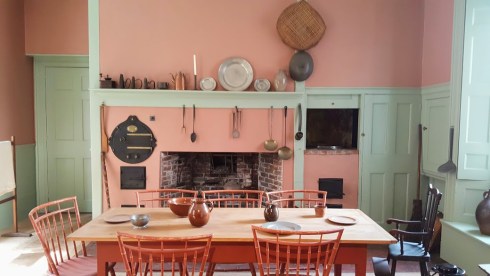


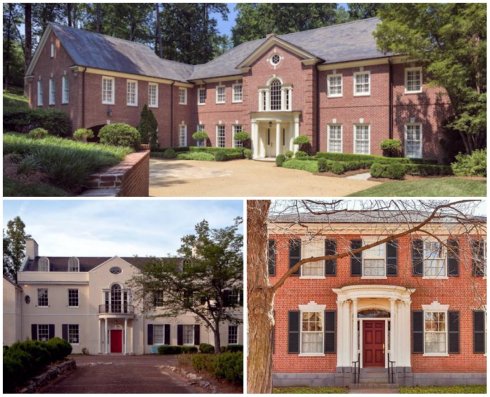 Detroit Publishing Co. photograph of Gardner-Pingree, 1906, Library of Congress; Albert MacDonald, Old Brick Houses of New England, 1917; Mansions of Massachusetts, 1977; the front parlor in the 1940s,houses in Atlanta and Brookline, MA supposedly inspired by the Gardner-Pingree.


 Two copies of
 Diplomas and medals for “drab” clothing, an artificial leg, mineral teeth, a miniature steam engine and a Patent Cloth Folder used at the Naumkeag Steam Mills in Salem, among other exhibits; a rare
  I couldn’t find any D.S. Bowdoin daguerreotypes from 1849, but here are two cartes de visite from later: studio portraits portrait of Robert Daley (or Daily), a Salem “expressman”, c. 1855 (Historic New England) and John Lewis Russell, a well-known botanist and Unitarian minister (Wisconsin Historical Society). According to the later photograph, Bowdoin’s studio was in the Downing Block, Salem.


 Scenes from the Salem Arts Festival on Saturday: my neighbor

 Henry Wilder, Map of the County of Essex, Massachusetts. Compiled from the Surveys made by order of the Legislature in 1831-1832, Boston Rare Maps; Ticknor map of Massachusetts, 1835, Leventhal Map Center, Boston Public Library.
 An Andover Market from the archives of the Andover Center for History & Culture; the Framingham History Center’s current exhibition.
 Lawrence textile industry strikers in 1912, Lawrence History Center Photographic Collection @Digital Commonwealth.

 New York Times, 1893.
 One of Bryant’s more notable commissions: the Bigelow Chapel at Mt. Auburn Cemetery. Library of Congress.
 The windowless “stacks” addition may soon be coming down. Salem News photograph.

 Greenlawn Cemetery in Salem, and the 2016 memorial for Medal of Honor recipient Thomas Atkinson.

 The Massachusetts State House festooned for a G.A.R. encampment in 1927, Leslie Jones, Boston Globe; images from the History and Complete Roster of the Massachusetts Regiments, Minutemen of ’61 who Responded to the First Call of President Lincoln, April 15, 1861, to defend the Flag and Constitution of the United States (1910).


 The Sheffield Patent, 1623, Phillips Library, Peabody Essex Museum; Title page of Thomas Maule’s New England Pesecutors Mauld, 1697;




 Four very different Cromwells dissolving the Rump Parliament on April 20, 1653: British Museum, 1790; Benjamin West, 1782, Montclair Museum of Art; and Cassell’s Illustrated History of England.
 A Newsham Engine of similar vintage @Colonial Williamsburg.

 Robert Newall photograph of the William Penn Hose Company in Philadelphia with their steam engines, 1865, The Library Company; Harper’s Weekly photograph of the Union, “the oldest fire-engine in the United States” in 1866; a photograph of the Union in an article announcing its return to Salem in The American City, January 1918.

 The Union and some fire buckets were featured prominently in a 1978 Essex Institute booklet: Museum Collections of the Essex Institute by Huldah Smith Payson, and fortunately for us, one of those very same buckets is one of the PEM’s online