Tag Archives: Labor Day

Revolutionary Remembrance

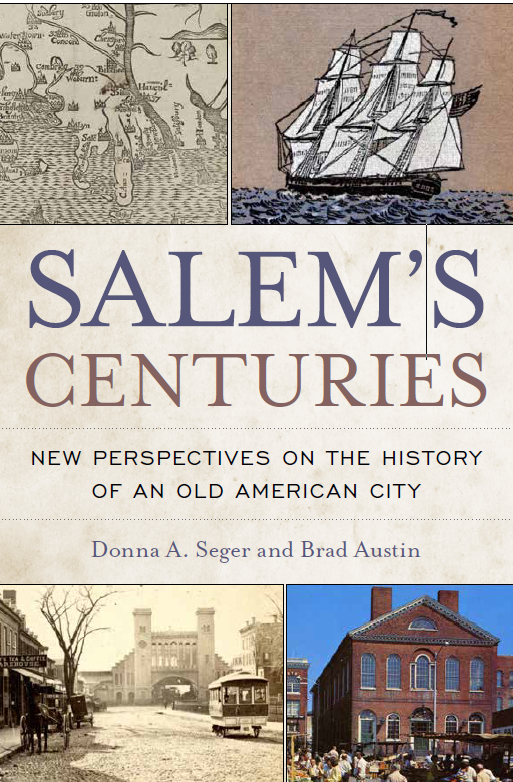
Even more so than usual, this Labor Day weekend seemed like the end of summer to me. Actually, not just the end, but the finale. This was quite a productive summer, even though I didn’t really produce anything: there were more edits on Salem’s Centuries and the new experience of working as a guide at Historic New England’s Phillips House, but what I was really focused on was Salem’s experience of the American Revolution. I read really widely on this topic, and learned a lot: I honestly don’t think I’ve read as much history since graduate school. It actually felt like graduate school, but without the pressure. As I say all the time on this blog, I’m not an American historian, so to truly understand historical forces at work at any time in Salem’s history, I have to get up to speed by going through both the classic texts as well as more recent studies. For a topic as big as the AMERICAN REVOLUTION, “background” is going to involve reading a lot of books, and so I did. At the beginning of the summer, all I wanted was to understand Salem’s role as provincial capital during the summer of 1774, but I couldn’t really grasp that without some understanding of the forces (and people!) at play in British America in general and Massachusetts in particular during the period between the close of the Seven Years’ War and the Boston Tea Pary. I would finish one book on this era with the realization that I had to read two or three or four more. I had questions which led to more questions. And it was all so PERSONAL: I had to figure out all the networks as well. My “revolutionary Salem summer” reading project was also personal, but it had public validation: Massachusetts has been in revolution-commemoration mode for a while thanks to the efforts and organzation of Revolution250  so there were regional events all summer long and this is also the bicentennial year of the (General) Marquis de Lafayette’s triumphant return tour of the United States, an anniversary marked by a succession of reenactments in the towns and cities which he visited originally, including Salem this very weekend. For an early modern European historian, this kind of synchronicity seldom happens!

Waiting for the General/ Marquis at a Red, White, and Blue Picnic in Chestnut Street Park—in this last photo, a very chill cat on a leash captured everyone’s attention, especially this regency toddler!

Lafeyette arrived in Salem around 2:00 pm, there were formal welcomes and speeches and a few photo ops, and then he was on his way. This was a busy day for the Marquis/General: it started in Chelsea, and then he visited Marblehead, Salem, Beverly and ended up in Ipswich—just like August 31, 1824. This was a very enjoyable event, co-sponsored by nearly all of the non-witchy nonprofits of Salem: Hamilton Hall, The Salem Athenaeum, The Phillips House, and the Pickering House, as well as Essex Heritage and the Creative Collective, and the colorful assistance of the Danvers Alarm List Company. The 1824 tour of “the Nation’s Guest” was marked by a spirited public exuberance which sustained and even rekindled memories of the American Revolution; let’s hope this Bicentennial tour can do the same! If it does, it will be in large part due to the efforts of the American Friends of Lafayette, an organization which has been cultivating the General’s character and contributions since 1932. Even though it was just one pitstop on a long day for Lafayette in 1824, the preparations in Salem were detailed and complex: you can see John Remond’s catering accounts at the Phillips Library and read all about the lengthy cavalcade here. And Salem was not alone: for comparison’s sake (and to get inspired for this weekend), I went to see the Lexington Historical Society’s small exhibition, “The President and the General,” last week. While some of the exhibits clearly belonged to another time, others clearly have resonance in our own, like the banner that boldly states LIBERTY.

Couldn’t quite capture the T & the Y! An allegorical image of Lafayette returning to France with founding-father protectors; ribbon/sash, invitation, banners from the 1824 tour, Lexington Historical Society.


Labor-free Weekend

I’m now in the last day of a very relaxing Labor Day weekend: the weather has been glorious but the fact that we started classes before the holiday rather than after has definitely contributed to my more peaceful state of mind. Instead of fine-tuning my syllabi I have been gardening, shopping, boating, bicycling, walking, eating and drinking. Salem is full of tourists; everyone is commenting that if seems more like October than September. However, they seemed quite spread out to me: never in the way but filling the shops and restaurants with festive energy. September means the weddings resume next door at Hamilton Hall (no air conditioning over there, thank goodness, which makes for very peaceful summers for us) but even yesterday’s wedding was small and tasteful (as compared to over-capacity, purple-clad bridesmaids, and a unicorn plastered on the horse harnessed to a festoon-clad carriage). We have a couple of new shops in town, including one called Hauswitch which looked so attractive that I had to go in even though I disdain anything kitschy witchy and they have spell kits (among lots of other things) for sale! Gorgeous store–the polar opposite of kitschy–it definitely put a spell on me. And even though, sadly, I can’t eat cheese, I had to go into the brand-new Cheese Shop of Salem which was packed with both cheese (among lots of other things) and people. We finally made it out to the now-accessible Baker’s Island (more in my next post), and skirted the fringes of the Gloucester Schooner Festival on the way back. Alas, I do have to work a bit today.

Labor Day Weekend in Salem 2015: a tale of three gardens– flowers from the still-vibrant late-summer garden at the Ropes Mansion, the fading herb garden at the Derby House, and mine, kind of in-between; Hauswitch and the brand-new Cheese Shop of Salem, absolutely packed on Saturday afternoon, the new coffee shop on Derby Street, the fishing pier at Salem Willows; approaching, on (looking back at Boston), and departing Baker’s Island.

Labor Day Weekend Ropes Garden Flowers

Labor Day Weekend 2015 075

Labor Day Weekend 2015 015

Labor Day Weekend 2015 060

Labor Day Weekend 2015 057

Labor Day Weekend 2015 054

Labor Day Weekend 2015 066

Labor Day Weekend 2015 257

Labor Day Weekend 2015 097

Labor Day Weekend 2015 124

Labor Day Weekend 2015 164

Labor Day Weekend 2015 229

Labor Day Weekend 2015 167


Labor through the Lens

Before we get to the bittersweet pictures of closing summer, we need to acknowledge that this is Labor Day weekend. I know that this holiday came about because of labor organization, particularly manifest in the 1880s when workers marched “to show their numerical strength in order to satisfy the politicians [of this City] that they might not be trifled with” (The New York Times, September 4, 1882), but I prefer to simply celebrate work. There is strength in numbers but you can more accurately gauge the intensity of effort when you gaze into the eyes of the worker. We have an iconic photograph in our family of my Italian great-great-grandfather, Gaetano, standing next to my great-grandfather, Anthony, who stands next to my grandfather Thomas and my father, also Thomas, as a little boy. They all wear dark suits and hats (even little Thomas) and are standing against a background of marsh and buildings that I assume is Winthrop, Massachusetts, where Anthony eventually settled after Gaetano put him on an American-bound ship when he was 13 years old. When I look at these men, the very first thing I think about is what they did: Gaetano was a fisherman in Campania, his son Anthony was a gifted tailor who evolved into a sought-after coat designer who made enough money to bring his Italian family to Winthrop and send all four of his children, including the two girls, to college. My grandfather was a physician, my father a college professor, like myself. So there’s a lot of effort, a lot of labor, in the picture, the labor that built our family, and I’m not even including that of the women, who also, of course, worked in their homes. For this Labor Day weekend, I have selected several pictures of Salem workers and their settings from the later nineteenth and mid-twentieth centuries which reflect this same individual commitment, at least to me. I must admit that the two ladies of Pequot Mills don’t appear to be working all that hard–especially when one is dancing–but they still illustrate the more personal experience I am always seeking (and I just love these photographs!)

Labor Day 8

Labor Day Pequot Mills Buffer

Labor Day Pequot Mills

Labor Day Pequot Mills 2

Labor Day Shelby Shoe Co 1942

Stunning stereoview of workers by J.W. and J.S. Moulton Photographers of Salem, who operated from 1873-1881, from Jeffrey Knaus Antique Photography; Man operating the buffing machine and workers on the floor of Naumkeag’s Pequot Mills, 1930s-1940s? and workers at the Shelby Shoe Company in Salem, 1942, all from the Nelson Dionne Collection of Salem Images at Salem State University Archives and Special Collections.


Work and the WPA

The artwork produced by the artists of the Federal Arts Project, the major visual initiative of the New Deal Works Progress Administration, is always accessible and often compelling. I think this because of the complete lack of abstraction in the works, but also because of their timeliness. During the period that the Project was operational (1935-43), the artists it employed produced over 200,000 works of art, including the iconic poster that informed the public, their employer, how and on what they were working.

486px-Archives_of_American_Art_-_Employment_and_Activities_poster_for_the_WPA's_Federal_Art_Project_-_11772

Where the federally-employed workers worked in 1936:  Archives of American Art, Smithsonian Institution.

I like how the FAP artists visualized work, both their own and that of other contemporary sectors. In advance of Labor Day, I was looking through their occupational posters, and thinking about work in the past, work in the present, and work in the future. For me, the Labor Day Weekend and Labor Day itself has always been less about the end of summer and more about heading back to work/school, whether as a student or a professor. This year, I’m going back as chair of my department, so I’m thinking about work in a different way altogether: rather than my own work, I’m thinking about how I can support and evaluate the work of my colleagues and facilitate the path of our students towards gainful and satisfying employment. As chair, I will also have to answer that dreaded question that always comes from students and their parents:  what can you do with a History major? There’s a long-winded answer (basically anything and everything), and I wish I had one of the FAP’s occupational posters to help me animate it! I just might have to commission one.

Workers LC household

Workers LC industrial

Workers LC

PicMonkey Collage

PicMonkey Collage

PicMonkey Collage

PicMonkey Collage

FAP/WPA Posters from the collection of the Library of Congress.