Tag Archives: Historic Hotels

The Last Week in February

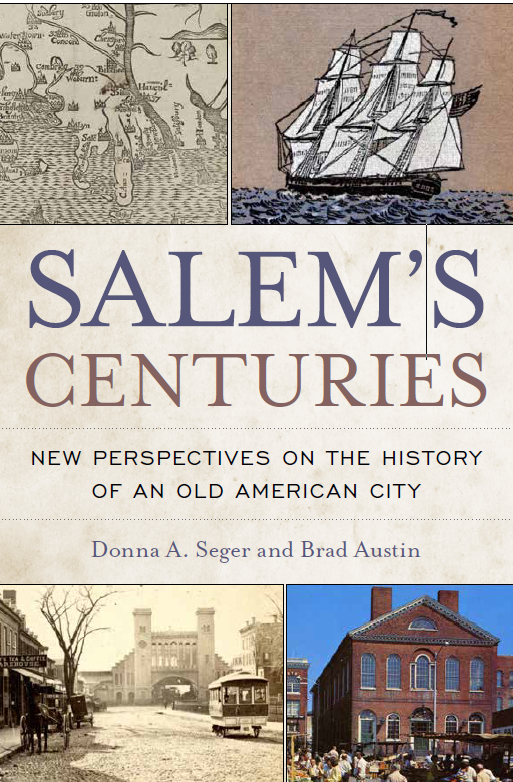
Well, it’s been quite a winter here in eastern Massachusetts, and last week was quite a week, so I think I’m going to take a break from topical posting and just present the week that was. It started with a blizzard, and even though it is now March 1, as I am typing I see big fluffy snowflakes out there again. But not all was white: there was bright blue towards the end of the week as my husband and I proceeded north for a little break. In this topsy turvy winter, Rhode Island experienced 30+ inches of snow while midcoast Maine seems to have had just a dusting. By the time we got up there on Thursday, it seemed springlike to me! We saw my stepson, who works at an oyster farm near Damariscotta, engaged in a bit of house-hunting, and (lucky us) stayed at the storied Norumbega Inn in Camden. The latter was a long-time wish of mine, having driving by the fantasy castle on Route One many a time, and it did not disappoint. After two nights in Camden, we returned to Salem on Saturday for a really cool event at Hamilton HallFashioning Freedom: Layers of Liberty. This was a theatrical performance fashioned as a “a celebratory, historical runway of Black creativity and activism” featuring prominent nineteenth-century African Americans, including the Remond family of the Hall, Frederick Douglass’s wife Anna, educator Charlotte Forten, and sculptor Edmonia Lewis. A collaboration between Salem’s revered historical theater company, History Alive, and the Hall, it was a can’t miss event for me: all Renaissance scholars adhere to the concept of “self-fashioning,” which is just what we saw, and of course after having written about John Remond in Salem’s Centuries it was a thrill to see “him” right in front of me. So it was a very interesting week and I am ready for March!

Monday’s blizzard from my second-floor windows.

And then: bright blue sky and sea in Maine! Obviously there was snow up there too, but less of it and more room to spread it around. City snow can be exhausting: you just can’t find get it out of the way and it is increasingly gray (among other colors). Below are a few houses in Newcastle, Cushing and Friendship, and then we were off to Camden and the Norumbega.

The Norumbega, otherwise known as Norumbega Castle, was built as a private home for Maine native Joseph Barker Stearns in 1886-87 in a style that is generally described as “Queen Anne”. To me, it has always seemed more Romanesque, but its interior was a bit lighter than I imagined—smaller too. Not that it is small, it’s just that the scale is not baronial or overwhelming. We stayed in one of the turret rooms, named Sandringham. Stearns made his millions in the telegraph industry by patenting and licensing duplex telegraphy, by which two messages could be sent over the same wire simulteneously. Camden is a hilly coastal Maine town (with its own municipal ski slope, called the Snow Bowl) and the Norumbega is situated on an elevated site which once, and really still, has unobstructed views over Penobscot Bay. The house remained residential for a century, and then was converted into an inn. We really enjoyed our stay: our room was lovely, as were all the public rooms, and breakfast and bar bites in the small blue cocktail lounge were special touches. We actually saw a bit less of Camden than we expected to because we just wanted to hang out in the castle—you can do that in the winter and not feel guilty. But Saturday morning we knew we had a date with the Remonds so back to Salem we went.

The real Remonds at Hamilton Hall and a few shots from “Fashioning Freedom” before and after the performance. It was a very visual evening so check out Hamilton Hall for more professional photos in the next few days. Congratulations to all involved! The month ended with the news that Salem’s new consolidated elementary school will be named after Sarah Parker Remond–yet another triumph for an important Salem family! I do tend to view them in the collective as they were all so invested and engaged. As we enter women’s history month, here’s a clip of an 1855 petition calling for the resignation of Judge Edward Greeley Loring, the Massachusetts Justice most associated with the enforcement of the Fugitive Slave Act, signed by ALL the Remond women, including matriarch Nancy, her daughters and daughters-in-law, and their friend Charlotte Forten. You can see more at the Massachusetts Archives Anti-Slavery Petititions Dataserve at Harvard University:

https://dataverse.harvard.edu/dataverse/antislaverypetitionsma.


Connecticut Calm (Waters)

I’m generally anxious around this time of year, approaching the end of the semester, but this year I am particularly so: I seem to be uneasy in general and in Salem in particular. The nice weather has kicked off the tourist season earlier than ever, or maybe it never ended? This means large tour groups just outside my house as late as 10:00 at night, with guides speaking about the ancient “ankle breaker” stones along the sidewalk that my neighbors and I installed in the last decade or so. Run, run, to the back of the house, I tell myself, so I don’t have to hear any more, but sometimes I just don’t want to get off the couch—and one guy is so loud I can even hear him way out back. A change of scenery (and perspective) was definitely needed, so for the long Patriots Day weekend my husband and I took off for one of the prettiest towns in Connecticut (a state with many pretty towns): Essex, near the mouth of the Connecticut River. We stayed at the old Griswold Inn, in one of its newer suites, and ate and drank and looked at old houses and the river. It was very foggy, but there were daffodils everywhere, and I do feel a bit cheerier now that I’m back home (or in Salem).

Welcome to Essex, Connecticut!

I started decompressing as soon as we got on one of my favorite Connecticut small roads: Route 169. Well, before, really: right over the state line in Thompson, which has a great common surrounded by wonderful houses (including the resurrected Gothic Revival long neglected by the famous interior designer Mario Buatta). Route 169 leads you through Woodstock, and by Roseland Cottage, to Canterbury, where the amazing Prudence Crandall opened her school for African-American girls (what an amazing woman! I need to know much more about her), to Norwich, where we turned south and drove by the decaying buildings of the long-abandoned Norwich State Hospital which are such a sharp contrast to the shiny Mohegan Sun casino across the river.

The road to Essex: Thompson houses, Roseland Cottage (which I visited just last summer), Prudence Crandall’s school in Canterbury, and one of the derelict buildings of the former Norwich State Hospital (with a glimpse of Mohegan Sun across the river).

I think my husband thinks that Essex is a bit “Truman Show-esque” but it was just what I needed:  a lovely town with clean sidewalks that is proud of its history rather than seeking to sell it 24/7. The houses are pretty perfect, but they are not mansions. It’s really all about watercraft in Essex: this was a rather quiet time but its harbor will be full to brimming in a month or so. Essex built a famous warship for the Revolution named the Oliver Cromwell (which was renamed the Restoration when it was captured by the British in 1779!), it endured the burning of 27 of its privateering ships when the British raided the harbor in April of 1814, the storied schooner yacht Dauntless ended her career on the Essex waterfront at the turn of the last century, and famous steamships line the walls of the Griswold Inn. The wonderful Connecticut River Museum, housed in an old steamship warehouse, explores the layers of local maritime history through art, artifacts and narratives in such an engaging way that I really felt the connection of water to land over history and now I’m absolutely inspired to take another New England road trip: a longer one, up the entire length of the River from Saybrook to Canada.

An array of Essex houses (birdhouses are big in this town too); the Onrust, a replica of a Dutch colonial ship, is moored in front of the Connecticut River Museum (my husband John is looking for me, I think); the Turtle, a Revolutionary-era submarine, which was built just up the River. I love the caption of this c. 1860 painting of Captain and Mrs. Samuel L. Spencer: “Captain Spencer of Old Saybrook, shown with the most important females in his life: his wife and his ship. He was captain of Daniel Webster of the London Line of packets for more than twenty years.” The Connecticut River Museum’s exhibition of Watercraft at Work made even BARGES interesting, and among the items I found my very favorite ship name of all time: of the schooner “Tansy Bitters”.


Weekend at the Mt. Washington

My grandmother introduced me to two things of which I can never have enough: a parade of new dresses for back-to-school every fall and grand old hotels. One indulgence started early in life but endured because of my profession; the other started a bit later but is also still ongoing. It was a family tradition to stay at the Equinox in Vermont for long Thanksgiving weekends, and later the White Elephant on Nantucket, and the two of us traveled to a succession of historic hotels on an epic trip down the east coast and back twenty-plus years ago. Nana passed away just about a year ago after her 104th birthday, so I was thinking about her when I planned my last October getaway weekend at the Mt. Washington Hotel. Built in 1902 in a (Spanish) Renaissance Revival style that is meant to dominate, rather than blend into, its setting, the Mt. Washington was one of the last of the great Gilded Era New England resorts to be built before the onset of the automobile, and it remains a conspicuous survivor. I really only wanted to do two things from the moment we arrived on a sunny Friday afternoon: capture the hotel from every angle, and sit on the back veranda (drink in hand) and stare at Mt. Washington and the Presidential Range, like generations of guests before me.

MW 1

MW 2

MW3

MW 4

MW Veranda

The interior of the hotel has a formal-but-not-fussy aesthetic designed to frame the views outside and mix faded grandeur with modern comforts. In the central lobby, a large fieldstone fireplace “crowned” with a Moose bust contrasts with crystal chandeliers from the 1920s, which seems to be the decade that supplied most of the Hotel’s lighting–and glass inserts everywhere. A ballroom, dining room, several bars, and a domed conservatory are also on the first floor, along with the famous “Gold Room” where the International Monetary Fund agreement was reached in the closing year of World War II.

MW Interior2

MWLobby 2

MW Interior

mwi2

mwi

mwi3

Mount Washington collage

We had great weather on Friday and Saturday so I spent as much time as possible out on the 900+ foot veranda, watching the light and cloud patterns change over Mt. Washington every few minutes, especially at twilight, when I got my best picture (s) ever: behold below! No filters necessary: the sunset was gold and purple on Friday night.

MWView 5

MW View 3

MW View 4

MWView2

MWView

My husband was not content to hang out at the hotel all the time so we took a hike—where we happened upon a man playing his flute in the woods–and went to the top of Mt. Washington on the cog railway. When I was quite young, for some reason I read a book about all the people who died on Mt. Washington and these sad stories have always stayed with me so I’ve never been particularly drawn to the mountain, but our traverse did afford me several new vantage points of the Hotel—you can just see it in the valley down below from the summit in the next-to-last picture, a little bit of white encircled by green far far away. As usual, it’s man-made over natural for me!

mwe

mwe2

mw clouds

MW Train