Tag Archives: ephemera

Shore Dinners

I have a guilty secret to admit, one which will reveal me to be out of step with most of my fellow Salem residents (no, it’s not about “witches”): I’m not particularly fond of Salem Willows. It’s got a great history and a great spirit, and I’m always happy when I go there, but I don’t really appreciate it. I’m sure I must be a bit of snob about seaside amusement parks, as I never really appreciated York Beach while I was growing up in York either. I don’t understand chop suey sandwiches, and while the popcorn at Hobbs is great, I enjoy my friend Carol’s just as much. While I can take or leave the Willows, I know that many Salem natives wait eagerly for its opening every spring: they have strong memories and associations which I don’t have, and they like chop suey sandwiches. The other day, I came across an article in a 1941 issue of Woman’s Day in a trial database of women’s magazines that we just obtained at Salem State: it was so enthusiastic about the Willows experience back in the day that I began looking at it in a new (old) light.

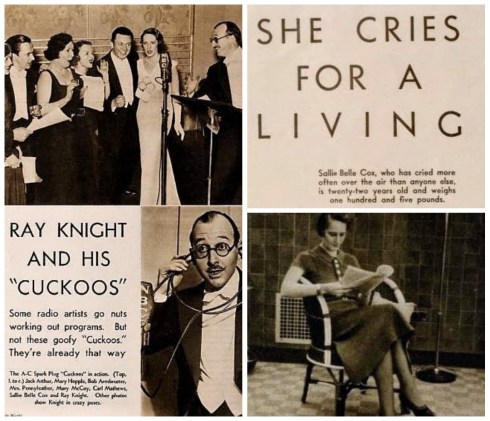
The article is primarily about Ebsen’s, established in 1885 and the last restaurant standing on the Willows’ Restaurant Row. By the end of the decade, it would be gone, but it was clearly alive and well in 1941. Since that was such a fateful year, one can’t help but feel we are “witnessing” the end of the era in the enthusiastic prose of Sallie Belle Cox, who was embarking on her second career after making a name for herself as the “cry baby of the airwaves” playing crying babies on radio broadcasts in the 1930s. On one such program, she met her husband, radio writer and broadcaster Raymond Knight, a Salem native. She became his second (of three) wives, and by her account he was horrified that she did not know the glories of Salem Willows in general and Ebsen’s in particular, so they drove up from New York City in the early summer of 1941. While her husband insisted that his hometown was the “one city in the world where they know how to make a fish dinner,” Cox’s image of Salem was “a weird, fascinating place filled with clipper ships and jaunty old sea captains who brought home exotic wives with rings in their ears to annoy all the other natives whose only fun in life was roasting witches on dull Saturday nights.”

Salem native Raymond Knight and his soon-to-be wife Sallie Belle Cox (behind the microphone at left) in Radio Stars magazine, 1933-34.

And straight to the Willows and Ebsen’s they went. The restaurant was packed, its oilcloth-covered tables and chairs the same which had been installed in 1890. They partake of equally-old Charley Ebsen’s Shore Dinners: fish or clam chowder, fried clams, fried flounders, and fried lobster, with potato chips, pickles, ice cream, and their choice of non-alcoholic beverages. Cox finds the chowder divine and furnishes her readers with the recipe from chef Fred Millet, who has also been around since before 1900. She also notes that “the Rhode Island and Manhattan clam chowders are not even considered worth discussing in Salem” and admits that there can never be enough fried seafood.

“Shore Dinners” by Sallie Belle Cox, Woman’s Day, July 1941.


Candy Land

In my sweetest dreams Salem is Candy Land rather than Witch City, and it certainly has the heritage to claim that title (although Candy Land was a Milton Bradley game rather than a Parker Brothers production.) There are of course the famous Gibralters and Black Jacks, still sold at the Ye Olde Pepper Candy Company on Derby Street, America’s oldest candy company. Mrs. Spencer sold her hard candy from a horse-driven carriage, and her primary competition seems to have been the stationary confectioner John Simon, whose shop was stocked with a variety of syrups and sweets, everything from anise drops to peppermint. He was always announcing his “removal” to Boston but somehow never made the move. Before the later nineteenth century, however, most confectionary item were not sold by single confectioners, but rather by grocers and apothecaries, and their lists of available sweets became longer and longer with every decade. Nourse’s Fruit Store on Washington Street sold “calves foot jelly candy, strawberry jelly candy, sherbet candy, gum jelly drops, and “East India Red Rock Candy” and all sorts of candies made with the New England’s favorite ingredient, molasses. Confections got a bit softer in the later nineteenth century, when cream candies became popular, and then comes Chocolate!

The Theodore Metcalf Company, one of Boston’s most successful apothecaries, published a beautiful pamphlet on gibralters and black jacks but these were SALEM candies; Nourse’s advertisement, Salem Observer 4 November 1865; Trade cards illustrate the softer trend in confectionary consumption.

The decline of hard candy and the rise of chocolate seems to be a major trend, but candy customers still loved variety. The most successful, and very long-running, confectionary business in twentieth-century Salem was the “Palace of Sweets” on Essex Street, from which the Moustakis Brothers sold their “mastermade” (a patented term) confections. This business was in operation from 1905 until 1968, and after the Taft Summer White House in Beverly placed a series of larger orders it received—and marketed—the presidential seal of approval.

Moustakis Brothers’ Menu from the digital archives of the Culinary Institute of Technology.

Salem is still candy central, in fact two confectionary shops opened up just this past year: Curly Girl Candy Shop on Washington Street and the Chocolate Pantry on Derby, not far from Ye Olde Pepper Candy Company further down the street. And then there is the venerable and amazing Harbor Sweets, the manufacturers of my very favorite candy, Sweet Sloops. I don’t even really have a sweet tooth, and if I am going to indulge I prefer jelly beans to chocolates, but bring a box of Sweet Sloops into the house and I will not rest until they are gone!

The House of the Seven Gables and Ye Olde Pepper Candy Company sponsored the ice sculpture of Mrs. Spencer’s horse and carriage for the Salem’s So Sweet festival this past weekend: its position made it difficult to photograph but it’s much bigger than it appears in this photo! My beloved Sweet Sloops, available at Harbor Sweets on Leavitt Street in Salem as well as lots of other retailers.


When Nixon went to China and Life Magazine came to Salem

For some reason, I’ve been going through the archives of Life magazine over the last month or so: it started with the photographs, and then I had to read the stories too. Life seems like it was a perfect mix of news and popular culture: we don’t have the like now, do we? And I doubt we ever will again with our very diffused and digital media. I’m no twentieth-century historian, but it also seems to represent the collective mindsets of its changing times: it really excels at representing wartime America, of course, but the later decades too. So far my favorite issue bears a beautiful Elizabeth Taylor on the cover on the occasion of her fortieth birthday: but inside the focus is on President Nixon’s imminent trip to China. It was fifty years ago this very month, and a very big deal. For some historical context, Life went to Salem, which emerges as kind of cultural intermediary between the United States and China, as it was the first American city to become thoroughly acquainted with the East. And so we get to read about Elias Hasket Derby and his ships, and see Derby Wharf, and all sorts of “exotic souvenirs” brought back from China by Salem’s daring merchants and later installed in the old Peabody Museum of Salem. It’s all great, but the best photograph is an aerial view of Chestnut Street where nothing much has changed in fifty years.

“When the US Sailed to China,” Life magazine, 25 February 1972. Photographs by Henry Groskinsky.

I think that the Peabody Essex Museum is still playing that intermediary “West meets East” role, although now the perspective is far more global than western. I know that I fault the PEM often for its displaced library and limited local offerings, but their East Asian and China Trade galleries are beyond impressive. I find myself teaching the first half of World History this semester for the first time in a decade, and I really had to do a lot of preparation before I stepped into the classroom (well, first it was on the screen as we had a “staggered” opening). China is the star of pre-1500 world history, and all my “color” comes from the PEM! Its collections are much stronger in later-dynasty objects, but there’s still some wonderful things on display from earlier eras. Much has happened in the past half-century: the Cold War is over, and Life magazine has also concluded its run, but Salem’s “China Cabinet” not only endures, but has been expanded considerably (and we no longer refer to its contents as souvenirs). In fact, aside from Salem’s built landscape, PEM’s East Asian collections constitute one of the largest and most lasting material legacies of “its” history in situ: this seems like an odd statement, but I think it is true.

Yichengyong Picture Workshop, Tianjin. Family celebrating the New Year and welcoming wealth from all directions, 1908-11, reproduction of detail from a woodblock print; Standing official with tablet, Jin dynasty, early 13th century; Guangzhou artists, Tea packer and porter, about 1803; Guangzhou artists, Wu Bingjian, Known as Houqua, about 1835; George Chinnery, detail from Dr. Thomas Richardson Colledge and His Assistant Afun in Their Opthalmic Hospital, Macau, 1833. There’s an emphasis on people and their relationships in PEM’s present galleries, but there’s also the “Great Wall of China” and a transplanted 18th-century Chinese house, Yin Yu Tang, to see.


A British & Bucolic Gaze on Salem

I adore the venerable and very traditional British magazine Country Life, which has been showcasing stately homes, lush gardens, and rural pursuits since 1897. I’ve had indulgent subscriptions and purchased my share of back issues: there can never be enough manors, fields, and drawing rooms for me! Despite my obsession, I had no idea that Country Life featured Salem in a 1972 issue with Salisbury Cathedral on the cover until just last week, and as soon as I saw the table of contents I searched for a copy and snapped it up. The timing is interesting to me: 1972, as Salem’s long struggle with urban renewal was coming to a close, or at least one phase. Of course, the editors at Country Living were not at all interested in anything new: they were seeking what survived.

The article is interesting and the photographs are great—but rather dated: they had been published by Samuel Chamberlain in several publications prior. Perhaps British readers would not have seen his New England views before but they might have appreciated Salem in color! The author, Helen Hall, observes that “the architectural richness of Salem is not so immediately apparent as it is in Deerfield or Marblehead,” so I assume this article is part of a series. She is not very complimentary about most of the city, actually, noting that “you are not especially aware of being in a town that was once so dependent on the sea for its existence” (I think you might be more aware of that now, but maybe not) and that certain parts “give the impression of never really having recovered from the decline of the Depression years.” She does note the recent renewal but also that “the results so far have been negative, with extensive demolition of often potentially restorable buildings, mostly in the central shopping district, creating blitz-like (!!!!!!) spaces that have become, inevitably, parking lots.” But she does love the Essex Institute and its houses, the Custom and Derby houses of the Salem Maritime National Historic Site, the Common, and Chestnut Street. The latter is still elm-lined when she visited, and while she finds American elms “much more graceful” than their European counterparts, they also hindered her views of the houses.

Samuel Chamberlain photographs of Salem in the August 31, 1972 edition of Country Life.


Salem in (water)color, 1939

Salem set the style standard in the first half of the century when Colonial Revival ruled, ruled, and continued to rule: right up to World War II and then beyond, according to the dictates of shelter magazines. In the first two decades of the twentieth century, you can find photos of Salem houses and house parts in issues of The House Beautiful and House & Garden from nearly every year: after that Salem is not quite as “present” but still around. Much of the attention shed on Salem is a result of two people I’ve written about here time and time again, Mary Harrod Northend and Frank Cousins, and after their deaths in the mid-1920s a Salem publicist-successor did not appear, yet “Old Salem” (rather than the “Witch City”) endured as the quintessential New England seaport. I’ve shared every Salem feature in these two particular periodicals from the teens and twenties in past posts, but not too many from the 1930s. A few weeks ago I came across some Salem images from a 1939 issue of House & Garden which were so striking that I knew I had to track down the original copy rather than rely on a digital version, and when it arrived I was not disappointed. This was an issue devoted to New England in all its glory, and Salem plays a central role. There is an interesting architectural introduction by Frank Chouteau Brown, some charming infographics that indicate that the Federal style had not yet been identified (???) but was rather referred to as the “Late Georgian,” and then some lovely watercolor vignettes of the interiors of several Chestnut Street Houses, the Gardner Pingree House, and the House of the Salem Gables by students at the New York School of Fine and Applied Art, which is now the Parsons School of Design.

Cover and illustrations from the June 1939 special New England issue of House & Garden. No Federal?


The Barstow West and Pickering Dodge Shreve Houses on Chestnut Street.


Parlors and Bedrooms of the Gardner-Pingree House of the Peabody Essex Museum.


Parlor and Dining Room of the House of the Seven Gables.


These rooms look so lively in these images: the interpretations really emphasize color and texture over pristine period perfection. There are some black and white photographs in the issue as well, like the one of the John Ward house below, but I don’t think they can compete with color. The magazine also aims to be a resource, so there’s a listing of all the historic houses in Salem and their hours of operation, which were far more extensive than today. You could go into the Peirce-Nichols House every afternoon from Wednesday to Saturday all year long, and the Gardner-Pingree and Derby houses every day!

The Ward House and notice for the Second Chestnut Street Day, 1939.


Decorating the “Little Room”

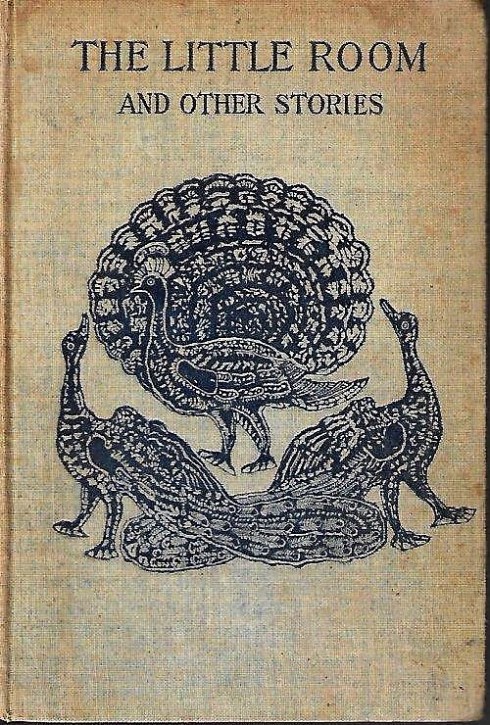
Happy June! I’m going to transition into a summer of lighter fare here: houses, gardens, non-academic books, events with people! In my contrary fashion, I’m going to start this transition with a spooky short story: one of the spookiest and shortest stories I’ve ever read. Madeline Yale Wynne’s “The Little Room” was first published in the August 1895 issue of Harper’s Magazine and then in The Little Room and Other Stories (1906). It’s a story about memories and perceptions, with a lot of ambiguity balanced by (in contrary fashion) very precise details, material details.

I’ll let you read it for yourself (it’s right here), but the basic problem is whether a certain space in an old Vermont farmhouse inhabited by two old maids was in fact a china cupboard or a “little room” complete with a green Dutch door exiting to the outside and a couch “covered with blue chintz—Indian chintz—some that had been brought over by an old Salem sea-captain as a ‘venture'” and given to one of the ladies when she was at school in Salem (yes, there is always a Salem connection). This chintz was described in more detail by those who saw the little room, and not the cupboard: it was “the regular blue stamped chintz, with the peacock figure on it. The head and body of the bird were in profile, while the tail was full front view behind it.” There were also hanging shelves with leather-bound books in the room, from which one bright red volume stood out, titled the Ladies’ Album, which “made a bright break between the other thicker books.” On the lowest shelf was a pink seashell, “lying on a mat of made of balls of red shaded worsted.” Not just a mat: a mat made of balls of red shaded worsted! Can we have any doubt that such a room, such a couch, such a shell, such a mat existed? Yes, we can. The room also contained several bright brass objects, a braided rag rug, and was wallpapered with “a beautiful flowered paper—roses and morning glories in a wreath on light blue ground.” How can this room not have existed? Wynne ensures that we will never know whether it did or not, but at least it can exist in some digital form with a bit of foraging and filtering.

The green Dutch door:

On the walls: I couldn’t find the wallpaper so precisely described by Wynne so I altered the color a bit from a 1960s floral paper on Etsy (which is the best place to find vintage wallpaper) and a watercolor possibly by John Hancock from the Carnegie Museum of Art (this is a lovely painting and I’ve really mucked it up with my filtering so make sure you see the original).

On the Settee: this first fabric looks very “stamped” but it’s really going to clash with my wallpaper, the second is softer but would still make for a very vibrant room!

On the Shelves: Wynne refers to hanging shelves very particularly, not a bookcase. I think of hanging shelves as more contemporary, but there are examples from the 18th and 19th century: the shelves below look appropriate to me, although with everything on them I think they would have to be bigger. These Waverly novels look weighty, but you can see how a slim red Ladies’ Album might pop out: perhaps it was Ladies Home Journal (which used red extravagantly) rather than Ladies Album? I’ve got lots of brass objects for this digital shelf/room (although maybe I should have polished them), and I stole the ultimate shell from my husband’s study. No mat though: I looked far and wide for a mat made of balls of shaded red worsted with no success, so the shell is sitting on a throw (but I used a “faded” filter). And finally, an amazing braided rag rug, which (hopefully) will pull this very interesting room together.

So that’s my “little room,” which was fun to put together. While this little story of a little room is an amusing diversion, it’s really not just about material stuff: it’s about the truth, and that awful scenario when two people, or three or four, or more, cannot decide or agree on what the truth is. This little story is a lot more timely now than when I first read it, maybe twenty years ago: then I think we all knew what the truth was.


Postal Perspectives, Salem Edition

I was enthralled this week with news of the new technology which has unlocked “letterlocked” letters from the sixteenth and seventeenth centuries: before the onset of the envelope in the nineteenth century there were often-intricate practices of folding, cutting, creasing and sealing letters to secure their contents, making it impossible for modern scholars to pry them apart without causing considerable damage to invaluable sources. With every discovery of a locked letter, or a cache of locked letters, the pressure mounted to discovery another way to reveal the writing inside, and this very week, a team of scientists announced their process of “Unlocking history through automated virtual unfolding of sealed documents imaged by X-ray microtomography.” This is BIG news: the letters are scanned and “virtually unfolded,” rendering their physical integrity intact. Secrets are revealed! I just can’t think of anything more exciting.

I’ve worked with seventeenth- and eighteenth-century letters before but they had already been opened up: hopefully they weren’t quite as “locked” as some examples and no harm ensued. It’s so interesting that envelopes became common so late in western history: really only from the 1830s. With the completion of my manuscript (and before readers’ comments come in) I had the time to indulge my curiosity a bit this week, the first opportunity in over a year, so I engaged in one of my favorite pastimes, putting a Salem spin on a much larger and more global topic. I haven’t engaged in “ephemeral history ” for a while so it was also nice to look at some pieces of paper. Both epistolary and postal history can reveal all sorts of interesting things, even on the surface, and two great sources for all things philatelic are the Stamp Auction Network in general and Daniel F. Kelleher Auctions in particular: all the letters below come from the latter source unless otherwise noted. First up, some folded 18th-century Salem letters from the Kelleher archive: addressed to Mrs. Hannah Pickering, Widow from 1725, and the nephews of John Hancock, Thomas and John, from 1796 (via the Salem “packet”).

Once envelopes arrive, they become increasingly elaborate, especially with the coming of the Civil War. The Phillips Library has a large collection of Civil War Covers which I hope to see one day but the one below is from Kelleher: as you can see, it contrasts quite strikingly with the simple letter addressed to Mr. Robert Manning, Nathaniel Hawthorne’s uncle. The Salem printer-publisher J.E. Tilton specialized in embellished envelopes: here is one showcasing John C. Frémont’s western expeditions in support of his presidential campaign in 1856. In the next decade Tilton moved his business to Boston, but other Salem printers took up the patriotic paper trade. The envelope illustrations seem to get larger and more colorful over the second half of the nineteenth century, leaving little space for the address—illustrated by the Spanish-American War cover from 1898.

In addition to patriotic purposes, envelopes were great means for advertising and commemoration: all sorts of engines start to appear from the 1870s on, along with a variety of other industrial (and agricultural) goods and of course, the company headquarters. Salem’s famous hotel, the Essex House, appeared on numerous envelopes in the later and early twentieth centuries. Clothing and shoe manufacturers took full advantage of their stationery (the 1895 letter to the Naumkeag Clothing Co. in Salem is from Downeast Stamps), and before the stamp became the chief expression of commemoration, it was all about the envelope.


The Mayflower Magazine

Happy Thanksgiving! Those of you who have followed the blog for a while know that I’m a big fan of graphic design and typography, especially from the earlier part of the last century. I love fonts from the entire era of print actually, and script as well now that I think about it, and paper: so when it all comes together in an integrated design, I’m pretty impressed. It’s been such a weighty few months, with the pandemic, and the election, and hours and hours of writing for me everyday: I think I’m going to get a bit lighter for the next month or so, to lift my spirits and yours! I’m beginning with this very festive magazine/catalogue from the late nineteenth and early 20th centuries, titled The Mayflower. It has nothing to do with the ship Mayflower, or Plymouth, or the Pilgrims: it’s all about flowers—and the most robust lettering and chromolithography I have ever seen.

The covers might be somewhat sedate (except for this last one above), but as soon as you delve inside: wow! color—so vibrant you need sunglasses. The magazine was an advertisement for the big botanical business of John Lewis Childs, one of several garden entrepreneurs of this era and the first to establish a mail-order seed business. He created an entire town on Long Island named for his product: Floral Park. The Mayflower was published from 1885 to 1906, offering gardening tips and seed packets to an international audience as well as 2 or 3 colored plates in each issue. Childs also issued seasonal seed catalogs with the same combination of flourishing lettering and vibrant plates of perfect plants, or perhaps I should say too-perfect plants.

The Mayflower magazine covers from Magazineart.org (a great website!); many more Childs seed catalogs at the Smithsonian.


Voting Matters

I am very, very anxious about the election and can think of little else. I have enough of a historian’s sensibility, of a human’s sensibility, to know that this is the most momentous election of my life. Of course there is little that I can do–other than donate and vote–so I have been appeasing my anxieties in my usual way: by reading about elections past. It has also helped me to read and listen to Boston College history professor Heather Cox Richardson, who has been putting the current situation in a comprehensive historical context for months now: talk about commitment! I have learned a lot about American history during this whole blogging experience, but I think I’ve learned more in the last 6 months than the past ten years: the problem is, I’ve been looking for the comfort of we’ve been here before but I seem to be surmising that many aspects of our current situation are truly aberrant! Apart from the search for context, there is just something very interesting about the logistics and detritus of elections past: in this digital age, we don’t have enough electoral texture. So here are just a few items that caught by eye.

Early Election Ballots: I love browsing through the early election ballots at the American Antiquarian Society: if you don’t understand the Electoral College—they are rather clear illustrations: also of the evolving concept of the ticket. Plus it’s interesting to see the emergence and disappearance of various political parties.

Mass Appeal: I love this flyer for Nathaniel Prentice Banks (also from the American Antiquarian Society), who was running for a Massachusetts congressional seat in the election of 1852. I don’t know if you can read it all, but he is appealing to all different sorts of men—mechanics, young men, middle-aged men and veterans! Plus he courts the ladies, and exhorts them to “stir up” their men!


Voting by Mail: since 1864. Very American. Poll Book from the Smithsonian Institution.


Poll Taxes! Who knew? I associated poll taxes with the segregated South, but in fact, people had to pay them right here in Massachusetts, and in other states as well, right up to the ratification of the 24th amendment in 1964! Imagine paying to vote. Imagine being an active suffragist, working your whole life for the voting rights of women, all women, and even after enfranchisement this barrier is still there! There were a few snarky articles published in the Boston papers right after the ratification of the 19th amendment in which the theory was put out there that perhaps women wouldn’t want to vote as they would have to tell the poll tax assessor their true ages! Unbelievable!


A Salem Parade Flag. Just because it must have been fun to see election parades, which I assume must have brought people together, but perhaps not. 13-star flag used in 1896 Salem parade, Cowan’s Auctions.

Pinback Buttons! Never can get enough of these: most are Roosevelt and McKinley, 1900 & 1904, from the Smithsonian; the Citizen pin is from 1915-20 and the Ann Lewis Suffrage Collection. I love the sentiment of Vote as you please but please vote.


A flyer from Margaret Chase Smith’s presidential campaign, 1964 (Smithsonian Collection). Because Margaret Chase Smith. And that’s as close as I am getting to our present time.


Distilling Women

Distillation became an important household activity for many women in early modern Europe in the seventeenth century; we have ample evidence that they wrote, purchased, collected, annotated, and shared recipes for medicinal, hygienic, and sweet-smelling waters and spirits. I’m sure it was the same on this side of the Atlantic as well: indeed, the “secrets” of distillation might have been even more valued as opportunities to purchase ready-make substances were more limited. This is a big topic in women’s history, at the intersection of women’s work and domestic life. There are three ways to get into it: the prescriptive way, through popular printed books on distillation, the archival way, through extant written collections of recipes, and the ephemeral way, through advertisements by women who were producing distilled spirits for sale—this latter entry is more of an eighteenth-century window. Recipe-rich resources for the distilling activities (or goals) of English women in the early modern era are pretty ample: but do we have any evidence of distilling activities among women here in Salem?

Distillation is one of the “Accomplished Lady’s” (or her servant’s) responsibilities on the title page of Hannah Woolley’s Accomplished Lady’s Delight, 1684, Folger Shakespeare Library; inset of the frontispiece to The Accomplished Ladies Rich Cabinet of Rarities, 1691, Wellcome Library; Recipe for a classic cordial, Orange Water, in the Folger Shakespeare Library’s MS V.a.669, c. 1680.

I went through the Phillips Library’s Finding Aids and couldn’t find the kind of domestic journals I’ve seen kept by English women, which include general household account books and more specialized recipe books or some combination of both, but there is a presentation on Elizabeth Corwin’s household book next week so that might be an opportunity to learn more about a Salem woman’s domestic economic life in the seventeenth century. That left me with advertisements, and I did find two in which Salem women were selling distilled spirits, both of the medicinal kind and the alcoholic kind. Before I get to Anna Jones and Eunice Richardson, however, a word (or several) about the evolution of these spirits. Distilled waters start to appear in the later fifteenth century in England, and are generally referred to as “cordials” as their primary purpose was to invigorate the heart and thus one’s spirits: depending on the recipe, other waters were designated “surfeit” and prescribed for indigestion. By about 1700 or so, it’s clear that these waters are being consumed for pleasure as well as their perceived medicinal virtues. The line between medicine and merriment was fuzzy: aqua-vitae, for example, is a term used for a strong and pleasant drink, generally brandy, but was also an ingredient in several medicinal “spirits”. That said, the two Salem women who entered into this business—or carried on their husbands’ businesses—represent two sides of the distilling spectrum in the later eighteenth century.

Essex Gazette, 1770,1772,1796.

Anna Jones was clearly a small-time distiller, carrying on her husband’s business on Charter Street in the 1770s: the recipes for all of those cordial waters, with the exception of snake-root (an American plant), go all the way back to Tudor times. These were medicinals, but I’m sure they were pleasant to drink too! Mrs. Richardson, by contrast, was a purveyor rather than a distiller herself: rum was a much bigger business and was not made in the backroom stillroom (45 hogsheads!). The two big spirits of the eighteenth century, gin and rum, had no recognized medicinal virtues and thus the line between domestic medicinal distilling and commercial distillation became more sharply drawn in the later eighteenth century: Anna Jones and Eunice Richardson represent either side in Salem.

A seventeenth-century stillhouse, and two recent books on distilling women: domestic and commercial.