A couple of months ago, I decided that this would be the Summer of The Secretary: I’ve been wanting to purchase an antique secretary for my front parlor for quite some time, and as “brown furniture” seems positioned for a revival after the mid-century modern mania we’ve been in for a while I think that prices will start to climb back to the level where they were when I first started to furnish my home. I have the perfect, slightly-recessed spot and I think a secretary will really complete that room, which I can never seem to get right. So I’ve been looking at all of the auction listings, and the other day I saw a piece that looked vaguely familiar in a Skinner Country Americana Auction. The description confirmed my suspicion: this secretary, along with several other pieces in the same auction, came from the colonial house in South Berwick, Maine which serves as the subject of Paula Bennett’s book Imagining Ichabod. My Journey into 18th Century America through History, Food, and a Georgian House.


Bennett and her husband owned the Goodwin house in South Berwick for over a decade, during which time she pursued every possible avenue to create an ambiance as historical as possible in their home: research into the textures, furnishings, food and events of the era in which the two Ichabod Goodwins lived (1740-1829), through primary and secondary sources, archaeology, and what I like to call “shopping research” ( in which I indulge often) via period houses, auctions, and antique shops. Imagining Ichabod details this very personal and material journey in words, pictures, and recipes, as Bennett is an enthusiastic cook—indeed, one gets the impression that she is enthusiastic about everything! After this complete immersion, it was off to a Boston condo for the Bennetts, which is why their Georgian furnishings ended up at Skinner.


The cumulative and intensive effort to create a perfect eighteenth-century (-esque) house, only to dismantle and leave it after a relatively short period, is interesting to me, as I wonder about the constraints of “period living”, and by that I mean aesthetic constraints rather than practical ones, as even the most passionate antiquarians have indoor plumbing! Everyone I know in Salem lives in an old house, mostly from the eighteenth and nineteenth centuries, but no one furnishes their homes in an exclusively period style: it’s generally a melange of old and new, with some nods to the era in which the house was built and a lot more comfortable furniture. When I first purchased my current house, which was built in 1827, I went about it much like Paula Bennett: I wanted period furniture, period drapes, period plates, period lighting, period wallpaper, and period hardware; I was particularly obsessed with finding the correct switch plates, but of course no switch plate is “correct” in an 1827 house. After about a decade of that design philosophy, I grew tired of the constraints and loosened up considerably, and now my house is a mix of past and present, as it no doubt appeared in 1927, 1877, and even the year it was built. But I still want a secretary—and the Bennett’s Georgian one is too early.
Sandy Agrafiotis photographs in Paula Bennett’s Imagining Ichabod. My Journey into 18th Century America Through its History, Food, and a Georgian House (Bauer and Dean, 2016). I never attempted period cooking like Paula Bennett, but I’m always on the lookout for a good rum punch, and the idea of roasted oysters intrigues, as both my father and husband are oyster aficionados.


 Prancing Horse, Diana the Huntress, Soaring Bird, and the Goddess of Liberty weathervanes from the Teiger collection,

 The Chinese Great Seal and Charles Thompson’s original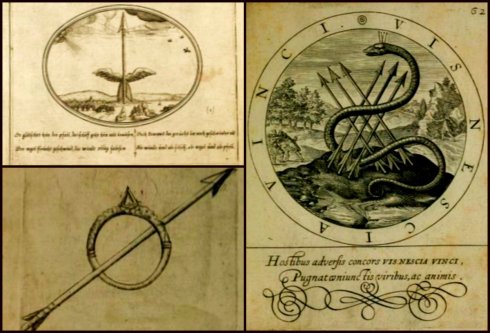




 American Terrestrial Pocket Globe made in Wethersfield, CT, c. 1850. A pocket globe is surely better than a pocket atlas.
 English Stumpwork Profile Portrait of King Charles I of England, 1646. How amazing is this—and there are more seventeenth-century lots in the MacKay/Field collection as well, including two more representations of King Charles I during the Civil War, or perhaps even after his execution! Royalist relics–from either side of the Atlantic.
 Silk Needlework Picture of a Gentleman wearing a Tricorn Hat, c. 1770. I like this guy from the next century too.

 Andre’s Journal: an Authentic Record of the Movements and Engagements of the British Army in America from June 1777 to November 1778 as recorded from day to day by Major John Andre,” Edited by Henry Cabot Lodge, Boston: The Bibliophile Society, 1903. This is a beautiful two-volume book which was limited to 487 copies for Bibliophile Society members: I continue to be fascinated by how fascinated Americans were (are?) with Major Andre!
 Lady Liberty Standing on the Head of Great Britain underneath the Great Seal of the United States, American School, War of 1812. LOTS of War of 1812 items in this auction: this is my favorite.
 The Frigate “Arbella” of Salem. American School, early 19th Century. I guess I have to have a Salem item–this is a lovely ink & watercolor painting of a ship with which I am not familiar: the original Arbella brough John Winthrop to Salem in 1630, but I don’t know anything about this Arbella. Only the Phillips Library can tell us, I’m sure!
 The Young Sailor. American School, 4th quarter, 19th century, Mrs. Mary Ide Spencer/Artist. I just love this painting: I know it would make me happy every day if it were mine.


 Mary Ann Wilson, Young Woman Wearing a Turban, c. 1800-1825, Museum of Fine Arts, Boston; Portrait of a “fashionable” woman, c. 1810, Northeast Auctions; Hepzibah and her turban (or turbans, as they all seem to be different styles) by Maude and Genevieve Cowles (1899), A.A. Dixon (1903) and Helen Mason Grose (1924), and a more recent (1997) Classics Illustrated cover depicting a very grim turban-wearing woman indeed.

 Photograph of Dolley Madison by Mathew Brady, 1848, Library of Congress; Painting by William S. Elwell, also 1848, National Portrait Gallery. Dolley descends upon the White House and witnesses her husband’s presidential oath, be-turbaned of course, in two YA books, Dolley Madison, First Lady, by Arden Davis Melick (with illustrations by Ronald Dorfman), 1970 & Dolly Madison, Famous First Lady, by Mary R. Davidson (with illustrations by Erica Merkling), 1992.


 Prints published by C. Shepherd and John Morris, 1775-1777 © Trustees of the British Museum; French prints of Hancock and Putnam, Swann Auction


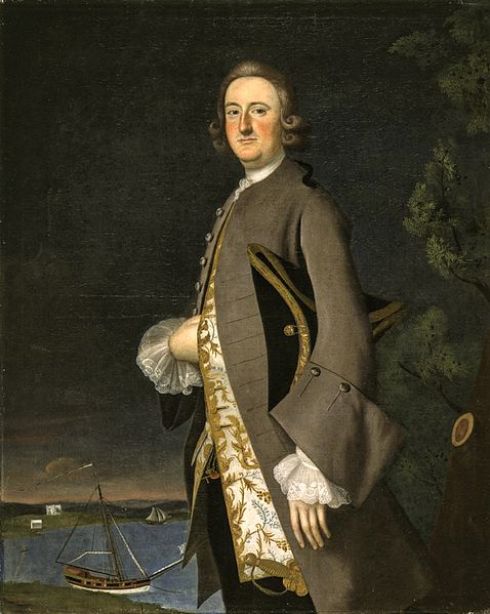


 19th Century Reverse-Painted Ship Silhouette on Glass Maple Frame, circa 1840, Trinity Antiques & Interiors,
 Michele Felice Corné’s Perseverance Wrecked (1805), and a portrait of Captain Richard Wheatland by the Chinese artist

 H.M.S.


 Capture of Major John Andre by John Paulding, David Williams and Issac Vanwart, New York: Sowle and Shaw, 1845, Library of Congress; The Capture of Major André, Thomas Sully, 1812,
 Holyoke Family Coat of Arms, late eighteenth century, attributed to Samuel Blyth, Northeast