Tag Archives: Art

The Revolution in Color

I decided to celebrate the debut of Ken Burns’ new series on the American Revolution by getting out two old books which I always enjoy browsing through, and which I now realize were quite foundational in how I look (and I do mean look) at American history in particular and history in general. The two books are The Pictorial History of the American Revolution by Rupert Furneaux and The Colonial Spirit of ’76 by David C. Whitney, and they were both published for the Bicentennial by Ferguson Publishing of Chicago with ample illustrations, including watercolors of noted Revolutionary spaces and places by “visual artist” Kay Smith. That’s how she is always described, and she died just this year at age 102! Every time I look at her watercolor buildings, I remember when I saw them for the first time; it happened just yesterday when I took the books out. And so it has finally dawned on me that my lifelong pursuit of history through houses began with her. The two books have lots of other cool illustrations too, including prints of every single tavern along the eastern seaboard which has any sort of Revolutionary connection, but Kay provides most of the color. I don’t know about reading these books—they’re definitely rather dated and devoted to storytelling rather than multi-causal analysis, but they are fun to look at. No Salem at all, sadly: colonial capital or Leslie’s Retreat or privateers. The Pictorial History has a chronological/geographical format and the Colonial Spirit is supposed to be more of a social history, I think, but its basic structure is biographical. Here are some of my favorite illustrations—all by Kay Smith, and most of buildings, of course—from Boston to Yorktown.

Kay Smith could depict people too—-her take on Major Andre’s famous sketch of Peggy Shippen Arnold is very charming. Interesting illustrations are scattered throughout both books liberally: uniforms, of course, firearms, vignettes of “daily life,” a great presentation of a Declaration of Independence cover sheet juxtaposed with a facsmimile of Thomas Jefferson’s hand-written and -corrected copy (used by Burns at the opening of episode one of The American Revolution). These books made for just as pleasurable browsing as all those years ago. And what do we think of the latest take on the Revolution?


A Sampler of Salem Folk Art

Salem is not particularly known for its folk art, I think. The standard for craftsmanship during the later eighteenth and early nineteenth century was so high, and production so prolific, that the curatorial and collecting emphasis always seems to be on the best and the brightest of the decorative arts rather than the more idiosyncratic. But I’m always looking for interesting examples of folk art, and every once in a while I do a round-up of samplers, silhouettes and signs. The Peabody Essex Museum has wonderful examples of Salem-made folk art in their huge collection, including my favorite trade sign, featuring a bust of Paracelsus made for James Emerton’s Essex Street apothecary shop, samplers from the famous Sarah Stivours school, and the “soft sculpture” (I’m not sure what else to call it) of textile artist, author and abolitionist Lucy Hiller Lambert Cleveland. And all manner of maritime objects of course. The amazing decoys of Captain Charles Osgood, carved while the Captain was biding his time waiting for his gold rush ship to set sail from San Francisco back to Salem in 1849 and hidden in a friend’s hunting lodge in Rowley for a century thereafter, are valued quite highly. Most are in the collection of the Shelburne Museum in Vermont, but one came up for auction recently with an impressive result.

 Lucy Hiller (Lambert) Cleveland, Sailor’s Home, mid-1800s, cotton, wood, leather, pigments, Gift of Mary T. Saunders, 1915, Peabody Essex Museum; Sally Rust’s Sampler from the Sarah Stivours School, 1788, Peabody Essex Museum; three Osgood decoys, Shelburne Museum.

But a lot of anonymous pieces crafted in Salem seem to sell for very little money. There’s a painting of Salem Harbor by an anonymous artist coming up for auction later this month at Eldred’s Auctions that is so beautiful I could fall into it—and it has a higher starting bid than I’ve seen before for folk art marine paintings. It seems worth it; this is not just a painting of a ship, but of life on land and sea. Contrast this with another nautical view below, a reverse glass painting of “Ship Siam of Salem / Built 1847 / Capt. Ebenezer Graves” sold by Jeffrey S. Evans & Associates Auctions. There’s certainly a lot more going on. Also from Evans, these two wonderful carved allegorical figures, which were apparently located at Salem Willows! I really can’t imagine where, precisely. Silhouettes cut in Salem appear at auctions frequently, but I’m not sure these would count as Salem art as such artists seemed to have been characteristically itinerant.

Folk art painting of Salem Harbor, Eldred’s Auctions; reverse glass painting and allegorical figures, Jeffrey S. Evans & Associations Auctions; Massachusetts cutwork silhouette “of S.P.H. of Salem, cut by S.A.D,” Dovetail Auctions.

Besides the first painting above, my favorite recent folk art finds are twentieth-century creations: a c. 1910 popcorn popper  and a wooden house purse made by Mercedes Hitchcock of Houston, Texas. You can find more about her business, “Houses by Hitchcock,” here. Apparently women from all over the country would send in photographs of their houses to her, and she would make scale model wooden pocketbooks for them! The owner of a Summer Street house commissioned a purse, and it came up for auction a few years ago. I’ve got to go for a walk–not quite sure which house it is. But it’s November, so safe now.

Scary Salem Popcorn Popper, c. 1910; Mercedes Hitchcock Folk Art Wooden Salem House Purse, Fairfield Auction; Salem Popcorn Popper, Bray & Co. Auctions.


Limning the Local

I’ve engaged in lots of different history here: a lot of public, some world, American and European, but above all, local. I’m always looking for new ways to delve into and present local history. I follow the sources, I chase down new perspectives and approaches whenever I catch a trail, and because I’m operating in a digital world, I always look for striking visuals. All of these avenues have somehow brought me to a somewhat obscure graphic artist who centered much of his life on living in, working in, and  illuminating the backwoods Maine lumber town of Weld, Maine, a man named Seaverns W. Hilton who often signed his work S.W. Hilton. Hilton was born in Rhode Island and worked as a graphic artist (he is generally referred to as a poster artist) in New York City, but by the 1930s and his 30s he was in Weld, a Franklin County town whose population had shrunk precipitously as it lost its lumber trail. He diversified his artistic training into wood carving as a means of reviving and perhaps becoming part of his chosen community, but continued to illustrate on paper as well—mostly local history texts, and this is how I found him. I became a bit preoccupied by Benedict Arnold’s disastrous Quebec Expedition of 1775 after attending some commemorative events in Newburyport a few weeks ago, and found a little treatise with that perfect mod/mid-century aesthetic by none other than S.W. Hilton. And then I caught his trail.

It’s just great! I mean, this was quite the adventure (disaster) and you need the pictures. I tried reading some academic texts, but I think I learned more from Mr. Hilton. He illustrated books about the neighboring towns of Livermore and Rumford, as well as the famous Mount Zircon Moon Tide Spring in the latter. The Bethel Historical Society has an online exhibition on this venerable mineral spring, comparable to Poland Spring, featuring Hilton’s illustrations fromThe Mount Zircon Moon Tide Spring: An Illustrated History by Randall H. Bennett. These inland Maine cities and towns have interesting histories, as highlighted by Hilton and the authors for whom he illustrated, but they are not as well known as the Downeast ports on the coast with their more dramatic maritime narratives, so I appreciate Hilton’s creative spin. The title page of Josiah Volunteered, featuring the Civil War diary of a Maine soldier, also illustrates the Hilton treatment: it was published in the year he died, 1977. Looking at Hilton in a somewhat wider frame, he seems to have had success working in advertising in New York City (his copy work is  scarce but has fetched high prices in recent auctions), and became increasingly entangled in Maine from the later 1930s, primarily through the woodworking shop he founded, Woodworkers of Weld, which produced toys and figurines into the 1950s. Some of his creations garnered a national spotlight when an adjoining restaurant adorned with them, The Farmer’s Wife, was featured in Life magazine in 1937, and postcards followed. In this and all of his work, there’s an obvious whimsy in his depictions of past and present, and I think that’s what I appreciate the most, especially now.

Opening Day of the Mount Zircon Spring, from The Mount Zircon Moon Tide Spring: An Illustrated History by Randall H. Bennett.

Hilton posters for the Northern Pacific from the 1920s: Swann Auction Galleries and David Pollack Vintage Posters.

A wonderful 3 part series about Weld and Hilton starts here: https://luannyetter.wordpress.com/2021/04/09/the-shop-land-part-i/


A Colonial Revival Dining Room

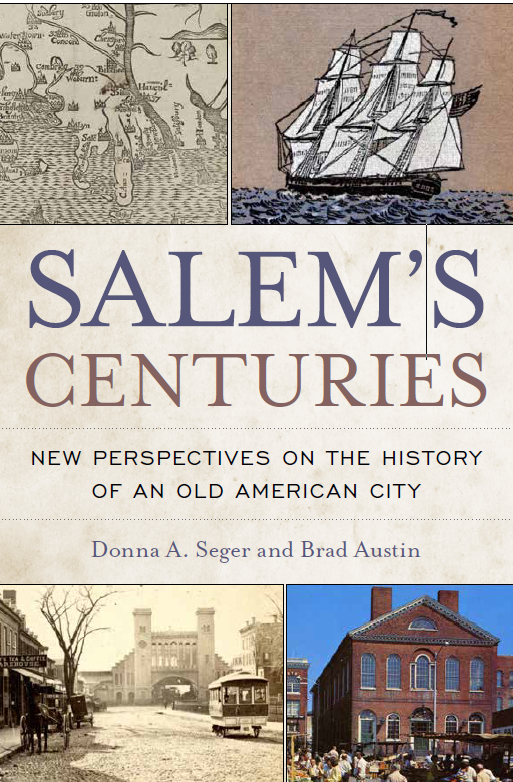
I wrote the chapter on Salem’s Colonial Revival movement in our forthcoming book Salem’s Centuries, an effort that I think was pretty ballsy given that I am neither an American historican or an art/architectural historian. You can be sure that I had both types of experts read it before submission and it has been peer-reviewed several times before publication! I felt confident because I took a biographical and cultural history approach, utilizing the work and lives of Salem exemplars Frank Cousins, Mary Harrod Northend, George Francis Dow, and Caroline Emmerton. They were all so respectful of Salem’s material heritage and more than a bit fearful of change. What we now label the Colonial Revival does seem to have been a movement in Salem, fueled as much (I think!) by nostalgia as by a desire to preserve, and its connections to the fledgling preservation movement in the early twentieth century are what interest me particularly. So while I have a sense of the Colonial Revival as a cultural movement, I am far from any aesthetic understanding, although I think I have made some strides in that direction by working at Historic New England’s Phillips House over these past two summers. The house’s dining room, in particular, a great example of the assertive effort of Salem and Boston architect William Rantoul to “marry” its later-19th century back to its Samuel McIntire front, has become my ideal Colonial Revival room. It all started with the alcove for me. I had seen Rantoul’s colleague and contemporary Arthur Little’s alcove in Caroline Emmerton’s house on Essex Street in person and in renderings (the cyanotype below is from a Little & Browne album in the collections of Historic New England), and it just seemed so Colonial-esque to me, so when I saw some semblance of an alcove in the Phillips’ dining room, it all made sense.

As you can see, Rantoul’s alcove is not nearly as enclosed as that of Little, but the former still carved out that space, removing a staircase for the symmetrical china cabinets and fireplace, delineated from the rest of the room by that strident ceiling moulding. He had modernized the systems for the Phillips after their purchase of the house in 1911: there was no need for that fireplace other than to enhance the “colonial” ambiance, which is also provided by the great Joseph Badger portrait of Phillips relative Thomas Mason (c. 1770-75) with his pet squirrel. I’m not even sure you would call this space an alcove, much less a nook, but it’s the semblence that creates the aura of the past in this large light-filled room.

Frankly this chair annoys me but I understand why it’s there.

Of course, the furnishings set the scene as well, and authors of decorating books from the teens and twenties always advised their readers that they should avoid placing items “of a set” if they were to attain that authentic Colonial look. It was relatively easy for the Phillips’, with their multi-generational wealth and trove of possessions from different places and times, to achieve the desired layered look. Their dining room seems to have attained the general “Colonial feeling” recommended by Helen Koues in her popular manual On Decorating the House (1928), in which the walls and woodwork are light in value, the furniture is mahogany or brown mahogany, silver is shown, and side lights or chandeliers may be in silver with glass prisms, or some fixture Colonial in feeling. Andirons and fireirons are of brass or brass and iron, and the china displayed is of Wedgwood in patterns of the eighteenth century. Of course, Stephen and Anna Phillips were both from old Salem maritime families, so their Wedgwood (and Limoges) is supplemented by a dazzling display of East Asian ceramics.


Summerlands

I am just back from a very festive wedding in Mexico, blitzed and therefore completely incapable of presenting a proper post. But I have been saving up some images by Jazz Age commercial artist John Held, Jr. (1889-1958) for a while, and today seems like the perfect time to put them out there. Held’s popular flapper images, appearing as magazine cover and content illustrations throughout the 1920s, are a perfect representation of their age, but it was his pictorial maps which first caught my eye. I also like the posters he created for the New York, New Haven & Hartford Railroad, enticing travelers to locations all around New England and beyond, northward, the same direction my travels will take me this summer. No more south, except for Rhode Island and maybe Connecticut! Held used the term “Vacationland” several times in his New Haven posters, but I never liked that term while growing up in Maine so I streamlined his alternative “Summer Play Land” for a more timeless title.

Travel Posters by John Held Jr. from Artsy and Swann Auction Galleries Archives.

Held was a wonderful illustrator but his work cannot be confined to that genre; even though he published over 100 cartoons in the New Yorker in the 1920s and 1930s he can’t be identified exclusively as a cartoonist either. He worked in many mediums: watercolor, ink drawings, engraving, woodblock prints, even sculpture. On several of his fanciful maps, he refers to himself as a cartographer, and he wrote as well as illustrated. In his commercial heyday in the 1920s he was reportedly the highest-paid graphic artist in America but his commissions declined and fortunes failed with the Depression. So he seems to define (some critics even say document) an era even as a moved on to less popular (flapper-less) artistic expressions. Many of his engravings and prints have an intentional primitivism that makes them almost timeless in my view, among them several Salem ships.

Cape Cod poster, 1931, David Pollack Vintage Posters; Ships by John Held, Syracuse University Museum; Ship Bonetta of Salem Departing from Leghorn, William Bunch Auctions & Apraisals.


When Salem was Pretty

The Salem visual vibe is darker now, and focused firmly on “Gothic” rather than Federal or Colonial, but the Witch City used to be pretty. I wrote the chapter on the Colonial Revival in our forthcoming book Salem’s Centuries. New Perspectives on the History of an Old American City (for which we have our cover, and a production schedule, and a publication date coming soon!), spotlighting four Salem “influencers” who emphasized the city’s beauty and craftsmanship through various cultural initiatives: Mary Harrod Northend, Frank Cousins, George Francis Dow and Caroline Emmerton.  They were so successful that Salem coasted into a period of being known primarily for its architectural and aesthetic heritage that lasted well into the 1960s, an image that was sustained by the Essex Institute’s house museums and the very public battle over urban renewal. A succession of commercial and graphic artists celebrated Salem through their accessible imagery, and we see Salem grouped with Colonial Williamsburg, Historic Deerfield, Sturbridge Village, Mystic Seaport, and other traditional heritage destinations. In today’s competitive tourism realm Salem has pulled ahead of (or moved behind?) that pack by emphasizing horror over beauty, Gothic over Federal, and darkness over light. At least that’s the projection I see in so many shop windows and on so many websites, but I think I better do some more searching in the real world. There are also many AI images of a Salem that doesn’t even exist, a concocted Victorian-Gothic world with black cats and cute witches, but also church spires! Fantasy Salem is even more idealistic than what came before, depictions in color and black and white of well-manicured car-free streets and stately houses, a “city of treasures” according to Katharine Butler Hathaway.

Some of my favorite images of Salem from the 1920s to the 1960s: Felicie Waldo Howell’s “Spring on Chestnut Street” + various houses; shelter magazines LOVED Salem in the 1920s; Rudolph Ruzicka made several Salem prints; interior vignettes from House & Garden, June 1939;Chestnut Street scenes from Philip Kappel and Samuel Chamberlain; LOVE these notecards from Nantucket artist Ruth Haviland Sutton; the “Silent Traveler,” Chiang Yee’s view of the Custom House.


Saints & Sinners & a Bad Professor

So you would think that I would be happy when an exhibition of paintings, texts and objects right in my teaching sweet spot of late Medieval/Renaissance/Reformation/Early Modern Europe comes to my very own city, and yes, I am. Have I taken advantage of said exhibition and brought my students to see things which I regularly refer to? No I have not. The “Saints & Sinners” in my post title refers to the current exhibition at the Peabody Essex Museum, Saints, Sinners, Lovers, and Fools: 300 Years of Flemish Masterworks, and the “Bad Professor” is me. This has happened before: the PEM has a global purview, and several exhibits which have complemented my courses have been up, but this one is really spot on. So when I finally went yesterday afternoon (it opened in December and is up until May), I really enjoyed it, but also felt bad. I am really not good at out-of-the-classroom activities with my students: I never have been and I never had to be. All my colleagues are a lot better. I always used to think, oh well, they’re Americanists, it’s easy for them, but that’s not going to work in this case is it? And I’ve always blamed it on Salem State’s location—about a mile out of downtown Salem. It’s not very far, but it feels far, when you’re trying to cover so much in the limited time of a semester. I walk it often, but to and from is going to eat up an entire class with not much time for viewing in between. The original Salem State (Salem Normal School) was located just behind my house on Broad Street, but in the 1890s there was a big move to a more expansive—now residential—area south. The move made sense at that time, but now I think our university would benefit from a downtown location, or maybe I’m just making excuses! I have occasionally invited my students to join me at exhibitions, and a few have, but never the entire class: my students seem very busy, taking six classes and working two jobs—oops, more excuses. In any case, I’m certainly going to extend that offer to them for this exhibition, because they will in fact see many things which they have heard about before.

Detail  from Jan Wildens, Panoramic View of the City of Antwerp across the River Scheldt, 1630.

Saints and Sinners is a traveling exhibition co-organized by the Denver Art Museum and the Phoebus Foundation in Antwerp, and it is very Antwerp-centric. Once certainly gets a sense of the somewhat wider world that was late medieval and Renaissance Flanders, but Antwerp is the star of the show. But that’s ok, because Antwerp was a very dynamic city in this era–the first non-Italian European entrepot. [a great read for the non-specialist is Michael Pie’s Europe’s Babylon: the Rise and Fall of Antwerp’s Golden Age] The exhibition opens with two galleries exploring intense late medieval piety and the rise of Christian humanism in northern Europe: there wasn’t much discussion in the exhibition text about the latter (or humanism in general, really) but I saw it all around me in both the Christocentric devotion and the subtle critique of the Church, most evident in Anthony Rebukes Archbishop Simon de Sully in Bourges, (c. 1475, by Master of the Prado Adoration). There is a lovely little triptych with a nice interpretive feature.

Circle of Dirk Bouts, The Virgin and Child in an Enclosed Garden , about 1468; Master of the Prado Adoration, Anthony Rebukes Archbishop Simon de Sully in Bourges, about 1475; Artist in the Southern Netherlands, Triptych with Saint Luke Painting the Virgin Mary and Jesus, 1520-30.

Then we were on to more worldly things: shockingly fresh portraits of people who were not saints, still-lives of stuff, a few landscapes, battle scenes, scenes of daily life and satire, cabinets of curiosities. The segue between the spiritual and material worlds was a succession of Adoration of the Magi paintings, focusing on stuff. You can never underestimate the impact of the Renaissance portrait, and I was particularly wowed by the portrait of Joost Aemsz. van der Burch by Jan van Scorel. He looks very (Thomas) Cromwellian to me, and yes, he was a contemporary and also a legal advisor, to Holy Roman Emperor Charles V. I love portraits of the new nobility of merit or robe (rather than the sword) and also of merchants, the other new men of the era. One of the most captivating (double) portraits of this exhibition is the rather pointed portrait of two “tax collectors,” a copy of the famous Quentin Massys painting of the same title. This image is a great teaching tool: I suspect the men were in fact “tax farmers,” collecting taxes for the government for a certain percentage, a practice which emerged before the expansion of professional state fiscal agencies, and their depiction conveys a lot about attitudes towards money, class, occupation, society, and even color. Another double portrait of a married couple was also interesting: they are obviously well-heeled and playing “triktrak,” an early form of backgammon.

Quinten Massys, Tax Collectors, late 1520s, oil on panel, 86 x 71 cm. Liechtenstein Collection, Vaduz/ Vienna.

LOVE this first portrait above: Jan van Sorel, Portrait of Joost Aemsz. van der Burch1530-1; Marinus von Reymerswaele, After Quinten Metskis, Tax Collections, about 1530; Jan Sanders van Hemessen (Hemessen c. 1504-1556 Antwerp), Double Portrait of a Couple Playing Triktrak, 1532.

I was familiar with most of the printed texts in the exhibitions but the key reference works were there: the very important and popular Cosmographia of Petrus Apianus, the pioneering On the Fabric of the Human Body by Andreas Vesalius, and the Nova Reperta engravings by Flemish artist Johannes Stradanus published by Philips Galle. The Nova Reperta (New Intentions of Modern Times) is a portfolio of 19 European “inventions” (many of which are not inventions and certainly not European inventions) is such a testament to European pride (and invention!) at the end of the very dynamic sixteenth century. The frontispiece alone is revealing [I use this great digital site at the Newberry Library in class]: highlighted are 1) the western hemisphere (ok Europe gets credit for that discovery), the printing press (Chinese origin–I don’t see the type here!), distillation (I would call this a Eurasian collaboration), wood from the guiacum tree in Brazil (then thought of as the cure to another American import, syphillis, but soon to be abandoned for mercury), a cannon (ok the Europeans encased Chinese gunpowder), a saddle with stirrups (ancient!), a clock (clock history is complicated but if we’re talking mechanical I think I will give it to Europe).  As the exhibit moved into a surreal and satirical gallery, with a Bosch-esque Hell, and lots of foolery, I was with it, but I walked right through the boring Classical Impact section (not what I’m looking for in Antwerp) into the galleries of wonder and cabinets of curiosity. It was fun to see actual Wunderkammer as well as paintings of wealthy Flemish men and women with their collections of exotic objects and paintings; one can easily grasp how connoisseurship expanded into collecting and it was almost as if these galleries were a mirror of the entire exhibition.

Andreas Vesalius, On the Fabric of the Human Body in Seven Books, 1543; Follower of Hieronymus Bosch, detail from Hell, 1540-5-; Daniel Teniers, Festival of Monkeys, 1633;  Gillis van Tilborgh II, Twelve Gentlemen in an Elegant Interior, about 1661; The Famous Pocupine in London, 1672 @Trustees of the British Museum. After I saw him in the bottom right corner of the Cabinet in the exhibition, I had to put in him here as he is my favorite early modern porcupine.

Watercolor Dining Rooms

I love dining rooms in general and my dining room in particular; I love renderings of dining rooms in general and watercolor renderings of dining rooms in particular: that’s pretty much the post! In the Victorian house I grew up in, the dining room did double duty as a sitting room of sorts, while my first Greek Revival house had an open kitchen/dining area. But my present house has a room that can be nothing other than a dining room and it’s my favorite room in the house. Dining rooms seem to be in danger of disappearing now, and I really hope that trend reverses itself.

My Thanksgiving dining room with and without a watercolor filter—definitely not very artistic!

My regard for dining rooms has artistic rather than social origins: I love all the things associated with dining rather than the act of dining. And when I was relatively young—in high school I think—I came across the paintings of English artist Mary Ellen Best (1809-1891), who painted her interior worlds with such charm and detail that they became imprinted in my mind. Her dining room in York remains one of my favorites: she also painted her family dining at the home of her grandmother and an elderly neighbor in her dining room. Best opened window after window into mid-nineteenth-century interiors in both England and Germany, where she lived after her marriage. We see kitchens, parlors, and drawing rooms in intimate detail: her use of watercolor gives these rooms a dreamy effect so we’re not too overwhelmed.

A very different artist, of another time and place, was Edgar W. Jenney, an architect and interior designer who retired to Nantucket in the 1920s. He offers more of a preservation prespective in his interior renderings of old Nantucket houses, large and small, but he was also a commercial artist: I first came across him when I saw his very Colonial Revival “Salem Room” in an old House and Garden. He seems much more focused on the overall ambiance than the details of daily life we see in Best’s paintings, but watercolor softens his scenes.

Two Nantucket dining rooms, 1930s,  by Edgar Whitefield Jenney, Rafael Osana Auctions and Nantucket Historical Society.

All of the above are artistic compositions, but watercolor was used for professional renderings as well so you can find some lovely paper dining rooms in trade catalogs published by wallpaper, fabric, and furniture companies in particular: there are myriad sources at the Internet Archive’s Building Heritage Technology Library. Architectural and Interior Design archives are another obvious source for these images: I was introduced to the wonderful work of Wisconsin interior decorator Odin J. Oyen here which led me to the first stunning dining room design below here. These kind of searches can go on for days and even weeks so be careful! Work interfered or I would have kept on going.

Two dining room elevation renderings from Historic New England’s Collections from Irving & Casson/A.H. Davenport. A dining room from Mary Brooks Picken’s Sewing for the Home (1941) and a Baltimore dining room from the Metropolitan Museum of Art’s The Homes of Our Ancestors (1925).


DeCordova Day

Last week I had a terrible night full of no sleep and the worst thoughts—it was the debate, my garden, my book, everything and nothing catastrophic, just made so in the dead of night. The next morning I had my coffee and drove to the DeCordova Sculpture Park and Museum in Lincoln, the leafiest of Boston’s leafy suburbs. Modern sculpture doesn’t usually speak to me, but on this occasion and in this setting, it did. I calmed way down, was capable of enjoying the low 80s, sunny and no- humidity weather, and forgot my concerns for a good part of the day. I didn’t spend the whole day there (my title is an alliterative exaggeration) but a solid morning, during which I walked around the 30+ acres with a skip in my step which I managed to maintain for the rest of the day–no exaggeration. So here are some of my highlights, starting with an off-kilter person and house, because that’s how I felt when I arrived.

Joseph Wheelwright. Listening Stone; Hugh Hayden, A Huff and a Puff (inspired by Thoreau’s cabin, not too far away!)

The DeCordova Sculpture Park and Museum was established on the former estate of local businessman Julian de Cordova on the southern shore of Flint’s Pond in Lincoln in 1950 and purchased by the Trustees of Reservations in 2019. There are some 60 sculptures outside and the castle-like main building is currently closed for HVAC repairs. The last time I visited was in the fall, and the sculptures were stunning against the foliage, but this was a glorious day too. It’s an engaging way to view art as you can approach the installations from any angle—Hugh Hayden’s cottage above is a perfect example above as is Alyson Shotz’s Temporal Shift below (which has the additional quality of being “site-responsive”): what do you want to frame and how do you want to frame?

Alyson Shotz, Temporal Shift; Lars-Erik Fisk, Decordova Ball; Reno Pisano, Torso; Christopher Frost,  A Mile from Any Neighbor from Walden; Rona Pondick, Otter (my photo is not really enabling you to see the otter qualities of this stainless steel sculpture!); Kitty Wales, Feral Goose; Robert Schelling, Time at the Museum; George Greenamyer, Mass Art Vehicle; John Buck, Dreamworld; Jim Dine, Two Big Hearts.

I walked right by—more subtle sculptures!

Andy Goldsworthy, Watershed;Richard Rosenblum, Venusvine; Robert Lobe, Environmental Impact Statement (from afar I thought it was just a big boulder but it is made of hammered aluminum).

Transparent sculptures: the most site-responsive!

Saul Melman, Best Of All Possible Worlds; Dan Graham, Crazy Spheroid—Two Entrances (which I loved because it made me look tall!)


Jacobean Style

Has anybody been watching Mary & George? So much texture! Dark and rich. I’m not sure what I think of the whole presentation in terms of its storyline and representations, but the ambiance and environment seem evocative to me, while also exaggerated: in the very first episode Julianne Moore’s Mary snares her second husband wearing a hat embellished by pheasant feathers and rabbit ears! Not being an art historian, I’m never sure whether or not the “Jacobean” style I admire is authentic or revived/amplified. But I like it. To me, it’s as if the early Stuarts ramped up everything Elizabethan—and then added their own more luxurious and whimsical touches. I love the very clever Anne of Denmark in this series: and she is the living, breathing clotheshorse I always thought she was. I’m not sure where the costume designer found her/his inspiration, but if I were charged with the task I would go right to a contemporary visual source: a portfolio of watercolor renderings of Royal, military and court costumes of the time of James I, “probably by an Italian artist.” I’ve been using these images in my classes for years, and while they certainly have a continental/Italian gaze, I still think they are representative of the age. Most of the experts seem to think that these images were made for a contemporary friendship album, called an album amicorum.

I assume these first three images are the King, the Queen, and their eldest son Henry Frederick, who died of typhoid in 1612—if they date from after that date, I guess that’s Prince Charles draped (like his mother) in fleur-de-lis, as the Stuarts were still claiming French sovereignty.

So many courtiers, or are these also the King and Queen? I can’t quite tell.I know those two never went riding around on one horse together, or cuddled under a tree by a big hat and a small castle.

These carriage scenes are great, but the most compelling images in this portfolio are those at the table—for meals and cards, or both. There’s just something about them: I love out-of-scale depictions and those are very BIG cards and wineglasses. The bright colors against the dark walls and the floor! The people somehow look both happy and wooden at the same time.

Julianne Moore is certainly not wooden in Mary & George and below she is in her big-eared hat: could it be a Jacobean variation on hearing all, as depicted by the more subtle (human) ears (and mouths and eyes) on Queen Elizabeth’s dress in her Rainbow Portrait and envisioned by a 21st century eye?


Queen Elizabeth, Julianne Moore, and Royal, military and court costumes of the time of James I, Folger Shakespeare Library.