Let’s Restore (Some Semblance of) Norman Street

Norman Street was and is an important thoroughfare in Salem, one of the major connections from the major route north to the center of the city, and ultimately the harbor. The street was charming in the eighteenth and nineteenth centuries, with substantial houses lining its brick sidewalks and TREES. Two of my favorite Salem Georgians were on Norman, the Jonathan Mansfield House and the Benjamin Cox House: details of the former show up in all sorts of early American architecture books in the first few decades of the twentieth century.

Norman Street in the later nineteenth century (1880s-1890s), Phillips Library, Peabody 

Norman Street was essentially annihilated in the twentieth century: its charming houses demolished and replaced by generic business boxes, its width expanded for automobiles, its trees left to die. I can’t think of a street in Salem so utterly transformed. Its bleakness is all the more apparent by the fact that it’s basically an extension of mansion-lined Chestnut Street, so the contrast is striking: I sigh with relief when I pass over Summer Street and everything gets greener and more friendly. All the twentieth-century forces aligned to kill this street: a big public works project (the Post Office), the car, of course, and the worst architectural eras of the century, the 1930s and the 1970s-1980s. There are three crosswalks, but cars whip around the corner onto Norman so you have to be a rather audacious pedestrian to think about using them. The street is so bleak it can only be improved, but the one vacant lot now set for redevelopment is in a particularly conspicuous spot: on a corner, between two historic districts, and between a residential district and the beginning of the commercial downtown: this project has the potential to CONNECT so many constituent parts of Salem, and restore some structure (and dignity) to Norman Street at the same time. I have high hopes and great expectations, and I really hope the permitting boards of Salem do too.

So let me show you the current lot and the prospective building: I am taking these photos from the presentation that the developers (Kinvarra Capital) and Architects (Balance Architects) gave to a neighborhood group last week, before they go before the Salem Redevelopment Authority (SRA) next week. This presentation was very thorough in its consideration of all of the challenges and context of this site, I thought. You can see the whole thing for yourself here. Let me say that I don’t have really strong objections to this building: compared to recent construction in Salem, and to what defines Norman Street at present, it’s an improvement. But I think it could be better. And I REALLY think that it should prompt a city-wide discussion about design rather than just a neighborhood discussion about parking.

Existing conditions looking north (top) and east (bottom): Chestnut Street is right behind you in this second photo. The city has decided to put a roundabout at this busy intersection, but they haven’t really committed and it’s too small a space, so everyone just drives over that yellow circle.
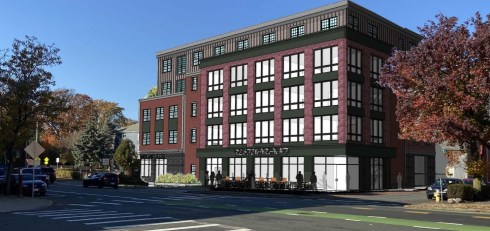
Same vantage points as above with the rendering of the new building. The bottom image also show the recently-approved “suburban” addition to the adjacent Georgian house by the Salem Redevelopment Authority (SRA), the same board that has jurisdiction over new Norman Street building.

So you see, a challenging site. I don’t envy the architects: should they take their contextual cues from the adjacent 1980s plaza, or the Georgian with its (insert adjective; I have no words) addition, or the 1930s Holyoke building across the street or the Federal and Italianate buildings which open Chestnut Street? You know me, I’m a traditionalist and a historian: I’d like to restore something of what was Norman Street in its glory days, perhaps along the lines of the Julia Row in New Orleans, without the wrought iron. But you can’t really recreate that: it would look cheap with today’s materials, and it wouldn’t fit in with the twentieth-century buildings of Norman Street. It’s not the entire composition but rather the depth of façade and detail I’m after, and in this case I was particularly attracted to the parapet end wall: if integrated into a new building on Norman, it could match the one at 2-4 Chestnut Street, establishing continuity and connection.

Julia Row, New Orleans; Chestnut and Norman Streets in the 1880s, Salem Picturesque, State Library of Massachusetts.

The New Orleans building is also too big, as is the proposed Norman Street building. What you don’t see in these photographs is the Crombie Street Historic District tucked away in back, with smaller-scaled buildings than any of the other adjacent structures. I looked at some recent developments in Boston, New York, and Philadelphia in which new construction was integrated into existing historic neighborhoods and came up with a few favorites in terms of scale and also texture, which is missing in most of the new construction I see. The first is in Bay Village in Boston, a small historic neighborhood tucked away in the midst of downtown Boston. The scale and detail of of Piedmont Park Square is nice: it fits right into its quaint neighborhood on the storied site of the Cocoanut Grove, where a tragic fire occurred in 1942. The building “stitches” together townhouses—what could be more connective than that?

Piedmont Park Square in Boston’s Bay Village by Studio Luz Architects.

As I searched for semblances of things I’d like to see in this important new building, I was motivated by scale, detail, texture, integration, contextuality, and some sense of the past: the proposed rendering reads “industrial” to me, and Norman Street was never industrial, so I don’t understand the reference. I don’t think I found what I was looking for, but I really like the integration achieved by a recent infill development in the Bedford-Stuyvesant neighborhood of Brooklyn, below. Tucked in between an early 20th century mansion on the site of its fire-ravaged garage and a row of 19th-century townhouses, this structure fits in but still makes a statement with its variegated façade and roofline and so much texture! This seems like an even more difficult challenge than Norman Street. I like it, but my husband-the-architect does not and neither, apparently, do its neighbors. All architecture is paradoxical, but urban architecture particularly so: it is so very public, yet the public has so little power to influence what is built.

Renderings of 375 Stuyvesant Street, Brooklyn by DXA Studio


The Howard Street Church

The Howard Street Church was a short-lived institution, but it had an enormous impact on Salem’s nineteenth-century social and political life, far beyond the brevity of its existence or size of its membership. It is also a great example of how Salem’s history has been distorted by the exploitation and commodification of the Witch Trials: today the Church is little-known, and the adjacent Howard Street Cemetery is significant primarily as the place where accused victim Giles Corey was pressed to death upon his plea of “standing mute” and the imposition of peine forte et dure.

The Howard Street Cemetery in 1949 by Life photographer Nina Leen: it looks much the same now and the vantage point is approximately the location of the Howard Street Church.

The Church was founded out of a schism, and it too experienced schisms during its brief existence, from 1803-1864: both it pastors and its membership were active and engaged citizens, often to the extreme. As its last pastor, the Reverend C.C. Beaman, concluded in his 1861 history (Essex Institute Historical Collections, Vol. 3): “the Church has been likened in reference to its trials to the bush that was in the fire and yet not consumed. On the slavery question and on temperance it has been a marked church, having early spoken boldly upon them;—and if the being cast into prison is a proof of regular descent from the apostles, this church has a strong claim, inasmuch as one of its ministers died in prison and another was confined there.” The men in question were the Reverends Charles T. Torrey and George Barrell Cheever. The latter was a passionate proponent of temperance, who targeted one of the wealthiest and most powerful men in town, John Stone, Deacon of the First Church and simultaneously Salem’s largest distiller (who also built my house), in The Dream, or, The True History of Deacon Giles’ Distillery and Deacon Jones’ Brewery: Reported for the Benefit of Posterity, which was first published in Salem in 1835 and later in New York City for national distribution. After its publication, Cheever was accosted in the streets, horse-whipped, and sued, convicted, and imprisoned for slander, but his campaign for temperance, waged from the pulpit as well as in print, did not cease. I wrote about this story way back in 2011, and now we have a distillery named after Deacon Giles (a perfect Salem story).

One of Deacon Giles’ Distillery’s great illustrations, from an edition at Boston Rare Maps.

So the Howard Street was a center of a temperance storm in the 1830s, but it was the center of Salem’s abolitionist activities from its foundation to its end. Its first pastor, the Reverend Joshua Spalding (sometimes spelled Spaulding) had welcomed African-Americans into his new congregation from the beginning, after his dismissal and his flock’s “separation” from the Tabernacle Church in 1802, and with each successive pastor the commitment to abolition became stronger. Spalding was an early advocate of public education for Salem’s African-American children, and he appointed an African-American man, Israel Freeman, as one of his new church’s deacons. A short-lived successor of Cheever, Charles Turner Torrey clearly could not stand to just talk about the evils of slavery in somewhat-enlightened Salem: he went south and became a conductor on the Underground Railroad, dying in a Baltimore jail of consumption after facilitating the freedom of some 400 enslaved persons. In jail, he wrote his memoirs to support his family back in Massachusetts: Home or The Pilgrims’ Faith Revived was first published in Salem in 1845; following his death in the following year, Torrey “returned” to Massachusetts and was buried in Mount Auburn Cemetery with considerable ceremony. One of Salem’s most eminent educators and abolitionists, William B. Dodge, was a long-time member and Elder of the Howard Street Church: he first taught Salem’s African-American students in its vestry, where the Salem Female Anti-Slavery Society (among whose founding members were Dodge’s wife Sarah Dole Dodge and daughters Lydia and Lucia) also met frequently. The whole congregation, and indeed the city, was summoned to the Howard Street Church on occasions for prayer services for the end of slavery, as was the case in June of 1835.

There is ample evidence that the Howard Street Church served as a hub for abolitionist activities in Salem over the first half of the nineteenth century, but it’s hard to pay tribute to a site that is no longer there. I can’t even come up with a photograph (well, there is a semblance, see below), which is really frustrating as the Church was the creation of Samuel McIntire! It had a tower, and a very famous bell, which might have ended up the adjacent Central Baptist Church on St. Peter Street after the Howard Street congregation was dissolved (but the City of Salem had a claim, so I’m not sure). The Church was almost in constant flux: it started out as the Branch Street Church, named for the lane that connected Brown and Bridge Streets, later called Howard, and assumed the name Howard Street Church in 1828. Its denomination changed too: from Congregational to Presbyterian and back to Congregational. It’s the individuals that stand out in the history of this church, though: Spalding, Cheever, Torrey, Dodge and more, It seemed to draw men and women of great conviction. And if Howard Street’s abolitionist history was not illustrious enough, there is the role that the Church played in one of the most deadly battles in pre-20th century naval history: the defeat of the USS Chesapeake by the HMS Shannon on June 1, 1813. The former ship’s crew was annihilated in the 12-minute battle, which was watched by North Shore residents from atop Legg’s Hill. The Chesapeake‘s captain, James Lawrence of “Don’t Give up the Ship” fame, died shortly after that famous plea, along with several of his officers. The Chesapeake was sailed to Nova Scotia by the British with its dead and wounded aboard, and Salem’s George Crowninshield retrieved the remains of Captain Lawrence and Lieutenant August Ludlow from Halifax at his own expense and returned them to Salem for a formal funeral at the “Rev. Mr. Spauldings Meeting-house” in late August 1813. And thus the Howard Street Church became the center of national attention.

Massachusetts State Library; Newburyport Reporter and Country Gazette, August 24,1813.

The Howard Street congregation began to dissolve in 1864 and the end of the material church (in Salem) came in 1867 when everything was auctioned off. The McIntire Church building was removed, not destroyed: it was floated (I assume) over to Beverly, where it became the new Avenue Methodist Episcopal Church in 1869, with some adjustments and alterations at that time, and more in the 1880s, so I don’t think that the photograph below represents what the Howard Street Church looked like—though perhaps some semblance. Its former location became the site of a new Salem public school, the Prescott School, but not for long: the growing Polish Catholic community represented by the Church of St. John the Baptist purchased the closed Central Baptist Church in the first decade of the twentieth century, and expanded its property to Howard Street in the 1960s. The history of Salem’s churches is indeed quite dynamic!

Salem Gazette; 1874 Salem Atlas @State Library of Massachusetts; photograph of the Avenue Methodist Episcopal Church, Historic Beverly. The displaced congregation of St. Alphonse began worshipping in this Church after the Great Salem Fire of 1914, and it was destroyed by arson in 1963.


Renaissance and Reign of Terror

1904 was a big year in Salem’s commemorative history: it was the centennial of Nathaniel Hawthorne’s birth, and his birthplace received both regional and national attention. This was squarely in the midst of the time when Witch City and Hawthorne/Colonial City were duking it out to see which one would define Salem’s identify going forward: the former won, of course. Hawthorne was born on July 4, so in the midsummer there were lots of stories on Salem in the Boston papers, with a notable focus on material culture: his houses, other storied Salem houses, Salem gardens, Salem streets. As Hawthorne was so often focused on the past, so too was his commemoration.

Homes and Gardens in Salem, Boston Daily Globe, July-August 1904.

Salem was also featured in a book on American architecture published in 1904: American Renaissance. A Review of Domestic Architecture by Joy Wheeler Dow, Architect. This first caught my attention because I assumed “Joy” was a woman architect, but it turns out that Joseph Wheeler Dow preferred to be called Joy. He was a prolific writer and critic around this time, publishing in several “shelter” periodicals, and had a very forthright style. I like opinionated authors, and even though Dow was very snobby, concerned when anyone who lacked a Harvard education was in any position of authority and using the term “Anglo-Saxon” a bit too much for my taste, he’s still fun to read. His concept of the material “Renaissance” was strictly Victorian but he detested Victorian architecture: his division of American architecture centered on a Renaissance of craftsmanship and style in the colonial and first half of the nineteenth century and a “Reign of Terror” thereafter in which too much money and fashion (as opposed to style) created objectionable buildings. He loved Salem and placed its building firmly in the era and style of the American Renaissance.

Dow’s captions are great, so I included a few of them above: if you want atmosphere and plenty of it, go to Salem! (exclamation point mine, as that is how he writes). We’re so fortunate to have all of the houses above still standing, and they still provide a wonderful context and atmosphere. I don’t share Dow’s opinion of Victorian architecture, either residential or commercial, and I think buildings from that era—and after—add context and atmosphere as well. If I were to divide Salem’s built environment into periods I would have a long “Renaissance” era extending up to the twentieth century, perhaps even to the Great Salem Fire of 1914, then a rebuilding/accommodating the car era (not sure what I’d name it) and the “Reign of Terror” would begin in 2000 or so: we are clearly in a Reign of Terror now. It’s hard to characterize all of Salem’s new buildings: several appear to have tried for some context in the details but ended up as plastic pastiche, others could have been built everywhere and anywhere. I can’t explain the first building below, Salem’s new Hampton Inn: I really have no words. I’m not really sure what to think about the Brix, a new condominium development built on the site of the former District Courthouse: it’s a big boxy building but its downtown location can support that, even as the transition to a side street, Church Street, is rather abrupt. I guess it’s just the roofline that bothers me: why the overhanging eaves? This is the third or fourth new Salem building with similar roofs: has there been some secret pact to transform Salem into an exemplar of a revived Prairie Style? Maybe that’s the new “atmosphere” we’re going for but it seems odd given Salem’s illustrious architectural past. Away from the downtown, but not too far, are the new Halstead Apartments, which manage to represent a shadow of Salem’s vibrant industrial past in a rather reassuring, even atmospheric, way.

Salem’s new multi-colored Hampton Inn (+apartments) and multi-style River Rock development on Goodhue/Boston Streets; The new Brix condominium building on Washington and Church Streets; the Halstead Apartments on Flint Street.


Postal Perspectives, Salem Edition

I was enthralled this week with news of the new technology which has unlocked “letterlocked” letters from the sixteenth and seventeenth centuries: before the onset of the envelope in the nineteenth century there were often-intricate practices of folding, cutting, creasing and sealing letters to secure their contents, making it impossible for modern scholars to pry them apart without causing considerable damage to invaluable sources. With every discovery of a locked letter, or a cache of locked letters, the pressure mounted to discovery another way to reveal the writing inside, and this very week, a team of scientists announced their process of “Unlocking history through automated virtual unfolding of sealed documents imaged by X-ray microtomography.” This is BIG news: the letters are scanned and “virtually unfolded,” rendering their physical integrity intact. Secrets are revealed! I just can’t think of anything more exciting.

I’ve worked with seventeenth- and eighteenth-century letters before but they had already been opened up: hopefully they weren’t quite as “locked” as some examples and no harm ensued. It’s so interesting that envelopes became common so late in western history: really only from the 1830s. With the completion of my manuscript (and before readers’ comments come in) I had the time to indulge my curiosity a bit this week, the first opportunity in over a year, so I engaged in one of my favorite pastimes, putting a Salem spin on a much larger and more global topic. I haven’t engaged in “ephemeral history ” for a while so it was also nice to look at some pieces of paper. Both epistolary and postal history can reveal all sorts of interesting things, even on the surface, and two great sources for all things philatelic are the Stamp Auction Network in general and Daniel F. Kelleher Auctions in particular: all the letters below come from the latter source unless otherwise noted. First up, some folded 18th-century Salem letters from the Kelleher archive: addressed to Mrs. Hannah Pickering, Widow from 1725, and the nephews of John Hancock, Thomas and John, from 1796 (via the Salem “packet”).

Once envelopes arrive, they become increasingly elaborate, especially with the coming of the Civil War. The Phillips Library has a large collection of Civil War Covers which I hope to see one day but the one below is from Kelleher: as you can see, it contrasts quite strikingly with the simple letter addressed to Mr. Robert Manning, Nathaniel Hawthorne’s uncle. The Salem printer-publisher J.E. Tilton specialized in embellished envelopes: here is one showcasing John C. Frémont’s western expeditions in support of his presidential campaign in 1856. In the next decade Tilton moved his business to Boston, but other Salem printers took up the patriotic paper trade. The envelope illustrations seem to get larger and more colorful over the second half of the nineteenth century, leaving little space for the address—illustrated by the Spanish-American War cover from 1898.

In addition to patriotic purposes, envelopes were great means for advertising and commemoration: all sorts of engines start to appear from the 1870s on, along with a variety of other industrial (and agricultural) goods and of course, the company headquarters. Salem’s famous hotel, the Essex House, appeared on numerous envelopes in the later and early twentieth centuries. Clothing and shoe manufacturers took full advantage of their stationery (the 1895 letter to the Naumkeag Clothing Co. in Salem is from Downeast Stamps), and before the stamp became the chief expression of commemoration, it was all about the envelope.


Paper Houses

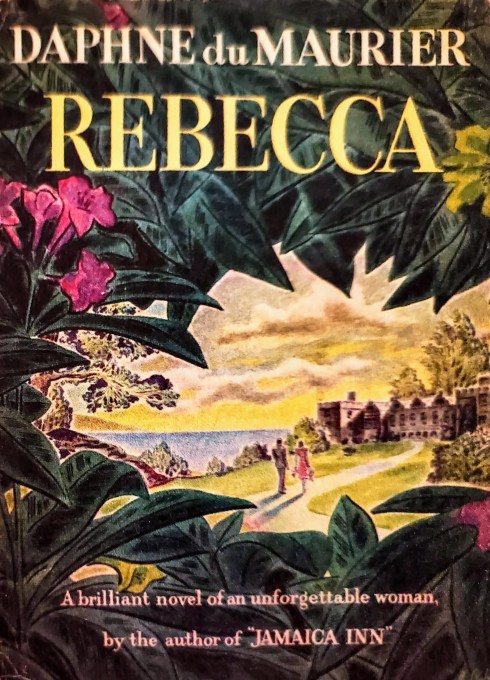
My manuscript is completed and has been dispatched to London, so last night I actually started reading a non-academic book, the first in a year or more. I didn’t last long, between the covers and between the sheets, because I’m tired, but it was novel. The book in question was almost-academic, so it was a good transition: Novel Houses by Christina Hardyment, featuring 20 “famous fictional dwellings,” including everything from Horace Walpole to Hogwarts. This morning I read it right through: a very pleasant read with great illustrations, so I thought I would showcase some of them here. Hardyment chose novels in which the plot is dominated by a structure, so much so that the latter is almost like a character: Walpole’s Castle of Otronto, Jane Austen’s Mansfield Park, Sir Walter Scott’s Waverly, Emily Bronte’s Wuthering Heights, Hawthorne’s House of the Seven Gables (of course, but is this a fictional house?), Charles Dickens’s Bleak House, Harriet Beecher Stowe’s Uncle Tom’s Cabin, Arthur Conan Doyle’s Sherlock Holmes, Henry James’s The Spoils of Poynton, John Galsworthy’s The Forsyte Saga, E.M. Forster’s Howards End, F. Scott Fitzgerald’s The Great Gatsby, Virginia Woolf’s Orlando & Vita Sackville West’s The Edwardians, Stella Gibbons’s Cold Comfort Farm, Daphne du Maurier’s Rebecca, Evelyn Waugh’s Brideshead Revisited, Dodie Smith’s I Capture the Castle, Mervyn Peake’s Gormenghast, J.R.R. Tolkien’s The Hobbit and Lord of the Rings, J.K. Rowling’s Harry Potter. 

In no particular order: Walpole’s Strawberry Hill, Jane Austen’s ancestral home Chawton, inspiration for many of her novels, 1913 edition of The House of the Seven Gables, an advertisement for Uncle Tom’s Cabin, 1949 edition of I Capture the Castle, Knole, inspiration for Woolf’s Orlando, Galsworthy’s drawing of the fictional “Robin Hill” in The Forsyte Saga, the first edition of Rebecca, cool cover for Cold Comfort Farm, Hobbit houses, Beacon Towers on Long Island Sound, which might have inspired Gatsby’s mansion in West Egg.

Some chapters worked better than others for me in terms of inspirational houses: I haven’t read Peake or Conan Doyle, or The Spoils of Poynton. I think perhaps Manderley and Brideshead are the strongest house-characters. It’s difficult for me to think of the Gables as simply a fictional house, because it actually exists, but it bears remembering that it did not in Hawthorne’s time.

I would love to get some more suggestions for novels in which houses play a major role in the plot, not just the setting.


Who’s Counting?

I am right on the verge of completing my manuscript for submission to the publisher, but I had to stop because something is bothering me and I need to “write it out”. That process describes quite a few of my blog posts, actually. Last week the Phillips Library of the Peabody Essex Museum posted some pages of the 1810 census for Salem on Instagram, illustrating very well the segregated columns of the census-taker, and the less-detailed entries of African-American households. The post pointed out that census records were “key” for conducting #BlackHistoryResearch and also included a tag for #genealogy. At first impression I was glad to see this post: Salem records for African-American history are limited and largely unavailable to the general public (with the great exception of the Salem Female Anti-Slavery Society records which are also held by the Phillips, and have been digitized by the Congregational Library) so anything newly revealed is great! But then I started to get annoyed: this is serious business, and the Phillips holds so much of Salem’s history, can’t we have more than an Instagram post? I think I’m speaking not only for myself but for many educators when I express my deep appreciation for the digital resources that many institutions have provided during this pandemic, actually facilitating, or even enabling, us to do our jobs. I have been very dependent on the digital resources and modules of the Newberry Library and the British Library, in particular, but it’s not just those large and well-endowed institutions that have stepped up, much smaller, local institutions have as well: the very day the Phillips posted its census pages, I checked out a great an amazing source-based digital exhibition created by King’s Chapel in Boston for Black History Month and Historic Beverly’s Set at Liberty exhibition has been up for a year. So these three census pages, as interesting and important as they are, did not really satisfy greedy me (but it is always thrilling to see John Remond’s name, and the size of his household in 1810).

The more I thought about this post, the more concerned I became, and it isn’t just because I think the Phillips should be stepping up its education game. I realized that there was an issue with the census itself, and the issue is: the National Archives doesn’t think that a census survey for Salem in 1810 exists. The people whose names you see above, both black and white, are not “represented” beyond the walls of the Phillips Library in Rowley. The National Archives has digitized its census records (Record Group 29: Records of the Bureau of the Census, 1790-2007) in partnership with Ancestry, FamilySearch, and other genealogical sites, and if you are a subscriber you can search by state, county, and township: I did so and could not find any Salem data for 1810. Maybe it’s just me: I really am a terrible genealogist. Perhaps those of you out there looking for your ancestors living in Salem in 1810 have had better luck. Let me know! When we were trying to stop the relocation of the Phillips Library to Rowley a few years ago, I though it was the public records that would keep it in Salem: I made lists of all their city and state records and sent them to influential people with high hopes. But I never thought that the Library might be the sole repository of federal records, so this surprised me, and of course, now I’m wondering what else is in there.

Update: I wanted to add an update because there is a lot of interest in this census! It does look like the Phillips might have the only copy, although Heather Wilkinson Rojo, genealogist extraordinaire of Nutfield Genealogy, found a microfilm reference at the National Archives (M252-18) but it is certainly not digitized. I notified Dan Lipcan, the head librarian and Pingree Director of the Library, and he is on the case.


Digging Up Derby Square

I was researching Salem’s struggle with/against urban renewal in the 1960s when I came across a massive collection of photographs from the career collection of Edmund Bacon, the famous Philadelphia city planner who is sometimes referred to as representing a “third way” between Robert Moses and Jane Jacobs. I honestly don’t know if Bacon was a critic or a fan of urban renewal: his work looks a little plaza-centric to me. Apparently he captured urban renewal funds for the rehabilitation of Society Hill in Philadelphia, however, and that is certainly to his credit. The landscape architect who worked on Society Hill was another Philadelphian, John F. Collins, and when Bacon was brought in to consult on Salem’s redevelopment after some (not all) of the planned destruction through “renewal” was thwarted, he recommended Collins to implement the new Heritage Plaza East Plan in the 1970s. Collins’ efforts reshaped downtown Salem over the decade, and you can read (and see) more about them here. But back to Bacon (father of Kevin, by the way): after his retirement he turned all of his papers and photographs over to the Fisher Fine Arts Library of the University of Pennsylvania, which is currently digitizing and crowdsource-cataloguing them through a project called the Ed Bacon Photo Project: the photographs are an amazing window into twentieth-century urban planning, and include several scenes of Salem’s little Dig.

During and after: Derby Square is such an important center for downtown Salem, although I wish the City was as dedicated to the maintenance of all the hardscape features incorporated by Collins as Philadelphia has been with Society Hill. The Cultural Landscape Foundation notes that “Collins’ details–richly patterned brick sidewalks and walls, granite curbs and backless benches, alleys, street trees, site-specific light standards and bollards – combined with small courtyards and pocket parks peppered throughout the 120-acre neighborhood, unite the unique blend of historic and modern buildings and landscape features.” The space has served as the site of grocers’ and farmers’ markets for decades–until last year when Covid mandated another location with more space for social distancing: I hope it can return this year. And on quite another note, I’m sure everyone will be thrilled to hear that one of Salem’s key businesses, Vampfangs®, is expanding into Derby Square with “Maison Vampyre,” an “elegant and uniquely themed private space, located in the heart of Salem at One Derby Square. Guests are invited to experience personal or group psychic readings from members of the local Vampire community.”


Cabot Constructions: Salem’s Lost Georgians

I am of two minds when it comes to genealogy: the professional historian in me thinks it is a bit antiquarian and lacking in context, but the local historian in me is very grateful to genealogists past, especially those who produced major family histories around the turn of the twentieth century, complete with lots of photographs of the old manses built by first, second and third generations. The other day I was looking for something other than the sources missing from my almost-completed manuscript’s endnotes, in other words, procrastinating, and somehow I found myself in the midst of the very comprehensive Cabot family genealogy: History and genealogy of the Cabot family, 14751927 by L. Vernon Briggs. The Cabots are a famous Yankee family, primarily associated with Boston now I think, but like so many Brahmin families—they started out in Salem. Some branches stayed, but most left: for Beverly, for Brookline, and for Boston. Everywhere they went they built great houses, and some of their best houses were right here in Salem. Unfortunately, only one survives: the Cabot-Endicott-Low House on Essex Street. I had read about the others, but never seen them, and in this great old genealogy, there they were! The Cabots had it all: ships and land and great country and city houses, but I only had eyes for these Salem Georgians.

The first Cabot house in Salem, built in John Cabot in 1708 at what is now 293 Essex Street; demolished in 1878: this is a great photo because you can see how commercial architecture imposed on Salem’s first great mansions on its main street.

Moved to Danvers! No time to run over there and see if it is still standing right now, but will update when I know.

Oh my goodness look at this Beverly jog! Built by second-generation Dr. John Cabot in 1739. Church Street was destroyed by urban renewal and is a shadow of its former self.

A familiar corner at the 299 Essex Street and North Streets: this Cabot house was built in 1768 by Francis Cabot and later occupied by Jonathan Haraden.

Survived! The Cabot-Endicott-Low House was built in 1744 by merchant Joseph Cabot and remains one of Salem’s most impressive houses. Its rear garden used to extend to Chestnut Street, and crowds would form every Spring to gaze upon it.


Petit Treason

I have fewer courses this semester as I took some of my archived overload so I could finish my book, but this release has been somewhat overset by the fact that I’m teaching a brand new course for the first time in quite some time. I always update my courses with new content and readings, but a new prep is much more time-consuming, especially when it’s not quite your expertise, which is the case with this course: English Constitutional History. We have a pre-law concentration in our major and this course is one of its electives and I can’t remember the last time it was taught. I’m teaching it like a social history of the Common Law, and I’ve learned a lot so far. This past week, I’ve been reading about treason, of which there were two kinds: High Treason and Petit (Petty) Treason. Both were capital offenses: High Treason was an offense against the King or the State, and Petit Treason was a crime committed against your master. As the law was codified in the fourteenth century the latter generally referred to wives killing their husbands, servants (and later slaves) killing their masters. Under this statute, which was in effect from 1351 to 1828, a woman who murdered her husband was not indicted for homicide, but petit treason, and until 1790, if found guilty, she faced public execution by burning at the stake. A succession of English women faced this prospect in the early modern era, or I should say, a succession of wives.

Anne Wallens Lamentation, 1616: EBBA

The punishment for treason, both kinds, had to be terrible: men who were found guilty were hanged, drawn and quartered, and women burned, as their public nudity was apparently an equally horrific offense against God and society. Most accounts indicate that women were hanged and then burned, and of course their clothing was burned off. The English colonies in North America were subject to the Treason Law of 1351 as well, and consequently two women, both enslaved, were burned at the stake in Massachusetts: one Maria, a “servant” to Joshua Lambe of Roxbury, who was found guilty of burning both his and an adjoining house down in 1681 (it’s not clear to me whether she was found guilty of petit treason or arson, which was also a capital offense), and Phillis, who conspired with her fellow enslaved “servants” Mark and Phebe to kill their master John Codman of Charlestown by arsenic (and “black lead” or “potters lead”) in 1755. There are many sources for this sad tale, including a Massachusetts Historical Society pamphlet from 1883 which provides testimony from the trials of the accused. According to its narrative: Mark, Phillis, and Phebe,—particularly Mark,—found the rigid discipline of their master unendurable, and, after setting fire to his workshop some six years before, hoping by the destruction of this building to so embarrass him that he would be obliged to sell them, they, in the year 1755, conspired to gain their end by poisoning him to death. I’ll let newspaper articles take it from there.

Both Mark and Phillis confessed and received their horrible sentences; Phebe was judged a less-guilty conspirator and transported to the West Indies. Mark offered up an explanation that you often hear in European cases of poisoning: that if one does not spill blood in murdering it is somehow a lesser offense before God. His body was indeed “gibbeted,” for quite some time: in his account of his “midnight ride,” Paul Revere actually wayfinds with reference to where “Mark was hung in chains” twenty years later. The rookie mistake that everyone always makes in regard to the Salem Witch Trials is that the “witches” were burned, but witchcraft was not a crime punishable by burning under the Common Law by contrast with the Continent, where the “crime” was judged manifest heresy. In England, and New England, only wives, servants and slaves were burned at the stake, and also counterfeiters. The last woman executed by burning in England was Catherine Murphy, who along with her husband Hugh, was found guilty of counterfeiting, a crime against the Crown and thus High Treason, in 1788. Her sentence was carried out in March of 1789, provoking the abolition of death by burning in the Treason Act of 1790.

The 1883 MHS pamphlet at the Library of Congress.


Under Cover in the Renaissance

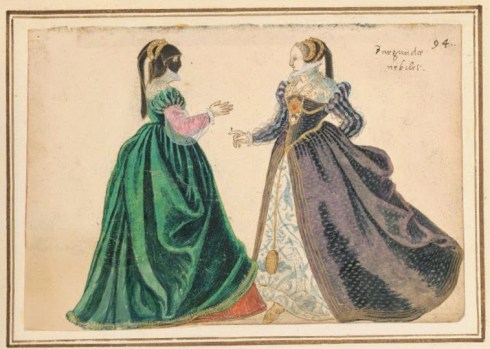
It’s a beautiful day here in Salem, but I’m in lockdown in my study, more than halfway through the very last chapter of my book! I am taking a break to show you some early modern masks, just because they are so wonderful. There is no material culture in my book: it’s all about information culture. But some of the instructive information I am coming across refers to very mundane matters like personal and household hygiene: one of my very favorite books is all about how to remove spots and stains from both precious and mundane fabrics, with dyeing advice if they won’t come out. Out, damned spot! Out, I say! This was of course a huge problem, as I am not dealing with a disposable society. Cleanliness was increasingly important for health reasons as well: sixteenth-and seventeenth-century people were living through constant pandemics of plague and various poxes and fevers, and while they knew nothing about germ theory, they had associated disease and squalidness. When they went outside, into the pestilential air, they covered up for protection if they could afford to: with hats, hoods, gloves and fans and yes, even masks. Everyone is now familiar with the beaked plague masks of the later seventeenth century, but this was just one, rather dramatic, form of early modern masks, which were also worn for “disguising,” for protection against the weather, for festivity, and for fashion. The most elaborate of fashionable early modern masks for women, the vizard or visard, which covered the entire face except for the eyes, seems to have had Italian origins, like so many fashions then (and now): when they began appearing in England, many commentators, especially of the Puritan disposition, were not impressed. In his Anatomy of Abuses (1583), Phillip Stubbes wrote: When they use to ride abroad they have invisories or visors made of velvet, wherewith they cover all their faces, having holes made in them for their eyes, whereout they look. So that if a man, that know not their guise before, should chance to meet one of them, he would think he met a monster or a devil, for he can see no face, but two broad holes against her eyes with glasses in them. Nevertheless, the household accounts of Queen Elizabeth’s reign list vizards among her purchases, and a century later, these “visors” were fashionable apparel for women of some means, who would wear them out and about, particularly when attending the theater. Samuel Pepys was so struck by one vizard-wearing lady at a performance that he went right out and bought a mask for his (long-suffering) wife. There are several digital sources for early modern apparel: I chose the images below from a late sixteenth-century album of costumes in watercolor at the Morgan Library and the “Friendship Album” (Album Amicorum) of a German Soldier in the collection of the Los Angeles County Museum of Art.

An Album of Costumes, Morgan Library.

Album Amicorum, LACMA.

Wenceslaus Hollar’s engravings of English women clothed for every season from the mid-seventeenth century illustrate the bit more utilitarian masks worn by women of means during the winter: many more Hollar images are at the Fisher Library at the University of Toronto and the Rijksmuseum, where I obtained these images—there is a new “Rijkstudio” where you can get creative with collection items; no time for that now, but later……..

Wenceslaus Hollar at the Rijksmusum.