Category Archives: Salem

Headline History

I went up to the Phillips Library in Rowley to look through some scrapbooks memorializing the Salem Tercentenary of 1926 late last week and found myself enchanted by the presentation and curation of one particular album put together by a certain Frank Reynolds. There were two big scrapbooks actually, and while I was expecting photographs (I guess that would be an album, rather than a scrapbook), there were only newspaper articles pasted in in a meticulous and chronological manner with attached white labels. At first I was disappointed, but then I went with it, and found the juxtaposition of the headlines really interesting. Then I came upon one particular article that really illustrated the concept of “headline history” and then I had my post.

Thus inspired, I divided my Tercentenary headlines into several categories:  1) The Big Row; 2) Getting Ready; 3) Advice to Tourists; 4) Dress Up; 5)) Crowds; 6) Presidential Address.

The Big Row was over the date of the founding of Salem, actually no, it was over what “founding” meant. Everyone knew that Roger Conant came down from Gloucester to Salem in 1626 with the “Old Planters” but William Crowninshield Endicott, Jr., the President of the Essex Institute, insisted that Conant and his colleagues were mere “fishermen and squatters” and Salem wasn’t really founded until his ancestor John Endecott arrived with the first royal charter in 1628. So Salem’s Tercentenary should be delayed for two years. The most eminent Salem historian of the time, Sidney Perley, made it clear that this was a ridiculous stance, and resigned in protest from his curatorial postition at the Essex Institute. Then Endicott resigned, and that was the situation in March of 1926, only a few months before the celebrations were to begin. I’m really not sure how it was resolved, but it took a lot of meetings and made a lot of headlines. Endicott went on to become President of the Massachusetts Historical Society, so maybe all the Boston Brahmins got together and offered him a bigger prize to back down.

Full speed ahead! We get some great headlines about getting ready. A lot of focus on cleaning Salem up. There was one big new project—a pineapple-topped bandstand on Salem Common—but much more of an emphasis on restoring and scrubbing (reports on parades later on often noted how clean Salem’s streets were). Hamilton Hall was stripped of its paint; the massive train depot was sandblasted.

There were some interesting marketing campaigns associated with the Tercententary. Every Salem store seems to have dressed up its windows with historical scenes; Parker Brothers reissued its first board game, The Mansion of Happiness. There seems to have been an outreach to Quebec, because of Salem’s large Franco-American population, but also to other areas of the country, and I think that might explain these odd witch headlines. The Salem Tourist Camp at Forest River Park seems extraordinary to me: this very same space hosted a refugee camp after the Great Salem Fire just twelve years earlier (and no, the Fire was not “kind to the city.”)

So many “antiques”! The word is used very broadly: houses, dresses, furnishings, all on display. There was a great opening of houses throughout Salem, and also a great opening of attics. While the parades presented a broad overview of Salem’s centuries, the open houses and performances were very focused on the Colonial: and its revival.

The entire July week was jam-packed: THREE parades, a big bonfire on the fourth in the Salem tradition, fireworks in the Willows along with a triple parachute jump from a hot air balloon and then an attempted quadruple jump two days later by Louise Gardner (who would fall to her death before an Atlanta crowd of 15,000 two years later), athletic competitions, lectures, a ball, all sorts of exhibitions. The Massachusetts papers covered everything in detail, as did some national papers, and there were a lot of headlines about crowds. For the Historical and Floral parade at the end of the week, the participants were estimated at 10,000 and the crowds at nearly 100,000.

By all accounts the Salem Tercentenary was a resounding success, but clearly there was a need for a presidential nod to cap it off. I had always thought that Calvin Coolidge was dissing Salem by not attending the big event as he always summered nearby, but apparently this year he was in another part of the country. So he sent Vice-President Charles Dawes, who interrupted his annual fishing trip to Maine. The Vice-President reviewed the first tercentenary parade, and gave a speech on how the radio could safeguard the constitution from rampant populism. But even that sounds better than President Coolidge’s note, below. So enthusiastic: “even if Salem ships no longer circle the world and the life of the community goes on in less picturesque and spectacular channels” Salem still has its history! You’d think Silent Cal would have congratulated the city on putting on such a big party, but no. The President does make the point that anniversary of the Declaration of Independence was being celebrated in the Salem year as Salem’s 300th and this year we have another concurrence with the 250th anniversary of the beginning of the American Revolution. From what I’ve seen so far, I think Revolution 250 is going to leave Salem 400+ in the dust, but we shall see.

Tercentenary font? Quincy is up this year: you can check out their schedule here.


Joseph Hodges Choate and the New York City Draft Riots

Salem is kind of an odd statue city, in my opinion. Some statues get placed by small constituencies, while others are erected in inappropriate locales. Salem’s most recent statue, of educator and abolitionist Charlotte Forten, is an unfortunate example of the latter. Charlotte certainly deserves a statue and I think her representation is lovely, but placing a diminuative bronze in the concrete “park” that is named for her but yet has nothing to do with her, in a space that has been compromised by giant tacky pirate illustrations and a turquoise wooden bar, emphasizes her fragility rather than her strength. She looks incongruous there and I don’t like to visit her: there’s no context. Poor Roger Conant, the founder of Salem, has a very strong presence which is unfortunately diminished by his location adjoining the Witch Museum—everyone who comes to Salem thinks he is a witch even though, of course, there were no witches. I think Nathaniel Hawthorne is well-served by his location on Hawthorne Boulevard, but a bit further to the south is Fr. Theobold Mathew, the Irish temperence “apostle” who visited Salem in 1849. No one knows who he is or cares about him at all; indeed, if there was more knowledge of Mathew I am sure his statue would be removed as he reneged on his original abolitionist stance when he came to America—Charles Lenox Remond, who met Mathew in Ireland and collected his signature on his “Irish Address” to Irish Americans denouncing slavery, must be rolling in his grave! I’m not commenting on Samantha; I think everyone who reads this blog knows how I feel about that atrocity. So that brings me to the memorial statue for Joseph Hodges Choate on Essex Street: an “entrance” statue which Salem needs more of I think, but also rather mysterious. The statue has been moved once before, not too far from its original location, but another plan to move it to a far less conspicuous place a few years ago brought forth a curious opposition, as it was clear that no one really knew who Choate was.

I didn’t really know much about Choate either, to be honest, but I started gathered the basics of his biography after visiting his summer house in the Berkshires, Naumkeag, a decade ago. I added a few details over the years—he was impressive and interesting to me because he seemed like a self-made man, not the usual “son of a prosperous Salem shipowner” type. His father was a busy Salem physician who managed to send four of his sons to Harvard, including Joseph, so I guess he wasn’t that self-made: Harvard was certainly a good start. He decided to practice law in New York City and was almost immediately attached to a well-known firm. As a litigator, he had a knack, or perhaps his mentors advised him, to take up cases that had national consequences or drew national attention: relating to the income tax and Chinese exclusion, reversing a famous Civil War court-martial. He was a very civic-minded New Englander in New York, and part of a group of influential reformers who took on Boss Tweed. He was also very much of a public intellectual, giving lots of speeches and writing popular periodical pieces. With his wife Carrie, he was active in New York’s social scene, and was one of the founders of both the Metropolitan Museum of Art and the Museum of Natural History. The capstone to his long successful career was his appointment as Ambassador to Great Britain in 1899, a position he occupied until 1905.

Vanity Fair “Spy” caricature of Joseph Hodges Choate, 1899.

Late last year, I came across Choate’s  “fragmentary” biography, The life of Joseph Hodges Choate: as gathered chiefly from his letters, and read it over Christmas. Several of his letters leaped off the page, so I want to go back to Choate’s early days in New York City, when he experienced, recorded, and played a role in one of our nation’s worst insurrections: the Draft Riots of July 1863. Following the passage of the Enrollment Act of 1863 and the first draft lottery in July, thousands of working class New Yorkers, primarily Irish immigrants, began rioting, looting and lynching in protest of the perceived inequalities of the draft, from which people of means could escape by purchasing the services of a substitute for $300 and disenfranchised African Americans were exempt. Given the near concurrence of Gettysburg and some severely compromised leadership, the City seemed powerless to stop the mob, so the riots became increasingly violent and specifically targeted against active abolitonists and African Americans for four bloody days in mid-July until the New York militia and Federal troops arrived. The estimated death toll is all over the place, anywhere from more than a hundred to more than a thousand; the destruction seemed inestimable but was ultimately estimated at between $1.5 million and five million (in 1863 dollars) and the horrors still seem horrible: at the very least, eleven black men were “murdered with horrible brutality” and NYC police superintendendant John Alexander Kennedy, an Irish-American himself, was beaten to a bloody pulp and stabbed 70 times by the mob. The Colored Orphans Asylum was burned to the ground.

The girls’ playground at the Colored Orphans Asylum before the riots; Illustrated London News depiction of its burning.

Choate’s descriptions of the Riots in a succession of letters to his mother back in Salem are raw; he’s clearly struggling with the cruelty and violence he is seeing. These observations will be consequential, as we will see, and this experience shaped his outlook and politics for the rest of his life. He happened to live near a rather famous abolitionist family with whom he had become friends, Abigail Hopper Gibbons and her husband James, both Quakers and seemingly tireless advocates for abolition and other social reforms. Choate observed that “nothing could be more simple and almost idyllic than the life that these Quakers let, and the house of Mrs. Gibbons was a great resort of abolitionists and extreme antislavery people from all parts of the land, as it was one of the stations of the underground railroad by which fugitive slaves found their way from the South to Canada. I have dined with that family in company with William Lloyd Garrison, and sitting at the table with us was a jet-black negro who was on his way to freedlom. On the second day of the riots, when both Mr. and Mrs. Gibbons were in other parts of the city, a mob descended on their house at 339 West 29th Street, with only their two teenaged daughters at home. A neighbor tried to help defend the house but was cut down by the crowd, while the girls escaped next door where Choate found them soon after. He continues: They threw themselves into my arms, almost swooning. I immediately got a carriage, and got them over a dozen adjoining roofs, and in a few minutes we were all safely at our door. Their house is not very much injured, but all the sacred associations of a home of 25 years are gone. Yes, they had to flee over the attached roofs of the townhouses of West 29th Street, now the Lamartine Place Historic District of New York City.

A contemporary view of the attack on “Mrs. Gibbon’s’House”; Lamartine Place, getting crowded out but still intact in the 1920s; the Gibbons house is in the middle. New York Public Library Digital Gallery.

Choate elaborates quite a bit in his letters home about the atrocities of those hot July days, referencing uncontrollable and unprecedented (since the French Revolution in his view) violence and the complicity of state and local officials. In a scenario which seems very reminiscent of President Trump’s embrace of the Charlottesville torchbearers, New York Governor Horatio Seymour addressed the rioters as his “friends,” horrifying Choate. It’s personal rather than political: the entire Gibbons family was sheltered in his home, along with several African American refugees, for no negro was safe out of doors. Choate’s accounts of his experiences had a long-ranging impact, even reaching our own time. A 13-year battle between a man who purchased the Hopper Gibbons House and sought (and actually started) to build a fifth story concluded in 2017 with an order to cease, desist, and restore the house to its original four stories. Preservationists relied heavily on the Choate accounts, which documented the house as a stop on the Underground Railroad and emphasized the historical (not just aesthetic) importance of the roofline which enabled the Gibbons girls’ escape. So now when I look at the embodiment of liberty enshrined on the Choate statue right here in Salem, I think of someone who was a lot more than a gifted litigator and influential diplomat. Joseph Hodges Choate responded bravely and earnestly to the challenges of his own time, and kept a record so that we might remember, learn, and preserve in ours.

The Hopper Gibbons House under siege; the stucco had come before, but the fifth floor has now been removed.


A Bewitching Bicentennial Book

Salem has been a tourist city for more than a century, so there has been a succession of guide books spotlighting the city’s landmarks and attractions from their particular chronological perspectives. I think I’ve referenced every guide book here, with the exception of the one I am featuring today: The Illustrated Salem Guide Book. Beyond Witch City, published for the Bicentennial in 1976. If you read all the Salem guides in chronological order, two themes are readily apparent: the increasing commodification of history and creeping witches crowding everything else out. The bicentennial book is an exception to both of these trends: it’s a breath of fresh air, guiding its readers to a more cohesive Salem 1976 rather than just downtown “attractions,” and its “Beyond Witch City” subtitle is accurate. It has wonderful illustrations and writing: the efforts of my neighbor Racket Shreve, a well-known maritime artist, and Robert Murray, respectively. It’s just a very special little book: I really love it. It actually makes me nostalgic for a city I never lived in!

One of the key differences between The Illustrated Salem Guide Book and its predecessors and successors is that it was published by the Salem Bicentennial Commission rather than a tourist agency. So the focus is much more on hospitality and non-profit attractions than salesmanship. As you can see above, it proudly bore the (competition-winning) Bicentennial logo as well as a Samuel McIntire swag on its back cover. Inside, we read that “This Guide Book is intended both as a portrait of Salem—an evocation of Salem, old and new, as well as a practical directory for How, What, Where and When.” The combination of aims makes for a thoughtful and accessible book; in its own words, “practical and irreverent.” This book was only one of Salem’s Bicentennial projects: the Commission also organized Visitor Hospitality Centers (in all of Salem’s churches—staffed by volunteers), the development of Fort Lee & Fort Pickering as natural preserves (1976 must have been the last time anyone paid attention to these sites), work on a Salem bikeway, the reconstruction of Samuel McIntire’s Washington Arch (recently restored), “Operation Sail” focused on the waterfront, and several Salem Symposiums “examining Salem’s Past, Present and Future.” This was a very ambitious and engaging agenda. It’s the evocative mission that I’m the most interested in, and while that quality is probably best illustrated by Racket’s illustrations, Robert Murray’s writing is also essential towards realizing this aim: On Oliver Street, an old clockface, empty of hands, hangs on the coach house behind No. 31, its gold numerals luminous at Noon. Attached to the rear of No. 5, two identical carvied friezes, attached side by side upon a stable wall: a touch of Federal surrealism. Beneath the friezes, a sign: Beware of Dog. Murray is particularly good on the history of Salem’s churches: I learned quite a bit. Racket provides some great illustrations of these buildings, and then they both take us all around Salem–not just to the “pretty” spots.

There’s a lot of Salem pride in this book. I was really happy to see a sentiment that I discovered when I was writing about urban renewal for our forthcoming book: an assertion that Salem had “triumphed” over urban renewal, and transformed all those Federal dollars into an initiative that actually focused on renewal rather than destruction. Murray emphasizes  the “imaginative” choice by the Salem Redevelopment Authority to substitute historic renovation for demolition. Salem has won national recognition for its adaptation of its old glories for its modern needs. This is true, and not appreciated sufficiently. Present-day witch-pitching people spin the story that witchcraft tourism “saved” Salem, but I don’t know, 1976 Salem looks pretty dynamic: all of the Essex Institute houses are open, as is its Phillips Library, there’s an ongoing archaelogical dig at the Narbonne House, “a group of rusty oil tanks huddle together aware that they are disliked and soon to be removed” for Pickering Wharf, Pioneer Village is deemed “an excellent place to begin a study of the evolution of the American home.” There were lots of restaurants: Red’s Sandwich Shop, the Lyceum, the Beef & Oyster House, In a Pig’s Eye, Strombergs, the Gutenberg Press Restaurant & Pub, and more—and if you had a party of six you could have dinner at the Daniel’s House: just phone Mrs. Gill and byob.

This little book succeeds in capturing Salem’s past and present from a 1976 perspective: it is not characterized by sickening sentimentality or boosterism. Salem emerges as a city shaped by its past and being shaped by its present. I wish its author and illustrator would create a Salem guide book now (for the 400th anniversary!), because I think it would be very interesting.

What was lost and what remains—the cement slide at Forest River Park! Below, the guide’s map and Racket’s Hamilton Hall Antique Show (a benefit for the then-Peabody Museum of Salem) covers.


Merry Christmas from Salem

No deep dive here, just some photographs of Salem at Christmas time: my neighborhood, my house, other houses. It’s been a tough semester and a tough month, and I’m tired. I did Thanksgiving, so my brother and brother-in-law are on for Christmas and we’re off to the Hudson River Valley tomorrow. Many of us in Salem have experienced a loss today, and these pictures make me happy: I hope they give pleasure to you as well. Salem is really beautiful in December in general and at Christmas time in particular: at that other holiday she is wearing a costume and not her true self.

Love this wreath!

We were fortunate to be invited to a dinner at the Pickering House before the Hamilton Hall dance, which has been held since at least World War II, with similar events before—way before! I hope these two ladies don’t mind their inclusion in this post, I was just so impressed by their gowns–and their purses!

Home–and away we go. Merry Christmas and Happy New Year.

P.S. MANTELS! Thanks, Patricia.


Christmas in Salem 2024

This past weekend was very busy: there was the annual Christmas in Salem tour of historic homes decorated for the holidays, Christmas teas at the Phillips House, and my new neighbors hosted a very festive party across the street. I love the Christmas season in Salem: it commences a period of relative radio silence by the witch-profiteers although we definitely have more dark stores than light in Salem now. The Christmas in Salem tour is venerable: it has been the major fundraiser for our even more venerable preservation organization, Historic Salem, Inc. (HSI), for decades, and before that it was run by the Visiting Nurses Association. It’s always been the best alternative/corrective to Witch City and it is popular: it’s a tradition for many Salem residents but also visitors from across New England. I’ve served as a guide or house captain for years, I’ve had two houses on the tour, and I seldom miss it: a couple of years ago I was housebound with sciatica and miserable, both because I was in pain and missing out. It’s a huge effort, both by Historic Salem in general and its Christmas in Salem committee in particular, and of course by the homeowners; an amazing expression of generosity and community by all. The tour varies its neighborhood focus and theme every year and this year it was centered on the core of the McIntire Historic District, Federal and Essex Streets, and named “Brick by Brick”. This name wasn’t entirely clear to me (because I was thinking brick houses) until I got the program, which highlights Salem’s brick sidewalks, which have been quite endangered up to the formation of Historic Salem’s Brick Committee and are now experiencing some much-needed restoration. So that’s another initiative to thank HSI for.

The Tour headquarters was the Assembly House, one of the Peabody Essex Museum houses which I haven’t been in for years. So I was excited, but it seems to have lost much of the texture which I remembered, so we didn’t linger long. The second-floor landing was always one of my favorite architectural features and that seemed the same. In general, the Federal Street houses were earlier and the Essex Street houses “Victorian,” with the exception the Corwin House, of course. There were several public buildings on the tour (besides the Corwin House, the First Church, Grace Church, and the Salem Athenaeum) but I skipped them in the interests of time. I heard they were decorated beautifully though, my loss! The decorations get ever more creative with each passing year: you might notice a cocktail subtext below.

Well, the pictures above represent most, but not all, of the tour houses on Federal and its off streets. The other thing that has always struck me about the Christmas in Salem tour is the value encompassed. We’re not talking about a mere six or seven buildings, but rather 14, along with a “bonus second visit to favorite house.” The value of this tour is also based in the sheer quality and diversity of the architecture: it’s always a great representative of the sheer quality and diversity of Salem’s architecture. And so on to some really stately Revival homes on Essex: an Italianate house with its own hill (always impressive) and the Balch House, Salem’s most distinguished Second Empire structure, which served as the city’s American Legion headquarters for much of the twentieth century (see black & white photo below, from PEM’s Phillips Library). These are very exuberant houses which have recently been “refreshed” and it was great to see them both so shiny and festive.


Mint McIntire

It’s always a big moment when a Salem house crafted by Samuel McIntire comes on the market, and that moment is approaching! Likely the most important McIntire house still in private hands, the very-storied Cook-Oliver House at 142 Federal Street, is coming up for sale quite soon. This house will certainly need considerable work, but my title is an attempt to epitomize the great creative and material efforts of its successive owners to preserve McIntire’s design and craftsmanship. The house was built by Captain Samuel Cook (1769-1861) whose span of life represents Salem’s spectucular maritime rise and fall. He was one of a score of Salem captains and merchants who earned great profits by re-exporting commodities from the East Indies to Europe in the first few decades of the nineteenth century, and only a year or so after the dramatic shipwreck of his ship Volusia off Cape Cod in early 1802 he was able to finance the construction of a house which spared no expense by all accounts. The fortunes of these men always seem so fluid to me! The carved detail, evident inside and out, was so notable in its time that there emerged a narrative which connected Captain Cook’s house to an even more notable McIntire construction: the short-lived Derby Mansion in the center of town. Salem’s merchant prince or King, Elias Hasket Derby, financed the construction of what looks like a proper manor house in his declining years, and it was completed according to the plans of Charles Bulfinch and Samuel McIntire in 1799, the very year he died. Given its central and conspicuous location (right in the middle of what is now called Derby Square), the mansion’s life was short: it was torn down in 1815 to make way for what eventually became the Old Town Hall or Market House. Even though Cook’s house was built a decade earlier, there persisted a story that some of the woodwork was somehow salvaged by him. There is a particular focus on the gateposts of the Cook House having Derby Mansion origins, repeated again and again and again in periodicals and monographs on old American houses until Fiske Kimball dismissed the connection as “legend” in his 1940 study, Mr. Samuel McIntire, Carver: the Architect of Salem.

I was thrilled when my friend Michael Selbst, a very busy Salem realtor with the listing, texted me with an invitation to view the house just before the election, and we went in two days afterwards: a welcome distraction! As you can see, it was a sunny day and the house glowed, despite the traces of moving activity all around. I think that this is the only McIntire house in Salem in which I have not entered before: it was kind of chilling (in a good way) because I had seen so many photographs and now here I was in the real house. It’s hard to explain just how lovely this house is and the photos will not do it justice: there’s something about the combination of the smaller scale and the very detailed woodwork. It is not by any means a small house (especially with its additions) but it has a more intimate presence than the other McIntire houses I have been in: I was actually and immediately reminded of Leonardo’s embrace of the classical concept of in all things is the measure of man. It’s a humanist house!

These two doorways, to the right (parlor) and left (dining room) just as you enter the house, have been photographed so often over the last century or so that I was a little starstruck upon my entrance. 

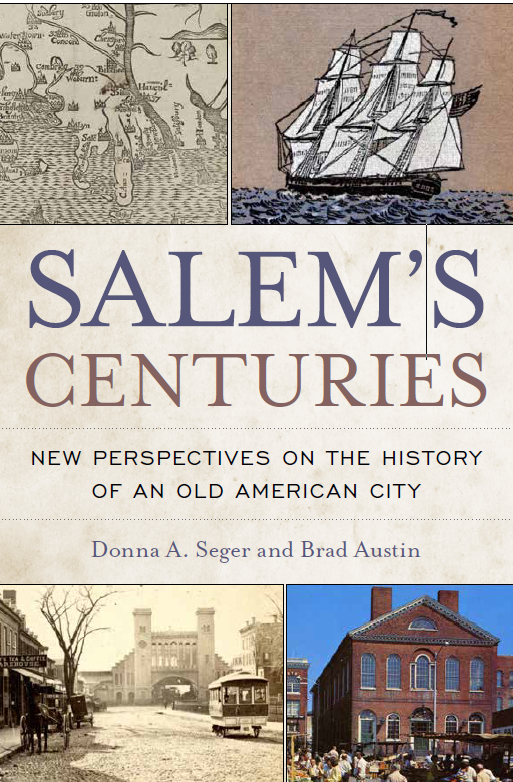
It is also, and has always been, a family home, and Michael and its owners hope it will be a family home again, with its essential structure and details preserved intact. Captain Cook and his wife Sarah (Sally) lived in the house until their deaths in the 1860s and then it passed on to their daughter Sally and her husband Henry Kemble Oliver, real Renaissance Man: a soldier, officer, civil servant, politican and musician who served successively as mayor of both Lawrence and Salem. Sally Oliver died in 1866, but Henry continued to live at 142 Federal Street until his death in 1885. Several owners later, the long tenure of Dr. and Mrs. Carroli saw the only “losses” for the house as the Dufour wallpaper in the parlor was donated to the Society for the Preservation of New England Antiquities (now Historic New England) in 1904 and a cornice to the Metropolitan Museum of Art in the 1920s. There are apartment and porch additions to the back that did not alter the original structure in any way. The woodwork throughout looks to my eye exactly as it does in the many photographs that date from the early twentieth century. After spending a good part of last year working on the Colonial Revival chapter for our forthcoming book Salem’s Centuries, not always a pleasant task as it involved documenting the “stripping” of several Salem houses, it was nice to see so much in situ!

I got a little flustered in the parlor looking at a unique fireplace insert, so I didn’t get proper photos of the mantle or even much of the room! So I have included some HABS photos, as well as two Frank Cousins views from Historic New England and the New York Public Library Digital Gallery with the Dufour paper, which was removed in 1904. The mantle remains the same! A lovely Palladian window on the second-floor landing, which has a very unique detail. More details, the dining room, kitchen, and my favorite third-floor bedroom. There are more bedrooms, and quite a few cute little rooms—I actually lost count: a sewing room? studies, a trunk room?

All summer long at the Phillips House, I kept describing the original McIntire construction (or relocation to Chestnut Street) as “shallow,” just one room deep. You rarely see Federal houses with this original shallowness—over the nineteenth century they were built on and on and on as needs dictated and so they become more square than rectangular. There’s something about being able to see the backyard from the front door: it adds a lightness to a house. On the dining-room side of the Cook-Oliver house, a first-floor kitchen was added and then the apartments wing, but in the hall and on the parlor side, you can see right through. And what you see is a very expansive yard. A quarter of an acre! Very lavish for Salem, as if this house wasn’t amazing enough.


Appendix: Period Homes, 2005.


History is Gray

For the past month or so, I’ve been considering the case of the Salem City Seal and various reactions to it. In the past, before last month, I’ve probably thought about the seal for 5 minutes; over the last month, I’ve been thinking about it for many hours—too many, certainly. If you haven’t read my previous posts, here is what happened, succinctly: several members of the Salem community complained that the seal, with its depiction of a Sumatran man, pepper plants, and Salem ship, was stereoptypical and insulting to Asian-Americans. Their condern and complaint was brought to the city’s Race Equity Commission, which had deliberations over the summer and concluded that “damage had been done” and the seal should be redesigned. The Race Equity Commission reported this finding to a subcommittee of the Salem City Council which concurred (I think), but somewhere in the process someone stepped in and suggested a public task force to add some transparency and public comment to what had heretofore been quite a closed process—I think at best 40 people knew that our circa 1839 seal was deemed suspect in a city of over 40,000.  And this is what the City Council finally voted on: the creation of a task force which will sit for 18 months and hear public testimony and garner historical perspectives. So that’s where we are and I think that’s a good place, in theory. In practice, I have my concerns, because I’m just not sure those in positions of authority have the capacity to grasp historical perspectives, frankly. In the Salem of my experience, every single public history issue has been black and white, villains vs. heroes, the powerful and the powerless, with an overcast of green, for money. Nothing is nuanced, multi-causal, two-dimensional, or gray, and that’s a problem, because most of history is gray. Salem has been without a professional historical society for a long time, and it shows.


Salem Stereotypes: Seal and Patch

My first concern about how this whole process will play out relates to stereotypes. The original accusation against the seal was that it represents a generic “oriental” stereotype. I can understand that, at face value. But before I gave the seal much thought, I always thought it was really cool for its cosmopolitan character, depicting a ship over there rather than in Salem Harbor. So I sent a note to our city councillors asking them to consider the very global nature of this very early civic symbol. About half wrote back, all but one branding the seal’s figure a stereotype. This got my dander up as it indicated a general closed-mindedness before we had even delved into the matter, and of course I couldn’t help but think about the certain stereotype which is everywhere in the Witch City. Wasn’t this a hypocritical position on the part of our Councilors, given that there is a crone-like character with a pointy hat riding on a broomstick on all of our police cars? And you know, people died who were not witches. (Edit: a city councillor informed that the City Council does not approve “mascots,” only the seal, so the omnipresent witch is not under their jurisdiction—I have to say that it’s not particularly uplifting to know that the Salem schools would choose the witch as their “mascot”).  No matter—there’s really no questioning this particular stereotype, and no constituency for its removal. The historical record regarding the intended depiction of the city seal’s character is pretty clear: he was supposed to be from the specific part of Sumatra (Aceh) which grew the pepper which was so sought after by Salem ship captains and merchants. He did look vaguely Asian to me except for the hat—the hat was a little different and a little distinctive and I thought I had seen it before. And then I remembered: Theodor de Bry, a Dutch engraver and publisher who specialized in depicting and disseminating images of “new” people as Europe intensified its voyages of expansion and conquest in the early modern era. Below is a 1599 engraving by de Bry’s son, and an image from nearly three centuries later of a group of Aceh men during the brutal Aceh War with the Dutch. Same hat, right? But again, it doesn’t matter:even if Salem’s seal features a unique provincial figure and not a general stereotype, if people label it as the latter it becomes one. There’s only so much history can do.

J.T. de Bry, Inhabitants of Sumatra, 1599, Bartele Gallery; Aceh envoys seeking British support against the Dutch in the Aceh War, 1873, Bridgman Images.


The “enormous condescension of posterity”.

George Peabody, Salem alderman and son of Joseph Peabody, one of the city’s wealthiest merchants, chaired the committee that designed the seal following the adoption of a new city charter in 1836. As a Sumatra trader himself, Peabody had familiarity with Aceh and its people, but again, I’m not sure this really matters. As expressed by public opinion, it seems to me that those for a complete redesign of the seal and against are rather equally divided, but last week a long column was published in the Salem News which condemned support of the Sumatran image as “toxic nostalgia.” It’s a well-written piece, so it commanded my attention, as did its almost-complete ahistorical argument: it’s an excellent example of labor historian E.P. Thompson’s famous quote, “the enormous condescention of posterity.” According to the author, “regardless of what the seal was meant to celebrate, it must be acknowledged that George Peabody was a product of his times and that the seal he designed reflects a lot of the imagery that came to be associated with western notions of superiority over eastern peoples.” Coincidental with the adoption of the seal in 1839 was the beginning of the shameful Opium Wars instigated by Great Britain upon a weak China, and as “some American merchants (including no doubt some from Salem) did engage in the Opium Trade and benefitted from the British actions in China” we should reject the seal on the basis of this connection? Are we also to reject the East Asian collections of the Peabody Essex Museum, all the Federal Salem houses built with fortunes made by pepper and spices, and the navigational expertise of Nathaniel Bowditch, whose miraculous return from Sumatra in 1803 made The New Practical American Navigator authoritative? Are we to reject anybody who had anything to say in 1839 and just wallow around in the progressive present? If so, it’s going to be a bit difficult to learn from the past. George Peabody’s time seems far less toxic to me than later in the nineteenth and twentieth centuries, when the Chinese Exclusion Act of 1882 and its extensions unleashed a cascade of anti-Asian vitriol in the United States, and we should all note that one of Salem’s most famous native sons, Joseph Hodge Choate, argued against the Act before the Supreme Court in 1893.


History is not cherry-picking.

Proponents of the seal tend to talk about “history-erasing” and its critics focus overwhelmingly on the violence which characterized the trade with Sumatra, which led to two US interventions after American ships were attacked by Malay pirates. Indeed, it’s not a pretty picture, but history seldom is. It is certainly not true that it was a one-way trade imposed upon the Acehnese: American ships brought a lot of silver over there. I’ve been reading as much scholarship as possible since this seal business began, and last week Anthony Guidone, an assistant professor at Radford University in Virginia, forwarded me his dissertion, “The Empire’s City: a Global History of Salem, Massachusetts, 1783-1820” (George Mason, 2023). It’s a detailed interdisciplinary study: I hope it gets published soon so everyone can read it. Guidone gives us the complete picture of Salem’s first global age: the black and the white, and lots of gray. Trade with Asia brought great wealth to Salem but also intensified its connections with slavery and the plantation economy in the Caribbean. But at the same time, it also benefitted a much wider slice of Salem’s population than I had realized, including African Americans and women, and facilitated the creation of a diverse community of sailors (he makes great use of the Salem Crew Lists 1799-1879 at the Mystic Seaport Museum, a great resource). In summary, Salem’s trade with Asia impacted “nearly all aspects of life in the town, changing Salem’s economy, politics, race relations, material culture, civic identity, and historical memory.” Whew! Even though the dissertation ends in 1820, Guidone expands it a bit further to discuss Salem’s anniversary moments in the next decades and the adoption of the city seal. He sees the commemorative focus on commerce by newish institutions such as the East India Marine Society and the Essex Historical Society as evidence of the desire to “construct a narrative that posed an alternative to the town’s witch-hunting past” even as (or because of ???) encroaching commercial decline. I agree completely: members of these institutions tended to identify the witch trials as a “stain” rather than an opportunity and waved no witch flags. How backward they were!

I’ve got to admit, Paul Revere’s first Massachusetts seal from 1775 is my favorite, even though its central figure cuts a rather simplistic figure.

The First Weekend of October in Salem

It’s been a long time since I spent an October weekend in Salem, but there I was on this past Saturday, walking through the crowded streets on my way to the Peabody Essex Museum to take their new “Brick by Brick” architectural walking tour (this is the exact same name as Historic Salem’s Christmas in Salem Tour this year; I sense collusion). I got behind some baby strollers which cleared my path like a snowplow, and dodged and darted amidst the sea of felt witch hat wearers. I knew they would put me in a nasty mood, so as soon as I spotted one “1692/They Missed One” t-shirt, I put on invisible blinders. This was the only day that I could take this tour, and I was desperate to get into one of the Peabody Essex Museum’s long-shuttered period houses: I wasn’t sure which one we were entering but it turned out to be Gardner-Pingree, the most beautiful house in the world! The tour encompassed all of the PEM’s houses save for the Assembly House, and we navigated the path between them relatively quietly armed with audio devices and earbuds, hardly new inventions but still apparently unknown to many Salem tour guides.

random scenes on my way and back; don’t drive to Salem!

I always feel sorry for the Gardner Pingree House this time of year: it’s so beautiful and the tourists don’t seem to notice it; they lean on its amazing fence looking away and down at their phones. But being inside while the crowd was outside was very calming; I could barely hear a thing! It’s a fortress against vulgarity. We got to go into the McIntire summerhouse out back and then heard brief histories outside the exteriors of all the other PEM buildings, again while tourists turned their back on them, their doors rendered to mere frames for selfies.

 Gardner-Pingree, Crowninshield-Bentley, Derby-Beebe summerhouse, John Ward, and Andrew Safford houses of the Peabody Essex Museum.

The main guide (Isabel? I believe, in the striped shirt) was very good at weaving in general Salem history with the history of the houses, so I think this would be a very good tour for new visitors to Salem who are not looking for well-worn witch trial narratives and ghost stories. It also has the benefit of getting new visitors out of the congested downtown into the McIntire Historic District, where the Peirce-Nichols house and Ropes Mansion are located. Salem’s “Heritage Trail” (yellow line) just doesn’t go there. The Ropes is the only PEM House that is open on weekends, and it is a Hocus Pocus house with a beautiful late-season garden, so it’s always a draw, but Peirce-Nichols hasn’t been open for decades. I don’t follow the party line in Salem that “tourists come for the witch stuff, but come again for the history” but my summer at the Phillips House has convinced me that a certain percentage of our tourists are actually coming for the history, so I’m glad that there are institutions which can provide it.

Peirce-Nichols house and Ropes Mansion garden–now in full bloom.

back to work: one good thing about October is I can’t find excuses not to walk to work, along Lafayette Street where there is a range of “decorations”. I like these little skeletons.


Salem 1774: Tea, Fire and a new Congress

I just want to wrap up Salem’s long hot Revolutionary summer of 1774 with a finale first week of October and then I’ll be turning to Salem’s intense Halloween—I am not escaping this year because I’m working at the Phillips House and both my husband and I are so busy we can’t really handle the commute to Maine. So I’ll be going to various “attractions” and writing about them; it should be……….interesting. But today, a “tea party,” a “great fire,” and the convening of a brand new autonomous Provincial Assembly for Massachusetts, all right here in Salem in the first week of October 1774. After reading about the pre-Revolution all summer long I now subscribe completely to super-historian Mary Beth Norton’s assessment of the importance of 1774: here in Massachusetts, maybe even here in Salem, the Revolution began.

The Massachusetts Spy piece gives you a sense of what the late summer and early fall was like in Massachusetts: a ship arrived with 30 chests of tea, its purchaser confronted and cargo sent off to Halifax. Local and county meetings continue, as do congregations to prevent the royal courts to convene. Legal officials who are appointees of the Governor/King “recant and confess.” Boston is ever more fortified by Royal troops and Benjamin Franklin is America bound! You can feel it coming (but of course hindsight is 20/20). Salem remains the official port of entry (with Marblehead) and colonial capital, all the elected representatives to the General Court called by General Gage for October 5 received instructions from their communities throughout the month of September to resist royal encroachments on their liberty and call for a return to the William and Mary charter from nearly a century before. And then Gage called off the big assembly!

Boston Evening-Post, 3 October 1774.

Too much tumult! There would be no royally-convened General Court assembly at Salem on October 5: it was postponed by Governor Gage to some “distant day”.  Ultimately a more representative body will convene, but before everyone that Salem happening there were two fires in town: one very little, the other, “great.” The little one was a PUBLIC burning of tea conveyed to Salem in a cask which was loaded onto a wagon belonging to Benjamin Jackson in Boston. I find this whole story so interesting because several weeks before 30 chests of tea had arrived in Salem but people seem more upset by this little cask! An unfortunate and anonymous African-American man, “belonging to, or employed by Mrs. Sheaffe of Boston,” had requested the cask be conveyed to Salem, and it was, and he was identified as offering it for sale rather than his owner/employer: “it was taken from him and publicly burnt,” upon its arrival, “and the Fellow obliged immediately to leave town” on October 3. Some chroniclers have labeled this a “Salem Tea Party,” but I’ve read too much about tea resistance in Salem in the revolutionary Summer of 1774 so it seems like a minor affair to me.

Several days later, the long suffering Tory Justice of the Peace Peter Frye, whose statement is above, had his house and commercial buildings destroyed in the “Great Fire” of 1774, which devoured a block of buildings in central Salem. Frye had tried to find his way back to “friendship” with his Salem neighbors, but they had never been able to forget his commercial and judicial dealings contrary to Patriot proclamations. He would leave Salem for Ipswich shortly after the fire, and cross over to Britain in the next year. Salem had a bit of a reputation as a Tory town before 1774, but it had certainly lost that identity by this time.

While the fire was still simmering and smoking, representatives from across Massachusetts converged on Salem for the meeting of the General Court, even though they all knew it had been canceled by Governor Gage the week before. They wanted to meet. They made a show of waiting around for the Governor, and then met on their own, in a completely autonomous assembly, a new Provincial Congress. This body, with John Hancock as its chair, became the de facto of Massachusetts, strengthening its resolve and powers with successive meetings in Concord (October 11-14) and Cambridge. But it started in Salem.

John Hancock drawn by William Sharp.


Two events in commemoration of the formation of the Provincial Congress:

In Salem, October 7: 250th Anniversary of the First Provincial Congress: https://essexheritage.org/event/250th-anniversary-of-the-first-massachusetts-provincial-congress.

In Concord, October 11: Exploring Our Democracy Our Rights and Responsibilities: https://www.wrighttavern.org/programs/#october11.


Salem Can’t Lose Sumatra

I’m still thinking and reading about Salem’s endangered city seal, so this is Part II of last week’s post. I promise there will be no part III (at least for a while) as I think I have resolved my feelings about this little scrap of paper, wood, or metal, which links past and present in very interesting ways. My present stance is: Salem can’t lose Sumatra. Let me first recap the issue and bring us up to date, as I was a bit sketchy in last week’s post about how we got here. Certain members of the Salem community find the figure on the 1839 seal, representing an early 19th century dignitary from the Aceh Province of Sumatra, offensive, and appealed to the city’s Race Equity Commission. This commission approved a recommendation to the City Council to redesign the seal unaminously in August. I don’t think there was any public awareness of this issue at the time (or much now, although there was an article in the Salem News last week). Thankfully, somewhere between the Race Equity Commission and the City Council emerged the idea of a task force, I think from the Mayor’s office, and that is what the City Council will be voting on this week. I am grateful that a public process is being considered, although I have yet to ascertain whether the task force will be a true gauge of public opinion or a rubber stamp.

I believe that this seal is unique in its provincial (vs. generic “oriental”) depiction and its global perspective for reasons I laid out in last week’s post. I subscribe to my former colleagues Dane Morrison’s and Nancy Schultz’s assertion that the aged Salem City Seal can still represent a relatively new cosmopolitanism in American Studies, as outlined in the preface to their authoritative volume on Salem history, Salem: Place, Myth and Memory. 

      “After Salem was incorporated in 1836, 210 years after its founding, the community imagined by city leaders was a much more globally connected entity than conventional histories have depicted. They called for a city motto, Divitis Indiae usque ad ultimum sinum—“To the farthest ports of the rich East”—that served as a reminder of Salem’s intimate connections with the trade of China, India, and Sumatra, the pepper-rich island in the South Pacific. The city council commissioned a design by pepper ship owner George Peabody to represent Salem’s global connections. It portrays an Atjehnese man, surrounded by palm trees and a pepper plant, holding a parasol to shade himself from the hot Sumatran sun, and wearing traditional attire—a flat red turban, red trousers and belt, a yellow kneelength robe, and a blue jacket—common to the Atjeh province of the island. In the background, a Salem vessel, with sails unfurled, navigates the harbor. Filling out the emblem are compass rose motifs and the image of a dove bearing an olive branchThe Salem City Seal may be read as text that illustrates this new direction in American Studies, offering a fresh way to envision cannections, not just between the local and the national, but also among the local, national, and global.”

Dane’s and Nancy’s preface, which is part of their instruction for students and teachers, instructed me to investigate the American meaning of the Salem-Sumatra connection, and boy did I find a lot! (and I’m sure there’s a lot more, but I actually have to work—when I found myself in the digital archives of the State Department at 2:00 in the morning I made myself stop). There are a lot of well-known facts: Sumatran-supplied pepper made Salem the 6th largest city in the US and its import duties 5% of the nation’s gross revenues, for example. There’s also well-known lore: so many Salem ships plied the Sumatran coast that the island’s residents thought SALEM was a country. But there’s much more. In 1905, the Merchant Marine Commission released a report to Congress with a striking summary statement that “only 10% of our vast seaborne commerce is now conducted in American ships” and a comparison from a century earlier, when that percentage was 91%. In the syndicated news stories that followed, published in newspapers across the country, Salem represented the earlier golden age of commerce when her pepper ships ruled the seas and transformed both the city and the nation. All of these stories featured the “romantic” narrative of Salem’s pepperdom, but they were also looking for lessons from the past—and equating Salem’s pepper ships with America’s merchant marine.

Then there are a succession of presidential references to Salem’s pepper trade and traders: daring free agents in a world of expanding European empires. This was the party line of presidents as diverse as James Monroe, Andrew Jackson (of course, he was very proud of his naval intervention in retaliation for a native attack on a Salem ship), Franklin Pierce, Zachary Taylor, William McKinley (a big jump!), Franklin Roosevelt, and most of all, John F. Kennedy. Kennedy clearly loved the Salem-Sumatra story: he referenced it when President Sukarno of Indonesia visited the US in 1961 and whenever he happened to be in a town or city called Salem.

Then-Senator Kennedy identified the image as an “Indian,” indicating that the Seal’s figure did not have an localized identification then as well as now. But the emphasis on “people of courage” still rings true, I think. His different Salem variations are interesting, but they all go back to Salem, Massachusetts, the connecting link between east and all the different wests. It would be so sad to lose this Salem, to a sanitized version of a witch’s hat (!!!!) or even the Custom House. We would be going back, I think, back to the provincial and away from the worldly. I am not of Asian descent, nor am I a politician or a human resources professional or a graphic designer so I have none of those perspectives: this is just one historian’s view: Salem can’t lose Sumatra.

P.S. I’ve had a lot of emails and read comments elsewhere…..yes, I too am struck by our city government’s lack of awareness about the contradiction between the perceived stereotype of the Sumatran city seal and the obvious stereoptype of the Witch, Salem’s other official city seal (or patch?), and plan to write about this in a future post. Every single Witch Trial descendant who I know or have heard from is offended by this image, but their outrage, our outrage, has no representation or redress.