Category Archives: Culture

Salem 1799

I always tell my students forget dates, you can always look them up, dates are a terrible way to learn history, but sometimes dates just stand out: 1348, 1517, 1776, 1789, 1914. The other day I was engaged in some endnote-editing and somehow, the date 1799 just started jumping out at me: it suddently seemed like the most important date in Salem’s history! Why? A lot of building mostly: of two of the most spectacular Derby houses and Salem’s first federal frigate, the Essex. But there were other notable things that happened in that year too: the foundation of the East India Marine Society for one, and the renaming of Salem’s long-ignored seventeenth-century fortification, Fort Pickering, for another. 1799 was a big year for Salem, then the eighth largest “city” in the United States with a population of over 9000. Its commercial vitality was already well-established, but it aquired a new civic reputation with the construction-by-subscription of the Frigate Essex for the federal government. The most wonderful book sheds light on the whole commission/subscription/construction process: Philip Chadwick Foster Smith’s The frigate Essex papers : building the Salem frigate, 1798-1799 (1974): I wouldn’t presume to add to it! I will, however, include a couple of its maps. Salem had terrible flooding last weekend and I think we need to remember that we live in an infilled-city, and that a river runs through it.

The US Frigate Essex, built in Salem by Salem residents.

Joseph Howard, watercolor of the Essex, after 1799, Peabody Essex Museum.

Maps from Philip Chadwick Foster Smith’s The Frigate Essex Papers.


Not one but TWO Derby houses built in 1799, with Bulfinch & McIntire designs.

The Ezekiel Hersey Derby House and the Elias Hasket Derby Mansion, one which existed long enough to be “denatured” into a commercial building and the other very short-lived, as its commissioner, the wealthy merchant Elias Hasket Derby, died in the same year that it was built: 1799. Think about the Salem in which these two structures were raised: talk about McMansions! These were conspicuous structures: Chestnut Street was at least five years into the future.

These were houses of a son and father of Salem’s first family. I’m not sure how long Ezekiel, the fifth child of Elias Hasket Derby, lived in his elegant house, one of just a few in Salem to be designed by Charles Bulfinch (with interior architectural details by Samuel McIntire). He was more focused on agricultural pursuits and the development of south Salem, where he had a sprawling farm. His town house stood long enough to be stripped, as happened to so many notable houses, and architectural historian Fiske Kimball established a Derby Room at the Philadelphia Museum of Art with its architectural features.

Plans and photos of the Ezekiel Hersey Derby House, Phillips Library, Peabody Essex Museum; the Derby Room at the Philadelphia Museum of Art.

Elias’s mansion did not stand long enough to be “denatured” (which certainly would have happened in its central location, maybe its short life was a blessing) or photographed, but there are sketches and plans in the PEM’s Phillips Library. It gave way to the present-day Derby Square.


Captain Devereux opens up trade with Japan!

It is decidedly NOT true that Commodore Perry opened up trade with Japan in 1853; rather, Captain John Devereux of Salem and the Boston ship Franklin did so in 1799. The Dutch had had a monopoly on western trade with Japan since the early 17th century, primarily because they did not proselytize like their European counterparts during the Reformation. Two centuries later, they licensed American ships to go to their trading post on Deshima Island just off the port of Nagasaki, including the Franklin in 1799 and the Salem ship Margaret in 1801. Devereux brought Japanese goods back to Salem, and so did the captain of the Margaret, Samuel Derby. The former’s account book in the Phillips Library lists “128 raincoats” purchased there, as well as several items of “lacked” (lacquered) furniture: the Peabody Essex Museum has a Hepplewhite-style knife box, several card and tip-top tables, and a large server/oval waiter in its collection from this cargo, the focus of an article in the July, 1954 Magazine Antiques below. Of course, the Reverend Bentley ran right over to see Captain Devereux’s hall at his house on the Common as soon as he returned, as recorded in his famous Diary.


The Foundation of the East India Marine Society!

The Peabody Essex Museum’s foundation date of 1799 and claim to be the oldest (maritime) museum in the United States is based on the establishment of the East India Marine Society in that year. I love the description of the society included in the American Neptune of 1944, in an article marking the completion of the restoration of the the Society’s East India Marine Hall: In the autumn of 1799 a group of thirty Salem shipmasters met to found a society so exclusive that only those who had sailed around Cape Horn or the Cape of Good Hope as masters or supercargos would be eligible for membership. As the first New England vessel had reached China only thirteen years before, this requirement made the society comparable, for its time, to a modern aviation club, for which only pilots who had successfully crossed the Atlantic or Pacific could qualify. Its members were equipped with notebooks so they might advance navigational and geographical knowledge, and like Captain Devereux, they brought home things to embellish their Society’s “cabinet”. There are quite a few old histories of the Society (like the 1920 text below) which reprint the foundation documents and highlight all sorts of little details, but there’s also George Schwartz’s recent history, Collecting the Globe, which presents a more comprehensive context for its foundation year, 1799.


Good Queen Bess

It’s the first week of a new semester, and I’m still working on my Salem book for imminent submission, so I have to admit that I don’t have much time or energy to post here. But it’s also coronation week for Queen Elizabeth I (in 1559) and I’ve come across a lovely children’s book which has captured my teaching imagination—why these scenes? why these stories? Sometimes the blog is a nice break from pressing responsibilities, and that is the case here. Good Queen Bess (1907) is a quarto containing 23 illustrations by the artist John Hassall and text in red by Miss Brenda Girvin. The visuals are striking in their color and context, with some editorial choices immediately apparent (of course we need to see Sir Walter Ralegh’s puddle-covering cloak) while others are a bit more elusive, but all portray the iconic queen as a person first and foremost, beginning with her childhood.

It’s a children’s book, so it might be a bit jarring to depict the young princess alone, as the orphan she was. Instead, she’s with her longtime companion Kat Ashley, cuddling by a fire with dog and toys nearby. Years later, her situation more precarious during her sister Mary’s reign, she is “imprisoned” at Woodstock, with Ashley and more dogs nearby. Not too scary, but still an experience that will shape the young Elizabeth. Somehow her character got her out of that situation, and she is next pictured accompanying Queen Mary at her entrance into London, echoing another entrance image in Parliament. Hassall misses a great opportunity to show the poignancy of the moment in which Elizabeth is informed of her sister’s death and her own ascendance at Hatfield, depicting her in a crowd rather than alone under the venerable oak tree of legend. At this moment, and again at her coronation, Elizabeth’s profile is that of the majestic mature Queen in white (with “wings”) rather than the young woman that she actually was, with her hair down. As Queen, she has to have that majestic look, whether she is stepping on Ralegh’s cloak, dancing (as she loved to do), receiving the famous authors of her reign (Shakespeare and Bacon), refusing the crown/title offered by Dutch emissaries at war with Spain (an odd choice for a children’s book) or addressing her troops at Tilbury with her “heart and stomach of a king” speech.

Elizabeth is defined by her own personal characteristics and experiences but she also represents a “Golden” Age so we must see some scenes without her: a man in stocks represents her policy towards “tramps” (better known as “masterless men” in her own era), reluctant Elizabethans cultivate the potato (perfect, this is my favorite illustration, although cultivation began long after introduction), and then of course we must see the glorious defeat of the Spanish Armada, a fitting finale.


2024: the Anniversary Year

Happy New Year! I’m a firm believer in “anniversary history” and I like to start out the new year previewing (or guessing) what commemorations we might see. This past year was a busy one with the 400th anniversary of two major ports in our area, Gloucester and Portsmouth, as well as Rye and Dover, New Hampshire. I was really impressed with Gloucester’s year-long commemoration, especially its 400 Stories project, which will be a lasting legacy. Salem’s 400th is coming up in 2026, and I’ve been working on a book though all of last year and part of 2022 for that big anniversary: I’m handing it off to the publisher this month and eager to work on some other projects. 2024 looks a bit quiet in comparison with some other years but I’m sure there will be several Revolution 250 events. Salem was very much the center of the action in 1774 so I hope our city can rise to the occasion. Here’s where I think/know/hope we will see some reflective/commemorative activity:

Indigenous History: It seems to0 large a concurrence to me to have the 100th anniversary of Indian Citizenship Act occur in 1924 and the 200th anniversary of the establishment of the Bureau of Indian Affairs not to have a major reflective moment, especially given the current and intensifying historiographical interest in Native American history. We certainly need one (or two or three or…….) moments of reflection. Again, NOT an American historian, so a bit shocked that unqualified citizenship was not granted to Native Americans until 1924 (actually, I don’t think I can use the word unqualified) and their voting rights were still challenged after that!

Essay on citizenship by a student at the Leech Lake Indian School, 1917-1920, Records of the Bureau of Indian Affairs, Record Group 75. “the ones who steal or TELL LIES are not good citizens.” (capitalization mine)

Winter Olympics (on a much lighter note): the first Winter Olympics was held in 1924 in Chamonix, France, and in the following year the International Olympic Committee voted to make it a regular event every four years. Now of course the summer and winter Olympics are staggered, and as this summer’s games are in Paris I think there will be some kind of recognition of the centennial from a cultural and/or French perspective.

Courtesy Swann Auctions

Impressionism: Speaking of France, the first impressionist exhibition happened in Paris in 1874, and this cultural watershed will be marked with a major exhibition at the Musée d’Orsay that will travel to the US later in the year. 130 works will be featured, including paintings by Monet, Renoir, Degas, Morisot, Pissarro, Sisley and Cézanne and some of their lesser-known contemporaries, as well as an “immersive expedition in virtual reality” entitled “Tonight with the Impressionists.” Looking over all the previews for this commemoration, I realize that I’ve never appreciate how radical the Impressionist movement was—looking forward to this spring.

Claude Monet, Impression, soleil levant (détail), 1872-1873, musée Marmottan Monet, Paris © RMN-Grand Palais

Lafayette’s American Tour: Moving back 50 years to another big French cultural moment, but an even bigger American one: Lafayette’s tour of the United States in 1824. I know that this bicentennial will be big, as there are several initiatives which have been in the planning stages for quite some time. A “Lafayette Trail”, signalled by red, blue and white markers erected in many of the towns and cities he visited—over 40 in New England alone—has been created, and  Lafayette 200 has coordinated hundreds of events to commemorate the General’s tour. You can check out all the events here: the kick-off is in August, the month in which Lafayette arrived. He visited Salem, Beverly and Ipswich on August 31, and it looks like Historic Beverly will be sponsoring an event on that day.

Salem as center of pre-Revolutionary activity: 1774 was a big year for Salem in terms of Revolutionary activity. Royal Governor Thomas Gage moved the location of the Massachusetts General Court from Boston to Salem, where he hoped it would be “more inclined to comply with the King’s Expectations,” in June but compliance was not forthcoming. Not at all.  The Salem assembly would not comply or even be disbanded after Gage’s order, instead resolving to endorse “a meeting of Committees, from the several Colonies on this Continent … to consult upon the present state of the Colo¬ nies, and the miseries, to which they are, and must be reduced, by the operation of certain Acts of Parliament respecting America ; and to deliberate and determine upon wise and proper measures to be by them recommended to all the Colonies, for the recovery and establishment of their just rights and liberties.” This “meeting of Committees” became known as the Continental Congress. Later in the summer, after Gage prohibited town meetings without his prior approval, Salem held one which drew over 3000 attendees, and in the fall a Salem “tea party” on October 3 was followed by a de facto declaration of independence. After yet another Gage cancellation, of a meeting of the Massachusetts General Court, its members met anyway on October 5 and voted “to resolve themselves into a Provincial Congress” which was not answerable to London.


Holiday Tables

If I’m hosting for Christmas or any other holiday, I spend more time thinking about the table than the menu: much more time. I love setting the table, and once I attain my “vision” we’re all relegated to eating in the kitchen, no matter how many days before the big meal. Here it is, December 22, and I am hosting Christmas dinner and the table is not set! I just finished my grading, however, so I’ll get it together. I have a different animal theme every year for Christmas decorating and some animals are easier than others. Obviously deer are super easy, and I’ve also done bears, foxes, sheep, swans, pheasants, mice and hedgehogs—and more. This year, I chose lions, and they have been challenging! But I do have these great lion placemats which are everything. I’m not quite ready, however, so here’s a succession of holiday tables from both sides of the Atlantic.  First we have some Scottish tables from my trip last month, and then a succession of tables from Strawbery Banke in Portsmouth, NH: every year they have a Candlelight Stroll among and within their historic houses, featuring a sweeping and colorful view of holidays past.

Scotland: first up are parlor, dining room, and kitchen tables in the Georgian House in Edinburgh’s New Town, owned and operated by the National Trust for Scotland, then a Georgian “everything” room in another National Trust House, Gladstone’s Land. You’re looking at a table, but a lot more is going on in this room–it reminded by of another Georgian room, just below, in the Concord Museum, which I just visited last week. Back in Edinburgh, nothing is more festive than a pub table, and the city is in the midst of major gin craze. The Jolly Botanist is a great gin bar that we really enjoyed.

Back Home (well in Portsmouuth): Strawbery Banke is a museum “neighborhood” of historic houses, some of which were located in the Puddle Dock area of Portsmouth, others which were moved there when the museum was founded in the 1960s. It’s always been a part of my life, as I grew up across the river in southern Maine. The annual Candlelight Stroll features decorated houses with reenactors, representing different periods and stratas of society. The opulent Goodwin Mansion, first up below, was built in 1811, but it is interpreted as an 1870s house. Below its dining room is that of the Chase House, a Georgian structure that is interpreted c. 1818, followed by that of the Rider-Wood House (1830s), the Shapiro House (1919) and the time-capsule 1950s kitchen of the Pridham House.

My table is not set yet but here are the lions, ready to go! Best wishes for a restorative and merry Christmas.


Salem and the Boston Tea Party

I’m excited about this weekend’s commemoration of the 250th anniversary of the Boston Tea Party: while the regional Revolution 250 initiative has been geared up for some time, I think that the countdown to the semiquincentennial of the beginning of the American Revolution will really intensify now. 2026 is going to be an interesting year in Salem, with both the 400th anniversary of its European settlement and the 25oth anniversary of the Revolution (though I have no doubt that Halloween will crowd both of those commemorations out). Leading up to the Tea Party anniversary, participants have been recognized through the Boston Tea Party Particpant Grave Marker Project overseen by the Boston Tea Party Ships and Museum and Revolution 250, and ceremonies were held for two Salem men: the Reverend John Prince and William Russell. These two guys do not represent the best Salem connection to the Tea Party, however: the Reverend was a witness rather than a particpant, and Russell, a true Revolutionary hero, wasn’t even from Salem—he was likely buried here because of his son’s residence. The best Salem tie to the Tea Party is rather the fourth ship (or the seventh, depending on your perspective). In late September of 1773, seven ships left London laden with East India Company tea bound for the colonies: four were bound for Boston (the Eleanor, Dartmouth, Beaver and William), while the Nancy was destined for New York, the Polly for Philadelphia, and the London for Charleston. The Eleanor, Dartmouth and Beaver became the “tea party ships” but the William never made it to Boston, as it was wrecked on Cape Cod. And that’s where Salem comes in. Here’s how the story played out in the newspapers.

The William was on the rocks in Provincetown, most of its barrels of East India tea intact and ready to be destroyed or salvaged. The revolutionaries back in Boston hoped that their Cape comrades would follow their example and ditch the tea, but that didn’t happen: it was succesfully salvaged and transported to Boston on the Salem schooner Eunice, captained by John Cook and owned by George Bickford. Both Cook and Bickford were called to task and eventually excused by their fellow Salem residents weeks later, only after the latter was paid a visit by “a company of natives, dressed in the Indian manner, armed with hachets, axes &” in Salem’s brand new smallpox hostpital. The shipowner and his captain were excused with a judgement of “mere inadvertence” but the town’s freeholders took the opportunity to condemn the “detestable tea” yet again, and form a standing committee of nine to ensure that it was repelled from Salem ships and shores forever, as it represented nothing less than “an open attempt to enforce the Ministerial Plan, and a violent Attack upon the Liberties of America.”

Essex Gazette, 25 January 1774.

So that was that: Salem would have its own “tea party” in October of 1774 but it was very much part of THE big party of December 1773, as were so many communities in eastern Massachusetts and beyond. “Essential” commodities have power, both in the past and the present, as the words above illustrate so well. The East India Tea was a rallying commodity, and the Boston Tea Party was a rallying event in its time and after. Its symbolism and choreographed imagery made it so, and it lived on in both American political and popular culture. An event that can be captured visually and displayed on everything from the French scenic wallpaper gracing the walls of the White House to a Currier & Ives print bearing pride of place in a humble parlor is a powerful one, especially as its name evolved from the “riot” (Governor Thomas Hutchinson’s term) to “party” (first used in the Salem newspapers in 1826–before that, it was mostly “the destruction of the tea.”)

Nathaniel Currier, The Destruction of the Tea in Boston Harbor (1846, one of Currier & Ives’ most popular prints); Zuber Boston Harbor/ Boston Tea Party wallpaper, 1852; The Tea Riot, from Jacob R. Neff, Thrilling incidents of the wars of the United States (1853); The Boston Tea Party-Destruction of the Tea in Boston Harbor, December 16,1773, Ballou’s Pictorial (1856); a 1920s postcard, 20th century folk art diorama and 1940s Wedgwood plate; graphic from the 200th anniversary commemoration.


Special Little Places: Closes, Corridors and Courts

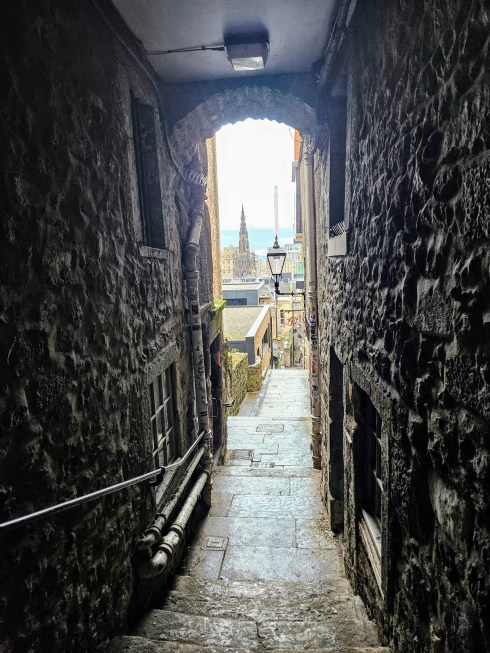
Still basking in my Edinburgh afterglow as we finish the last week of classes of the Fall 2023 semester: at home, as a deficient boiler has rendered Salem State’s North Campus an uninhabitable place. Shades of 2020-2021 for sure! I’m actually teaching two online classes by choice next semester, but I was not expecting to be back on Zoom so soon. I had a bit of time to think about some themes I wanted to emphasize about my Scotland trip, and one is “special little places”: I find that in most (not all) European cities that I have visited there are urban spaces which preserve a bit of the past, off the beaten path. Little courtyards and lanes and ways. Off the Royal Mile in Edinburgh there are so many “closes”! It’s quite extraordinary really–some access other ways, some are closed-off, all seem to transport you off a busy street into somwhere else. Here are just a few: Riddell’ss Close AND Court, Advocate’s Close, Tweeddale Court and Bakehouse Close: the latter two arre Outlander locations, and I encountered an Outlander tour just after I took these pictures!

There are some special places in Edinburgh’s 18th century “New Town” as well, but not as many: it was laid out for breadth, perspective, and movement, just like an American city (well, at least the latter). There are places and lanes that give you a bit of that enclosure within the larger city feeling, like Circus Lane below, and the spectacularly picturesque Dean Village. You can still get away, or get back, in the New Town.

There are a few places in America where you can get this out-of-time experience. Beacon Hill in Boston is like that for me. Neighborhoods in Charleston, Alexandria, Annapolis, Newport and Nantucket. Salem used to have lots of little ways and squares, but it has always evolved, and most have disappeared. Everybody’s favorite little street is actually a court, Bott’s Court between Chestnut and Essex, and I can spot a really special little way on a 1916 map of Salem: (the) North Pole! I’m not sure where that place went, but it’s definitely no longer here.


A Scottish Photo Feast for St. Andrew’s Day

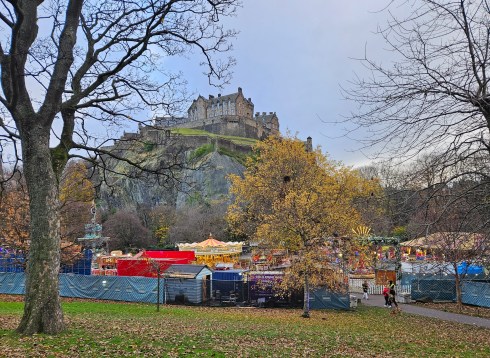
I’m just returned from a long trip to Scotland, during which I took hundreds of photographs, and today marks the feast of the Scottish patron Saint Andrew, so that’s the post! I promise more substantive essays in the future, but I have re-entered at the busiest time of the semester and my Salem’s Centuries manuscript is due in just over a month, so these photos will have to suffice for now. We spent most of our time in Edinburgh, but also covered a wide swath of south central Scotland, including Glasgow, Oban and Fort William in the west, and St. Andrews in the east. I spent my junior year abroad at that city’s university, and while I’ve been back several times since, it’s always great to go back. I really explored Edinburgh on this trip, both Old Town and New and some adjoining neighborhoods, so it was hard to pick my favorite photos of the capital, but I think I’ll favor the light. All the cities and towns we visited were aglow with Christmas trim, and every other day the sun bathed the land-and street-scapes for several intermittent hours: with moody mornings and darkness descending at 4pm, the light is very precious.

In Edinburgh:

Interior shots are of two National Trust properties: Gladstone’s Land in the Old Town and the Georgian House in the new. Of course the modern embellished building is the relatively new Scottish Parliament, about which I learned a lot. Christmas markets and fairs in every available green space!


Glasgow:

Glasgow Cathedral and Council Chambers are quite something, as are the Hunterian Museum and Art Gallery at Glasgow University. Charles Rennie McIntosh immersion is possible.


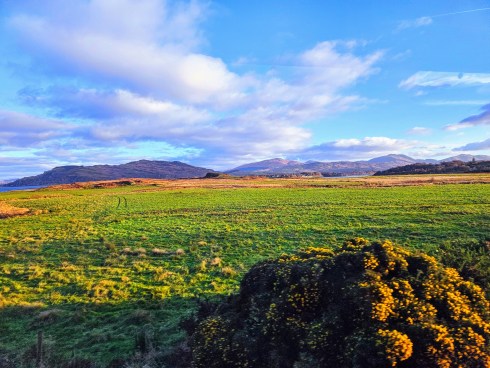
Western Coast from Oban to Fort William and through the Highlands:


Fife villages on the East Coast, and St. Andrews:

So, lots more to write about, including whiskey, GIN, Jacobites, McIntosh, Princes Street, old and new architecture, the power of Outlander, closes, courts and corridors, and hedgehogs, but this postcard post will have to do for now: Happy Feast of St. Andrew day!


Salem’s Bêche-de-mer Boom

Back in Salem until I take off for Scotland at the end of next week. I’ve got lots of teaching, writing, and organizing to do, but I ignored all of my obligations last weekend and read a fascinating book about early American trade in the South Pacific: Nancy Shoemaker’s Pursuing Respect in the Cannibal Isles. I couldn’t put it down! It gave me all sorts of insights into a very particular and profitable trade dominated by Salem merchants and sea captains in the 1830s and 1840s: in bêchedemer or sea cucumbers, highly sought after in China for medicinal and culinary uses. Trepang (the primary eastern term) were and are sea cucumbers (often called sea slugs in the 19th century) which were processed in a special way, still in use today: boiled in sea water, placed in baskets and washed again, then dried in smokehouses. A Pacific example of the importance of dried seafood in world history, the bêche-de-mer trade was characterized by boom and bust phases over its long history due to overfishing in response to the sustained demand, but in the 1830s and 1840s Salem traders were very dominant. Shoemaker provides her readers with an appendix of Salem ships engaged in the trade, from ship Clay in 1827 to bark Dragon in 1857, with all sorts of familiar Salem names on board. William Driver, of Old Glory fame, then second mate on the Clay, claimed that he was the first “white man” (not westerner, or American, or Salemite) to execute the bêche-drying process sucessfully, thanks to the instruction of a band of pirates from Manilla. This trade has it all, believe me: daring captains working for equally-daring shipowners engaged in a risky trade that was potentially lucrative but also completely dependent on native “cooperation,” profit-seeking pirates and bureaucrats, a range of nineteenth-century ethnographic attitudes, tales of cannibalism and violence, big money.

Still very much in demand: bêche-de-mer at a Hong Kong market, photo by G. Clayden

My colleague Dane Morrison works in the field, and I can understand why he finds it so enticing: the stories and the sources are amazing, lending great narratives to important historical analyses of trade, imperialism, and cross-cultural influences and interaction. Using a micro-historical approach, Shoemaker explores American-Fijian encounters through the lives of three people: David Whippy, a Nantucket whaler who remained in Fiji and became an extremely important intermediary, Mary D. Wallis, the wife of Salem sea captain Bejamin Wallis who accompanied her husbanad to Fiji in the 1840s and later wrote about her experiences (as an anonymous “Lady”) there in Life in Feegee. Five Years Among the Cannibals (1851), and John B. Williams, son of a prominent Salem commercial family who tried to make his own fortune in the islands through a more bureaucratic route. So we have quite a Salem focus here: it’s another reminder that the historical Salem experience is played out in Salem and abroad. Williams in particular offers a very interesting perspective: born into money and raised on Chestnut Street (at #19) he was desperate to make his own fortune, beause “to go home poor its a curse in Salem.” These stories of Massachusetts men (and one woman) abroad illustrate how the entire bêche-de-mer trade was dependent on Fijian labor, coerced by native elites with whom the Salem traders negotiated and paid off. So many interesting anecdotes emerge from Shoemaker’s analysis of the exploitative yet intimate relationships tied to this trade: a powerful chieftain named Cokanauto whom Salem captain John Eagleston nicknamed Phillips after his employer Stephen C. Phillips back home (apparently it stuck), a young native woman named Phebe who became the servant (slave???) of Mrs. Wallis, a “Feegee dwarf, about four feet in height, —- said to have been a man of some distinction at home,” transported to Salem on the ship Eliza. (Shoemaker tells us that he made it back home). Captain Eagleston, who made four voyages to Fiji (on the Peru, Emerald, Mermaid, and Leonidas) from 1831-1841, called “his” bêche-de-mer operations “our little city.”

Cokanauto in Charles Wilkes’ United States Exploring Expedition (1845): 3:122.

The Zotoff (1922 lithograph) and  Emerald returning to Salem, (c. 1950 postcard issued by the Salem Chamber of Commerce).

Shoemaker’s focus is appropriately on Fiji, but it would be nice to explore the impact of this trade on Salem: the sources are numerous as many participants, Eagleston among them, memorialized their particpation in logs, journals, and reminiscences. I’m always looking for narratives to counter Salem’s storied post-1820 decline, as it seems to imply that merchants and seafarers just sat on their hands looking at empty wharves like Nathaniel Hawthorne. I’m not digging into the economics here, but Shoemaker does, and the fortunes that could be made from this trade were astounding! We can see the material legacy of the trade among the Oceanic collections at the Peabody Essex Museum here in Salem, as all of the bêche-le-mer traders were members of the East India Marine Society and thus brought stuff home, but I want to know more.

Bure Kalou (Spirit House), Fiji. Peabody Essex Museum. Gift of Joseph Winn Jr., 1835. 


Salem in the Press, 2023 Halloween Edition

Since I’ve been living outside of Salem for the past month, only coming in for classes and shooting right back to Maine on my (not-so) secret routes, I followed the press coverage on seasonal tourism a bit more closely than in years past. I set up a google alert and got notifications nearly every day. There are always a lot of what I would call obligatory articles about Salem at this time of year focusing on crowds and traffic but it struck me that in this particularly year the coverage was a bit more negative, though as you know, I’m not a Haunted Happenings fan, so I could have been reading what I wanted to read. I will be the first to admit extreme bias in this realm, but I tried to read every article which came my way several times, and there was definitely an underlying tension in several, between the “success” of Salem’s tourism and its costs, whether they were traffic, trash, or exorbitant short-term rentals. For me, the tone seemed to be set in late August, when the Salem Witch Museum was identified by as the #2 tourist trap in the entire world by USA Today: this generated more stories in the regional press, concluding with the recent “visit” of the Boston Globe to the “Museum.” This article is not especially probing in its exploration of either a for or against position on the attraction’s rating, and gives a rather blase tourist the last word: “you have to expect it to be a tourist trap. It’s Salem in October. Isn’t that kind of the whole point?” Indeed.  The Globe featured a stronger, more focused article in mid-October on the skyrocketing prices of Salem airbnbs, which was no surprise to anyone who lives in Salem. They’re everywhere, even though municipal regulations attempted to limit their number a few years back. The article quoted Mayor Dominick Pangallo as asserting that there are “250 t0 300 airbnbs” in Salem, while the rental website listed considerably more units in October.

Of course the victims of 1692 were NOT witches, but Airbnb puts a special focus on “haunted” or themed Salem rentals in October, like this one featuring a “100% that witch” bedroom./Airbnb

This year’s offering from the Washington Post is longer than the Globe pieces, but nevertheless manages to say very little. I don’t understand its title, “Salem bet big on spooky season. Now witch girlies are everywhere,” nor do I discern anything close to a theme or thesis. It’s all over the place with lots of quotes from locals, including my colleague, the president of our preservation organization, and several Salem shopkeepers. But none of the quotes seem to have much context, including one which made me see red after (apparently) confining twentieth-century Salem to the simplistic characterization of a “horrible factory town.” This is the tourist industry’s party line: witchcraft tourism saved Salem. After a summer of reading and writing about the past century for our book, I just can’t stand to hear it anymore–it erases the hopes, dreams, activities and achievements of generations. It’s a falsehood, but also a quote out of context according those who offered this characterization. So now I’m wondering what it, and the entire article, means. I can tell that my colleague is presenting an argument here—about the balance of history and entertainment, the need to discern the authentic from the fake, and tourism’s toll on Salem’s residents, but his quotes are so strung out that I couldn’t quite grasp it–and I know him! And then there are the captions, like the one for the photo below: “people dress up in Salem in late October.”  Wow, really? I have news for you, Washington Post, people dress up in Salem in late July.

Washington Post

The Wall Street Journal’s Salem story, “Living in the Middle of Halloween Central is Not Wicked Fun,” is much tighter and much better. And as you can tell from its title, more negative with its focus on the experience of residents. It’s far more historical in its analysis of how Salem evolved from shame to exploitation in its attitude to the trials, with one Salem tour guide furnishing a very interesting anecdote about Southern slaveholders taunting Salem abolitionists for “burning their grandmothers” and yet another referencing Joey Buttafuoco and Amy Fisher (the spectrum of Salem tour guides never ceases to amaze). And then there is the suggestion of a Florida (of course) tourist, who wants to see “a life-size wooden replica of the gallows where they hung the witches,” in order to “give a real sence of how intense it must have been.” A wary Salem social worker worries that “we’re commercializing a tragedy” and yes, her use of the word “we’re” is spot on: Salem’s exploitative and ever-encroaching tourism not only impacts but also reflects upon all of its residents. The WSJ article was my pick of the litter until a late-season entry appeared on my screen just two days ago: “Salem’s Unholy Bargain” by Lex Pryor, a writer for the sports and popular culture website The Ringer. A BRILLIANT writer: just read this one paragraph, and you’ll be hooked, like me:

It is awesome, financially beneficial, and out of control. In Salem, Halloween is a monthslong beast with an unquenchable appetite. It gobbles late-summer weekends and the first-of-winter snows. There are people who welcome it and people who flee it, but everyone feels it. And though by lineage this creation is at best rarely theirs, by geography and the inalterable stain of days gone by, they are full inheritors of its weight. Because of history—its burdens and allure—a community is held in a periodical and self-imposed state of bedlam. Look beyond the hoopla and you’ll see in Salem a storm, age-old as it is modern, that manages to unmask the knotty, innermost contents of the place and the folks who frequent it.

And one more: a brilliant quip involving bratwursts: the morbid nature of Salem’s appeal isn’t that uncommon among travel destinations. Millions visit the Colosseum every year. Same with Hiroshima and Nagasaki. I have never been to Auschwitz, but I am wholly certain that someone is selling something like bratwursts somewhere nearby. Salem is Salem because, unlike those sites, in Salem a plurality of people come for the bratwursts. They arrive in spite of the history, and they have no shame in this.

THEY COME FOR THE BRATWURSTS! And we can’t get away.

Well I could keep quoting this brilliant piece, but you can read it for yourself: you should read it for yourself if you’re interested in what Salem has become. I was going to conclude with the New York Times’ Salem article for this year but it is quite literally so small by comparison with Mr. Pryor’s piece in its focus on the plague of nip bottles on the streets of Salem that I think I’ll just leave you with the link.

NOVEMBER 1!!!


It Happened in Town House Square

I didn’t expect to be posting on Salem for a while as I’m on my way to Maine to escape the Halloween Hordes (haven’t quite broken away yet!) but I’m in the midst of writing the last chapter for Salem’s Centuries and I thought posting would help. It’s why I started this blog in the first place, so long ago, to indulge my curiosity about Salem’s lost history and free up my writing from its academic constraints! This last chapter is on the long history of Salem’s center, Town House Square, and I’m just kind of enraptured with everything that happened there, but also haven’t figured out the meaning of it all. I’m trying to use the chapter to summarize the book Salem’s Centuries and also Salem’s centuries by using the Square as kind of a “stage” (at least that’s the word I’m using now). So this will be kind of a sketchy post as it is a work in progress and I welcome all comments and corrections.

I’m happy with my opening paragraph:

A crowd filled Town House Square on a sunny day in June of 2005, cheering and jeering the unveiling of a bronze statue of the actress Elizabeth Montgomery in character as Samantha Stevens of the television series Bewitched. The rationale for the statue was the filming of a few episodes of the series in Salem in 1970, commencing a successful intensification of witchcraft-focused tourism in the view of those who cheered, while less-enthusiastic attendees noted the impropriety of installing a fictitious witch within view of the sites where the victims of 1692 were accused and tried. The Reverend Jeffrey Barz-Snell, 31st pastor of the First Church of Salem, which stood across the street for centuries, was among those who had urged the Salem Redevelopment Authority to reject the statue weeks before“in due deference to our history”and its location: “we must object to this statue being sponsored by the city of Salem, less than twenty yards away from site where we committed, arguably, one of the worst…..crimes in the history of this city.” This argument was countered by the majority opinion, expressed succinctly by Salem City Councilor Thomas Furey: “Salem is the Witch City. I think we all need to lighten up, take a breath, and let Salem have fun.” This moment in time and place is representative of the continuous significance of a small parcel of land, more of an intersection than a square, over Salem’s centuries. The crowd, the expression of civic identity, representations of church, state and commerce: all have had their role to play in Town House Square.

Then I go back to the seventeenth century and start with the English settlement of Salem from 1626, including a brief discussion of how the topography shaped the town and its center at the intersections of its two main thoroughfares, later called Essex and Washington Streets. This became known as Town House Square in the 18th century, and that’s still its place-name, although I wonder how many Salem residents (much less tourists) know it as such today. Then it’s all about meeting houses—-four on the same site: it really took a lot of time to figure out all that building history. First there was a small meeting house built in 1634 which was long thought to be the small building you can see in the rear of Plummer Hall on the Peabody Essex Museum’s campus, a larger though still quite simple structure built around 1670, the first “churchly” meeting house with a belfry, built in 1718, and finally the present building (1826) which long served as the Daniel Low & Co. store after the First Church departed to its present building further along Essex Street. Salem’s meeting houses are confusing, both before and after the First Church splits up into successor congregations: East, North, South and Tabernacle. Thank goodness I don’t have to go into the theological and factional disputes: I’m sticking to Town House Square.

So, once I set the stage, action will begin: here’s what happened in Town House Square, with an emphasis on the public. Obviously lots of other things happened in this vicinity over 400 years but why do some leave a mark or record and others not? And do the happenings in the Square reveal its public nature and role? Just questions I’m asking myself as I am writing.

  1. Lots of Quaker resistance: holding their own meetings right next to the First Church/Meeting House, wearing their hats into the latter, and then in 1662, Quaker Deborah Buffum Wilson, accompanied by her mother and half-sister, walked “naked for a sign” down Washington Street in imitation of an Old Testament episode (Isaiah 20.2-3) and in denunciation of the spiritual “nudity” of those who condemned them. Yes, a NAKED QUAKER walked down Washington Street. This resistance was met with an equal (or larger) measure of persecution, especially by the William Hathorne, who lived right on the Square.
  2. Anti-Royalist protests: by the same William Hathorne, who as Major of the Salem Militia, assembled his armed soldiers in Town House Square for his impassioned speech against the Royal Commissioners present in Massachusetts in 1664, after which he himself was summoned to England on the charge of refusing to submit to royal authority.
  3. The Salem Witch Trials: also happened in Town House Square once the judicial proceedings moved from Salem Village to Salem Town. Close quarters! Judge John Hathorne, son of William, lived right there, as did the Reverend Nicholas Noyes, and victim Bridget Bishop. The combined courthouse/schoolhouse at the northern end of the Square, made of the framing of the 1634 meeting house, separated the properties of Noyes and Bishop, and High Sheriff George Corwin resided at the southern end of the Square.
  4. Salem’s first July 4th: came before the Revolution! There was a huge party at the Town House (sometimes called the provincial Court House, sometimes even the State House—think of the old State House in Boston) to celebrate Sir William Pepperrell, the hero of the Siege of Louisbourg, in 1746. The cannons surounding the Town House were fired after every toast, and there were many.
  5. Big Town Meeting Protests: against British taxation, commencing with the Stamp Act (1765), at the Town House. (But less than 20 years earlier they were celebrating the hero of a war they were not willing to pay for–just a British historian’s perspective.)
  6. Salem’s “Tea Party”: a crate of tea from Boston is seized and burned in Town House Square on October 4, 1774, “in the presence of several hundred spectators.”
  7. Last meeting of the Massachusetts Provincial Assembly: against the orders of Governor Thomas Gage, electing delegates to the new Provincial Congress which met in Concord on October 7, 1774.
  8. Colonel Alexander Leslie and his regiment passed through Town House Square on their way to the North River to recover rumored cannon, and back again on their retreat, February 1775.
  9. Presidential Parades: George Washinton in 1789, and Theodore Roosevelt in 1912.
  10. Salem’s “big digs”: the first railroad tunnel built in 1839, and rebuilt in the later 1950s.
  11. Nathaniel Hawthorne’s romanticized view of colonial history set against Town House Square in two stories: A Rill from the Town Pump and Endicott and the Red Cross.
  12. Town House Square Transportation Hub: trains, trolleys, and later, buses.
  13. Daniel Low & Co. established in the former fourth meeting house of the First Church, 1867. A mail order innovator, the store also issued a catalog which projected both Salem and Town House Square to the entire country.
  14. War Bond Rallies: the Square was the center of  “community chest” and war bond events during both World War I and World War II, including one which featured  fake Germans attacking during the former!
  15. Restaurant action: I think this can take me from the second half of the twentieth century into the twenty-first, from the long-running Gerber’s “Little Town Hall” restaurant through various fast-food experiments to today.
  16. And then came Samantha……back where I started. I don’t really believe in historical objectivity, but I know that I can’t even try to write about that awful statue in a balanced way, so I better close with a reprise of Reverend Barz-Snell’s and Councillor Furey’s statements.

John Smibert’s portrait of Sir William Pepperrell, Peabody Essex Museum; the “Salem Tea Party” of October 4, 1774; there are great historic placques in Town House Square but I don’t think the tourists are really interested. Where can I Get a Car?, 1894; The Story of a Store, 1926. Boy, what a devolution of opponents: from King George to Burger King. Town House Square today, or yesterday: it’s Samantha’s neighborhood.