
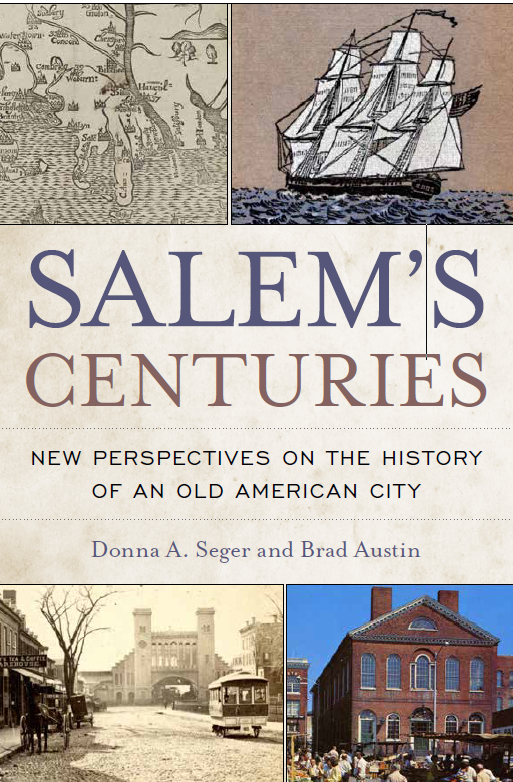
I’m still working on the fall version of my 2025 reading list even as the year draws to a close. I certainly won’t finish it by the end of the year, but I have a LONG break ahead of me as I have a sabbatical for the spring semester! Lots of great books coming out next year (including my own) so I better get going. Next week, I’ll post about Salem’s Centuries as its publication date is January 6 (hoping to change the vibe for that particular date). This is a really good working list of books that I have read, am currently reading (I tend to read books concurrently) and plan to read pretty soon, all of which were published in 2025. In fact the last book is due to be published tomorrow, so I don’t have it in my possession but I pre-ordered it. As usual, this is a nonfiction list; I just don’t read very much fiction so I can’t offer up any kind of a guide to those genres. I read history, history of science, art history, the history of food and drink, folklore, and books about various types of design and architecture. That’s pretty much it. Maybe a bit of politics and popular culture—and media, but the vast number of titles for fiction and self-help books appearing every year seldom catch my attention. So here goes, beginning with books in my period that I felt that I had to read but were nevertheless quite good.


I thought Borman’s book was going to be just a narrative of Elizabeth’s declining years, death, and the succession of James I and VI, and it was that, but it was more too—I learned lots of little things I did not know about these years. Borman is more than a television presenter, clearly: this is a very source-based history, with particular reliance on new revelations about William Camden’s Annales. Just further complexities relating to James for me! I think I have a book on him on many of my book lists here, and as 2025 was the 500th anniversay of his death I had to have one more: Clare Jackson’s Mirror of Great Britian is amazing, one of the best royal biographies I’ve ever read, and that is saying something as James was complex: earnestly Protestant but also a pursuer of pleasure, well-educated but also a true believer in demonic witchcraft, the only contemporary critic of tobacco, the first King of Great Britain. He’s a lot, and Jackson handles both the man and his era really well. Getting away from royalty and this specific era, two other British books which I am kind of reading together, gradually (they are both what I think of as “dipping” books in that you can pick up and dip into them wherever and whenever you like) are all about food and folklore—both just completely entertaining and informative at the same time.


I like to read books that are sweeping in terms of their topics, sweeping over the centuries: a change from most of the academic reading I do which is much more constrained in terms of both topic and time. The very popular genre that I call “commodity history” often includes sweeping titles, but as its title asserts, Jordan Smith’s The Invention of Rum is more narrowly focused on the invention of this “perfect” Atlantic spirit. Another “invention” book (though I really don’t think “design” was invented in the twentieth century but that’s why I want to read The Invention of Design) covers only the twentieth century. A really fascinating book blending history, magic and medicine (one of my favorite combinations), Decoding the Hand covers more ground.


I have my natural, constant interests, but if I’m looking for something new to read the first place I go is to the website Five Books, at which experts recommend five books in their areas of expertise and lots of lists to inspire a wider range of reading. I love this site! One great book that I never would have found on my own came from here: Sara Lodge’s Mysterious Case of the Victorian Female Detective, which was on the shortlist for this year’s Wolfson History Prize, awarded annual for both well-researched and accessible (enjoyable!) history writing. This book was definitely both, and a case study in utilizing historical and literary sources.

Finally, three books of a more timely/political nature. The medievalist Patrick Boucheron has written a great book about Political Fictions over time, I am searching for some explanations for/relief from the NOISE that assaults Salem all year long so I purchased Chris Berdick’s well-reviewed Clamor (though I’m sure he will take on all the sirens and jackhammers but not the tour guides), and I think we should always remember January 6 (for more than the publication of Salem’s Centuries) so I’m going to read Nora Neus’s oral history on that day.





December 29th, 2025 at 7:03 pm
Thank you for planning to read my book on Jan 6! It sounds like a perfect way to observe the day and remember the horrors of what happened five years ago.
December 29th, 2025 at 11:51 pm
I agree: thank you for producing it!
December 29th, 2025 at 8:48 pm
Congrats on your upcoming publication!
December 29th, 2025 at 11:51 pm
Thanks! A long way to get here!
December 31st, 2025 at 1:43 pm
Ive got a few books on the spy game in the days of Elizabeth and of Charles II on my list, the latter because I’m doing a course that will spend some time on Thomas Blood. My father claimed we were related to the good (bad) captain, but I tend to doubt it.