Tag Archives: Women’s History

The First Crusader

One of the key themes emerging from my #SalemSuffrageSaturday posts is the activism and organization of women: there is a paper trail of organized advocacy for abolition, suffrage, temperance, and all sorts of reform and relief. The beginning of that trail might have begun in the 1820s with protests against the Federal government’s policy towards Native Americans: I don’t see a movement but I do see one fierce crusader in Salem. Elizabeth Elkins Sanders (1762-1851) is yet another woman about whom we never hear anything in Salem: she was born into privilege, lived a privileged life, but was aware of said privilege in an age when most of her contemporaries were not, and consequently became a fierce advocate for Native Americans and an equally fierce critic of American cultural imperialism from the 1820s on—expressing views that become much more current a century later. She was not just an armchair observer; she published Conversations, Principally on the Aborigines of North America (1828), the First Settlers of New England (1829), and the Tract on Missions (1844) as well as several literary essays and reviews. The intense presidential campaign of 1828, pitting notorious Indian fighter Andrew Jackson against Massachusetts’ native son John Quincy Adams, inspired her to pick up a pen in her sixties: the Tract on Missions was published when she was 82!

Women Sanders 2 (2)

Sanders Circular (3)

Sanders contextConversations, Principally on the Aborigines of North America, published by Elizabeth Elkins Sanders during the presidential campaign of 1828; Catherine Beecher’s Circular Addressed to Benevolent Ladies of the United States (from the Phillips Library, incorrectly attributed to Sanders), a call to action against the pending Indian Removal Act, 1829. Alisse Portnoy’s Their Right to Speak connects the anti-removal movement with the emerging abolitionist movement in the antebellum era.

Elizabeth Sanders (or Saunders) was a Salem representative of a larger movement against Indian removal which included the first national women’s petition campaign, organized by Connecticut educators Catherine Beecher (elder sister of Harriet) and Lydia Sigourney: in response to the Circular addressed to Benevolent Ladies of the United States nearly 1500 petitions were sent to Washington in 1830. I’m assuming Elizabeth sent hers, and wondering what other causes and organizations were the focus of her “expansive benevolence and strong mature intellect”.

Sanders Feb 22 1851

20200717_180254Salem Observer, February 22, 1851; 39 Chestnut Street, the home of Captain Thomas and Elizabeth E. Sanders.


The Coal Queen of Salem

There is no question that the women I’ve come to admire the most as I’ve been compiling my #SalemSuffrageSaturday stories are the entrepreneurs: the artists and writers and activists are both interesting and impressive of course, but women entrepreneurs leave less of a mark, and were much more daring in their day. It was fine for women in the eighteenth and nineteenth centuries to “dabble” in painting and writing, but business was another thing altogether: no dabbling there. And no one is interested in them, so their stories remain untold. We have to hear about (very worthy, but still!) House of the Seven Gables founder and philanthropist Caroline Emmerton Caroline Emmerton Caroline Emmerton Caroline Emmerton Caroline Emmerton Caroline Emmerton Caroline Emmerton Caroline Emmerton Caroline Emmerton Caroline Emmerton Caroline Emmerton again and again and again and again and again, but I’m telling you now: her contemporary Charlotte Fairfield was far more interesting.

So who was Charlotte Fairfield (1864-1924)? Well, I have labeled her “Salem’s Coal Queen” and the Boston papers refer to her as both a “Model Business Woman” and “Salem’s Smartest Business Woman”, among other glowing terms. She was the daughter of James Fairfield of Salem, a dealer in coal and other commodities, but she did not simply inherit the family business: she pursued her own bookkeeping career in Boston, principally with the dry goods firm Babcock & Sargent, until the combined forces of her own illness and her brother’s death compelled her to come back to Salem and work with her father. In 1903, when she was denied a vote in the Salem Coal Club, she and her father decided to go “independent” and undercut their competition, lowering the price of coal in Salem and exposing what was essentially a cartel in the process to great acclaim and notoriety: the newspapers simply could not write enough about Miss Fairfield in the winter of 1903: she became the “Fighting Coal Dealer”.

Coal Feb 15 BSG

Coal Collage 2

“Lottie” Fairfield transcended her gender with that particular headline in the Boston Sunday Globe, but the story beneath it, and most stories about her in 1903 and later, are overwhelmingly focused on it: Thoroughly independent, with a mind, a will, and a brain all her own and a masculine adaptability for business, Miss Fairchild is decidedly feminine, not at all what you would call a strong-minded ‘new’ woman, but an up-to-date, stylish, well-gowned, attractive, bright, lovable little body, who, with the proverbial inconsistency of her sex, with coal by the wagonloads on her wharves, has burned coke for a couple of years in her furnace reads the February 15 illustrated story in the Globe. Wow! That is quite a characterization. The Boston Post caricatured her “arrogant” competitors in the Salem Coal Club, most prominently Major George W. Pickering, while headlining her as a heroine.

Untitled (89)

Coal Boston Post 13 Feb 1903 2PMBoston Post 13 February 1903

And so she was: because the result of Miss Fairfield’s war with the Salem Coal Club was the lowering of the price of coal from $12.00 to $9 a ton in Salem: imagine the impact that had in an era when coal was a major household expense! Charlotte Fairfield appears in the Boston papers again and again over the next twenty years, always portrayed as plucky, business-savvy, and well-dressed. After years of pleading with the city of Salem to dredge the Harbor so that coal-laden ships could reach her docks, she took matters into her own hands and then submitted the dredging bill to the City, which refused to reimburse her. One of her docks was damaged because of the inaccessibility of the Harbor. She filed suit against the City for both reimbursement and damages, and eventually won both, though the legal process stretched out for years, earning her more headlines in the local papers. She was a fierce advocate for Salem Harbor, and not just for commercial reasons: at this time the City was dumping raw sewage into it and she and others protested regularly to state and federal authorities. She was very involved in the relief efforts following the Great Salem Fire in 1914 (which did not burn down her waterfront storehouse, as it was built of “modern” materials) and she gave a job to every Salem soldier returning home from World War I.

Coal 1910 Beverly Directory (2)

Coal Harbor

I became so enamored of Charlotte Fairfield that I actually gasped when I found accounts of her death in the papers: a tragic end to a very full and active life, from injuries sustained when her clothing caught fire while she was standing too close to a gas heater in her home at 13 Pleasant Street (there is actually quite a list of Salem women who died when their clothes caught on fire!!!) She was able to call for help, and was in stable condition for the first few days in Salem Hospital, but she died on January 30, 1924, leaving only a niece, and a substantial estate, of course.

Coal-28-Jan-1924


Suffrage Stories

I apologize for my disappearance without a heads-up: the combination of computer problems and travel rendered me postless for a week! I am back with the first of what will be a series of reading lists for the summer, but first some big news: I’ve just received a book contract for the project I’ve been working intermittently but steadily on for the last couple of years, so expect The Practical Renaissance: Information Culture in Early Modern England out next year (or early in 2022) from Bloomsbury! This means that posts on early modern medicine, agriculture, mechanics, and navigation are going to turn up here occasionally, but the blog will also serve as a break from my more-scholarly endeavors: Salem history is still a rich minefield and I will still have a life! As these past few weeks have shown, history in general is as problematic, and public, and current as ever, and here I can indulge, and engage, and weigh in. And in matters more material, I still have my kitchen renovation to show you! (we are in a particularly messy and noisy stage right now).

Though the suffrage centennial has been drowned out by the pandemic and protests of this eventful year, it remains a focus for me. I’m sorry that this notable anniversary is getting lost— along with the bicentennial of my home state of Maine and the 400th anniversary of the passage of the Mayflower. As I am neither an American or modern historian, I really had to read up on the long struggle for suffrage–both in America and Europe–to get the context and perspective I wanted for my #SalemSuffrageSaturdays. The literature on the American and British suffrage movements has grown exponentially over the last few years, and I couldn’t read everything, so in typical academic fashion I started with some key primary sources, read a lot of reviews, narrowed down what I thought might be the essentials, and spread out from there. I was looking for a trans-Atlantic approach, which I didn’t really find, and also more personal stories—and the quest for the latter took me into fictional territory, so I do indeed have a few novels on my top ten (actually eleven) list. I wouldn’t consider these texts sources, of course (although they were certainly well-researched) but they fleshed things out for me. And I have some real suffragist stories too.

Books My Own Story (2)

suffragette-books (4)

Books Suffrage Kitty Marion

Books Broom

Books Collage

Books Picturing (2)

Books Lucy Stone Collage

Books Gilman (6)

Fictional Suffrage Collage (2)

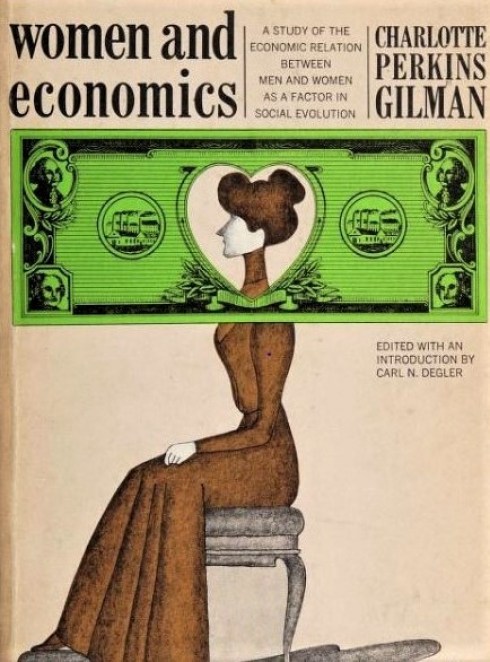
How I learned about the Suffrage movements in the UK and US: 1) Emmeline Pankhurst’s My Own Story (1914), because you’ve got to start with the founders; 2) Diane Atkinson’s Rise Up, Women is my favorite British survey—focusing on personal stories (and from Bloomsbury!) 3) here is our trans-Atlantic activist, Kitty Marion, whose extraordinary life is explored in Fern Riddell’s Death in Ten Minutes; 4) images are so important to this movement—on both sides of the Atlantic—and I’m obsessed with the work of British photographer Christina Broom; 5) and 6) I didn’t really find the writings of the founders of the US movement very accessible or enjoyable, so I went for more recent interpretations: Lisa Tetrault’s Myth of Seneca Falls and Faye Dudden’s Fighting Chance were particularly helpful in explaining some of the divisions in the movement; 7) Allison K. Lange’s brand-new Picturing Political Power explores the very important visual projections of Suffragists in the US; 8) in Massachusetts, it’s all about Lucy Stone, who must have visited Salem 100 times: she is the subject of several works, but I found Sally McMillen’s Lucy Stone: an Unapologetic Life the most helpful; 9) Charlotte Perkins Gilman’s Women and Economics (1898) provides classic context, and 10) and 11) two works of fiction in which Suffragettes and the Suffrage Movement play key roles: Tracy Chevalier’s Falling Angels and Lucy Ribchester’s The Hourglass Factory.

I couldn’t limit my list to 10 and I had to throw in some fiction: happy reading, everyone, and Happy Fourth!


An Inventory of Salem Women Artists

Today’s #SalemSuffrageSaturday post is really more of a list than a composition, and a working list at that: I want to take a stab at identifying as many female Salem artists as I can, although I know it’s an impossible task. It’s impossible because there were so many, and I’m pretty certain I haven’t tracked them all down, but it’s also a difficult task because of the historical impact of gender. In the seventeenth, eighteenth, and nineteenth centuries, women were taught artistic and creative skills as part of their informal and formal education: some excelled and were clearly artists, even though they—or anyone else—did not identify themselves as such. I think this especially applies to women who worked in the textile arts but to other women as well. In the nineteenth century we see the emergence of (a few) women who can make their living through their artistic talent and skill; this is rarely possible before.

Artists Fidelia Bridges by Oliver Ingraham Lay 1872 SmithsonianFidelia Bridges (1834-1923) by Oliver Ingraham Lay, 1872, Smithsonian: Bridges is probably the first and most successful Salem woman artist, though she traveled widely and lived in Connecticut for most of her professional life.

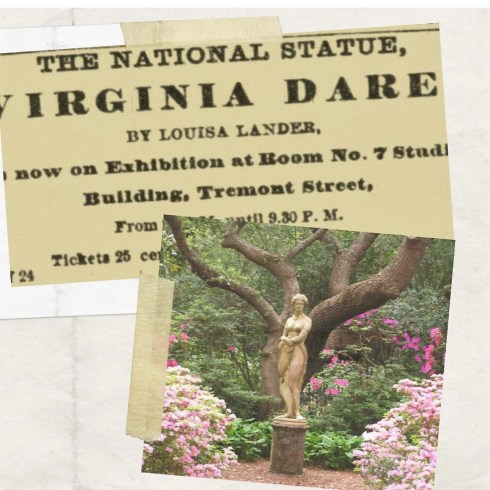
Daughters of old Salem families, Fidelia Bridges, who worked in several mediums and as both an artist and an illustrator, the Williams sisters, Abigail and Mary, who were both artists as well as art dealers, and sculptress Louise Lander, all found themselves in Rome in the mid-19th century for varying periods of time, drawing inspiration and establishing connections. The Misses Williams returned to the family home on Lafayette Street where they created a studio and loaned their works out to several prominent institutions, including the Essex Institute, which featured its very first art exhibition in 1875 featuring many Williams works. Louise Lander (1826-1923) also returned, reluctantly and eventually, to Salem and the family home at 5 Summer Street when she was shunned by the Anglo-American (and quite Salem-dominant) circle in Rome upon charges of some sort of scandalous behavior which she never deigned to answer. She exhibited her “national statue” of Virginia Dare, the first English child to be born in the New World, to raise money for war relief and moved to Washington, D.C. upon the death of her last Salem sister in 1893.

artist williams 4 (2)

Artists Williams Sisters Bulletin of Essex Institue 1875 (2)

Artist Virginia DareMary E. Williams, illustrations from The Hours of Raphael in Outline – Together with the Ceiling of the Hall Where They Were Originally Painted (Little, Brown, 1891); Just some of Mary and Abigail Williams’ works shown in the 1875 Essex Institute Exhibition; Virginia Dare in the Elizabethan Gardens & notice in the Boston Post, January 24, 1865.

To these nineteenth-century artists who seem to be awarded “professional” status I would add Mary Jane Derby (Peabody, 1807-1892) and Mary Mason Brooks (1860-1915) from the generation before and after the “Roman” circle. I’ve written about Derby many times before (see here and here) because I am the fortunate recipient of a journal she composed for her grandchildren, and Brooks more briefly here. Before her marriage, Mary Jane (a cousin of Louisa Lander) was definitely pursuing an artistic career, and she created several lithographs for the Boston firm Pendleton’s Lithography in the 1820s, including a view of her childhood home on Washington Street. Brooks, who worked exclusively in watercolors I believe, was one of the Salem artists who worked out of the famous “studio” at 2 Chestnut Street briefly, and her works were exhibited in Boston and New York. Among Mary Jane’s generation (almost) were two lesser-known artists, Sarah Lockhart Allen (1793-1877), who produced portraits in miniature and pastel, and Hannah Crowninshield( 1789-1834), both of whom were recognized as working artists by their contemporaries. Sophia Peabody Hawthorne (1809-71) is representative of the score of score of female artists who exhibited and sold their works at charitable fairs and bazaars in mid nineteenth-century Salem: always as “misses”.

brm2033-derby-nahant-ca-1827-749x1024 (2)

Artists Mary Mason Brooks

Artists reportsoffirstex01sale_0027 (2)

View of the Nahant House by “MJD” (Mary Jane Derby), Boston Rare Maps; Mary Mason Brooks, The Lumber Schooner, Grogan & Company Auctions. Just a few of the “Fine Arts” exhibitors from Reports of the First Exhibition of the Salem Charitable Mechanic Association : at the Mechanic Hall, in the city of Salem, September, 1849

And then there were all those Salem needlewomen! In her definitive work Girlhood Embroidery: American Samplers and Pictorial Needlework, 1650-1850 (1993), collector and scholar Betty Ring devotes an entire chapter to Salem, focusing on the influential school of Sarah Fiske Stivours (1742-1819) and showcasing the work of Antiss Crowninshield (1726-1768), Love Rawlins Pickman (Frye, 1732-1809), Susannah Saunders (Hopkins, 1754-1838), Betsey Gill (Brooks, 1770-1814), and Mary Richardson (Townsend, 1772-1824) among others. This was a very important Salem art form that was revived in the late nineteenth and early twentieth century by Jenny Brooks, Mary Saltonstall Parker (1856-1920) and other entrepreneurial artists.

Artists_Girlhood_Embroidery__2_-removebg-preview

artists Saunders Sotheby's (2)

Screenshot_20200618-064954_Chrome

Brooks Collage

mary-saltonstall-parker-house-beautiful-1916 (1)Betty Ring’s two-volume Girlhood Embroidery; Salem samplers by Susannah Saunders (Sothebys) and Elizabeth Crowinshield (Doyles); Jenny Brooks Co. advertisements from 1913, and Mary Saltonstall Parker’s cover embroidery for House Beautiful, October 1916.

So that brings me to the most entrepreneurial of Salem women artists, or maybe all Salem artists: Sarah Symonds, an artist-craftswoman descended from a long line of Salem craftsmen. I’ve written about Symonds (1870-1965) very recently, so I’m not going to go and on here, but she operated a very successful business selling her cast plaques of historic Salem symbols and structures in the first half of the twentieth century. Following her death in 1965 the Essex Institute, which operated as Salem’s historical society until its amalgamation into the Peabody Essex Museum in 1992, started collecting her works, as they “have enriched our local picture of the past”.

20200121_133721Sarah Symonds in her studio, Phillips MSS 0.202, Papers of Sarah Symonds, 1912-21.

How the past informs the present, and how the present acknowledges, interprets, and builds upon the past are central preoccupations of mine, and artistic perspectives on these processes can be just as illuminating as texts. I’d like to conclude this (again, working) list of women artists from Salem with a contemporary artist whose work is a great example of this illumination: book artist Julie Shaw Lutts. Julie’s a great friend of mine and I’ve featured her work before here, but she has just completed a very timely project which I love, so I wanted to showcase her talents again. The Vote is a mixed media artist’s book which commemorates the achievement of women’s suffrage in ways that are both personal and memorial, material and textual, and touching: all the best ways.

the-vote-9-julieshawlutts (2)

the-vote-8-julieshawlutts

JS Lutts 2©Julie Shaw Lutts, The Vote.


Women on a Pedestal

Obviously statues have been in the news of late, so I thought I would tap into the national (and international) focus by looking at some of our country’s more notable monuments to women, either striving for the franchise or striving in general, for this week’s #salemsuffragesaturday post. It doesn’t matter what your political inclination is, everyone seems to agree that there are not enough statues of women anywhere and everywhere, and corrective measures are being taken, along with initiatives associated with this Suffrage Centennial year. The husband and wife team who constitute Statues for Equality have established that statues of women represent less than 10% of public monuments in several American cities, and far less in most. In Salem we have only one statue to a woman: Samantha Stevens from Bewitched, situated in our city’s most historic square. She never accomplished anything (because she never actually existed) and her prominent situation and whimsical depiction mocks the real victims of the 1692 trials who were falsely branded “witches”, but nonetheless she is deemed worthy of monumental representation in Witch City. There are so many more women (real women) that deserve to be put a pedestal in Salem—that’s what this year has been all about for me.

pixlrSamantha is currently wearing an ensemble by local artist Jacob Belair, which I think is lovely on its own but also because it covers part of her up! I wish it extended to her unfortunate pedestal. I’m not in Salem now, so I asked my stepson ©Allen Seger to take the photos of Samantha in crochet.

Let’s turn to some more serious representations. Ever since it’s installation 15 years or so ago, the Boston Women’s Memorial has been one of my favorite monuments: not only is it aesthetically pleasing and immediately engaging, but it represents a spectrum of women who shaped Boston’s history (as well as that of Massachusetts and the nation): Abigail Adams, Phillis Wheatley, and Lucy Stone. These women are not just on pedestals (actually they have come off their pedestals) but depicted by sculptor Meredith Bergmann in the process of thought and activity, with their words accompanying them. Monumental women are in large part, active women, the feminine counterpart of all those masculine equestrian statues.

Screenshot_20200612-082211_Chrome

Screenshot_20200612-082224_Chrome

Screenshot_20200612-082234_ChromeThe Boston Women’s Memorial by Meredith Bergmann; photographs from her website.

Meredith Bergmann was also commissioned to create the most anticipated installation of this Suffrage Centennial Year: the Women’s Rights Pioneers Statue in Central Park in New York City, which will be unveiled on August 26, the date on which the ratification of the 19th Amendment was certified in 1920. This will be the park’s first statue honoring real women, and it also focuses on their activity: Sojourner Truth, Susan B. Anthony, and Elizabeth Cady Stanton are gathered around a table, intently focused on drafting a document. The statue had a controversial conception in that Truth was originally excluded, but public discussion and debate resulted in a more inclusive—and representative—monument.

Screenshot_20200612-082723_Chrome

Screenshot_20200612-082623_ChromeModel and Mock-up of the first and final monument to the Women’s Rights Pioneers by Sculptor Meredith Bergmann, to be unveiled in Central Park on August 26, 2020.

As the state which ultimately ratified the 19th Amendment in August of 1920, Tennessee takes its suffragist history very seriously and has produced two notable monuments to the women who worked so hard to make it happen (because it’s really not all about a wavering state senator is it?) There is the Tennessee Woman’s Suffrage Memorial (2006) in Knoxville, depicting Lizzie Crozier French, Anne Dallas Dudley, and Elizabeth Avery Meriwether, and the Tennessee Woman Suffrage Monument (2016) in Nashville’s Centennial Park, featuring Dudley along with Abby Crawford Milton, J. Frankie Pierce, Sue Shelton White and Carrie Chapman Catt. Even more recently, the Commonwealth of Virginia—always the site of so much statue furor—dramatically increased its commemorative depictions of accomplished women with its Virginia Women’s Monument: Voices from the Garden initiative, honoring the “full scope” of women’s achievements with twelve representative statues.

Screenshot_20200612-075354_Chrome

Screenshot_20200613-080549_Chrome

Screenshot_20200612-072439_Chrome

Screenshot_20200612-072336_ChromeThe Knoxville and Nashville Suffrage statues—both by Tennessee sculptor Alan LeQuire—and the unveiling of seven statues of prominent Virginia women last fall: former Virginia First Lady Susan Allen points to a statue of Elizabeth Keckley, dressmaker for Mary Todd Lincoln, and suffragist Adele Clark among the crowds (Bob Brown/ Richmond Times-Dispatch).

I like the fact that so many of these monuments are collective, featuring women engaged with each other. Sometimes they are working, sometimes they are simply “conversing”—or meeting for the first time like one of the most famous Suffragist monuments, the “When (Susan B.) Anthony met (Elizabeth Cady) Stanton” statue in Seneca Falls, New York, portraying the moment when these two icons were introduced by Amelia Jenks Bloomer in 1851. My very favorite “conversation piece” is the lovely statue of two prominent Rochester, New York suffragists, Anthony and Frederick Douglass, having a cup of tea: I would love to have been a fly on the wall (or the bench) for that conversation!

Screenshot_20200613-075828_Google

Screenshot_20200613-080112_ChromeThe Anthony-Stanton-Bloomer statue (1998) by Ted Aub in Seneca Falls; Ira Srole’s “Let’s Have Tea” (2009) in Rochester.

The most official Suffrage statue of all, Adelaide Johnson’s “Portrait” monument to Anthony, Stanton, and Lucretia Mott completed (and dedicated) in 1921, is also a collective representation but the women don’t seem particularly engaged with each other: it’s not my favorite statue but that doesn’t mean I think it should have been hidden away for most of the twentieth century! The “unfinished” appearance of the work also engulfs the women in their “pedestal” rather than placing them on it, but rumor has it that Johnson was making room for at least one more prominent woman—perhaps the first female president—to be carved out of that raw marble in the back at some point in time. Clearly not 2020.

Capitol StatueOffice of the Architect of the Capitol.


Feeding Suffrage

Sorry I’m a bit late today with my #SalemSuffrageSaturday post: I’ve migrated up to Maine for several weeks and the wifi situation is a bit challenging! But I think I have it together now. I’m going to move into some national suffrage history for a few weeks and then go back to the parochial, because the long-term suffrage movement was successful ultimately because it operated at several levels: the national and the local, the exterior and the interior. I have been continually impressed, as I studied this movement this year, at how adept the marketing was, with every concern taken into consideration: messaging, branding. graphics, audience. Lately I’ve been reading some wonderful suffrage cookbooks, which in many ways were the perfect venue for the Suffrage message: not too radical, traditional really, but also containing themes of practicality, self-sufficiency, and above all, femininity. The first Suffragist cookbook, the Woman Suffrage Cookery Books, was edited and published by Mrs. Hattie Burr of Boston in 1886 with exactly that message in its forward:  Alarmists of both sexes will shrink back abashed before this cook-book, for at least two recipes, which she has tested with success, will be given over the signature of each fair suffragist who contributes to its pages. It will be a confession book, a proof that, even if they wish to vote, the suffragists cherish a feminine interest in culinary matters.

Suffrage 1886 2 (2)

Suffrage-Cookbook-1890-2nd-ed-2

First and Second Editions of Mrs. Hattie Burr’s Woman Suffrage Cookbook, 1886 & 1890: you can read the text here.

Indeed there was nothing at all alarming about this cookbook: no radical recipes! In addition to recipes for everything from soup to nuts, there are sections on the care and feeding of invalids and helpful household hints, followed by “Eminent Opinions on Woman Suffrage” (starting with Plato!) only at the very end: an appendix. I think the relative banality of this book must have helped the cause considerably, and it certainly inspired regional editions as well as the first British Suffrage cookbook in 1912. I also think it inspired valuable support, in the form of advertising, from commercial food producers, such as Fleishmann’s Yeast (referenced in several of the recipes) and Kellogg’s Cereals. All in all, it seems like the cookbook was a very nourishing genre for the Suffrage movement.

Screenshot_20200605-093743_Chrome

Suffrage Pittsburg 1915

Suffrage British Cookbook 1912 (2)

Suffrage Ad Collage

suffrage all-stirred-up-9781643134529_lg

Suffrage cookbooks from Washington State (1908), western Pennsylvania (1915) and the UK (1912), from the Ann Lewis Women’s Suffrage Collection. Fleischmann’s Yeast and Kellogg’s advertisements from the 1890s and 1914. I bet that Laura Kumin’s All Stirred Up, which will be published in August, will have lots more details about the publication and impact of these cookbooks. 


The Unveiling of Salem Women

A big transition here from New Deal Salem to Governor Endicott’s Salem but I am joyfully skittering back to the early modern era for #SalemSuffrageSaturday after spending too much time in the twentieth century for the #Salemtogether project of the last month or so! It’s dificult to uncover seventeenth-century women—both in Europe and in the New World: you generally need a flashpoint. Obviously the Salem Witch Trials was a HUGE flashpoint which created a window through which we can see several women closer up at the close of the seventeenth century, but earlier on, there’s not a lot to go on. So a debate about the veiling of women in the 1630s is an opportunity to examine perceptions of women—in a very general sense. Likely at the instigation (or at the very least the encouragement) of Governor John Endicott, often characterized as a “hot-headed” Puritan and certainly a strident separatist, the Reverend Samuel Skelton, the first minister of Salem’s First Church, ordered women to wear veils to church in 1630, “under penalty of non-communion, urging the same as a matter of duty and absolute necessity”. Under the remainder of Skelton’s tenure, and through the short term of his successor Roger Williams, this was the policy, and it was a controversial one, drawing the very public disagreement of the prominent Reverend John Cotton of Boston, who saw veils as more ceremonial than scriptural and demeaning to women in a more representative Reformed perspective.

pixlrThe MEN: pro-veil John Endicott and anti-veil John Cotton.

I have to back up a bit chronologically and go back to England to put this issue in its proper context: Endicott’s point of view is confusing to me as it is actually CONTRARY to that of the Puritans back home, who identified veils with the traditional “churching” ceremony in which new mothers were “purified” through a ritualistic return to the Church. There was no scriptural reference to this ceremony, so Puritans rejected it. But on the other hand, there WAS a very key scriptural justification for women wearing veils in church, from the Apostle himself, St. Paul: “For a man ought not to cover his head, since he is the image and glory of God; but woman is the glory of man. For man was not made from woman, but woman from man. Neither was man created for woman, but woman for man. That is why a woman ought to wear a veil on her head, for the sake of the angels” (1 Cor. 11:710). So this was a paradox, between tradition, custom, and the Bible—which of course can be interpreted in alternative ways—leading to debate along the spectrum of English Protestantism from the Elizabethan era to the onset of the English Civil War. In the earlier period, Puritan Thomas Cartwright alleged that the customary wearing of a veil was a Judeo-Catholic invention which should be abolished, while Archbishop of Canterbury John Whitgift responded that this was a trifling matter, which women could decide for themselves: “let the women themselves answer these matters”. He asserted further that the wearing of veils was a civil matter, a custom, rather than a ceremony of the Church. Whitgift’s voice of moderation was echoed later by the Reverend Cotton, who not only engaged in a fierce public debate in Boston over the veiling of women, a debate that was so “enthusiastic” that John Winthrop had to “brake [it] off”, but also traveled to Salem to encourage the unveiling of its women in a sermon which was characterized as both enlightening and immediately effective by William Hubbard in his General History of New England (1680): Taking an occasion to spend a Lordsday at Salem, in his exercise in the forenoon, he by his doctrine so enlightened most of the women in the place, that it unveiled them, so as they appeared in the afternoon without their veils, being convinced that they need not put on veils on any such account as the use of that covering is mentioned in scripture…….[He] let in so much light into their understandings, that they who before thought it a shame to be seen in the public without a veil, were ashamed ever after to be covered with them”. Well, this was quite a moment, especially as Endicott seemed to be advocating for a policy in which women should wear veils “abroad”, meaning in public, rather than just in Church, and another reminder (there are so many!) that you can’t paint “Puritans” with a very broad brush, as is definitely the practice in Salem today.

Screenshot_20200515-205634_Chrome

Screenshot_20200515-210231_ChromeThe WOMEN: what were they wearing? Well, these are English women rather than Salem women but they are contemporary and this first portrait is one of my very FAVORITES: an anonymous painter and subject, it it titled “A Puritan Lady”, 1638, Berwick Museum & Art Gallery. I think it was back to the “steeple-crowned hat”, if they ever took them off! You tend to see veils for particular occasions and times of life: the second portrait is of Jane Trevor, Lady Myddleton as a WIDOW, so she is wearing a mourning veil. National Trust, Chirk Castle, c. 1670.


Molly Saunders

Though Salem is very much a foodie town today, I don’t think it has a historical culinary reputation, but there are four foodstuffs that do stand out in its long history: a daunting sour beer beverage called whistlebelly vengeancea “Salem” suet pudding, Gibralters, a hard candy invented and marketed by Mrs. Spencer–atop–her carriage, and Molly Saunders’ gingerbread, which came in two varieties: top-shelf and lower-shelf. The latter received acclaim even in mid-nineteenth-century Boston, which liked to lord over fading Salem at every opportunity. In her reminiscences of A Half Century in Salem, Mariane Silsbee gives us perhaps the best description of this storied item: Anybody who has never tasted “Molly Saunders’ gingerbread” has missed a pleasure. In a small shop on Central Street was a door, half wood, half glass, such as formerly were so universal, and the children could peep at the destined feast before lifting the latch, thereby tinkling a bell to give notice of a customer. The common name of this gingerbread was “upper shelf” and “lower shelf”. Upper shelf had butter in it, lower shelf had none; “upper shelf” was three cents a cake, “lower shelf” was two; and both were so delicious that whoever chose the one longed also for the other, but youthful funds were limited. It appeared and disappeared with the maker. Whether she was a Mrs. or a Miss is not now known; if she retired from business during life, or left it in dying, is a doubt not to be settled. The Bedneys were the next occupants of the shop; their election cake was good, but they were merely successors, not rivals, to the immortal Molly Saunders. There was a reappearance of Molly Saunders’ gingerbread in the twentieth century in the form of recipes in What Salem Dames Cooked (1910) and my favorite Hamilton Hall Cookbook (1947), but who knows which of these (variant) recipes are authentic—if either? (The Dames top shelf recipe doesn’t even have ginger in it, and contrary to what Mrs. Silsbee asserted, both varieties have butter as an ingredient). How were they passed down from the “immortal” though rather mysterious Molly Saunders?

Gingerbread collage

Gingerbread HH collage

Gingerbread 2 (3)Recipes & stories of Molly Saunders’ famous gingerbread were passed down in a variety of publications over the later nineteenth and early twentieth centuries…..

I am no culinary detective but I don’t really trust any of those twentieth-century recipes. Instead, I decided to refer to a publication closer to Molly Saunders’ own time: Mrs. Putnam’s Receipt Book, and Housekeeper’s Assistant, first published in Boston in 1849. This is such a great book: it has such an air of confidence about it and also of tradition: Mrs. Putnam and Mrs/Miss Saunders were coming from the same place and time and so I think their gingerbread recipes would be similar. New England cooks in the later eighteenth and early nineteenth centuries discerned between hard and soft sugar and molasses gingerbreads, and I think this might also be the distinction between Molly Saunders’ top- and lower-shelf varieties, but whether it’s the hard or the soft or the molasses or the sugar I do not know! In any case, here are Mrs. Putnam’s receipts, and it is perfectly clear that we are talking about cake gingerbread here, and not the snaps or cookies that were sold more on the fly, at musters and fairs. And in addition to all of these recipes, I’m also offering up a book recommendation in this post (or two, as I think I have recommended Mrs. Putnam as well): Helen Oyeyemi’s Gingerbread, which also references a mysterious gingerbread recipe and started me on my little quest.

Gingerbread Putnam Collage

Screenshot_20200507-144659_Google


Mrs. Gibney did not have to rise to the Occasion

In the first few months of 1918, the Boston-area newspapers all carried a story about a local Salem family, the Gibneys of Oak Street, who had received a letter from President Woodrow Wilson thanking them for the service of their four eldest sons. All the stories printed the President’s letter verbatim, and detailed the service of the young Gibney soldiers, but they also directed a spotlight on their mother, Mrs. John (Alice) Gibney, who clearly represented the perfect wartime mother: an expert war gardener, frugal cook, and Red Cross volunteer. There are lots of stories about women rising to the challenges (and opportunities) of the home front during World War One, but I think Alice Gibney’s service was quite simply her life (and vice-versa).

Gibney-1-Boston-Sunday-Post-2

Gibney-2-3Boston Sunday Post, February 3, 1918 & Boston Sunday Globe, April 7, 1918.

So let’s look at the life of Alice Marion O’Brien Gibney (1869-1945) in the Spring of 1918. She was a Lynn girl who married a Salem boy in 1890: they had fourteen children, three of whom died in infancy. The family home on Oak Street looks like it might have acquired some additions over the years, but even in its expanded state it’s a bit difficult to envision it containing a family of thirteen although obviously there was more room with the four oldest boys in the service. At around the same time that Alice and John Gibney received their letter from President Wilson, he was laid off from his job at a Lynn shoe factory, so he fell back on what seems to have been a secondary line of work, ferret-breeding (and later, extermination). So Alice not only had a houseful of children but also ferrets out back. Nothing phased her: she told the Boston Post reporter that “surely we haven’t the right to grumble over a little personal discomfort” when boys such as hers “have taken their lives in their hands for the sake of their country.” In addition to her work as one of the founding members of the Bowditch (School) Parent-Teacher Association, she established the Company H Woman’s Auxiliary, which “carefully looked after 150 boys….even if they are far away in France (with her son Alfred): for Christmas of 1917 she personally packed 150 Christmas parcels for these soldiers. Along with the ferrets, there were several gardens out back: a vegetable garden which enabled Mrs. Gibney to can 150 quarts of tomatoes and 32 quarts of beans and “put down” bushels of carrots, parsnips, and celery in her cellar, and a flower garden “which brought forth 10,000 blossoms” in 1917, which were sold in the market. She made jars of pear preserves and grape “catchup”, all the while also supervising the war gardens of her younger children, who took top prize in the Salem Chamber of Commerce garden contest several years in a row.

20200430_114240

Grape Catchup CollageThe standard war-time recipe for grape “catchup”, sometimes called catsup and later ketchup: it evolves into a relish over the twentieth century, but earlier in the century there were many different types of catchups: cranberry, mushroom, any fruit or vegetable really, and it was recommended that such sauces be served with roasts. I bet Mrs. Gibney had a more economical recipe for her grape catchup as 2 pounds of sugar would have been very dear in 1918.

Every day, in her free time, Alice Gibney went to the Red Cross headquarters in Salem to work on surgical dressings, baby layettes, or knitting projects, “wherever the need is greatest”. She also turned her practical experience at provisioning and feeding her large family to account in the service of Salem’s food conservation campaign. All four Gibney soldiers came home at the end of the Great War, several had families, and Mrs. Gibney lived to see her grandsons go off to war as well. She died at the close of World War II and is buried in Harmony Grove cemetery, not very far from her lifetime home.

Picture_20200430_182434877We just discovered that Hamilton Hall served as a Surgical Dressings center for the Salem Red Cross in the summer of 1918, so Mrs. Gibney might have worked there—my attempt at a ghost sign for the Hall!


Sarah’s Spectacles

In my mission to ferret out lesser-known Salem women for my #salemsuffragesaturday posts I seem to be focusing on quite a few unmarried women, but they are not your typical “maiden aunts” known only to their families: some public activity has to have been documented or they would leave no mark other than personal memories. Today I am featuring the older sister of a very famous Salem family, described by none other than the New York Times as “eminent for genius and enterprise”: Sarah West Lander (1819-72). Sarah’s siblings included Civil War General Frederick W. Lander and sculptress Louisa Lander; they were the great-grandchildren of Elias Hasket Derby and the grandchildren of Elizabeth Derby and Captain Nathaniel West, whose spectacular divorce rocked Salem in 1806. I wanted to write about Sarah mostly because I’m envious of the amazing houses in which she lived throughout her life, no doubt in the midst of all that famous Derby furniture: a charming and long-gone Barton Square house, the famous McIntire creation Oak Hill in nearby Peabody (also long gone, but with interiors preserved at the Museum of Fine Arts, Boston), and the brick townhouse that now houses the Salem Inn. But in her own time, I think she found considerable fame as the author of a series of juvenile travelogues titled Spectacles for Young Eyes: eight volumes were published in all during the 1860s, encompassing cities from Boston to New York to Berlin and St. Petersburg. It is through these spectacles that we come to see Sarah.

Lander Barton Square 1904 (2)

Lander Oak_Hill (2)

Oak Hill Parlor MFA

Lander Cousins (2)Five Barton Square, Sarah’s birthplace, in 1904 by Frank Cousins from his Colonial Architecture in Salem (1919); Oak Hill in the early twentieth century, Peabody Institute Library; Five Summer Street (left), Sarah’s home after 1850, in a 1890s photograph by Frank Cousins, Phillips Library, Peabody Essex Museum via Digital Commonwealth.

Sarah didn’t begin writing her children’s books until the onset of the Civil War: the first one, originally titled Spectacles for Little Eyes and focused on nearby Boston, was published in 1862, the same year that her brother died from injuries sustained in battle and the onset of pneumonia. His Washington funeral was attended by President Lincoln and members of the Cabinet; crowds lined the streets of both the capital and Salem after his body was returned home for burial in the Broad Street Cemetery on March 8. It is impossible to know how Sarah processed all this: it is tempting to offer up escapism through travel writing but certainly that’s taking too many liberties!

Lander Funeral FOUR

Lander Funeral March New York Times, March 9, 1862; C. Mathias, “General Lander’s Funeral March”, Library of Congress

Seven more books followed Spectacle for Little Eyes, all issued in multiple illustrated editions with the revised series title Spectacles for Young Eyes. Contemporary trade journals refer to Miss Lander’s success at selling 50,000 plus copies per title: while the rest of the country was occupied with war and reconstruction, she was clearly focused on her writing, publishing poetry and translations from French and German as well as the Spectacles books. Obviously Sarah knew Boston, but I can’t find any evidence that she visited any of the other cities she wrote about, using the experiences of the wandering Hamilton family as her “spectacles”. Her younger sister Louisa was well-traveled, but Sarah was an armchair traveler, settled in a Salem which she describes as very pleasant, quiet, staid, [and] neat-looking—as if it were Sunday all the time. The spirit of the Puritans seems hanging over it still [very Hawthornesque!]. Hers was a quiet Salem, not a busy (though declining) port, a burgeoning industrial center or a cauldron of reformist activism.

Lander Collage

Spectacle2 (2)

Lander zurich 2 (2)

Lander Spectacles 3 (3) Spectacles: Boston, St. Petersburg, Zurich, “Pekin”.

Indeed, in her 1872 obituary, the Salem Gazette is pretty much in the same position to view Miss Lander as I am: it belongs to those who were favored with her intimate acquaintance, to speak of the attractions and virtues of her private character. But we may be permitted to refer to those productions through which she has become known to the public, i.e. the Spectacles, much praised for their great research, their moral tone, beauty of style, and great fidelity of description.