Tag Archives: travel

Summerlands

I am just back from a very festive wedding in Mexico, blitzed and therefore completely incapable of presenting a proper post. But I have been saving up some images by Jazz Age commercial artist John Held, Jr. (1889-1958) for a while, and today seems like the perfect time to put them out there. Held’s popular flapper images, appearing as magazine cover and content illustrations throughout the 1920s, are a perfect representation of their age, but it was his pictorial maps which first caught my eye. I also like the posters he created for the New York, New Haven & Hartford Railroad, enticing travelers to locations all around New England and beyond, northward, the same direction my travels will take me this summer. No more south, except for Rhode Island and maybe Connecticut! Held used the term “Vacationland” several times in his New Haven posters, but I never liked that term while growing up in Maine so I streamlined his alternative “Summer Play Land” for a more timeless title.

Travel Posters by John Held Jr. from Artsy and Swann Auction Galleries Archives.

Held was a wonderful illustrator but his work cannot be confined to that genre; even though he published over 100 cartoons in the New Yorker in the 1920s and 1930s he can’t be identified exclusively as a cartoonist either. He worked in many mediums: watercolor, ink drawings, engraving, woodblock prints, even sculpture. On several of his fanciful maps, he refers to himself as a cartographer, and he wrote as well as illustrated. In his commercial heyday in the 1920s he was reportedly the highest-paid graphic artist in America but his commissions declined and fortunes failed with the Depression. So he seems to define (some critics even say document) an era even as a moved on to less popular (flapper-less) artistic expressions. Many of his engravings and prints have an intentional primitivism that makes them almost timeless in my view, among them several Salem ships.

Cape Cod poster, 1931, David Pollack Vintage Posters; Ships by John Held, Syracuse University Museum; Ship Bonetta of Salem Departing from Leghorn, William Bunch Auctions & Apraisals.


Weekend in Wiscasset

Just back from a long weekend in Wiscasset, Maine with family, lots of eating and drinking, house-hunting, and pumpkins. My stepson is working at an oyster farm in the region so we’re going to midcoast Maine pretty regularly, and this Columbus/Indigenous Peoples Day weekend was of course a good opportunity to escape Witch City. We stayed in a lovely house in Wiscasset, one of Maine’s prettiest towns, and made regular trips up Route One to Damariascotta, which was holding its annual Pumpkinfest, complete with Pumpkin Queen, Pumpkin Drop, Pumpkin Derby, Pumpkin Regatta, and a main street embellished with large embellished and carved Pumpkins.

Wiscasset houses & shopping & Damariascotta pumpkins.

I worked at Historic New England’s Phillips House in Salem on Saturday and visited Historic New England’s Nickels-Sortwell House in Wiscasset on Sunday. It certainly has been an HNE summer for me! We spent so much time with the pumpkin festivities in Damariascotta that I turned up at Nickels-Sortwell at 3:00 pm: the last tour of the day on the last day of their season! Bad form on my part, and I apologized profusely, but of course my guide was  completely gracious and welcoming and eager to show off the house. Historic New England has two houses in Wiscasset: the very dramatic Castle Tucker and the very……..strident Nickels-Sortwell, and I had never been to the latter so I was thrilled to be able to squeeze it in this weekend. I always look at history and houses through a comparative Salem prism, and this was not difficult to do regarding the Phillips and Nickels-Sortwell Houses: both are Federal constructions which evolved into a Victorianized rooming house/hotel and then were restored with Colonial Revival inspiration by wealthy Yankee families.

I learned a lot about the house and the families who lived in it on my tour, but after we said our goodbyes I was still puzzled by the assertion of my guide that in the year of the house’s construction, 1807, “Wiscasset was the busiest port north of Boston.” Of course I couldn’t stop myself from contesting that statement: I think Salem was? Certainly Portsmouth and Portland were busier? She responded that she wasn’t sure but that was a pretty standard Wiscasset claim. And she’s right: I looked at all the the Wiscasset tourist and historical information on the web and there it was, again and again: Wiscasset was the busiest port north of Boston, Wiscasset was the busiest port east of Boston in 1807, the year of the Jefferson Embargo Act. This is clearly not true in terms of tonnage or voyages, but I’m wondering if “busiest” means something else? Shipbuilding and other maritime industries AND customs revenues? HELP early American maritime historians!


Special Little Places: Closes, Corridors and Courts

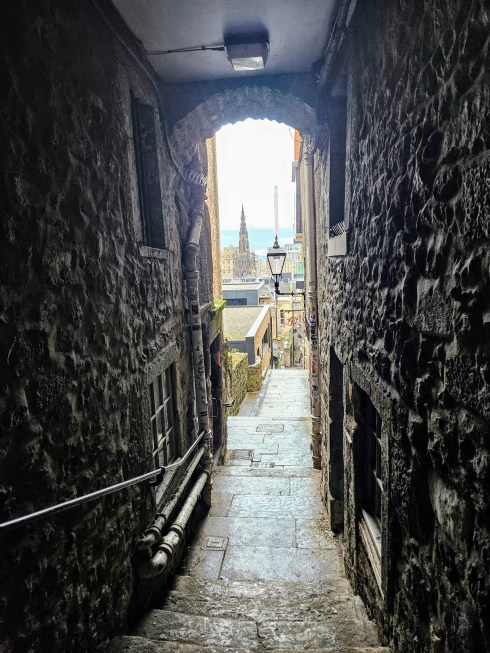
Still basking in my Edinburgh afterglow as we finish the last week of classes of the Fall 2023 semester: at home, as a deficient boiler has rendered Salem State’s North Campus an uninhabitable place. Shades of 2020-2021 for sure! I’m actually teaching two online classes by choice next semester, but I was not expecting to be back on Zoom so soon. I had a bit of time to think about some themes I wanted to emphasize about my Scotland trip, and one is “special little places”: I find that in most (not all) European cities that I have visited there are urban spaces which preserve a bit of the past, off the beaten path. Little courtyards and lanes and ways. Off the Royal Mile in Edinburgh there are so many “closes”! It’s quite extraordinary really–some access other ways, some are closed-off, all seem to transport you off a busy street into somwhere else. Here are just a few: Riddell’ss Close AND Court, Advocate’s Close, Tweeddale Court and Bakehouse Close: the latter two arre Outlander locations, and I encountered an Outlander tour just after I took these pictures!

There are some special places in Edinburgh’s 18th century “New Town” as well, but not as many: it was laid out for breadth, perspective, and movement, just like an American city (well, at least the latter). There are places and lanes that give you a bit of that enclosure within the larger city feeling, like Circus Lane below, and the spectacularly picturesque Dean Village. You can still get away, or get back, in the New Town.

There are a few places in America where you can get this out-of-time experience. Beacon Hill in Boston is like that for me. Neighborhoods in Charleston, Alexandria, Annapolis, Newport and Nantucket. Salem used to have lots of little ways and squares, but it has always evolved, and most have disappeared. Everybody’s favorite little street is actually a court, Bott’s Court between Chestnut and Essex, and I can spot a really special little way on a 1916 map of Salem: (the) North Pole! I’m not sure where that place went, but it’s definitely no longer here.


A Scottish Photo Feast for St. Andrew’s Day

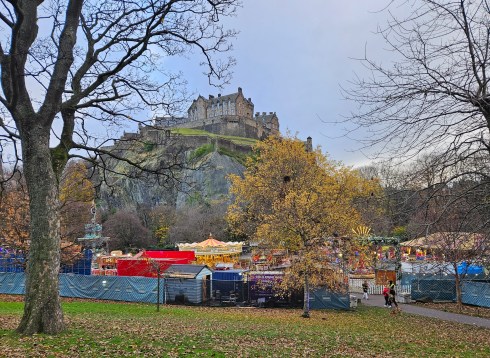
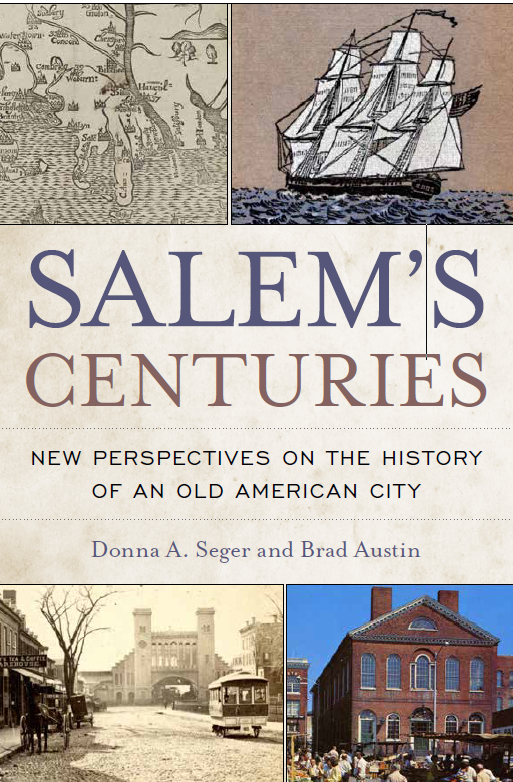
I’m just returned from a long trip to Scotland, during which I took hundreds of photographs, and today marks the feast of the Scottish patron Saint Andrew, so that’s the post! I promise more substantive essays in the future, but I have re-entered at the busiest time of the semester and my Salem’s Centuries manuscript is due in just over a month, so these photos will have to suffice for now. We spent most of our time in Edinburgh, but also covered a wide swath of south central Scotland, including Glasgow, Oban and Fort William in the west, and St. Andrews in the east. I spent my junior year abroad at that city’s university, and while I’ve been back several times since, it’s always great to go back. I really explored Edinburgh on this trip, both Old Town and New and some adjoining neighborhoods, so it was hard to pick my favorite photos of the capital, but I think I’ll favor the light. All the cities and towns we visited were aglow with Christmas trim, and every other day the sun bathed the land-and street-scapes for several intermittent hours: with moody mornings and darkness descending at 4pm, the light is very precious.

In Edinburgh:

Interior shots are of two National Trust properties: Gladstone’s Land in the Old Town and the Georgian House in the new. Of course the modern embellished building is the relatively new Scottish Parliament, about which I learned a lot. Christmas markets and fairs in every available green space!


Glasgow:

Glasgow Cathedral and Council Chambers are quite something, as are the Hunterian Museum and Art Gallery at Glasgow University. Charles Rennie McIntosh immersion is possible.


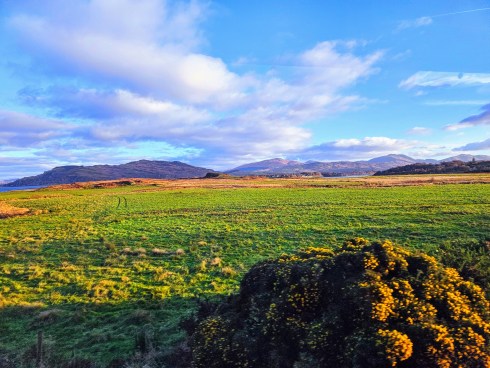
Western Coast from Oban to Fort William and through the Highlands:


Fife villages on the East Coast, and St. Andrews:

So, lots more to write about, including whiskey, GIN, Jacobites, McIntosh, Princes Street, old and new architecture, the power of Outlander, closes, courts and corridors, and hedgehogs, but this postcard post will have to do for now: Happy Feast of St. Andrew day!


Christmas at Home and Away

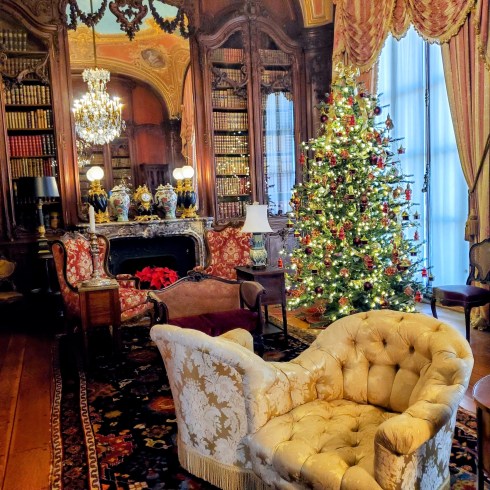
Our Christmas was Covid-impacted like everyone else’s, but it ended up being just lovely, with most of our time spent with my brother and brother-in-law in Salem eating, drinking, playing bad board games and watching movies. We went up to York Harbor for Boxing Day with my parents, but we’re not going down to New Jersey to see my husband’s family, so this is a rare holiday season without long-distance travel for me (with the exception of last year, of course), and I’m enjoying lounging around. Because we knew we would be primarily stationary on Christmas weekend, we snuck in a quick trip down to Newport to see the decorated mansions (the Elms, Marble House, and the Breakers) as well as the streets and streets of colonial houses of every color. So all in all, a convivial, colorful, and (so-far) Covid-free holiday! I feel very fortunate.

Christmas at Home (with swans this year—and lots of cats, our Trinity & Tuck, and my brother’s Clementine).

Newport! I really prefer the smaller colonial houses, but when you’re in Newport you’ve got to see some mansions, especially at Christmas time. We had a lovely dinner at the White Horse tavern, and just walked by and through so many houses. Perfect little break. I think I have the many, many Christmas trees and mantles in order of their location—-first The Elms, then Marble House, then the Breakers—but there were just so MANY I might have mixed some up.

The Elms, 1901.

Marble House, 1888-1892.

The Breakers, 1895.

As glittering as they are at this time of year in particular, these mansions are a bit over the top, so I’m ending with the simple themed trees in the basement kitchen of the Breakers (hedgehogs & mushrooms! I’ve been wanting to do those Christmas themes myself) above and my very favorite Newport house and the First Parish Church in my hometown of York, below. Happiest of holidays to everyone.


Thanksgiving Tradition and Transition

For many years my family spent the long Thanksgiving weekend at the grand old Equinox Hotel in Manchester Village, Vermont, the generous gift of my grandmother. We established several traditions there that ended with her death five years ago, after which none of us wanted to return, until this past Thanksgiving. So we came from Maine, Massachusetts and New York to Vermont, where the golden November weather shifted to white winter on Thanksgiving night. We woke up, and it was like a switch had been flipped! We’ve never been crazy about the Equinox restaurants, so we went to the Dorset Inn for a Thanksgiving dinner, as we had in the past. The night after Thanksgiving always began with a dram of Scotch at the tavern at the 1811 House across the way (where nothing else was served except popcorn) but that has been absorbed by the Equinox and I’m not entirely sure what they’re doing with it (although I looked in the window and the bar doesn’t seem to have been changed a bit, thank goodness). Manchester’s role as a center of outlet shopping seems a bit diminished by the pandemic, but we weren’t very interested in shopping anyway (except at the Vermont Country Store a half hour away in Weston). I trudged around in the snow quite a bit but certainly didn’t make it up, or even near, Mount Equinox, though others ascended.

Thanksgiving and the day after at the Equinox and vicinity, the Dorset Inn, and the Vermont Country Store.

On Saturday I trudged all the way to Hildene, the summer home of Robert Todd Lincoln and his family for many years. This is just a great site, encompassing a stately Georgian Revival house and several other adjacent structures, well-preserved and interpreted (and a very nice museum shop, which reinvigorated my shopping impulse). The house looks imposing from outside but seems intimate inside, especially as an organ was diffusing early twentieth-century music through pipes which seem to run throughout. After a spectacular sunset and a great schnitzel for Saturday dinner, we drove down south and home, out of the white and back to the brown (and all of our responsibilities!)

Exteriors and Interiors at Hildene.


A Cape Full of Color

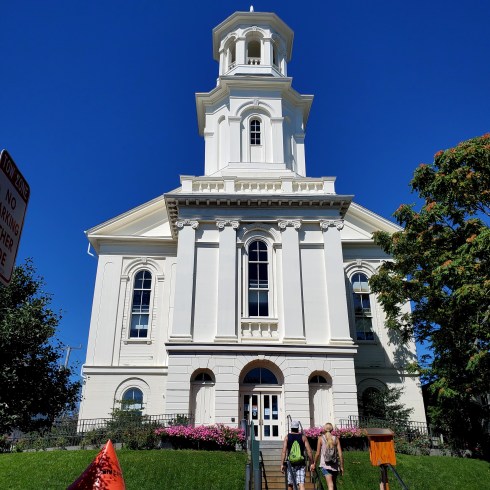
So every year in early September we journey to Cape Cod on the weekend after Labor Day for my husband’s birthday. It is an odd time, just after “summer” is over and we have established our fall routines, and I always complain, but off to the Cape we go because he has wonderful memories of fishing in Provincetown and that’s what he always wants to do for his birthday. As is generally the case with us, he will fish and I will walk or drive around looking for old houses, but this time we spent most of the weekend together. Provincetown is one of those towns that I don’t think I want to go to before I go but once I’m there I’m happy: actually everyone seems happy in Provincetown! It’s not that it isn’t a wonderful, dynamic and scenic town, it’s that I always feel that it is overbuilt and too crowded, with both houses and people. And it is, but if you stop and look at individual houses you’ll see some wonderful details and landscaping. I had not seen the Public Library before, and that was a special treat, and of course I had to make my yearly pilgrimage to John Derian’s summer house with its shop in back. Another highlight: the recently-restored eighteenth-century Mary Heaton Vorse House, on which interior designer Ken Fulk seems to have spared no expense.

Saturday in Provincetown: the Pilgrim monument, Public Library in the former Center Methodist Church, featuring a half-scale model of the Rose Dorothea schooner on its upper floors, John Derian & Mary Heaton Vorse Houses, and, of course, the beach.

I posted a few pictures and an Instagram friend informed me that there was an “All around the Common” event on Sunday way back in Yarmouth Port, during which several historic houses would be open, including Historic New England’s Winslow Crocker House, which I had never visited. So that was all I needed to hear: I had no problem driving back to get into that house. It was a very blustery day, so my husband decided to join me in lieu of fishing: a big surprise. We then commenced a long drive back to Salem via nearly every Cape town on Sunday, with stops in Harwich and Yarmouth. We both really wanted to visit the Atwood-Higgins House in Wellfleet, which is part of the Cape Cod National Seashore, but as soon as we got to the gates of the property a rather frantic park ranger drove up to us in his SUV and told us to proceed with extreme caution as there was a major mosquito infestation. We were still pretty gung-ho, but about ten steps in we were covered with mosquitos and ran back to our car: one Wellfleet mosquito rode all the way back to Salem with us! And then it was on to Yarmouth.

All we saw of the Atwood-Higgins property in Wellfleet.

I dashed through the Edward Gorey House and the Bangs Hallet across the Common, and then spent quite some time in the Winslow Crocker House: too much time for my husband. The house was built during the Revolution by privateer Crocker in West Barnstable, and moved by collector and descendant of an original land grant Cape family, Mary Thatcher, to Yarmouth Port in 1935-36. She had a new foundation laid, and removed all evidence of the division made by earlier owners. Miss Thatcher lived in the house all year long and filled it with antiques, all of which she donated to Historic New England. It’s a gorgeous Georgian house with warm wooden paneling throughout, lots of light, and some great William & Mary and Hepplewhite furnishings. I have added Miss Thatcher to my list of heroic female preservationists.

The Edward Gorey and Captain Bangs Hallet houses on Yarmouth Port Common and the Winslow Crocker House, built c. 1780. Miss Thatcher.

Our last visit was to the 1790s house of an old friend of my husband’s, also on architect, on the Herring River in West Harwich. Amazing setting and decoration, and some very striking mantles in particular (I hope you can pick up the detail in the pictures). A perfect end to our Cape dash, and then we dashed for home, with (miraculously) no traffic!

A beautiful end of our weekend in West Harwich.


Hudson River Valley Highlights

I’m just back from almost two weeks staying at my brother’s house in Rhinebeck, New York, right in the middle of the Hudson River Valley. I’ve seen a lot, and have many beautiful photographs to upload here, but I’m not quite sure how to curate them: no theme is emerging other than wow, there’s so much here. I’ve been to this region quite a bit over the past few decades, and I thought I knew it, but this longer stay has convinced me that I do not, really. You know I’m not really interested in nature (apart from its harnessing) so it’s not about the River for me, it’s about the houses and the towns, the built environment. Do I organize my hundreds of photos of structures and streetscapes by family (the Livingstons are everywhere), by chronology, by origin (Dutch vs. English), by size (the two cities of Kingston and Hudson on the west and eastern sides, surrounded by smaller towns and “hamlets” and the larger cities of Poughkeepsie and Tarrytown to the south), or by style? Mansions or private residences? Shops, or more particularly, shop windows (which seem to be curated here to a level we haven’t seen in Salem since the 1950s)? One theme which might work is that of stewardship, which I always think about when I’m in the midst of a region as architecturally and institutionally rich as this valley, but that will take some work and as I have officially entered the last week before classes that means I have SYLLABI looming: better stick to highlights!

Mansions and Cottages:

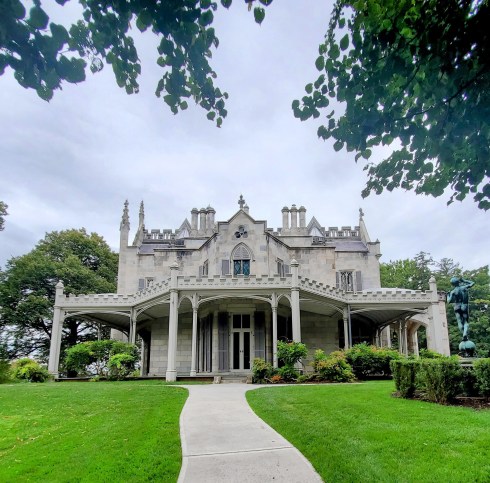
The stunning Lyndhurst Mansion in Tarrytown, designed by Alexander Jackson Davis for the Paulding and Merritt families over several decades beginning in 1838 and later acquired by Jay Gould, whose daughter left it to the National Trust for Historic Preservation; neighboring Sunnyside, the home of Washington Irving; Wilderstein in Rhinebeck and a detail from its stables; Montgomery Place and its stables, now the property of Bard College.


A Decayed Mansion with much potential: The Point, or Hoyt House, at the Mills Mansion/Staatsburg State Historic Site, Hyde Park.

There are several impressive structures on the vast riverfront acreage of the Staatsburg State Historic Site, including the Classically columned Mills Mansion, but I only had eyes for the Hoyt House on my hike. Designed by Calvert Vaux before his Central Park partnership with Olmsted, it just looks perfect, despite its decay (or maybe because of it?) The Calvert Vaux Preservation Alliance, of which my brother-in-law Brian is a director, is raising funds for the Hoyt House’s restoration and potential repurposing as a center of traditional craftsmanship training—talk about stewardship! I’m wondering if this cottage on the main road outside of the park is tied to the estate, as well as this adjacent entrance?


Alexander Jackson Davis’s furniture: almost everything is arched.

Chairs, beds, mirrors, even tables, so there is no “head” of the table: all at Lyndhurst.


Private residences: both vernacular and very high style—-all sorts of styles.

A Foxhollow Farm cottage, more contemporary board and batten, and two houses in Claverack to the north (I spent a lovely hour or so inside the white brick Hillstead, at the gracious invitation of Bruch Shostok and Craig Fitt); all sorts of restorations going on in Hudson; the lighthouse at the entrance to Kingston’s harbor.


And shopping! Mostly at Hudson, a bit at Kingston (Grounded) lured in by creative shop windows (which we need more of in Salem). History was in the windows too.


Revolutionary Jersey

I turned my return trip from a mid-Atlantic family/research weekend into a day trip focused on New Jersey’s Revolutionary history which is, of course, plentiful. I had been to the battle sites of Princeton, Trenton, and Monmouth before, but never to Morristown, so that was my focus. And I snapped a few photos at Monmouth as well, just because I was driving by and everything was so green. But mostly I was in Morristown, where General Washington located two winter encampments during the Revolution, in 1777 and 1780. The town’s location was strategic then, and convenient now, not too far from either New York City or Philadelphia. It has a lot to offer the tourist seeking historical places, but its vibrant downtown is evidence that it is not altogether focused on the past: destinations that deliver for both visitors and residents are always the best. There are blue and red markers near the sites of Revolutionary structures that are no longer there, and the sprawling Morristown National Historic Park encompasses those that survive. So while we don’t get to see Arnold’s Tavern, Washington’s headquarters during the first encampment, we do get to see the beautiful Ford Mansion, where he spent the second, during the coldest winter on record, in comparative luxury (though with a lot of other people). We also get to see the Wick farmhouse and land at Jockey Hollow, which was transformed into one of the country-in-formation’s largest settlements with the encampment of some 13,000 soldiers. Actually I was going to spend more time and get a true Revolutionary perspective by returning to Princeton and Trenton, but I got sidetracked by a pretty little town in the center of the state, Cranbury. It served as the encampment for Washington and his troops prior to the Battle of Monmouth in late June of 1778, and so set the theme for my little daytrip: encampments rather than battlefields. I must admit though: Cranbury’s houses were so great I would have spent time there regardless of any Revolutionary connection, and so you have to too!

The Monmouth Battlefield and nearby Cranbury; the last cute house is home to the Cranbury Historical & Preservation Society–everywhere I go there are city historical museums or societies and Salem is very conspicuous in its lack of one!

The encampment focus is one which highlights civilian as well as combatant experiences and sacrifices. At the Georgian Ford Mansion in Morristown, you cannot help but think about Theodosia Ford, who offered her gracious home to General Washington to serve as his headquarters in 1779, two years after her husband died during another winter quartering, with 35 soldiers in the house. During Washington’s occupancy, which included his wife Martha, five aides-de-camp, 18 servants (the NPS is not forthcoming on how many were enslaved), assorted guides and occasional dignitaries also in residence, Mrs. Ford and her four children were restricted to two rooms. At Jockey Hollow several miles away, the surviving Wick house, a very New Englandish structure built about 1750, would have been surrounded by small soldiers’ cabins built from 600 acres of the farm’s timber, while Major Arthur St. Clair of the Pennsylvania brigade quartered in the family home. They all endured through the “Hard Winter” together. Numerous monuments and plaques testify to the sacrifices of the Revolutionary soldiers who occupied Morristown at one time or another; I think the contributions of the Revolutionary citizens of Morristown should be marked as well. But perhaps they already are, by the witness houses still standing almost 250 years later.

The National Historic Park at Morristown, encompassing the Ford Mansion and Washington’s Headquarters Museum (one of the first NPS museums, designed by John Russell Pope and completed in 1937), as well as Jockey Hollow. Some exhibits inside the Museum, including an altar-esque presentation of an Edward Savage portrait of George Washington. The park does not include the Jabez Campfield House, c. 1760, but it’s just down the road from the Ford Mansion: this is the scene of the courtship of Alexander Hamilton and Betsy Schuyler in 1780, so it’s now referred to as the Hamilon-Schuyler house! The Wick house and its grounds, which are beautiful, including reproduction soldiers’ cabins and a wonderful herb garden maintained by the Herb Society of America. Like New England, New Jersey is very green this summer.


Way Down South

We’re just back from a quick trip to the Florida Keys and Miami, not really my ideal vacation location but my husband craved sun and sand and fishing and I had never been to Key West so it was good compromise destination. There was just enough architecture to keep me occupied and he indulged me with a visit to Vizcaya. I was a bit worried about Florida’s reputation for negligent masking, but everywhere we went people wore their masks inside. The highlights of the trip for me were: Key West cottages, with their myriad shutters, porches, and brightly painted doors, our Key West hotel, which was both very stylish and very comfortable, the shrimp and grits featured at the hotel’s restaurant, with the non-traditional, amazingly delicious additions of manchego cheese and bacon, Ernest Hemingway’s house and its resident cats, many lime-flavored drinks, learning all about the female keepers of Key West’s lighthouse and the construction of Henry Flagler’s Overseas Railroad, and Vizcaya, of course. It was also very interesting to watch the coexistence of so many different vehicles on the streets of Key West, including cars, scooters, bicycles (which really rule the road) and skateboards. And because I cannot go to another tourist city without comparing its “interpretive infrastructure” to that of Salem, I must say that Key West’s signage (both wayfinding and historical) is more uniform, more aesthetic, and simply BETTER than that of Salem, although that’s not saying much as our signage is so bad.

Key West, including the interior and exterior of our hotel, the story of our marriage, and a Marathon sunset.

Lowlights? Only the heat, I would say. It was exhausting to do my characteristically energetic architectural walkabout in Key West, but as I write this bundled up in bed on a cold and wet New England spring morning, that warmth is a fond memory.

Miami & Miami Beach: Vizcaya exterior and interior, and just a few houses from a few decades later—all is turquoise and coral.