Tag Archives: Reading Lists

Finishing my 2025 Books

I’m still working on the fall version of my 2025 reading list even as the year draws to a close. I certainly won’t finish it by the end of the year, but I have a LONG break ahead of me as I have a sabbatical for the spring semester! Lots of great books coming out next year (including my own) so I better get going. Next week, I’ll post about Salem’s Centuries as its publication date is January 6 (hoping to change the vibe for that particular date). This is a really good working list of books that I have read, am currently reading (I tend to read books concurrently) and plan to read pretty soon, all of which were published in 2025. In fact the last book is due to be published tomorrow, so I don’t have it in my possession but I pre-ordered it. As usual, this is a nonfiction list; I just don’t read very much fiction so I can’t offer up any kind of a guide to those genres. I read history, history of science, art history, the history of food and drink, folklore, and books about various types of design and architecture. That’s pretty much it. Maybe a bit of politics and popular culture—and media, but the vast number of titles for fiction and self-help books appearing every year seldom catch my attention. So here goes, beginning with books in my period that I felt that I had to read but were nevertheless quite good.

I thought Borman’s book was going to be just a narrative of Elizabeth’s declining years, death, and the succession of James I and VI, and it was that, but it was more too—I learned lots of little things I did not know about these years. Borman is more than a television presenter, clearly: this is a very source-based history, with particular reliance on new revelations about William Camden’s Annales. Just further complexities relating to James for me! I think I have a book on him on many of my book lists here, and as 2025 was the 500th anniversay of his death I had to have one more: Clare Jackson’s Mirror of Great Britian is amazing, one of the best royal biographies I’ve ever read, and that is saying something as James was complex: earnestly Protestant but also a pursuer of pleasure, well-educated but also a true believer in demonic witchcraft, the only contemporary critic of tobacco, the first King of Great Britain. He’s a lot, and Jackson handles both the man and his era really well. Getting away from royalty and this specific era, two other British books which I am kind of reading together, gradually (they are both what I think of as “dipping” books in that you can pick up and dip into them wherever and whenever you like) are all about food and folklore—both just completely entertaining and informative at the same time.

I like to read books that are sweeping in terms of their topics, sweeping over the centuries: a change from most of the academic reading I do which is much more constrained in terms of both topic and time. The very popular genre that I call “commodity history” often includes sweeping titles, but as its title asserts, Jordan Smith’s The Invention of Rum is more narrowly focused on the invention of this “perfect” Atlantic spirit. Another “invention” book (though I really don’t think “design” was invented in the twentieth century but that’s why I want to read The Invention of Design) covers only the twentieth century. A really fascinating book blending history, magic and medicine (one of my favorite combinations), Decoding the Hand covers more ground.


I have my natural, constant interests, but if I’m looking for something new to read the first place I go is to the website Five Books, at which experts recommend five books in their areas of expertise and lots of lists to inspire a wider range of reading. I love this site! One great book that I never would have found on my own came from here: Sara Lodge’s Mysterious Case of the Victorian Female Detective, which was on the shortlist for this year’s Wolfson History Prize, awarded annual for both well-researched and accessible (enjoyable!) history writing. This book was definitely both, and a case study in utilizing historical and literary sources.

Finally, three books of a more timely/political nature. The medievalist Patrick Boucheron has written a great book about Political Fictions over time, I am searching for some explanations for/relief from the NOISE that assaults Salem all year long so I purchased Chris Berdick’s well-reviewed Clamor (though I’m sure he will take on all the sirens and jackhammers but not the tour guides), and I think we should always remember January 6 (for more than the publication of Salem’s Centuries) so I’m going to read Nora Neus’s oral history on that day.


What I’m Reading, Spring 2025

I’ve working my way through a stack of books this semester and looking forward to some notable new publications so I thought I’d put together a post to relieve everyone (including myself!) from the Revolutionary focus. As is generally the case with my reading lists, there’s no fiction here. I really, really wish I could read fiction, but I am for the most part an “information reader”: I’m looking for something or want to learn something. I aspire to read for pleasure but I’m not there yet. I’m always teaching and writing about history, so most of what I read is history too, but I have various sideline subjects: architecture, urban planning, folklore, art. I will often have a stack of books by my bed or desk which I will dip into for an hour or two, but for the past year I’ve been trying to break that habit and read through every book I pick up. I’ve been moderately but not completely successful in this aim. I’m also trying to kick my Amazon habit, but have been less successful in that goal! So here’s the list, in no particular order.

Big, sweeping cultural histories of monsters and fairy tales! I’ve been eagerly awaiting Humans. A Monstrous History, which was published just last month. I ordered a desk copy from the publisher, because if it’s as good as I think it will be, I will definitely use it in class. I think I know where Surekha Davies is coming from, because I read her first book on Renaissance ethnography, but she is really stretching it our here—“monsters” are a bit different in the medieval and early modern era. But every civilization has its monsters, and their creation tells us a lot about every civilization. I’ve had Warner’s Once Upon a Time for a while, but finally finished it, as I thought it would be a good companion book for the monsters.

American history always seems much more….tangible! I love books that can explain how just one thing—whether tangible or not, can be “revolutionary” so this book on the Franklin stove is right up my alley: I have a Franklin stove and have written about its companion technology, Rumford roasters! I have not received this book yet (I couldn’t order a desk copy as I don’t teach American history) but I am really looking forward to reading it. I have read No Right to an Honest Living and while it was a bit slow-going for me, I really learned a lot. I wanted to read it as I have thought and written about the Remond family here in Salem so much and I thought this book on Boston African Americans who lived at the same time might give me some insights into their lives, and it has.

Some women’s history (and literature) for Women’s History Month. These are two very accessible, informative, and complementary books: I read straight through them in a weekend. I am a fast reader but I also tend to “gut” books as they taught us in graduate school: you really can’t do that with either of these books. This is the anniversary year of Jane Austen’s birth so I expect we will get more Austen books but I suspect Jane Austen’s Bookshelf will do it for me: I liked this very personal window into her reading world.

A wide range of architecture. I guess I’m going for complementary reads here; I hadn’t planned on that, a pattern is emerging! Now that I think about it, I guess this is how I read. If I read an engaging book, I want more, or I want some kind of response. I’m not sure these that Inessential Colors and A Paradise of Houses will be complementary: I’ve only read the former and the latter is going to be published at the end of this month, I think. I pre-ordered it because its title gave me hope: Salem is just getting uglier and uglier with its new construction and I yearn for a reversal and “rebirth” back to urban integration and intention: do we even have a city planner anymore? Maybe this is not what Podemski is offering, but I’ll see. Works on pre-modern architecture that are not theory seem rare so I snapped Inessential Colors right up: it’s an academic book which explores the beginnings of the use of color in architectural renderings. I’ve been reading a lot of color theory for the next book I’m researching, on saffron, so it hit the sweet spot of architecture + color for me but it might be a bit specialized for most.

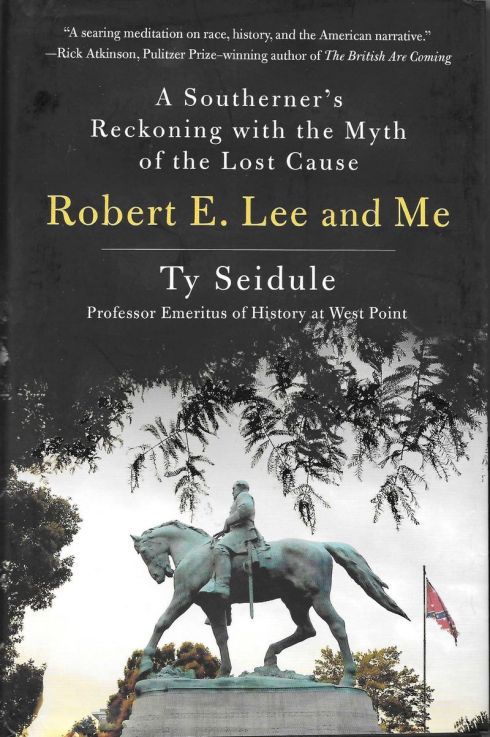
Different Forms of Memory. Here are another pair of books of which one (I’m showing two covers here because mine is on the left but I much prefer the right) I’ve read and the other I’m waiting for: I should have subtitled this post “books I planned to read.” I’m really interested in statues and other forms of public commemoration: Fallen Idols was an ok overview but it didn’t quite do it for me. I think I’ll read Erin Thompson’s Smashing Statues: The Rise and Fall of America’s Public Monuments next. I’ve really become interested in Revolutionary remembrance because of my deep dive into the Revolution last year and this year’s commemorations. The Memory of ’76 looks like it’s going to answer a lot of questions I have about this topic, so I wanted to include it here as a reminder—it’s coming out in July.

Lightening (Liquoring) up. I have the occasional habit of posting my Friday cocktail creations to Instagram, and was rewarded with several books on alcohol this past Christmas! Kind of embarassing, but both of these gin books have some great recipes and Austen + alcohol—what could be better? I write quite a bit about the cordial consequences of early modern distillation in my book The Practical Renaissance, but Camper English has a much more accessible and expansive take on this trend: Doctors and Distillers is a really enjoyable book.

Would love some suggestions for engrossing historical fiction and public art marking history!


Spring 2024 Reading List

I have been reading! I intend to read more! So much writing and so much teaching over the past few years, I’ve had very little time for general reading, as opposed to targeted reading, trying to find the answer to some very specific question in as little time as possible. That’s not really reading, so I’m trying to get back into the “practice”.  We have our Salem’s Centuriemanuscript in now, and the semester is winding down, so I’ve ordered up a stack of books and am digging in. If you’re familiar with my reading lists you know there’s never a lot of fiction: novels cannot retain my attention unless I’m on a plane. Otherwise, I put them back in the stack and generally forget about them. I do have one novel on this list, Richard Harris’s Act of Oblivion, which is about the manhunt for two regicides in seventeenth-century New England, a topic I can’t resist. I haven’t started it yet, and I’ll be thrilled if I finish it. I like the idea of reading novels and I hope to return to fiction at some point, but that time is not now; I’m just too hungry for information, even when reading for pleasure. Most of these books are adjacent to some of my scholarly interests, but not spot-on, although I could have written this first one and wish I did!

This first batch of books (above) could be generally classified as early modern cultural history and I’m kidding, I certainly could not have written Jill Burke’s great book about beauty culture in Renaissance Italy. I included a few recipes for cosmetics in my book, The Practical Renaissance, and made both a mental and actual note (in one of my writing notebooks) to dig a little deeper into that realm but then forgot all about it. Burke’s book is both scholarly and accessible and if you’re interested in learning more about her topic check out the Wellcome Collection’s “Cult of Beauty” exhibit. Ulinka Rublack is another early modern historian whom I admire and her latest work is on the shifting patronage environment in that era, through the perspective of Albrecht Durer’s career. Like Burke, Rublack really opens what has been/could be a much more contained “world”.  Marcy Norton’s The Tame and the Wild. People and Animals after 1492 is also global in its orientation and focused on a topic which I explore in several of my courses (now that I think about it, ALL of my courses): how Europeans viewed the New World/ how the New World impacted the Old. In this case, all about animals. Spycraft is not quite out yet, but soon, and I really want to read it so I put it on this list. I just finished The Wisest Fool, a very engaging biography of King James I and VI, as I wanted to be all ready for the debut of Mary & George this week! Victoria Finlay’s Fabric: the Hidden History of the Material World, is one of those sweeping “commodity histories” which are always on my lists—I haven’t read this yet, but I enjoyed her last book on color.

The last three books are a bit more local: as noted above, Act of Oblivion is historical fiction, largely set in New England, Flee North is about the African-American shoemaker//abolitionist/author/ liberator Thomas Smallwood, and A House Restored is about the restoration of a Massachusetts house.  Flee North is the only book on this list with any sort of Salem connection: Smallwood worked with Charles Torrey, former minister at the Howard Street Church in Salem, to organze escapes of enslaved men and women from the Washington-Baltimore region. I believe that Lee McColgan, whose restoration of the first-period Loring House in Pembroke, Massachusetts is detailed in A House Restored, is going to be one of the speakers at Historic Salem’s annual meeting next month, so I will be reading his soon-to-be released book in advance.


What I’m Reading this Summer

I haven’t done a reading list in a while and I have really been reading, so it’s time. It’s been a voracious reading summer for me: it’s as if I was emptied out by writing my own book and I need to fill myself up! There are the usual random categories you will be familiar with if you’ve been following me for a while: history, architecture, decorative arts, design, a marked preference for nonfiction over fiction. This summer I seem to be more interested in the public aspects of all these things: public history, urban planning, media. History has become so very contentious in our time, and I feel my deficiencies in American history knowledge very keenly. I’m also troubled by the constant tide of development here in Salem, and looking for new urban ideas, strategies and policies that lend themselves towards unification rather than division. My major collecting focus has always been pottery, but for some reason I’ve become obsessed with fabric this year, not so much as an objection of consumption but of production. And I have read some fiction, though not much. So here’s a working list of what I have read or am planning to read before I go back to school.

History is very, very, very public in general and Texas history in particular: 

Well the top three books are not only public histories but also personal histories, and that makes them very compelling, although a bit uneven in places. Denmark Vesey’s Garden is magisterial (thus I had to amplify or “quadrify”? it); it’s one of the best history books I’ve ever read, examining the very complex story of “how slavery has been remembered in Charleston, South Carolina from 1865 to the present” in the words of its married historian authors. I’m finally realizing now, probably long after most American historians, that slavery really has to be examined historically at both the macro and the micro levels to fully grasp both its existence and its impact.

But BIG history is also important and interesting (and very useful for teaching):

I don’t really understand the modern world so I try to read as many books with the subtitle “the making of the modern world” as possible. This is actually a pretty large genre: you would be surprised at just how many books claim that their subjects “made” the modern world, beginning with a study of Genghis Khan. These are this year’s “making” books: I read everything by Linda Colley and my understand of the 18th century is basically based on her interpretation, so I would have read this even without its “making” subtitle, but I certainly would not have picked The Butterfly Effect without its making claim: Melillo makes a pretty good argument for the centrality of insects.

I’m particularly interested in material history this year: just loved these two books—they are big history too.

These histories of fabric are a bit more than the standard commodity global histories that we have seen over the past several decades (oysters, alcohol, drugs) in that they are about production as much as consumption, and like food, fabric is pretty essential.

Two books with Napoleon in the title, which are not necessarily about Napoleon:

Actually the first book is about Napoleon, but more about the painting he stole from a Venetian monastery, Paolo Veronese’s Wedding Feast at Cana, which ended up, and still remains at the Louvre. I believe that it is hanging right across from the Mona Lisa, another Italian painting that ended up in Paris. I’m always looking for works at the intersection of art and history, especially stories that involve theft, and Saltzman’s work was perfect. The center figure of Ben Macintyre’s The Napoleon of Crime, was an art thief, but much more: apparently master (and short) thief Adam Worth was the inspiration for Sherlock Holmes’ Dr. Moriarty.

Insights into vexing problems:

Besides the changing environment, on which I think I can have minimal impact beyond my personal and household habits, the two pressing issues which concern me the most are deliberate ignorance and disinformation and ugly architecture. Information literacy has become a much more important focus of my teaching over the past few years, but deliberate, willful ignorance and disinformation still confounds me. I’m looking for some historical context with Ovenden’s book, which I haven’t read yet. On a more local level, Salem has been experiencing a building boom over the past few years with the construction of steady stream of really ugly—or even worse, generic—buildings. Despite the fact that nearly everyone I talk to in town is wondering how we are getting all these monstrosities, there seems to be no opportunity for public discourse. Expectations are very low: why don’t we want beauty in our lives? Sometimes critics are labeled busybodies, but I believe that architecture is public, and so I was particularly struck by the title of Timothy Hyde’s book, Ugliness and Judgement. I’m looking for ways to be a more educated and effective critic: Hyde was helpful as was Charles Montgomery’s Happy City.

And finally fiction!

Well, I read Station Eleven because it seemed timely: it’s about a post-pandemic world! And it is a wonderful book, but not for me: I am not a future-dweller. It drove me back to a comfortable period, and some classic works of historical fiction which I never read, never even considered reading before this odd year. Norah Lofts was an amazingly prolific author of historical fiction and mysteries, and the second volume of her “House” trilogy, which follows the history of a Suffolk house and the residents who lived in it from the fourteenth century to the twentieth, is a Tudor-Stuart treat. In the same vein and tradition, Hilda Lewis’s Mortal Malice is more focused on one of the major scandals of the Jacobean era: the poisoning of Sir Thomas Overbury while a royal prisoner in the Tower of London, a scandal that involved not only poison but also affairs, plots, and Sir Francis Bacon. It even attracted the attention of Nathaniel Hawthorne centuries later. It’s hard to turn this scandal into a bad book, and Lewis does not disappoint.


Summer 2020 Reading List: What I Would Have Read

I’m a bit late with this summer reading list: it’s August! And this list is more intentional than actual, so I’m not going to be able to give informed commentary on most of these books. I planned to read all of them, but as soon as the end-of-semester responsibilities were over, intensive gardening began. And as soon as intensive spring gardening ceased, family trips were taken. And then I returned home and BOOM: big book contract! So the last month has been all about writing rather than reading. Yet I have heard from many of you that you like my book lists, so I thought I would offer up one: I did choose these carefully, and many of them are sitting by my bedside, but I usually pass out before I can pick one up! I didn’t even have time to go back and look at my previous book lists but I bet there is a trend of increasing interest in historical fiction over the years: I used to be pretty snobby about that genre, but after reading several titles which were researched meticulously and crafted beautifully—enabling one to really plunge into the world in question—I have changed my tune. I think there are a few of these on this list: you’ll have to forward your assessments, and after my own book is finished I will either return to these books—or I won’t!

So let’s start with fiction. I am dying to read James Meek’s To Calais, in Ordinary Time, which is set in England and France during the Hundred Years’ War and Black Death, and the publication date of Emma Donoghue’s 1918 book was moved up to Corona time. Talk about plunging into the past: I read Andrew Miller’s previous historical novel, Pure, last year and was definitely plunged into the world of an eighteenth-century engineer in Paris; Free is set in Scotland during the Napoleonic Wars, and I really want to go there. I always want to go to sixteenth-century England, even into the somber Shakespeare household following the death of Hamnet, from the plague, of course. Big jump in terms of both chronology and topics: I’ve been reading my way through Evelyn Waugh and his era over the years, and I loved these new covers so purchased them for my bedside stack (I purchased Martin Green’s Children of the Sun a few years ago for some context and insights into this era, but have read it only in snippets so far). And another favorite era in fiction and fact: the Daphne Du Maurier’s novel is from the 1940s, Nadine Akkerman’s scholarly book on female spies in the seventeenth century is much more recent.

Reading Pandemics

Reading Miller

Reading Hamnet

Reading Waugh collage

REading Untitled - 2020-08-03T132118.632

For the first time every, I think I have more fiction books than nonfiction—-probably because I’m all nonfiction all the time for by work: both writing and teaching. I don’t really have time to indulge my curiosity this year, but if I did, I would move Ivory Vikings by Nancy Marie Brown, about the medieval Lewis Chessmen, up to the top of my bedside stack: I’ve been curious about these guys forever. The other books are somewhat related to my book so I supposed I can categorize them as research: I’m writing about gardening and cooking right now, in my Chapter Three, so Floud’s and Dawson’s books are right by my side, offering some great insights and context supplementary to my primary sources. Newton is a little late for me, but I’ve got to read all about alchemy for my book as it creeps into several topics (medicine, beauty, even agriculture), so William R. Newman’s Newton the Alchemist will be illuminating, I’m sure.

Reading Chess

Reading Gardens

Reading Food

Reading Newton Collage


Suffrage Stories

I apologize for my disappearance without a heads-up: the combination of computer problems and travel rendered me postless for a week! I am back with the first of what will be a series of reading lists for the summer, but first some big news: I’ve just received a book contract for the project I’ve been working intermittently but steadily on for the last couple of years, so expect The Practical Renaissance: Information Culture in Early Modern England out next year (or early in 2022) from Bloomsbury! This means that posts on early modern medicine, agriculture, mechanics, and navigation are going to turn up here occasionally, but the blog will also serve as a break from my more-scholarly endeavors: Salem history is still a rich minefield and I will still have a life! As these past few weeks have shown, history in general is as problematic, and public, and current as ever, and here I can indulge, and engage, and weigh in. And in matters more material, I still have my kitchen renovation to show you! (we are in a particularly messy and noisy stage right now).

Though the suffrage centennial has been drowned out by the pandemic and protests of this eventful year, it remains a focus for me. I’m sorry that this notable anniversary is getting lost— along with the bicentennial of my home state of Maine and the 400th anniversary of the passage of the Mayflower. As I am neither an American or modern historian, I really had to read up on the long struggle for suffrage–both in America and Europe–to get the context and perspective I wanted for my #SalemSuffrageSaturdays. The literature on the American and British suffrage movements has grown exponentially over the last few years, and I couldn’t read everything, so in typical academic fashion I started with some key primary sources, read a lot of reviews, narrowed down what I thought might be the essentials, and spread out from there. I was looking for a trans-Atlantic approach, which I didn’t really find, and also more personal stories—and the quest for the latter took me into fictional territory, so I do indeed have a few novels on my top ten (actually eleven) list. I wouldn’t consider these texts sources, of course (although they were certainly well-researched) but they fleshed things out for me. And I have some real suffragist stories too.

Books My Own Story (2)

suffragette-books (4)

Books Suffrage Kitty Marion

Books Broom

Books Collage

Books Picturing (2)

Books Lucy Stone Collage

Books Gilman (6)

Fictional Suffrage Collage (2)

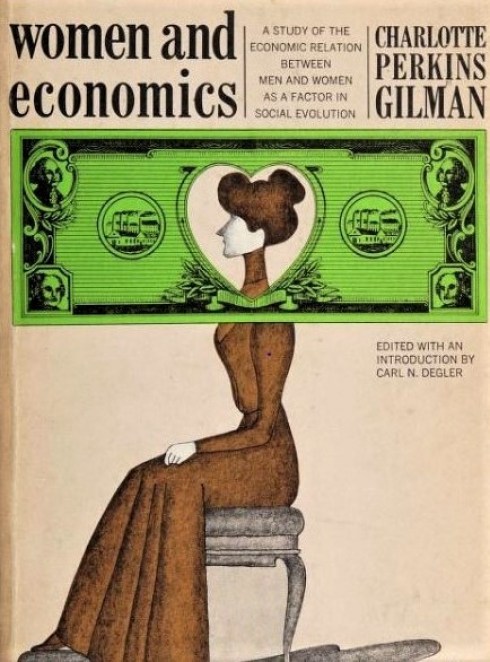
How I learned about the Suffrage movements in the UK and US: 1) Emmeline Pankhurst’s My Own Story (1914), because you’ve got to start with the founders; 2) Diane Atkinson’s Rise Up, Women is my favorite British survey—focusing on personal stories (and from Bloomsbury!) 3) here is our trans-Atlantic activist, Kitty Marion, whose extraordinary life is explored in Fern Riddell’s Death in Ten Minutes; 4) images are so important to this movement—on both sides of the Atlantic—and I’m obsessed with the work of British photographer Christina Broom; 5) and 6) I didn’t really find the writings of the founders of the US movement very accessible or enjoyable, so I went for more recent interpretations: Lisa Tetrault’s Myth of Seneca Falls and Faye Dudden’s Fighting Chance were particularly helpful in explaining some of the divisions in the movement; 7) Allison K. Lange’s brand-new Picturing Political Power explores the very important visual projections of Suffragists in the US; 8) in Massachusetts, it’s all about Lucy Stone, who must have visited Salem 100 times: she is the subject of several works, but I found Sally McMillen’s Lucy Stone: an Unapologetic Life the most helpful; 9) Charlotte Perkins Gilman’s Women and Economics (1898) provides classic context, and 10) and 11) two works of fiction in which Suffragettes and the Suffrage Movement play key roles: Tracy Chevalier’s Falling Angels and Lucy Ribchester’s The Hourglass Factory.

I couldn’t limit my list to 10 and I had to throw in some fiction: happy reading, everyone, and Happy Fourth!