
The Historic New England season is closing this Columbus/Indigenous People’s Day weekend and as I am up in York Harbor, I went to visit one of HNE’s oldest houses (both in terms of sheer vintage and time under its stewardship): the Jackson House in Portsmouth, built circa 1664. This is an extraordinary house: I’m sorry to be posting at this time when you won’t be able to visit it until next June, because I’d really like to urge everyone reading to go. I had been in it before, but when I was much younger and couldn’t appreciate it properly. But now, wow. I always thought it was a saltbox: it is not. It’s a seventeenth-century two-story small square house which had an elaborate lean-to added a bit later, along with two additions on each side. It is also a lavish display of wood: certainly not from an American perspective, but from an English one, which would have been its builder, Richard Jackson’s perspective. When I was writing my first book, The Practical Renaissance, I was reading treatises written for carpenters and shipbuilders, as well as some more general agricultural pamphlets, all of which made me aware of the increasing concern about the shortage of wood in seventeenth-century England. All the first-growth forests had long been chopped down, so to come to North America and see all this wood must have been something. So for me, the Jackson House was just a great illustration of that abundance. Our guide emphasized this theme adroitly as she described the house’s framing, exterior and interior, and she also illustrated the construction impact of less-abundant woodland in New Hampshire by showing us the attic over the eighteenth-century addition, with its decidedly less-robust timbers. The Jackson House is one of Historic New England’s unfurnished study houses (like the Gedney House in Salem), so the emphasis is decidedly on construction, but we got to learn a fair amount about the family as well, who possessed the house until 1924, when William Sumner Appleton, the founder of the Society for the Preservation of New England Antiquities (now Historic New England) purchased it.


Perfect 17th century parlor and east and west wings, with a patch of preserved wallpaper.
Appleton had apparently been obsessed with the Jackson House since his freshman year at Harvard, when he came up from Cambridge and knocked on the door. A pioneering preservationist and critic of “one property museums,” he began acquiring choice properties after the founding of SPNEA/HNE in 1910. Rather than stripping off the east and west additions of the house, he removed stucco and plaster to reveal its construction. The original property was extensive, fifty acres or so just across the North Mill Pond from downtown Portsmouth, in a neighborhood named Christian Shore. When I was growing up across the Piscataqua River in southern Maine in the 1970s and 1980s, Christian Shore seemed to me a drive-through area with delapidated old houses, but then suddenly appeared The Inn at Christian Shore and I started noticing all the beautiful old houses and now they really are all beautifully restored. Portsmouth is actually growing in this direction, with several hotels built in what were once vacant lots which divided Christian Shore from downtown. But when you look out the windows (replaced by Appleton, but in their original openings) of the house on its slightly elevated lot, you can imagine, and even sort of feel, the aura of its first century.


The replacement windows and upstairs, including some wood-carvings. I knew all about the counter-magical daisy wheel from the M.A. thesis on apotropaic marks by Alyssa Conary at Salem State, so it was fun to see it (a perfect example of how I didn’t “see” on my first visit as I have no memory of it). A watercolor and Detroit Publishing Co. (Library of Congress) photograph of the house before it became a museum.


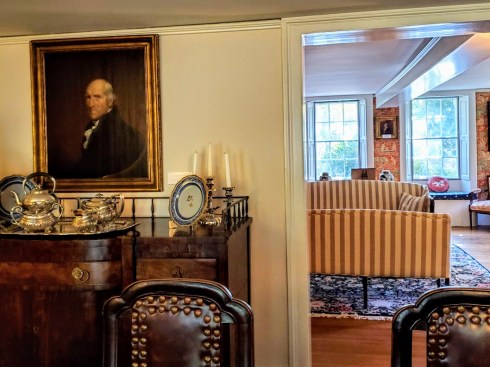

 Colonel Tim presiding over the Dining Room, Amanda Eddy showing us the evolution of the house; the Peacock Inn, UK National Archives.


 Western parlor with portrait of Mary Pickering Leavitt (1733-1805) and her daughter Sarah by Joseph Badger; Hessians!; wonderful portrait by Mary, restored by textile conservator Elizabeth Lahikainen in 2017; the Pickering family arms; from the curio cabinet; LOVE this china pattern but forgot to ask what it is—please inform, someone; family books and one of John VI’s essays.
 Photograph by Salem photographer and artist


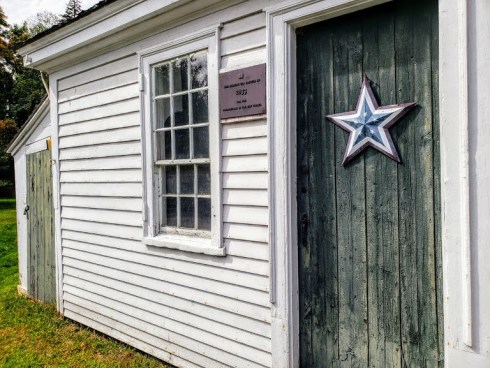


 The Kittredge Mansion & gate in HABS photographs from 1940-41, Library of Congress.


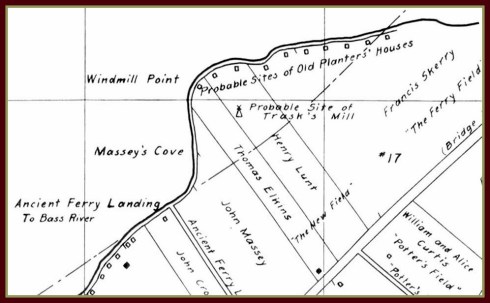

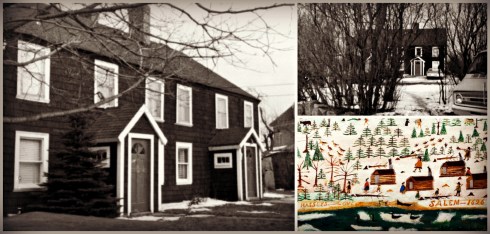


 The Pickering House and fence today and in 1940 (HABS, Library of Congress), followed by the William Brown House, built in 1847.





